07-22-2026 - Interviews & Behind The Scenes, News
Introducing The Sony FX5: Breaking Down Barriers with Gareth Edwards
By: Yaroslav Altunin
Drawing on the expertise Sony has cultivated through the development of Cinema Line, the introduction of the Sony FX5 brings a new full-frame camera into the Sony Ecosystem.
Supporting both video creators and cinematographers, the FX5 unites the RAW capabilities of the VENICE and BURANO with the compact form factor of the FX3 and the AI-powered, High-precision AF from the Alpha series.
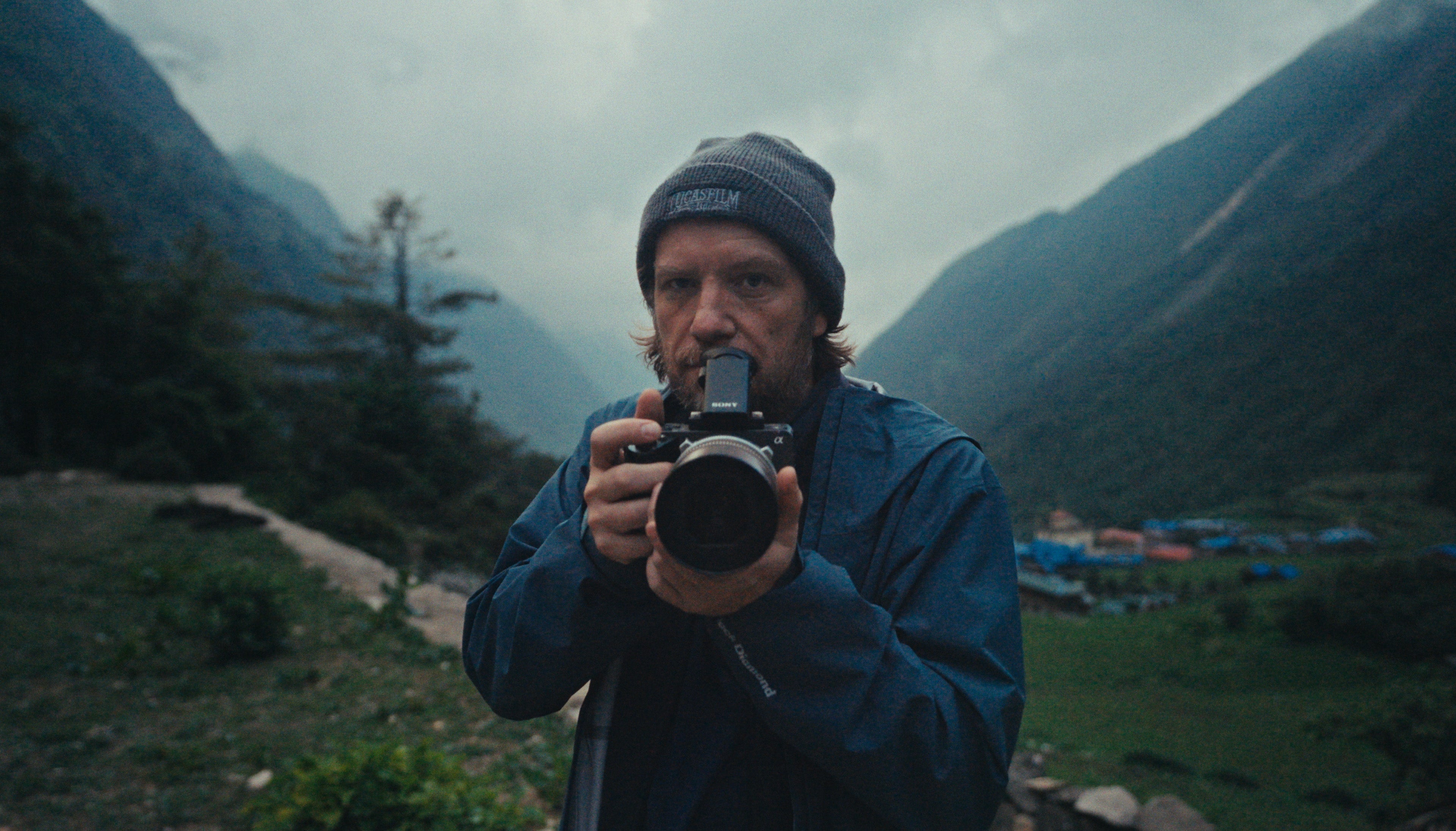
To explore this new addition to the Sony Cinema Line, director Gareth Edwards took the FX5 back to the locations of The Creator to embrace his unique approach to storytelling and discover how the new capabilities of the FX5 can break down creative barriers for creators, cinematographers, and filmmakers.
The New Sony FX5
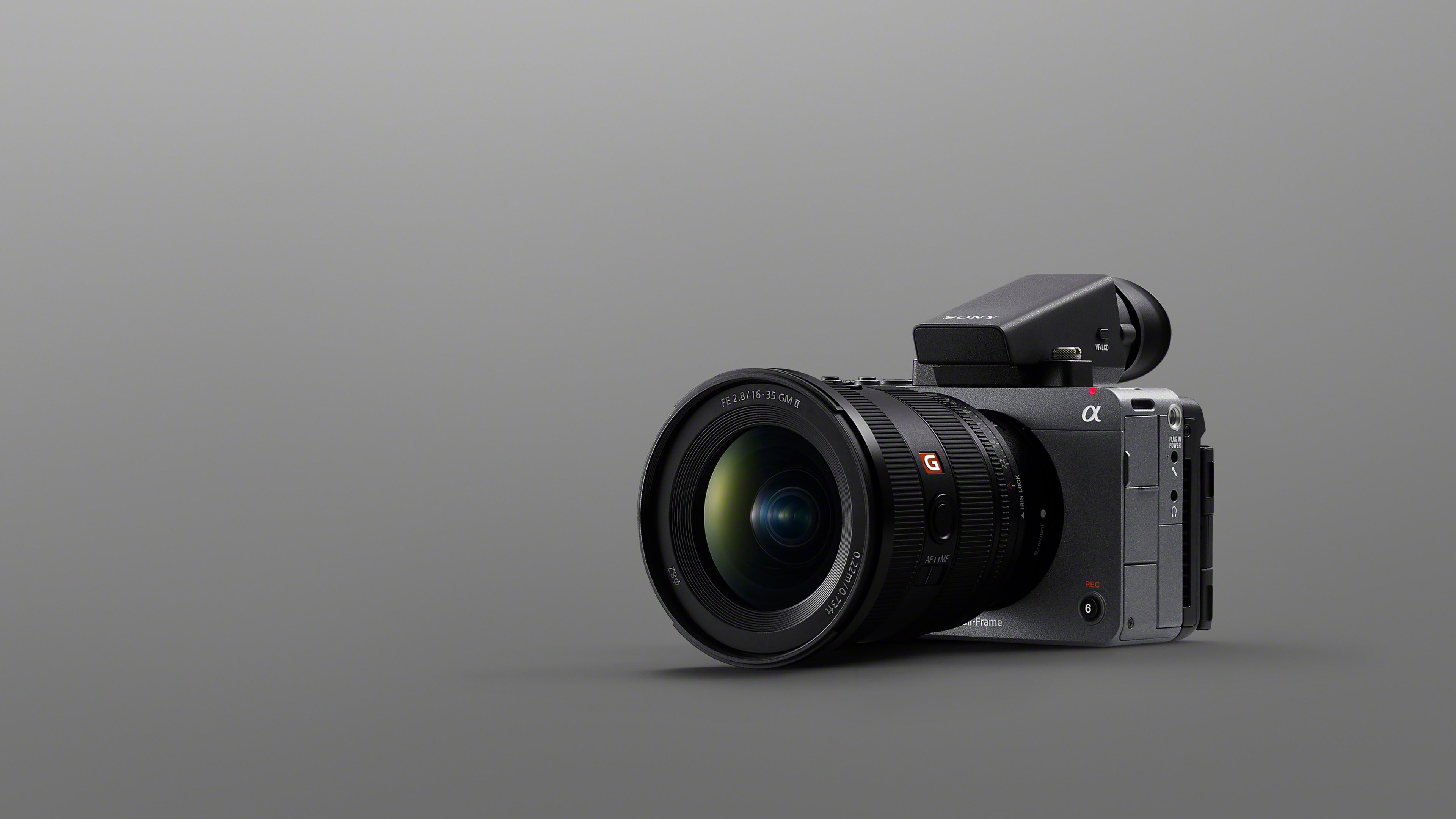
Equipped with a newly developed fully stacked CMOS image sensor with 15+ stops of dynamic range and three base ISO settings, the FX5 enhances sensitivity performance when compared to the FX3.
For the first time in the Cinema Line FX series, the FX5 supports a Dual Gain Shooting mode and Open Gate shooting, as well as in-camera recording in X-OCN, Sony’s proprietary 16-bit scene-linear RAW format. The camera is capable of shooting in 5K at up to 60 frames per second, in 4K up to 120 frames per second, and in FHD up to 240 frames per second.
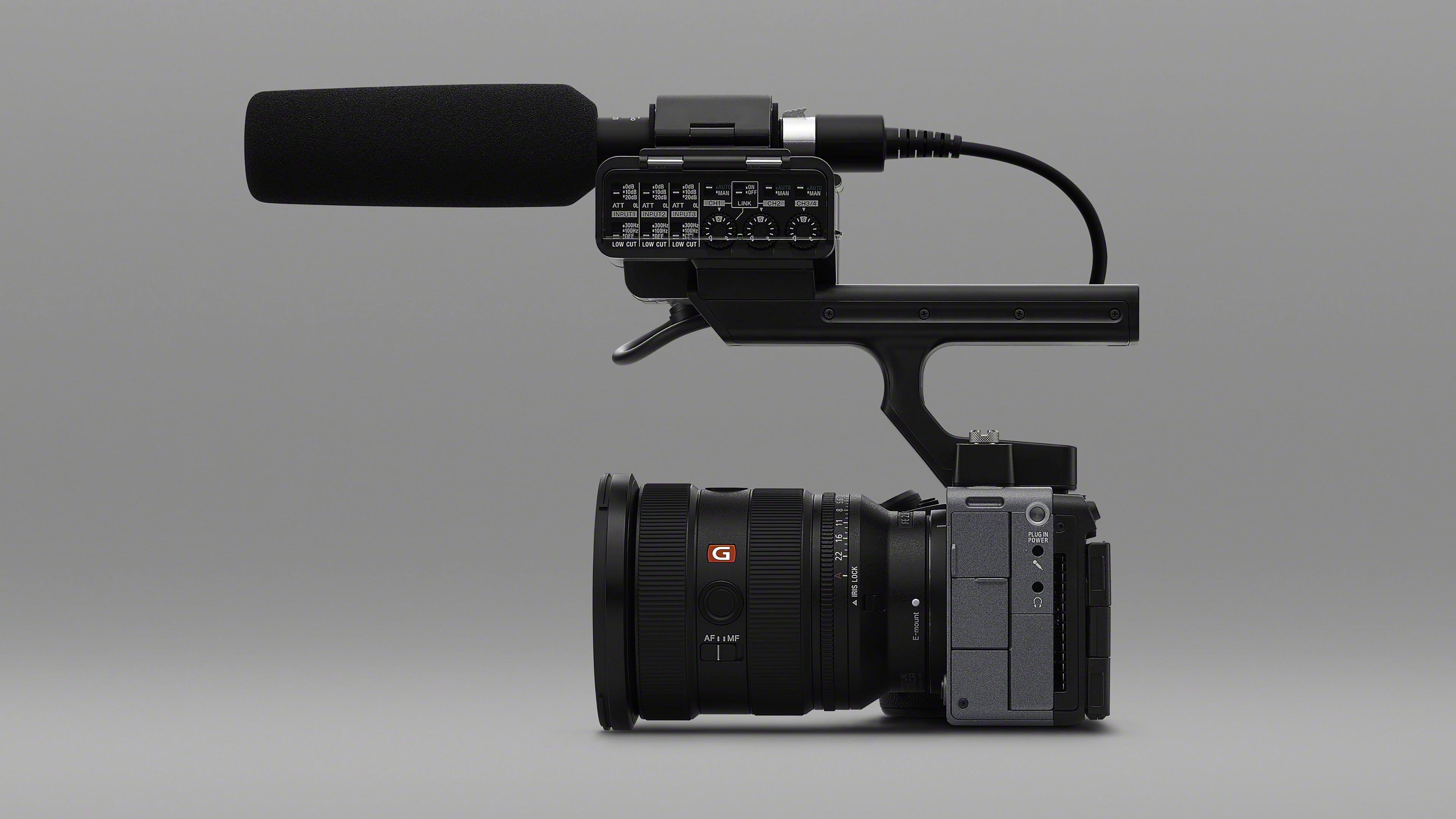
This release also includes two new optional accessories: a detachable OLED viewfinder and an XLR Handle that enables in-camera recording at up to 96 kHz, 32-bit float.
Key Features
- Full-frame, fully-stacked Exmor RS™ CMOS image sensor
- High-speed BIONZ XR2™ image processing engine w/ dedicated AI processing unit
- 15+ stops of dynamic range when shooting in S-Log3
- Three base ISO settings of 800, 4000, and 12800
- Dual Gain Shooting function
- Open Gate, 3:2 full-pixel readout across the entire image sensor area
17:9, 16:9, and Super 35mm image scan modes - In-camera X-OCN w/ X-OCN LT and the newly added X-OCN C1 and X-OCN C2 codecs
- High-precision AF powered by AI
- Noise Suppression settings
- Desqueeze function with 1.3x, 1.5x, 1.6x, 1.8x, and 2.0x options
- 5-axis optical in-body image stabilization
- High-quality audio recording of up to 96 kHz, 32-bit float and 4 audio channels with the newly developed XLR handle unit
- Optional 0.58-type tilting OLED viewfinder
- Video monitoring and remote operation via the Monitor & Control application
- Timecode input via an optional timecode adapter cable
Remote camera operation and network connection via wired LAN terminal
Future planned updates to the FX5 will include support for HFR shooting up to 240 fps in X-OCN, XAVC S-I recording in a 3:2 aspect ratio, an optimized user interface for vertical shooting, and a frame grab function.
Read the full announcement to see a full breakdown of the FX5’s capabilities.
Revisiting The Creator with The Sony FX5
In 2022, director Gareth Edwards traveled to over 80 locations across Cambodia, Nepal, and Thailand to shoot The Creator. Captured entirely on the FX3, the film embraced the unique exploratory storytelling techniques that Edwards first honed in Monsters, his feature film debut.
“My favorite things are when [shots] seem unrepeatable. That's when they're most impressive,” Edwards said. “It's that marriage of the camera doing something quite preordained, but the ingredients in front seem like a one in a million.”
“There's a beautiful thing about moving at the speed of thought and having an idea and instantly doing it rather than trying to get permission.”
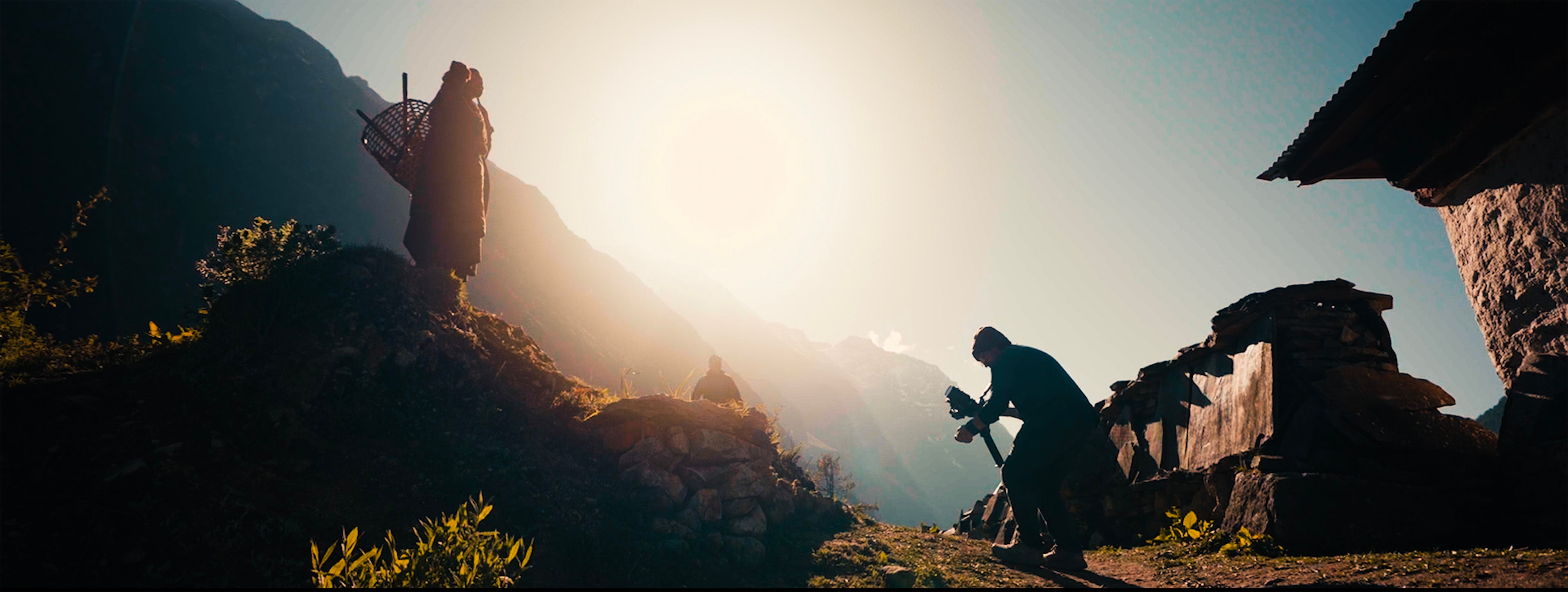
With the FX5, Edwards returned to locations in Cambodia, Nepal, and Thailand used in The Creator to not only capture visually striking scenes, but also to compare his previous experience to the new camera.
For one week, Edwards and his small team braved temperatures as high as 95°F and as low as 23°F as they trekked through the Himalayas, ancient temples, and modern cities carrying only three bags. Anything that wasn’t critical would be left behind. One bag carried the FX5, one a small dolly and slider, and another camera accessories.
“I got [the FX5] in my hands about a week before we were shooting, so we had to turn it around really fast, and I wanted to go somewhere really nice in the world,” Edwards said. “I knew from The Creator, because we had looked around the whole of Southeast Asia for that movie, if I had a gun on my head and someone said you've got a day or so to shoot loads of great images, where would you go? I'd immediately say Kathmandu in Nepal and then a close second Cambodia.”
Pushing the Boundaries of Creativity
Having worked extensively on The Creator with the FX3, Edwards brought his previous workflow to the FX5. With the new WiFi and RAW capabilities, the director was able to streamline the camera workflow even further, removing any external monitors or recorders, letting the camera, gimbal, and his 2x vintage anamorphic lens do all of the work.
By using the MagSafe on the back of an iPhone, Edwards used the smartphone as an external monitor that he could magnetize to his gimbal or wrist and keep his focus on the composition.
“[The iPhone] is so bright and the battery is so good, it’s better than any five-inch field monitor you could get,” Edwards said. “And because of the magnets…I could use it on the gimbal and quickly pull it off and put it on. I also had a little magnet on my wrist, and I could wear it like a watch if I was holding the gimbal low or I was doing something awkward. And that was all being sent through the Wi-Fi from the camera, so you don't need a transmitter, necessarily.”
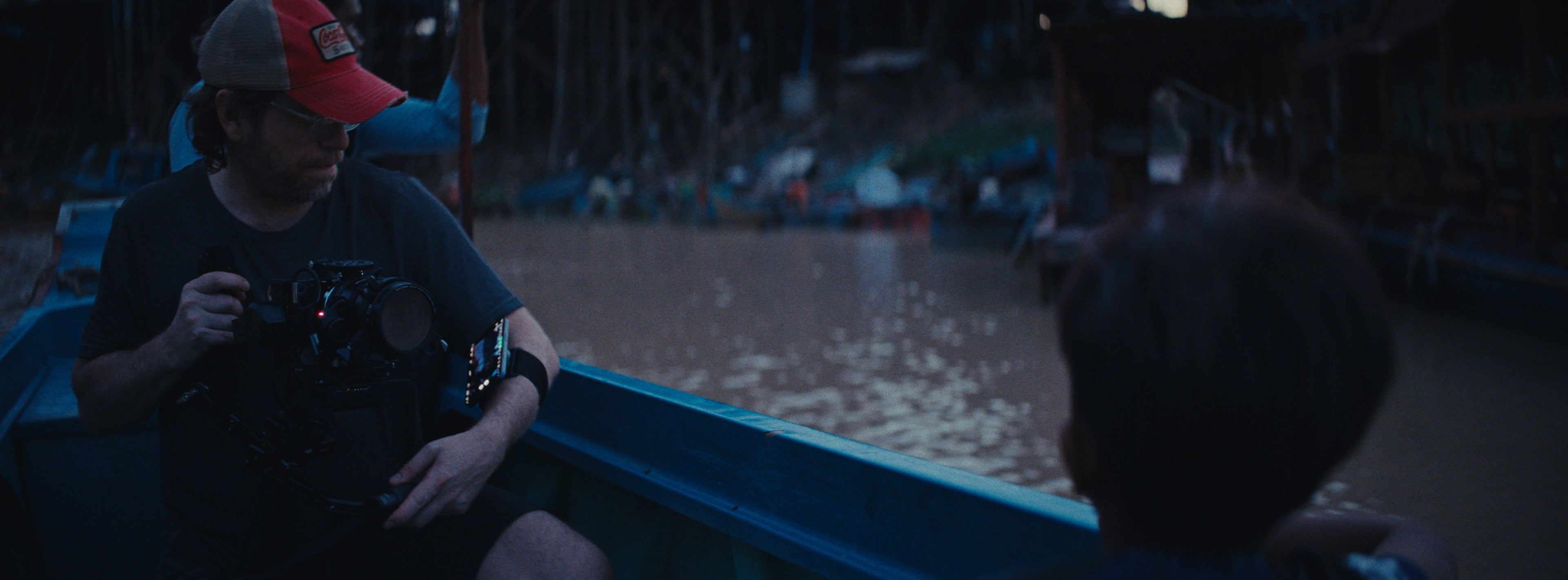
As a filmmaker, Edwards is all about removing information and being selective, so resolution isn’t often a critical component of his visual language. It’s about seeing the whole world but cutting out only the most important information for his story. However, the 5K resolution of the FX5 and its X-OCN LT codec offered a unique perspective to the imagery he captured in Southeast Asia.
“What was super interesting is, when I came back, I started to appreciate having a lot of information, and what it can do, which is firstly, my exposures didn't need to be that great,” Edwards said. “You can be quite out, and in post, slide it back to what you want. And the same with the color science. There’s enough color in there that we could get really nice skin tones. And when I did the grade, I didn't do any power windows. What you see is exactly what came out of the camera. All the colors and everything, we didn't skew anything, we didn't key anything. It’s all as it comes to you with this LUT on it.”
“I was also using a Japanese vintage 2x anamorphic lens because I just love the look and it can fit on a gimbal,” Edwards continued. “It's got this beautiful character about it, and it does all those things I love about Panavision lenses. It's like a classical painting where it's just suggestive in a lot of places.”
“But then what's great is when you finally get the focus, you get that person's face; it's in 5K. It's just really crisp, but then the rest of the bit has a much more painterly feeling.”
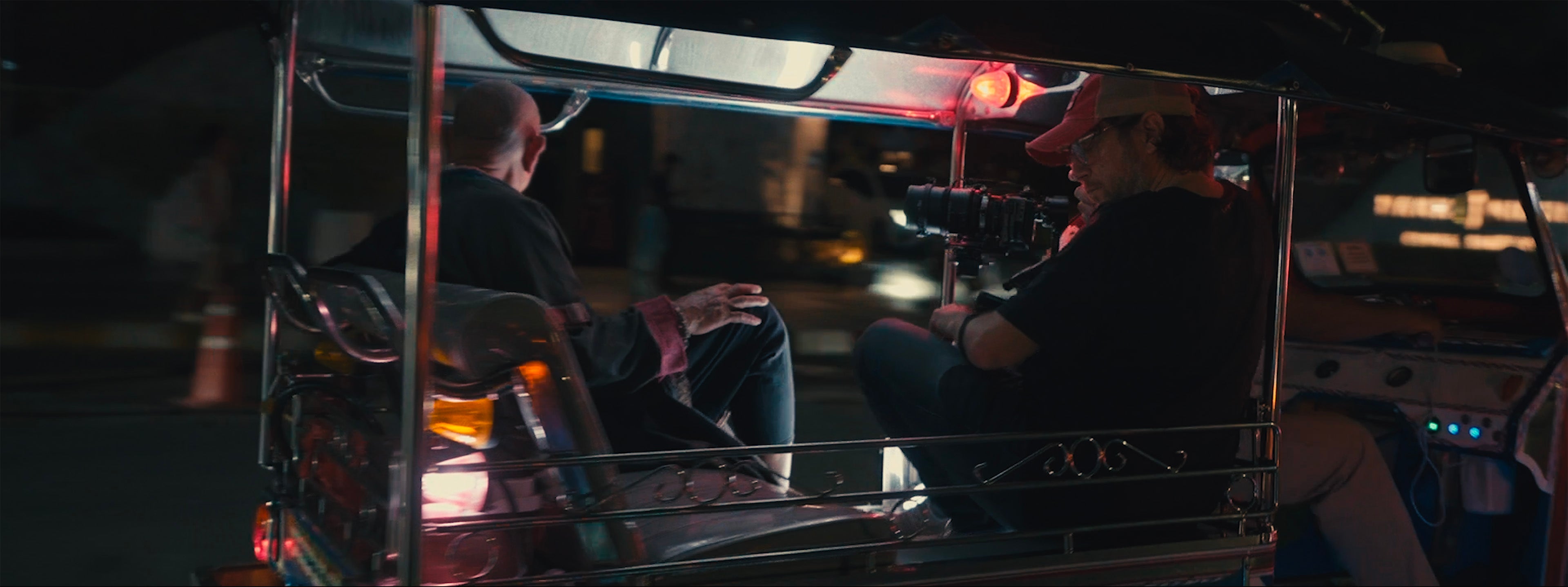
With only the camera and a gimbal, Edwards relied only on available light, using one INKEE Gold Crow Air 30C to accentuate his compositions. Here, the three base ISO settings offered by the FX5 were paired with a variable ND filter to capture the bright midday sun and extend the colors of magic hour.
"The best light in the day starts happening as the sun is going down. And essentially, if I could see it with my eye, I knew the camera could see it. It was pretty much doing what your natural eye does in dark conditions,” Edwards shared. “And so you can just keep going and going and get all these magical, happy accidents that without it, you just can’t. I can't go back from ISO 12,800. I’m just not interested in cameras that can't do it now.”
“And as a soft little light where you just need to see the face now and again, [the Gold Crow Air 30C] was beautiful. When [the FX5] was at ISO 12,800, I found myself dimming it to like 2%. You needed so little to see it. The 12,800 is a big improvement on this camera over the FX3. When I put it to 12,800 on this, it'd be hard to know sometimes because it wasn't that grainy.”
The addition of ISO 4000 further let Edwards stay in the moment to capture those unrepeatable shots. Without having to stop to remove filters or change settings, he could shoot exteriors and interiors on one ISO setting.
“When [Sony] said they had ISO 4000 as a new base, basically, what it meant is I could have a variable ND on the camera, I can go out in bright sunlight, get a perfect exposure in middle of the day sunlight, and then go inside a house, just change the variable ND, and be able to film keep filming without having to unscrew and take everything off,” Edwards explained. "I basically ended up at ISO 4000 throughout the whole day, and then just as magic hour was happening, I would just put it to ISO 12,800 because I knew this was going to be our little moment of all these beautiful images.”
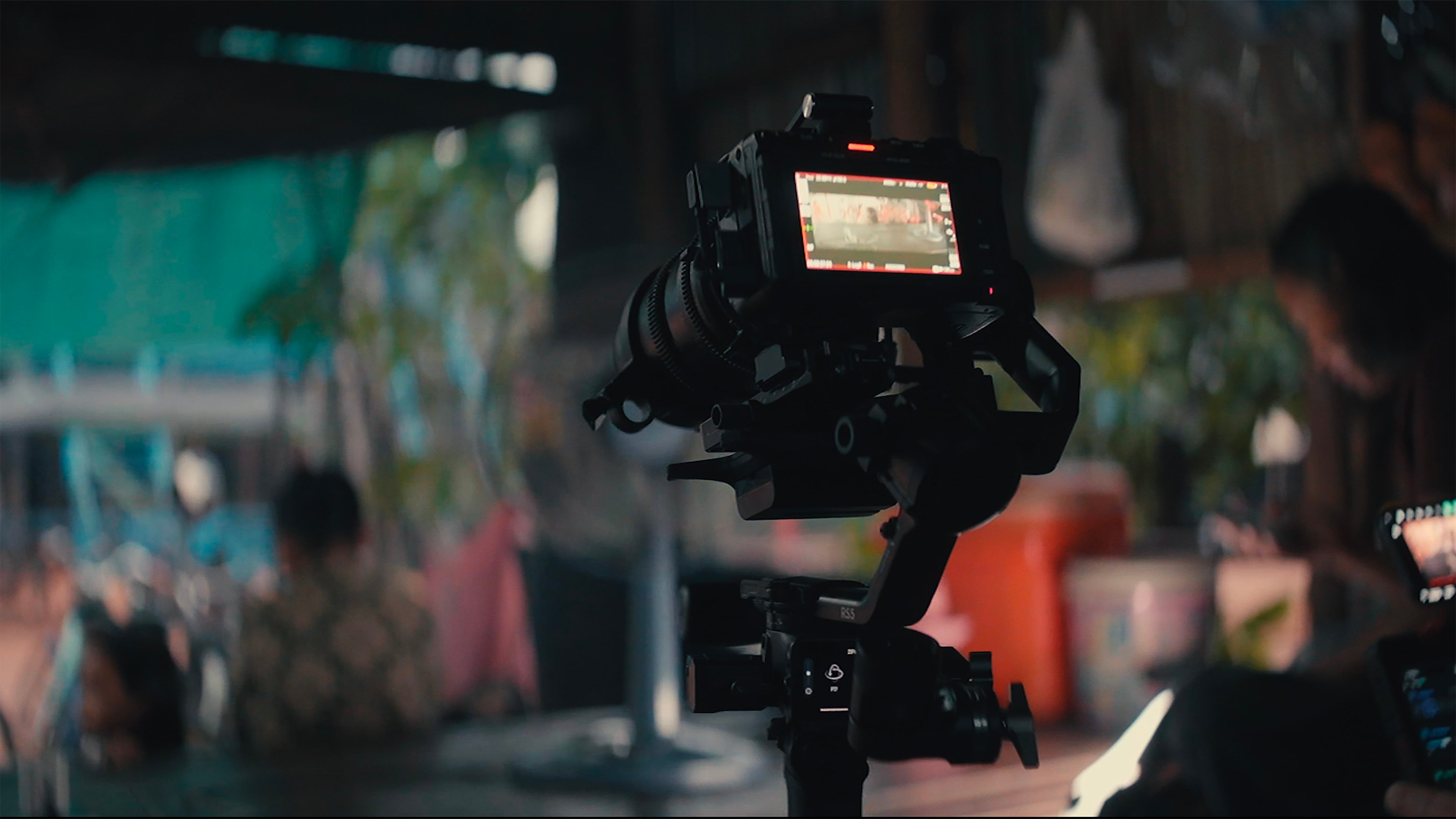
Bringing a Cinema Camera into Unlikely Places
From Monsters to The Creator, Edwards is in constant search for compositions that are difficult to stage. This approach to picking up a camera and trying things, just to see what he can capture, is often at odds with studio cinema cameras with RAW capabilities, as they draw attention and can be cumbersome to use with a small crew.
“I feel like I do my best work when I'm left alone a lot more and I can fail,” Edwards said. “And so I really enjoy just picking up the camera and going somewhere and trying things. That freedom and the excitement of when something you didn't plan starts to happen.”
“I feel like what you can do now with these new tools is capture even more cinematic shots, for instance, when using a gimbal,” Edwards continued. “What's great about the FX5 versus the FX3 and some of the other cameras is that I was powering the camera from the handle of the gimbal. I didn't need an extra V-mount battery somewhere. I didn't need a crazy rig like I had last time. I could hold it in one arm like a classic gimbal. I didn't need an extra big recording device. And so it all became a lot more tiny.”
“You hide in plain sight. You can be shooting for a movie that gets a theatrical release, but you just look like a tourist. I think it's going to open up lots of opportunities.”
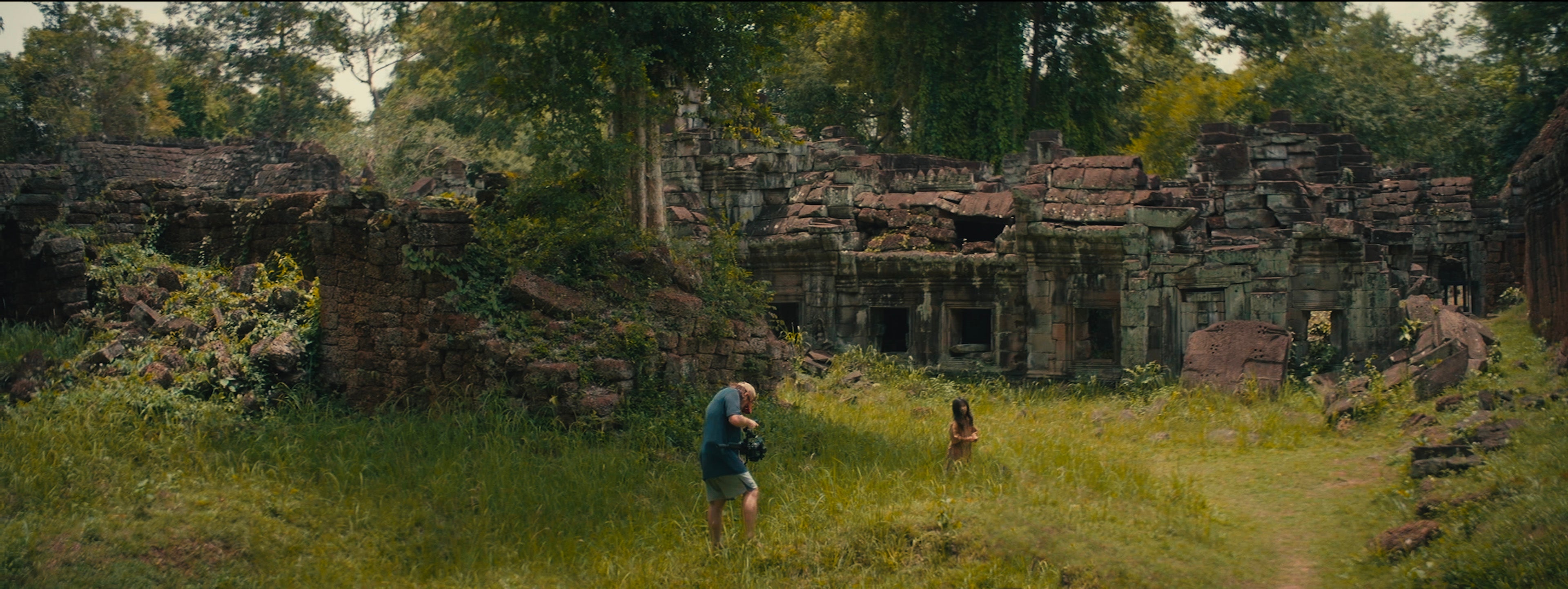
It was in the Himalayas that Edwards discovered such an opportunity. While exploring a mountain village, the sounds of a bell drew the small crew to a monastery where they were invited to observe a ceremony.
“Because it was just me and a tiny camera, nobody cared. I took my shoes off, and I went inside, and this Buddhist ceremony started taking place,” Edwards shared. “They were just in the midst of this thing, and I shot loads of different shots. It was one of those things where if we tried to organize that, or got permission properly, the way things normally unfold, it would have been such a big deal and an expense and a lot of red tape.”
“But because we look so non-intrusive. It didn't cause a problem,” Edwards added. “I really don't want to look like I'm making a movie. I want to look like I'm just passing through. Like, carry on with what you're doing. Because that's when you get the really naturalistic behavior, and you get permission to walk into places and do things that you wouldn't otherwise have got so easily."
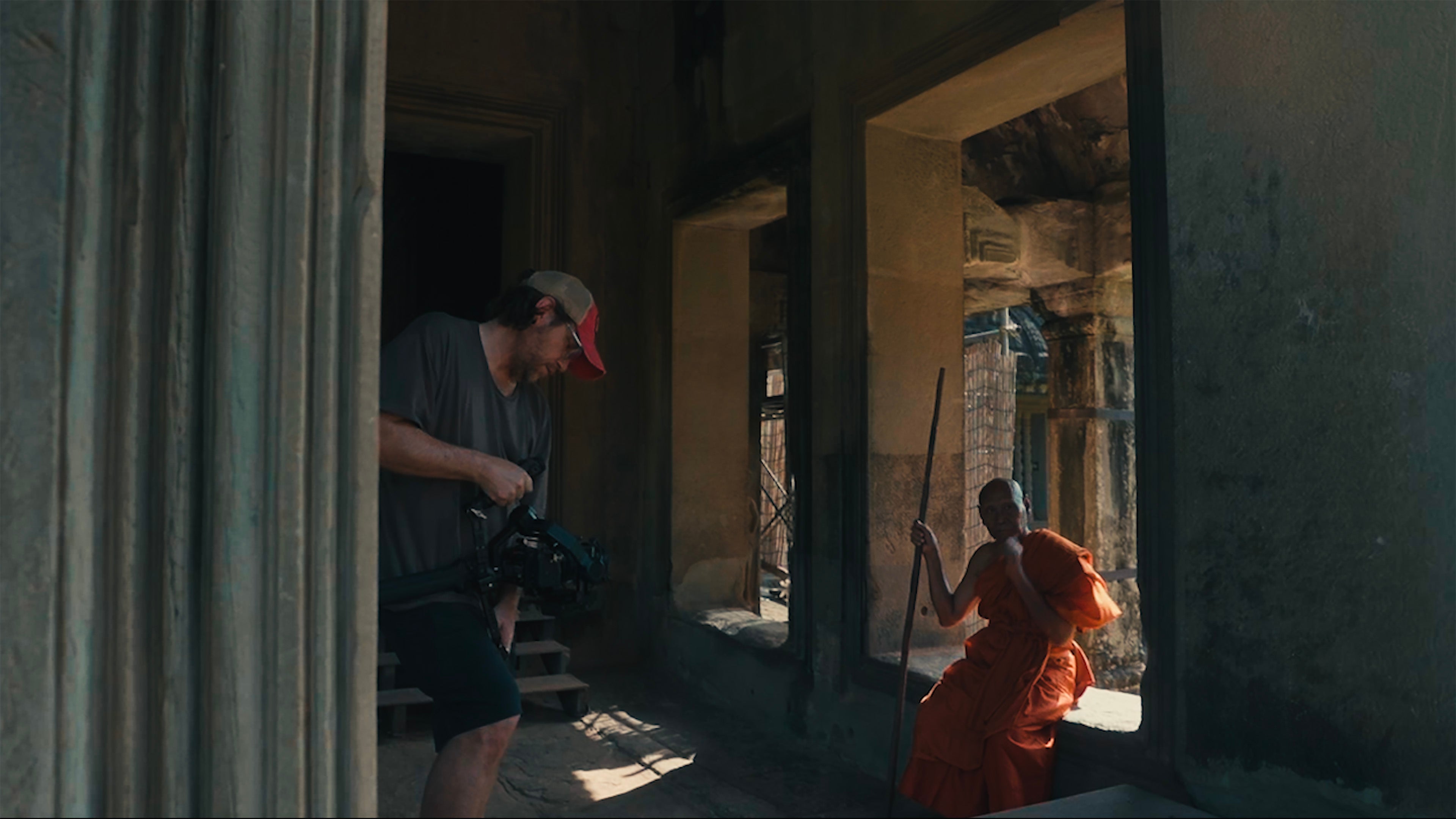
With the small footprint of the FX5, Edwards could capture the unrepeatable moments he’s constantly searching for in a quality that meets the standard of high-end productions, all while maintaining a minimal presence.
“You can just hold [the FX5] all day, and it looks like proper cinema film. I don't feel compromised. When I look at these images at Photokem on the proper big screen, I feel they are up there with any other camera I’ve ever used,” Edwards said. “Then when you add to that how light it is, plus it can shoot at ISO 12,800, which a lot of these cameras can't do.”
“I just think the colors and the quality of the resolution, and it's such a tiny package, it is like holding a cinema camera in your hand.”
Carrying Millions of People
After a week revisiting the locations of The Creator, Edwards discovered that the FX5 offered the freedom of the FX3 and the production quality of a flagship cinema camera. For the director, every composition comes with a heavy responsibility to the audience, and a tool that gets Edwards closer to building those crucial connections with his audience becomes a critical creative partner.
“Sometimes, on other films, I've always felt like there are little moments in the middle of a shot where you're holding the camera, and you think to yourself, a year from now, this is going to get a major theatrical release around the whole world,” Edwards said. “And you could argue that hundreds of thousands or millions of people are going to see this. And it creates this really strange feeling where you go, 'I am carrying millions of people right now. In this shot, I'm holding them.’ It gives you such a buzz.”
“And to feel like, in such a small camera, to have that same feeling, where there's no weight to it, it feels like a TARDIS. It feels like there's so much going on inside for how small it is. It shouldn’t be impossible. The FX5 should have a massive silhouette for what it's delivering.”
To learn more about the how the FX5 can support filmmakers, explore the videos on our YouTube channel.


