08-25-2026 - Interviews & Behind The Scenes
Sony FX5 Takes a Vintage Anamorphic Look Into the Night for Alex Warren’s “Rescuer”
By: Yaroslav Altunin
Grammy-nominated singer-songwriter Alex Warren has lived an incredible life of highs and lows, from social media fame and brief moments of homelessness to signing a deal with Atlantic Records and reaching the Billboard Hot 100. Throughout this adventure, his love story with his now-wife, Kouvr Annon, inspired several songs, including his most recent release titled “Rescuer,” which accumulated over 12 million views on YouTube over a span of 12 days.
For the music video of “Rescuer,” director Andrew Donoho and long-time collaborator DP Idan Menin — one of American Cinematographer’s 2026 Rising Stars of Cinematography — joined forces to craft a cinematic love story inspired by the look of Barry Lyndon and Atonement. To achieve the night sequences based on those looks in just one day, Menin paired the Sony VENICE 2 with the Sony FX5 to use anamorphic lenses in the dead of night.
Sony Cine sat down with Menin to explore the challenges of shooting with anamorphic lenses at night, how he achieved the dreamy look of his references, and how the FX5 gave him the flexibility to do more with less.
Discovering the Look of “Rescuer”
When working on music videos, Donoho looks to the tone of the music and the lyrics to build the visual look, and “Rescuer,” which is based on the story of how Warren met Annon while he was unhoused, offered a lot of story to explore.
“Andrew is the kind of director, especially in the music video space, where he draws a lot from the songs,” Menin said. “He tries to really tie it back to the story that the song is trying to tell. And for “Rescuer,” this is a very personal song to Alex [Warren]. It is literally the love story of him and his wife. And in our approach to it, we were very conscientious of hearkening back to that true story.”
“The video seeks to balance romance and sentimentality, while gently satirizing high-society aesthetics — the pomp and exclusivity of masquerade balls.”
“Rescuer” even includes visual moments, such as the flower arrangement on the bridge, pulled from real-life moments from Warren and Annon’s wedding. But to elevate this story, Donoho and Menin looked to the films that inspired them early in their career.
“When [Donoho] first came to me, he sent me this awesome creative deck that broke down the concept of the video,” Menin said. “Andrew is a very visual director, and so he had a really strong idea of the mood and the style that we were going for and a lot of the references. We harkened back to a more classical cinematography and lighting approach that I grew up on and really loved when I was beginning to digest and consume films.”
“A lot of the references he shared with me were from Barry Lyndon, and I shared a bunch of stuff from Atonement, which was one of my favorite looking movies and also just like an incredible love story,” Menin continued. “It became very apparent that we were going for longer lenses and painterly, impressionistic feelings.”
With the creative look set, the next challenge proved to be logistical. Donoho and Menin had grand ambitions for the visual language, but with only one day to shoot, the duo were limited in how much they could achieve in such a short timeline. It was here that their toolkit allowed them to be efficient with their setups, especially at night.
Night Cinematography With the FX5
While the day sequences were shot on the Sony VENICE 2, Menin had to find a way to translate their established aesthetics and visual language to night. However, the remote location provided little to no light.
"The logistical challenge of this project was we had this night exterior,” Menin said. “The dream was to get these big wides that you see in the video, and at nighttime, that can mean a big crew, getting giant condors and lights that need generators and tons of cable. You have to shoot one way, and then when you turn around, it’s a huge reset. All these were things that we simply couldn’t fit in.”
“Both Andrew and I are ambitious people, but we didn't want to just scale everything down to fit the resources, the labor, and the equipment that we had.”
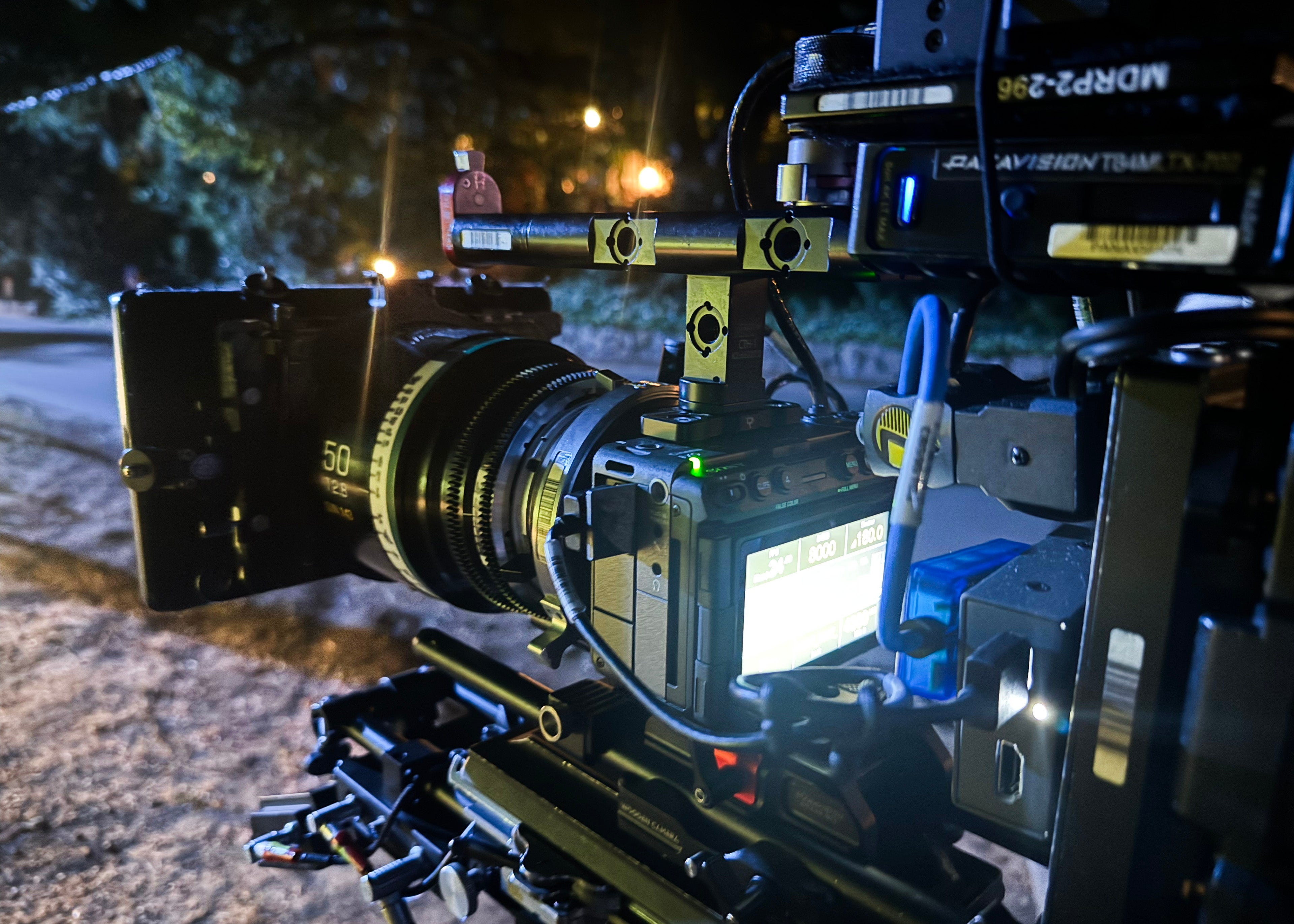
Menin is a cinematographer who isn’t afraid to push a sensor. Still, with limited lighting at his disposal, and his choice to shoot on 1.3x anamorphic Panavision Ultra Panatar II lenses, there wasn’t a camera that could support his needs.
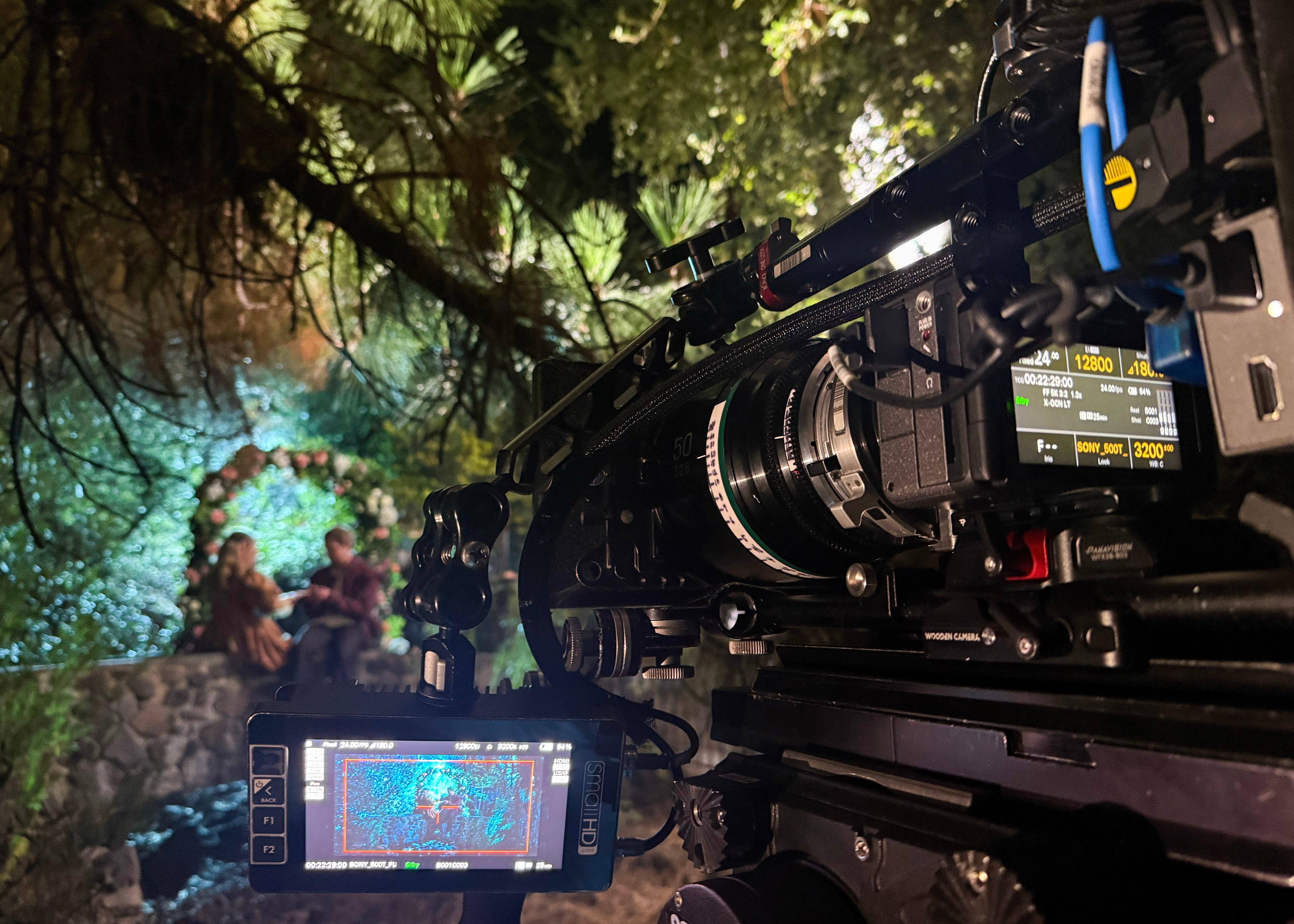
“[At the time] Sony was doing its [FX5 reveal] event at IMAX with Gareth [Edwards], and I brought the director, Andrew, with me,” Menin said. “We were able to see the FX5 footage on an IMAX screen, and that told us everything we needed to know. The fact that with the internal [X-OCN LT codec], with the caliber of this new sensor, it's on an IMAX screen and it looks great and it's holding up, that instilled a lot of confidence in us to really push forward with this plan to shoot the entire night half on that [FX5] body.”
"And I'm glad we did because our resources went so much further and suddenly we could do these big washes of beautiful blue cinematic moonlight.”
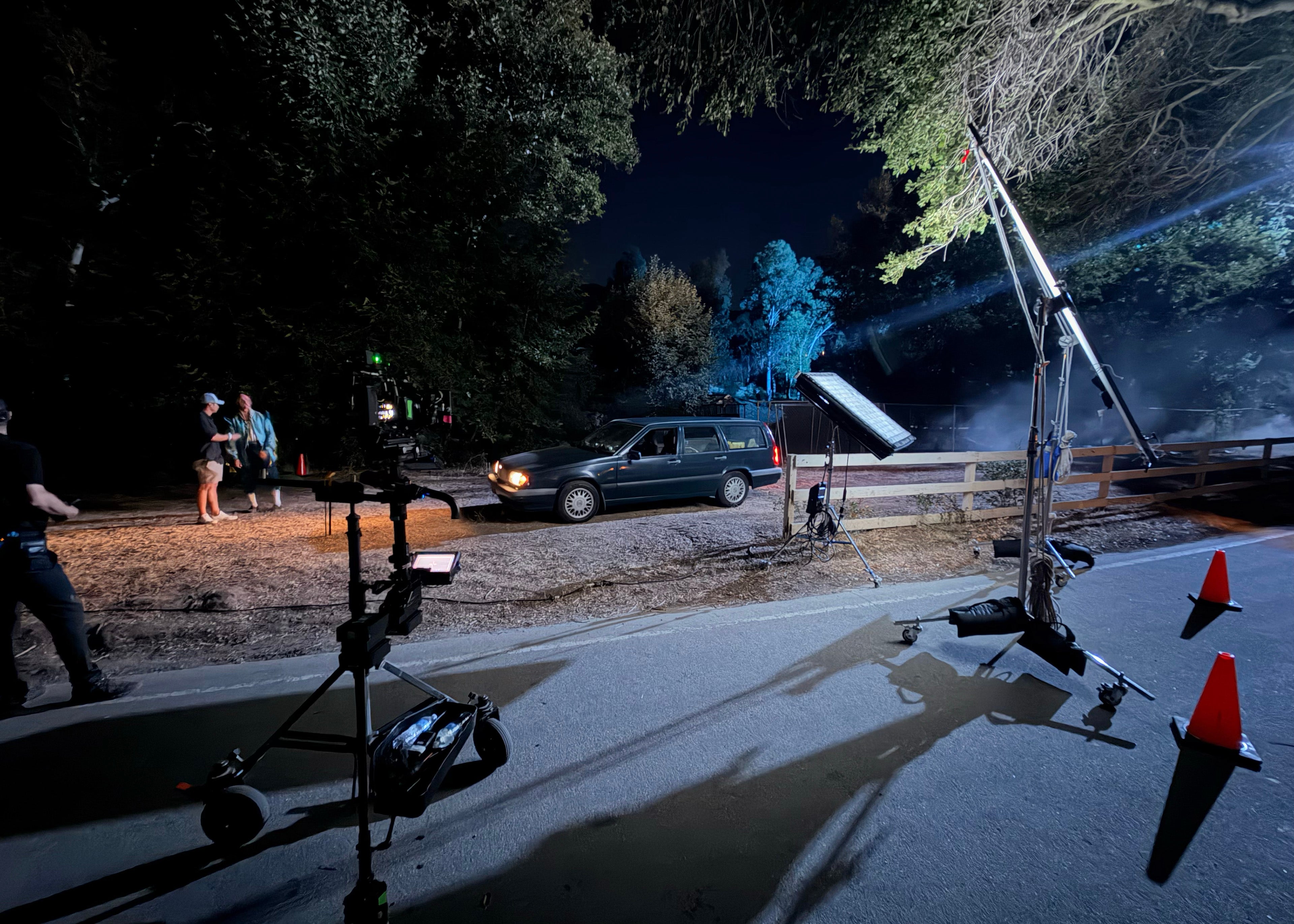
With only one summer day to shoot everything, and only four to five hours for the night scenes, the Sony FX5 gave Menin a clean image at ISO 12800, even when shooting on anamorphic lenses.
"I knew that to get to where we wanted to be, because the street was a desolate, dark desert road, we had to build [our lighting] from the ground up,” Menin said. “But even with pushing the other camera sensors as far as I have, to ISO 3200 and ISO 6400, I knew it wasn't quite going to get us to the place we needed to be. We also had to factor in this classic night lighting, this more romantic style with big moonlight washes, and even though they're still dark, they have a heightened feeling.”
“We had a Creamsource SpaceX, which is less than 20 amps, and it sat three to four blocks away behind a tree, parked in a large scissor lift with just a stinger dropping down to a suitcase generator,” Menin added. “We were able to accomplish something that normally would require so many more resources, and I think it looks great.”
Menin was further supported by the FX5's internal X-OCN codec, which the FX3 doesn’t offer, allowing the new camera to fit into the image pipeline without additional adjustments.
"Without question, the greatest upgrade here is this internal RAW codec. Having internal [X-OCN] recording provides an incredible amount of confidence,” Menin said. “And then there's an extended latitude and a cleaner signal. From my impression, ISO 12800 is cleaner, which is really impressive. It integrates really seamlessly, and for me, the only differences that I'm seeing between the [FX5] and a full-size body are the convenience factors of Genlock, SDI, and other recording formats.”
“And being able to do higher frame rates while still recording internally in X-OCN, especially for a music video, is essential.”
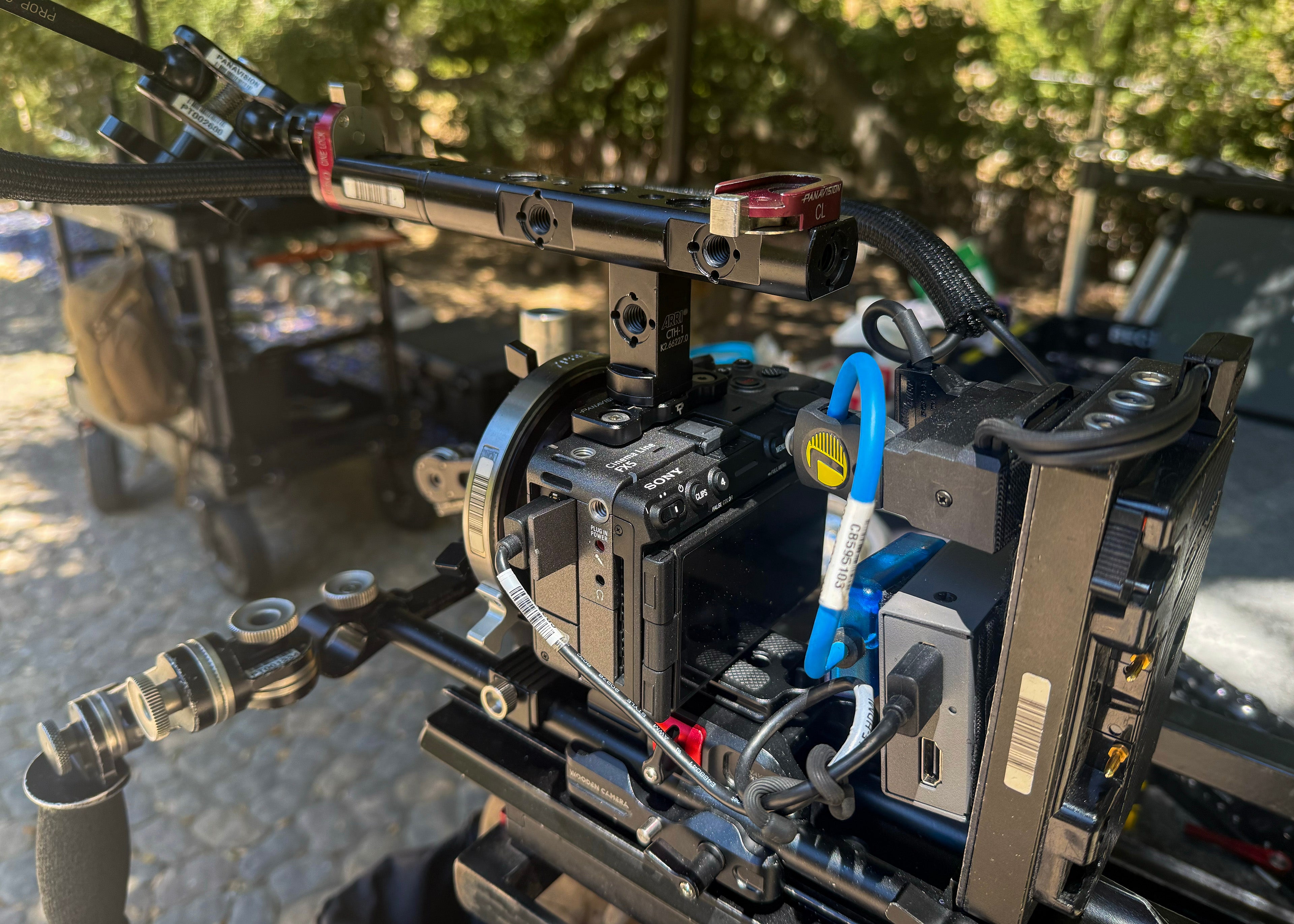
Beyond its high sensitivity and internal RAW, the FX5 gave Menin the option to shoot Open Gate in 5K. When paired with 1.3x anamorphic lenses, the 3:2 aspect ratio delivered a 16:9 frame.
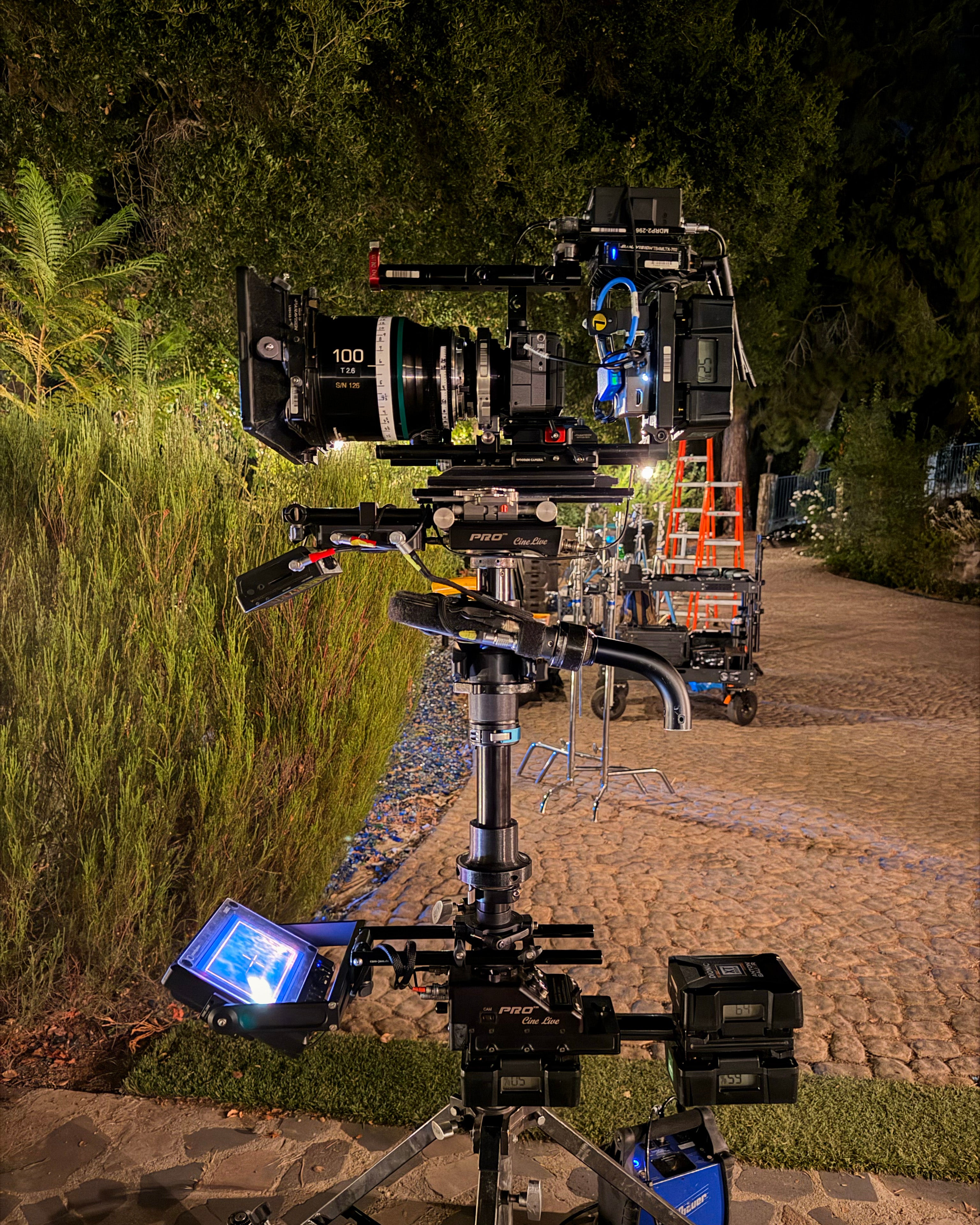
“For this project, we shot on the Panavision Ultra Panatar II [lenses]. Those are 1.3x anamorphics, so they were able to give us a 16:9 frame, which we were really excited about because we were trying to go for a classical, painterly effect,” Menin said. “When I think of Impressionism and the style of that sort of painting, the way anamorphic breaks apart the background feels more like a painting to me. And then we took it a step further and put a TrueNet filter in front of the lens.”
“If I could find a way to get the Dior #10, like, the original black stockings that are not nylon but silk, it would have been that because that's been the grail I've been chasing for a long time.”
These lenses were also de-tuned, which provided a more aggressive fall-off on the edges. With the FX5 and its high sensitivity, Menin could bring this look into the night sequences without the added burden of increased lighting.
"I think that had I not been able to shoot confidently at such a high ISO, I would have gone the route of spherical faster lenses. And I really love that I can say I shot anamorphic at night with very limited resources,” Menin said. “Because frankly, we would have ended up on Panavision Ultra Speeds, wide open at a T1.4, but we were able to shoot at a T2.8, T2.8 and a half for all of it.”
“It is a unique experience lighting at that high of a Base ISO. There are many moments where if you look at it with your eye, it's brighter on the monitor, and that’s a surreal experience. You see so much more in the shadows than your normal eye would.”
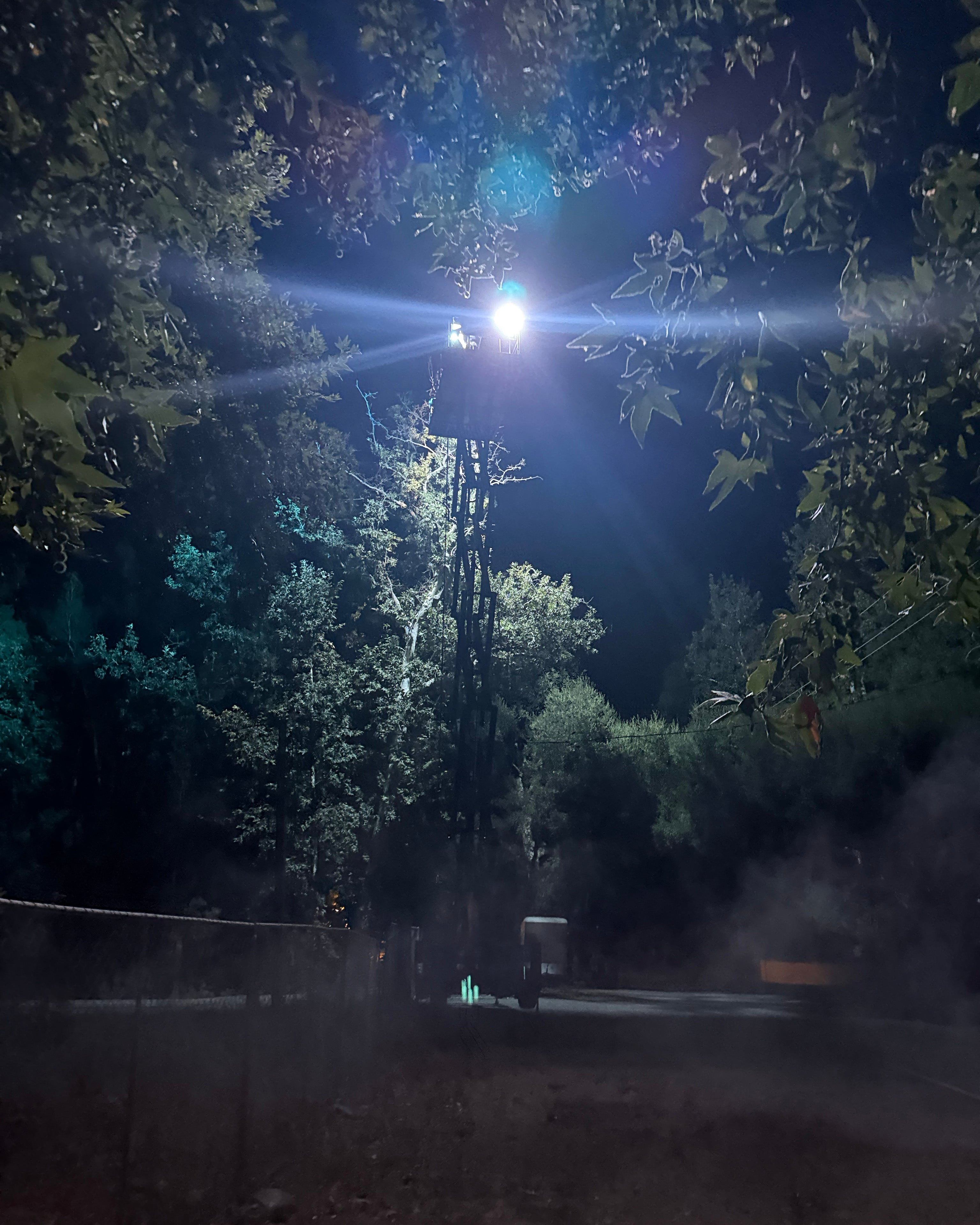
This increased sensitivity also shifted how Menin and his gaffer approached a scene. With the FX5 seeing so much more than the human eye can, they could move lighting and bounce farther away, leaving more room for camera movement and blocking.
“It’s also an adjustment in terms of planning. My gaffer, Jacob Abrams, to his credit, was concerned we wouldn't have enough light, and so we had other things ready to go. There's a bit of a shift from after you work with [the FX5] a few times, of the kind of unit that you're going to call for. And the coolest part was how far away you can put the light from set. That is such a boon to be able to create the same quality of light but further away."
“Being able to just walk a bounce frame further away from set than you would normally, so that it actually falls off really nicely, and you and the camera and the talent can actually move around and not suddenly get two stops brighter by the end of the shot, these are incredible things that projects at this scale maybe aren't normally accustomed to having,” Menin added. “You're still lighting the frame and still making all the same creative and logistical choices, and you’re still dealing with resources and limitations, but you're just achieving more.”
From Prep to Production
Even though Menin only used the FX5 for the night scenes, the experience has opened the cinematographer to new possibilities, not only for production, but also for the moments during prep. The FX5 started to feel like a tool that could live with him for the entirety of a production and even for moments beyond.
“I'm excited for my next feature because I see this camera as something that can follow me through prep into production,” Menin said. “The idea that I can have something that can make an incredible image, that is both a prep scouting tool with an EVF — because I'm a big EVF person — one that I can use for getting references, shot listing, location, light studies, and it's at that price point, and at that form factor that I can use it beyond set. That is really exciting.”
"The monitor is fantastic because in those scenarios, we wouldn't need all this other stuff on it. You can just take it out and get ahead of things in prep and then bring it into the actual shoot and use it for whatever your heart desires.”
Check out “Rescuer” by Alex Warren to see Menin’s cinematography with the FX5 and VENICE 2. To learn more about the other cameras in the Sony Cinema Line, visit our Camera Comparison Chart.


