10-08-2026 - Interviews & Behind The Scenes
DP Bradford Lipson and VENICE 2 Capture Music Festival Chaos for “Rolling Loud: The Movie”
By: Yaroslav Altunin
For over a decade, Rolling Loud has taken the hip-hop genre all over the globe, making it one of the biggest music festivals in the world, according to Complex. Tens of thousands attend the multi-day events, with Rolling Loud Miami 2024 bringing in an estimated 200,000 hip-hop lovers. It was in one such crowd that director Jeremy Garelick had an experience that would lead him to make Rolling Loud: The Movie.
To capture the film, Garelick brought on ASC Award-winning cinematographer and longtime collaborator Bradford Lipson (In The Dark, The Wedding Ringer), who had the monumental task of overseeing a seemingly impossible production schedule. Using the Sony VENICE 2, Lipson brought together a creative team at the top of their field, weaving together footage shot on sets, volume stages, and even at Rolling Loud in Miami in 2024.
Sony Cine sat down with Lipson to chat about the film, where we learned how volume work set the foundation to make the film a reality, how the team managed to shoot around 200,000 concert attendees, and how the Sony VENICE 2 united the film across three different production styles.
Rolling Loud LA, Where It All Began
The story of Rolling Loud: The Movie follows an overprotective father, played by Owen Wilson, who sneaks his 13-year-old son into the music festival and loses him in the process. The idea for the film came from the time Garelick took his own son to Rolling Loud and, much like the film, lost him in the crowd.
“I happened to be at NAB and read the script that evening,” Lipson said. “The next day, I was walking the show floor when I came upon the Kino Flo booth, where Frieder [Hochheim] had two MIMIK walls and a wall of MIMIKs suspended overhead. They had created a virtual Ferris wheel setup with a pod you could sit in and a moving plate behind it.”
“Right away, I thought it had real potential for us. I recorded the setup from several angles on my phone and sent the clips to Jeremy.”
In the script, an important moment occurs on a Ferris wheel, where Wilson’s character gets tangled in a situation that required a fair bit of stunt work. But after Lipson introduced Garelick to the volume, the film finally became a reality they could tackle. Even so, the idea was big, which required control over every element while also feeling like nothing was in control.
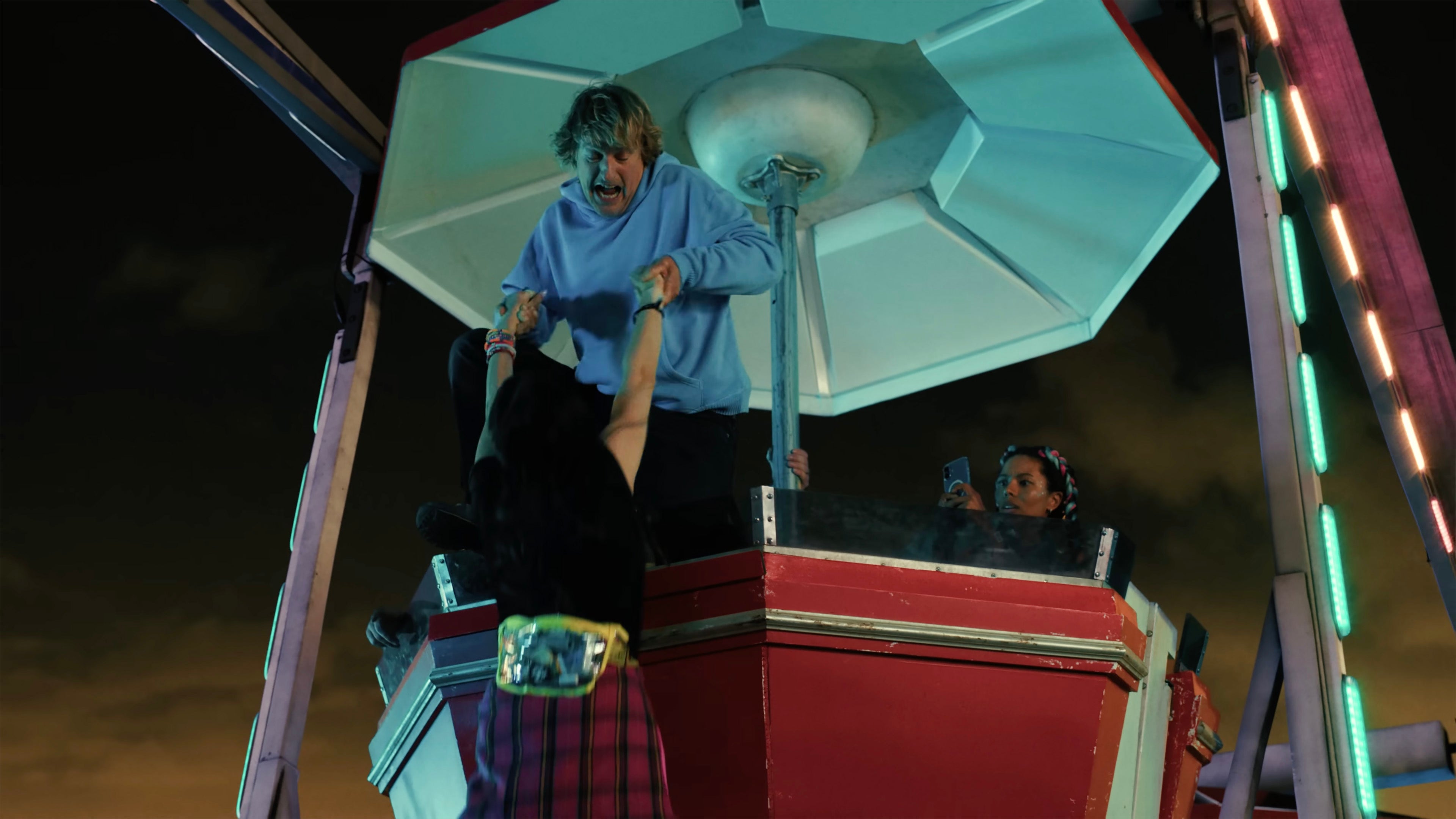
Ferris wheel scene shot on the Lux Stage volume at Trilith Studios
“Once [Garelick] saw the volume, he understood its potential to place the actors safely in an environment while still giving [the film] the scale it required,” Lipson said. “From there, I connected Jeremy with Sam Nicholson of Stargate Studios, and we had a great discussion. Jeremy already had a visual effects supervisor, Matt Whelan, who had broken the script down in detail and created storyboards.”
“We all got together and decided — even before the movie was greenlit — to shoot plates at Rolling Loud in Los Angeles and experiment.”
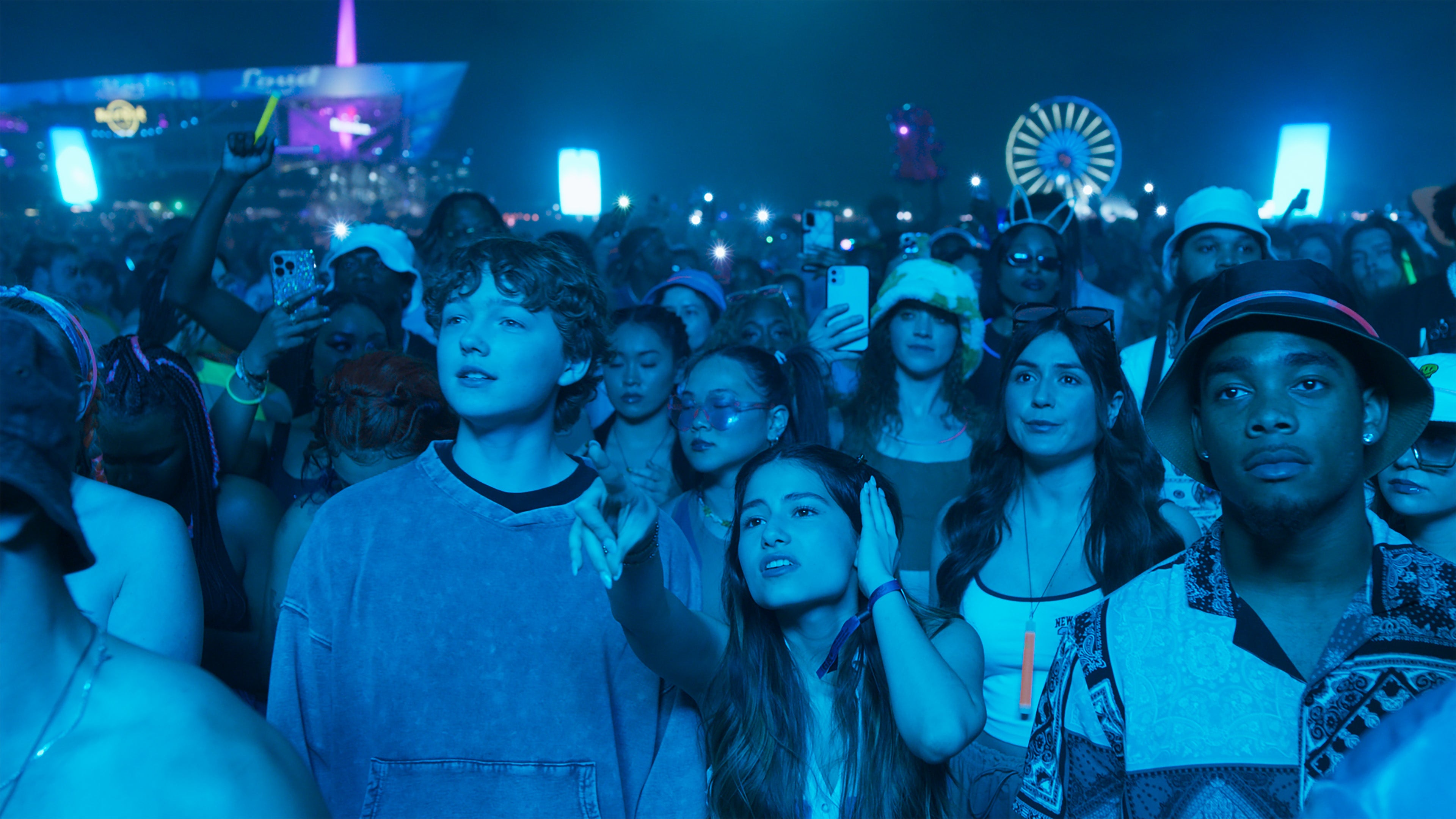
On location at Rolling Loud in Miami
At Rolling Loud 2024 in Los Angeles, the crew spent two days and two evenings shooting all around the festival using special camera arrays created by Stargate Studios. With support from the festival and Live Nation, Lipson and Garelick shot an incredible amount of footage before going onto the volume at Trilith Studios, whose Lux Stage offered a horseshoe-shaped volume stage that was 90’ by 80’ and nearly 30’ tall.
“Once we settled on where to shoot and discussed the approach, Jeremy and I went through the script scene by scene to define the visual energy,” Lipson said. “We wanted the beginning, before he goes to the concert, to feel calm. Even when he first arrives, there should still be a sense of calm, so we were careful not to inject too much energy or chaos too early.”
“When he loses his son, that’s when everything begins to unravel. We wanted the tension to build and build.”
The film builds its visual language with dollies and cinematic movement, before losing the heads and moving onto Steadicam, and finally switching to handheld for the remainder of the film. Each scene was color-coded and given parameters that allowed the story to escalate visually.
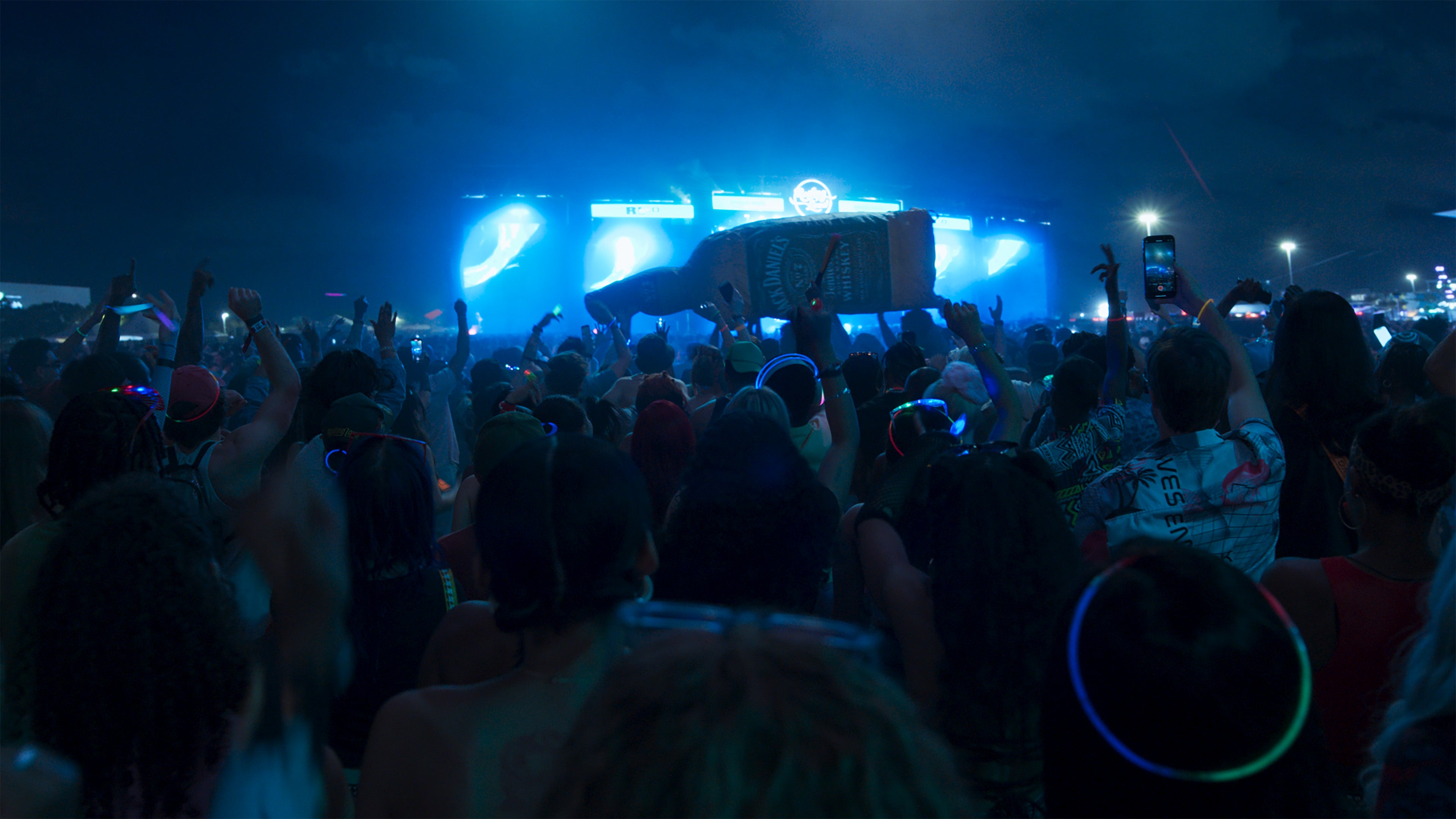
On location at Rolling Loud in Miami
“We also knew we absolutely had to take the actors to Rolling Loud in Miami,” Lipson said. “That presented a lot of logistical challenges. We had an amazing first AD, Mark Catone, who was phenomenal to work with. Jeremy, Catone, Matt Whelan, and I sat down together and mapped out how we could accomplish the shooting at Rolling Loud [in Miami].”
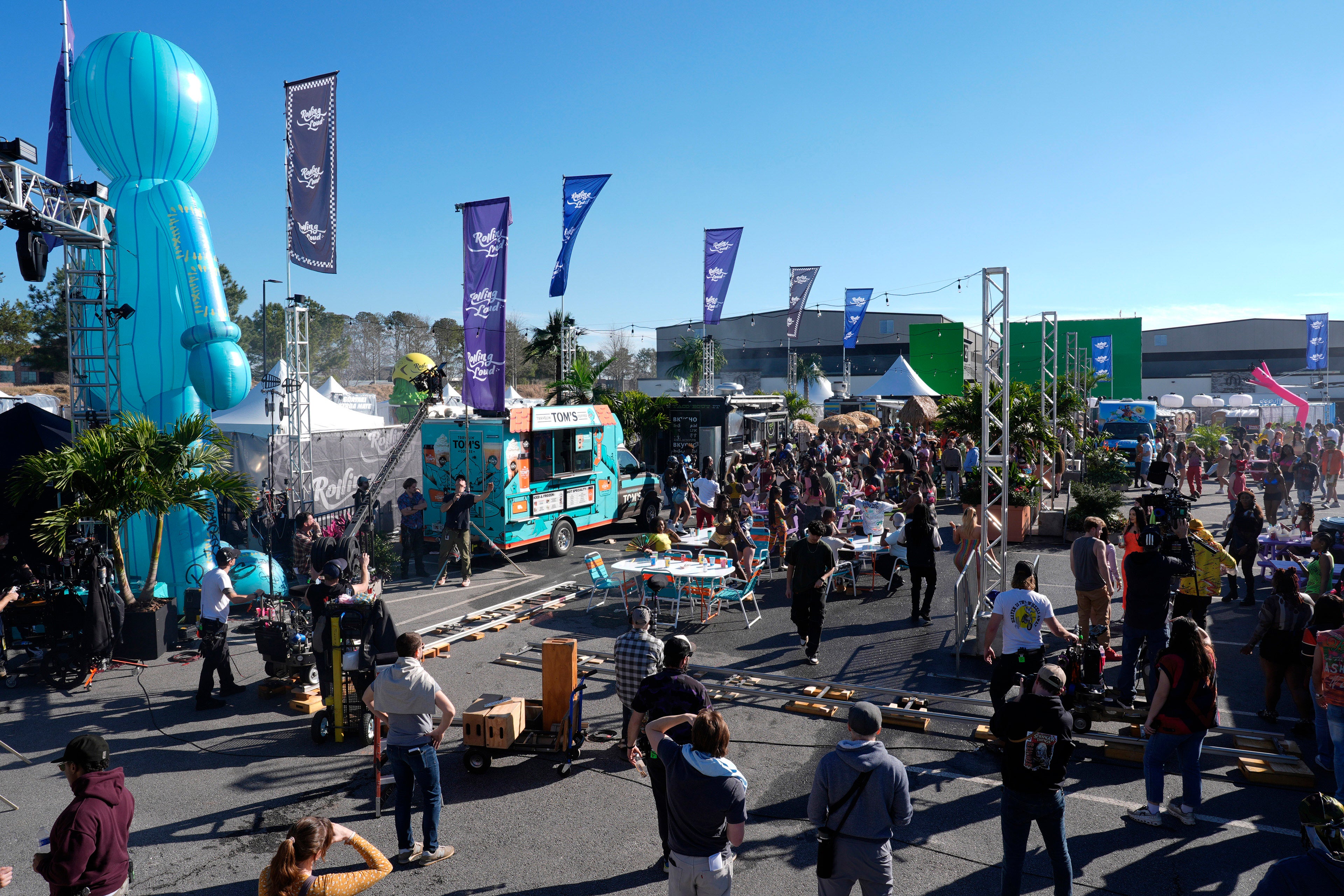
With continued support from the festival, the team was able to shoot after the festival had set up, but before it opened. Here, they shot part of the infamous Ferris wheel scene, among other scenes, which included hundreds of extras. When the festival was finally underway, Nicholson and Whelan created a massive schedule that allowed four crews with four camera arrays to travel across the grounds and capture footage that would later be used in the volume.
Meanwhile, Lipson had his own scenes to capture.
“We shot a lot of B-roll, and this is where the film takes on a documentary feel. We filmed Owen, Matt [Rife], Christine [Ko], and Christian Convery throughout Rolling Loud, both day and night,” Lipson said. “The danger was that it could easily feel like three different movies: the real festival, the virtual production work, and the section of Rolling Loud festival grounds that our amazing production designer, Kathrin Eder, built in the parking lot outside the volume stage at Trilith Studios.”
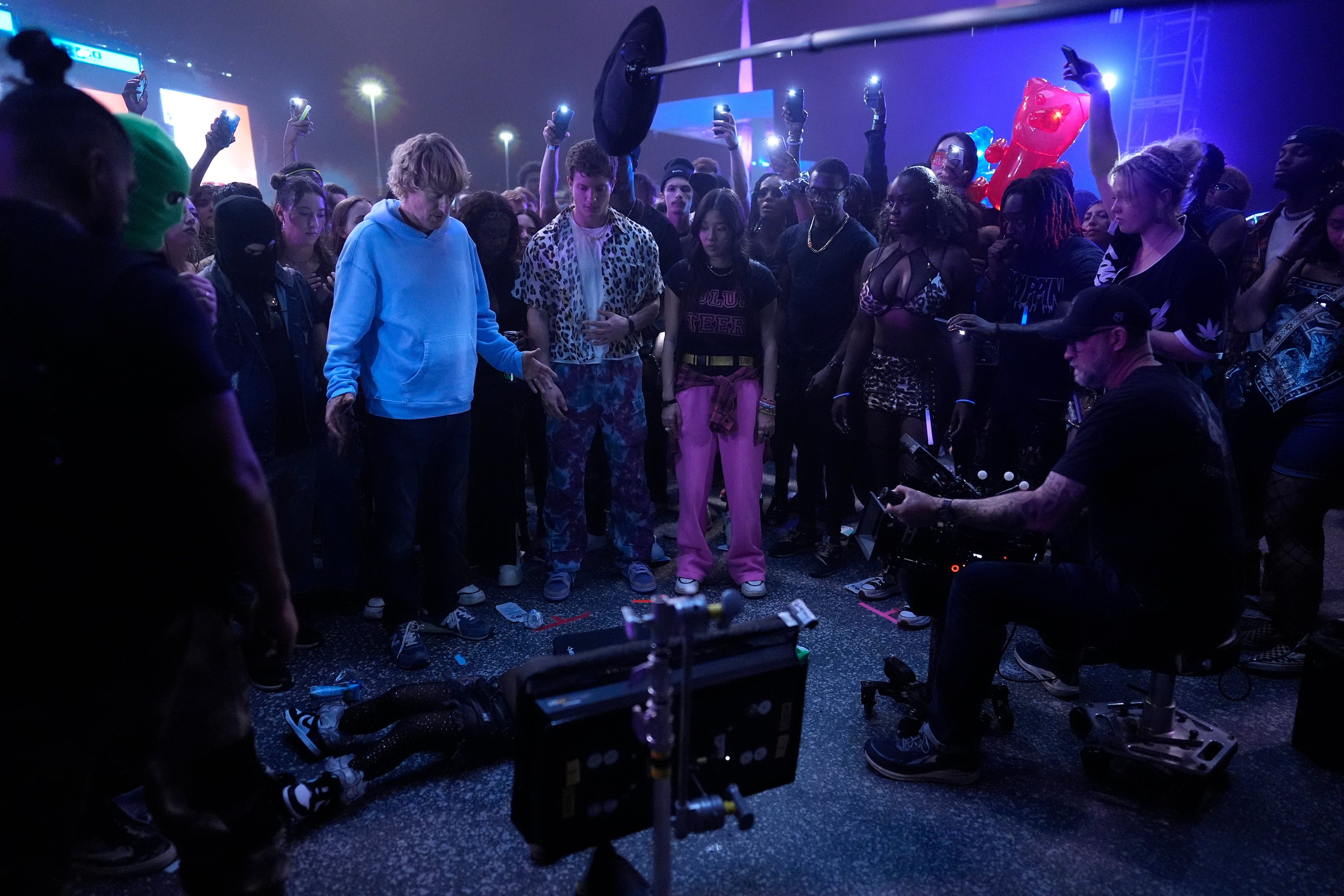
Volume work at Trilith Studios
Capturing The Chaos
This masterclass in coordination brought together footage from three different teams and a multitude of cameras, including the Sony VENICE 2 and the cameras used by the festival production team. At the core of this technical cornucopia was Lipson and the VENICE 2.
“I was very familiar with the Sony VENICE because I had shot a television series with those cameras,” Lipson said. “I often used the low-light mode and loved how beautiful and rich the textures and colors remained, even with very little light.”
“When I began thinking about shooting Rolling Loud—and remembered running around the Los Angeles festival with Jeremy while capturing plates—"I thought about all the very dark areas here.’”
By Lipson’s admission, he needed a workhorse camera that could provide gorgeous imagery and be able to shoot on the volume, on sets, and then capture a concert performance with lasers, bright spotlights, and giant LED screens.
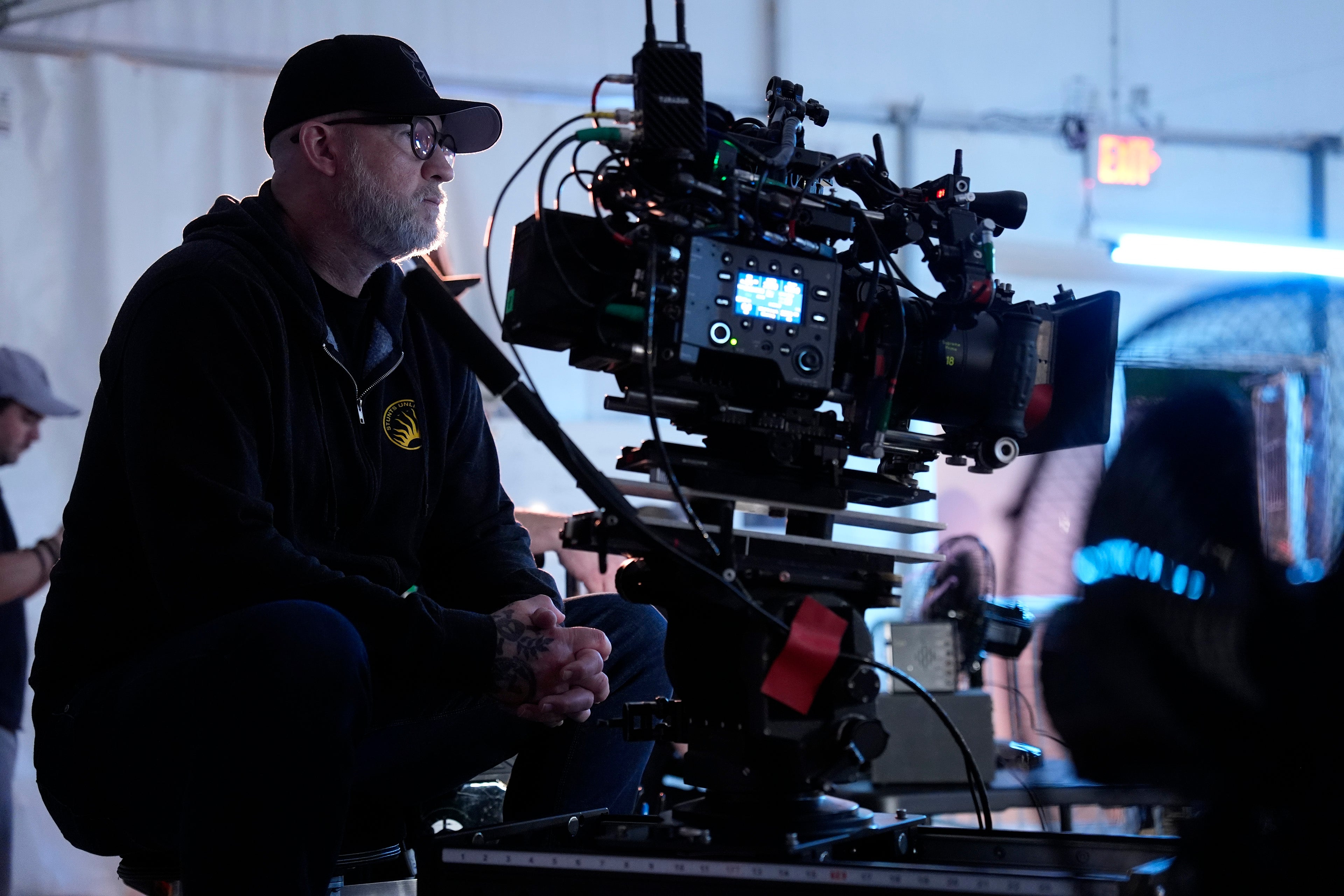
“For me, it was the natural choice. Sony’s color space and wide color gamut were a major attraction,” Lipson said. “I love how the camera handles color in low light without introducing noticeable noise. The colors feel rich and accurate. Blues were especially important, and they can go wrong very quickly. The Sony VENICE 2 renders them beautifully.”
“It was my security blanket. I knew I could go into Rolling Loud, capture what we needed, and trust that the footage would look great.”
For lensing, Lipson paired the VENICE 2 with Zeiss Supreme Prime Radiance. While he also used Fujinon Premista zooms for select shots, the Radiance primes were his main choice for the film.
“I knew a large portion [of the film]—about two-thirds of the story—would be handheld, so the camera package couldn’t be too heavy. We needed to stay light on our feet,” Lipson said. “I also wanted the lenses to flare in an interesting, beautiful way whenever we moved into lights or caught the sun. The flares needed to become part of the chaos, and the ZEISS Supreme Prime Radiance lenses gave us that.”
“I also loved that the daytime flares could feel warm from the sun, while at night we could switch to the other Radiance [lenses] for cooler, bluer flares.”
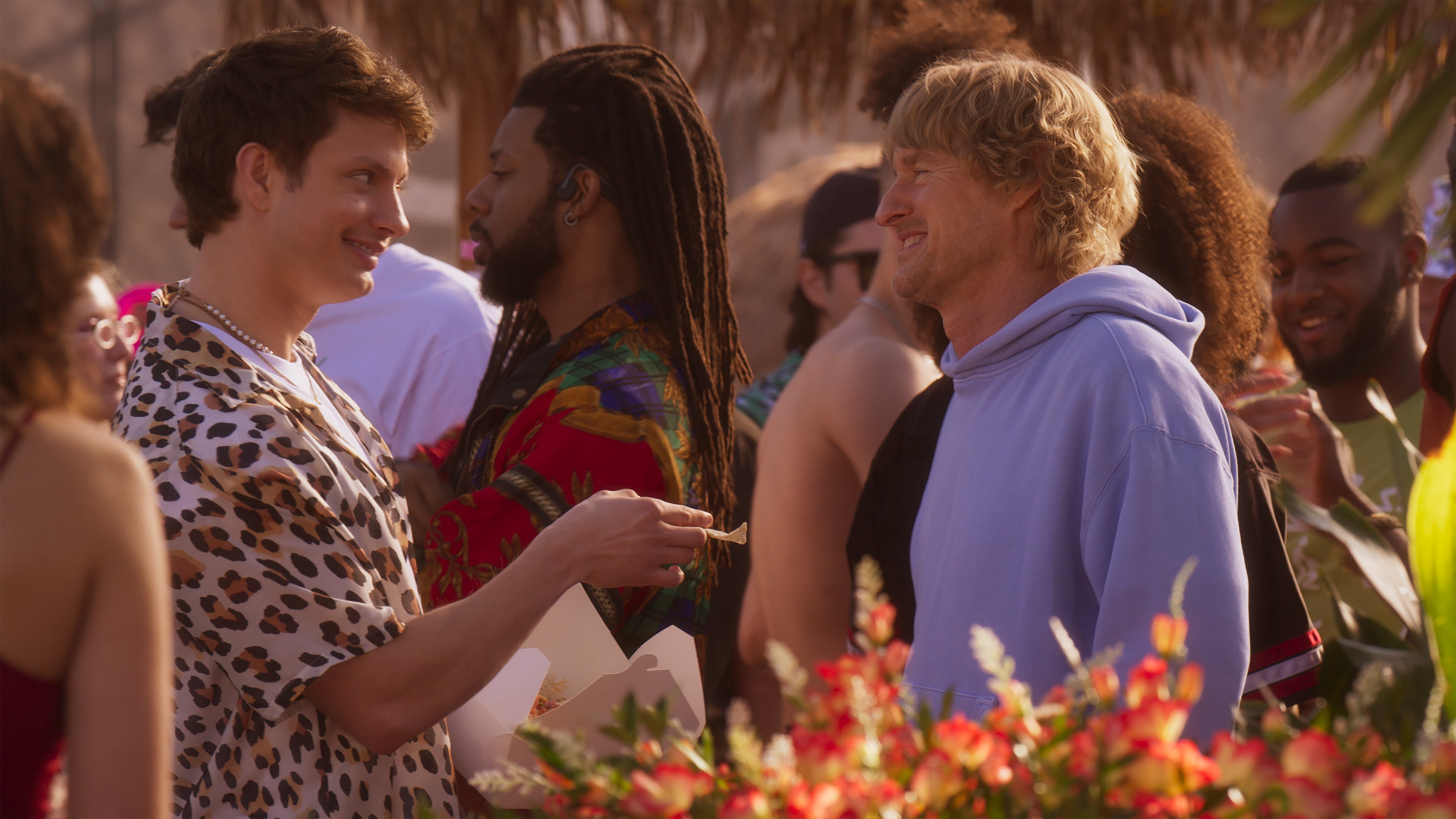
Once the cameras were set up and unleashed on the festival, lenses and filtration couldn’t be swapped. Both the VENICE 2 and Supreme Prime Radiance lenses needed to capture moments that would never happen again without failure.
With so many different lighting situations, from warm days to cool blue nights, Lipson and his operators leaned on the lenses and internal NDs to still have creative control over their depth of field.
“The internal NDs were also hugely important because we barely had time to add diffusion,” Lipson said. “I knew we needed to reach ND 0.9. I didn’t want to shoot at T11; I wanted to stay around T5.6 or T4 rather than closing the lens all the way down.”
“That capability was integral to making the Miami shoot work.”
But the VENICE 2 continued to support Lipson beyond the festival. When the team finally arrived at Trilith Studios, the capabilities of the camera allowed for a cohesive look, even when color spaces were out of sync.
“When the Sony VENICE 2 came out, I began hearing about its visual-effects capabilities,” Lipson said. “I was intrigued by how it could integrate with a virtual wall and keep the color pipeline aligned. That was another major advantage for us.”
“I felt the VENICE 2 technology was there for us and could handle anything we threw at it. I knew it was the right tool for all these different environments.”
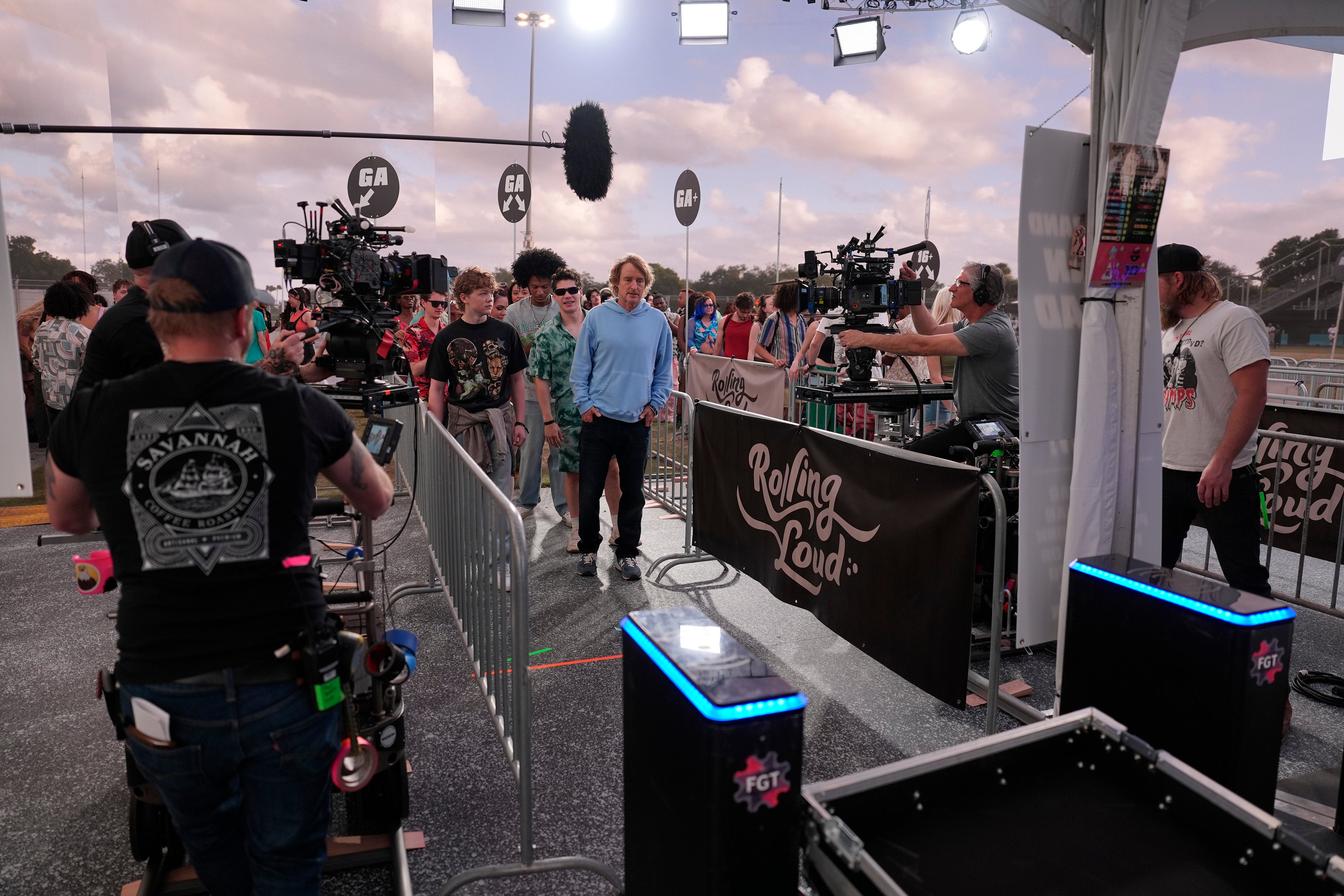
Volume work at Trilith Studios
While Lipson and his team mostly shot on the VENICE 2, having the RIALTO 2 for tight quarters proved creatively valuable.
“One memorable instance involved Owen, Matt, and Christine in the crowd, just as security was about to catch them,” Lipson said. “They all dropped to the ground, and we needed the camera to go down with them while maintaining that chaotic energy.”
“Chris McGuire, an incredible camera operator, suggested, ‘Let’s use the RIALTO so I can drop down with them, add a top handle, stay low, and move around with them.’”
This shot was especially tricky because Lipson wanted the shot to feel like the audience was in the crowd, and he didn't wanna create a huge round space around the actors.
“We wanted it to feel claustrophobic,” Lipson said. “The RIALTO was small and light enough for Chris to move through the crowd and shoot through people’s legs and bodies in the foreground.”
On location at Rolling Loud in Miami
The Biggest Challenge
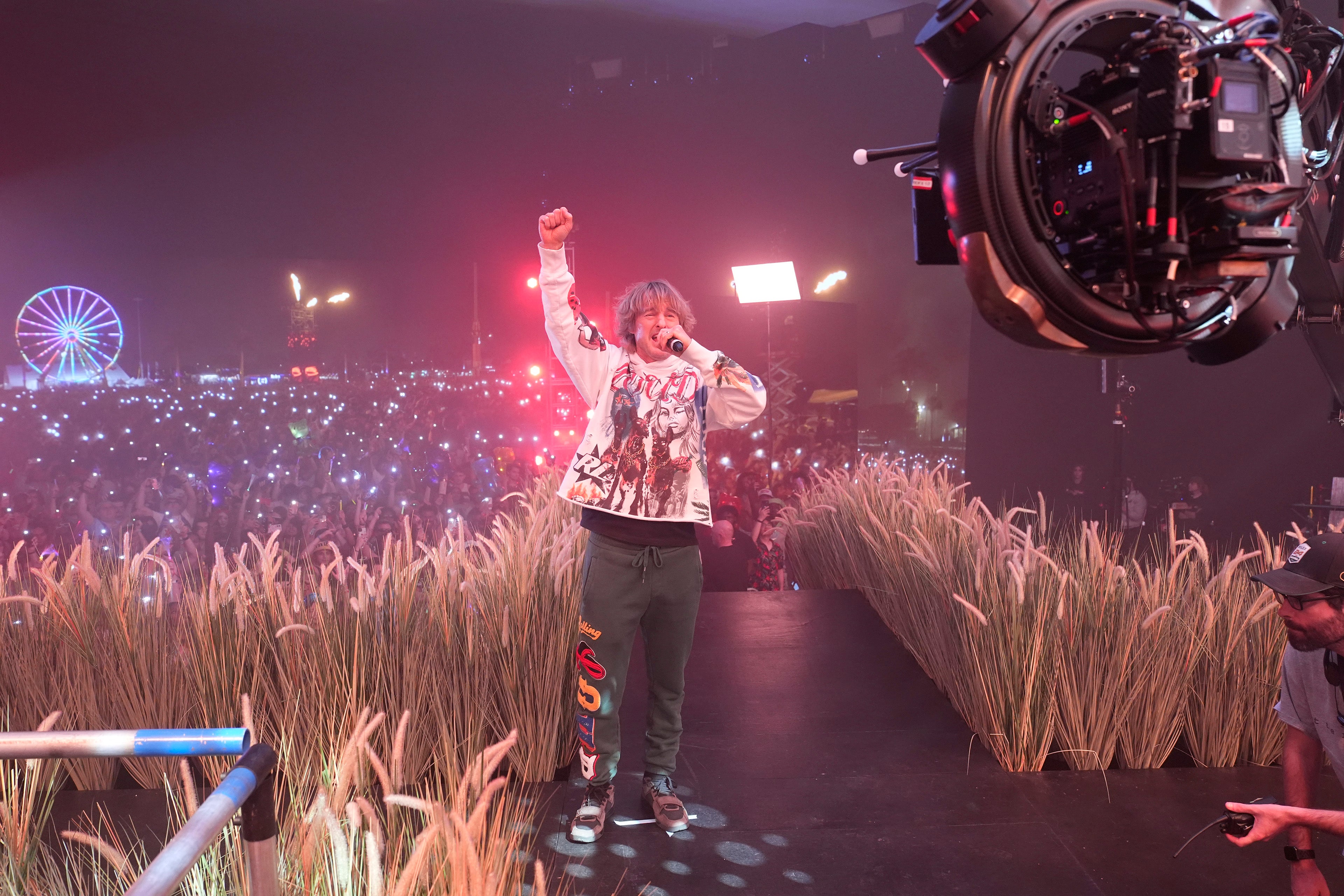
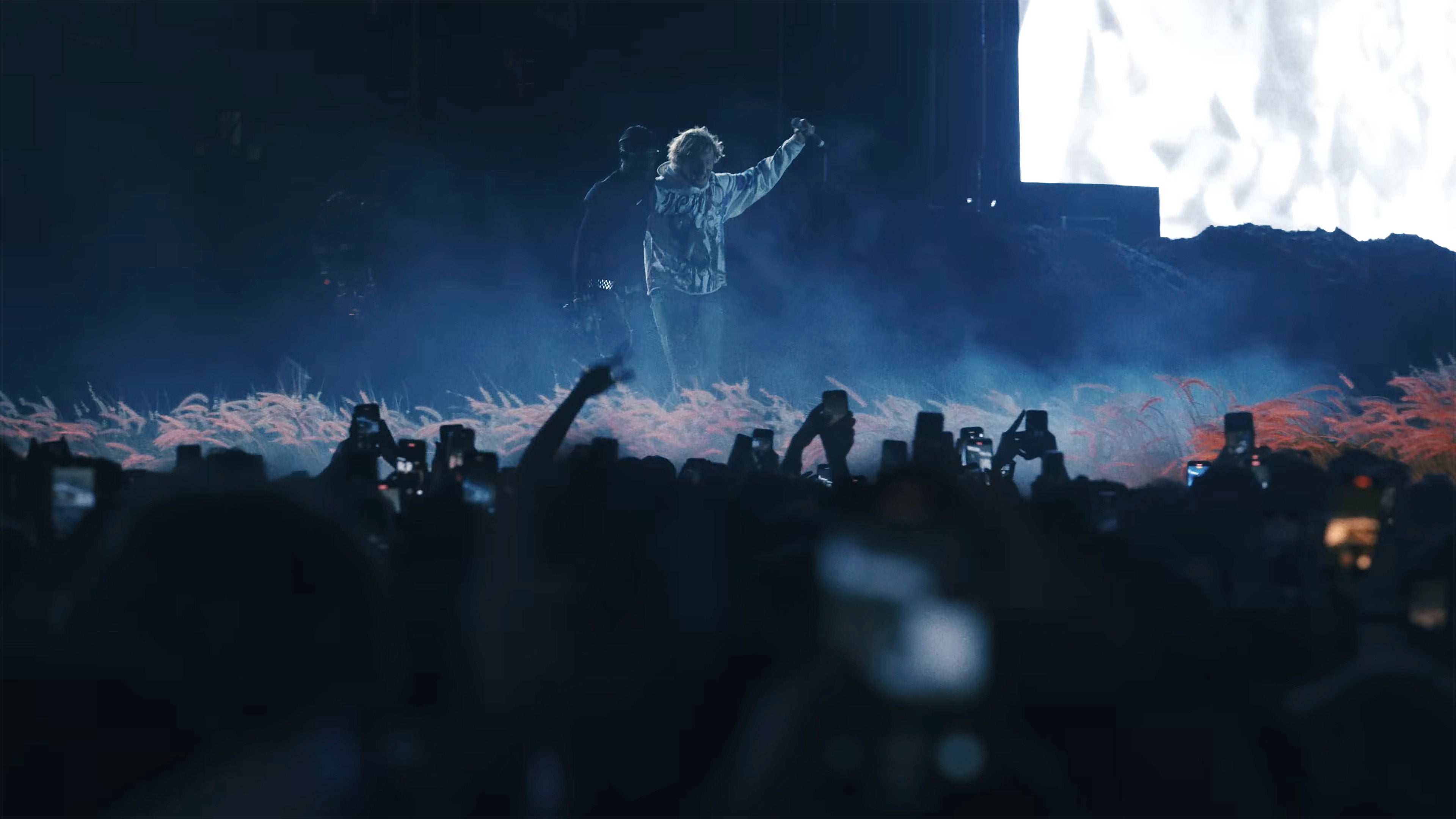
For the finale of the film, where Owen Wilson’s character takes the stage at Rolling Loud with hip-hop artist Travis Scott, all of Lipson’s planning and technical support came together.
“The biggest challenge was always [going to be] the finale, with Owen Wilson onstage alongside Travis Scott,” Lipson said. “When Travis brought Owen onstage at Rolling Loud, I covered it with two Sony VENICE 2 cameras, [and several other camera systems].”
“Beyond our cameras, the Rolling Loud festival had an enormous production operation feeding images to its LED screens, so I coordinated with that team,” Lipson continued. “That was another reason I knew I was in good hands with Sony. We would be integrating footage from many other cameras, along with B-roll from Miami and other festivals, captured in all kinds of formats.”
“I wanted our footage to provide the visual foundation while remaining flexible enough to blend with everything else. I felt confident that the Sony VENICE 2 would give us that flexibility.”
The main goal was to get as much footage as possible at the actual festival, but as with all best-laid plans, things went sideways. With the team Lipson put together, and Garelick’s creative vision, the film embraced these last-minute changes.
“What was remarkable was that Travis let Owen perform ‘FE!N’ four or five times. Around the third take, it began to rain,” Lipson said. “The rain intensified, Owen embraced it, the crowd went wild, and we just kept shooting.”
After this shift in the scene, Trilith Studios accommodated the project and allowed them to shoot rain scenes in the volume, leading to a sequence that Lipson will never forget.
“There was a tremendous amount of coordination with Live Nation and the Rolling Loud group, and they were phenomenal,” Lipson said. “Everyone was incredible in helping us make it happen. Looking back, it was really quite an accomplishment.”
To see the imagery Lipson captured and the incredible coordination of his team, catch Rolling Loud: The Movie in theaters, which premiered October 2, 2026. To learn more about the Sony VENICE 2 and the other cameras in the Sony Cinema Line, visit our Camera Comparison Chart


