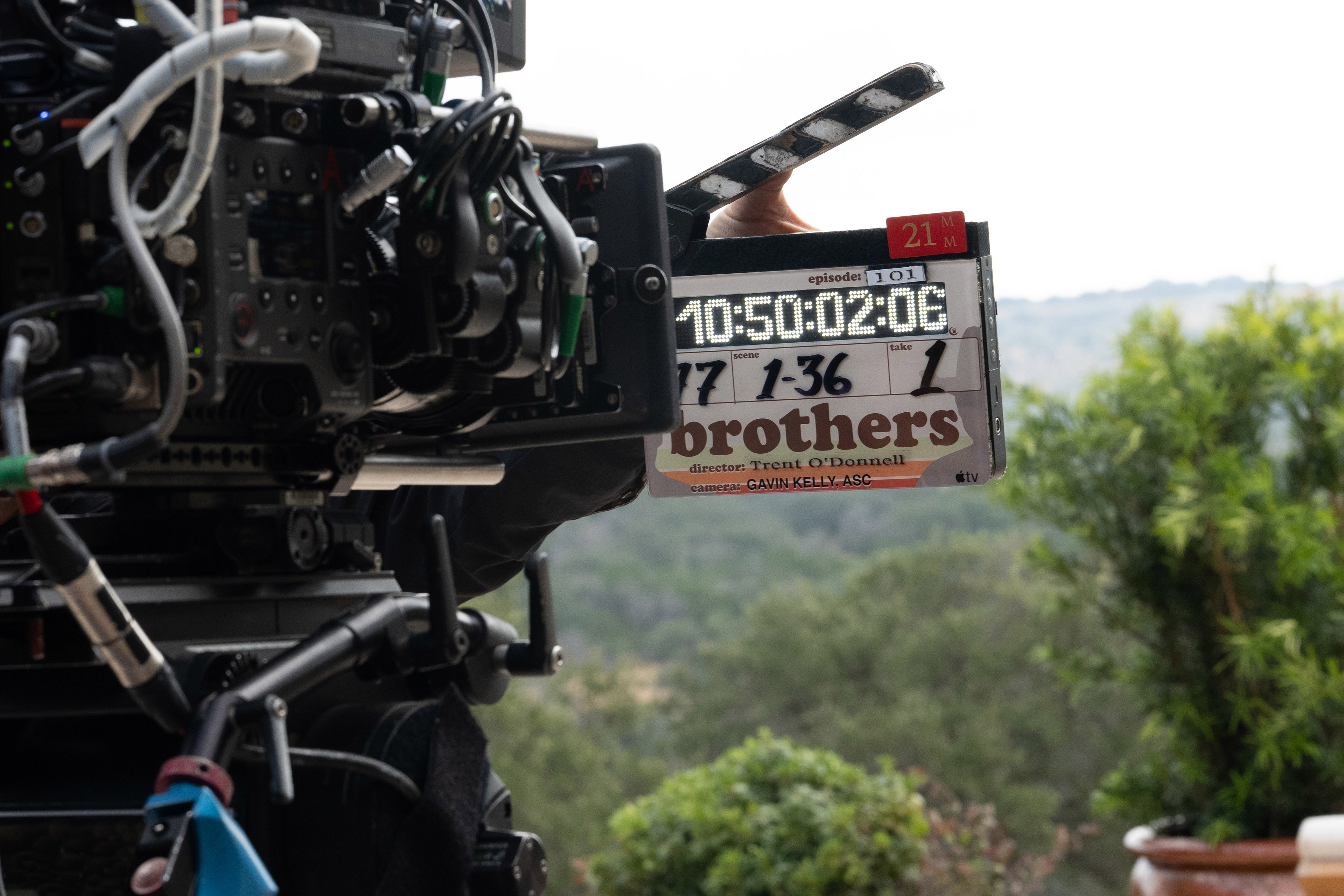
10-13-2026 - Interviews & Behind The Scenes
Gavin Kelly, ASC and RIALTO Mini Discover the Spontaneity of Performance in “Brothers”
By: Yaroslav Altunin
After nearly 30 years, longtime friends and co-stars Woody Harrelson and Matthew McConaughey reunited on screen once again for the Apple TV series Brothers. Created by McConaughey and Harrelson, along with Lee Eisenberg and David West Read, the show is a fictional take on their friendship, exploring the possibility that they might actually be siblings.
Cinematographer Gavin Kelly, ASC (Wu-Tang: An American Saga), was brought on to shoot the pilot after the series had already shot footage for several episodes under DPs Bobby Bukowski (Willie Nelson & Family) and Chris Teague (The Acolyte). To blend the pilot with the existing footage and shoot the rest of the episodes, Kelly turned to the Sony VENICE 2 and RIALTO Mini to create an environment that let the iconic actors explore the spontaneity in their performances.
Sony Cine sat down with Kelly to learn more about his creative approach, how he tackled one of his first comedic series, and how the RIALTO Mini opened the door for new creative compositions.
Finding the Narrative in Real Stories
The premise for Brothers is based on the real story that McConaughey’s mother and Harrelson’s father may have had a relationship beyond a simple friendship. A comedy at heart, the show leans into strong performances and improv while leaving room for dramatic moments.
For Kelly, who would be tackling his first fully comedic series, exploring this fictional journey between McConaughey and Harrelson would be a tightrope walk between new creative visual possibilities that felt united with existing material.
“I came in when we were essentially shooting a new version of the pilot with Lee and the team as well as some later episodes,” Kelly said. “There was material already shot that was to be used, so I was bridging the gap between that and clearly establishing a look in the pilot that would draw the viewer into the dynamic, fun world of the show with some swagger and scope, which was important to [director] Trent [O’Donnell] and Lee.”
“It's a comedy and based loosely on two real, very familiar, and iconic actors that everybody knows, but it's riffing on a lot of their real life,” Kelly continued. “So there's often a bit of a looseness, an off-the-cuff, in-the-moment feel to the camerawork when things are bouncing along, while other sequences land with a more elegant, classic feel when the tone leans more dramatic.
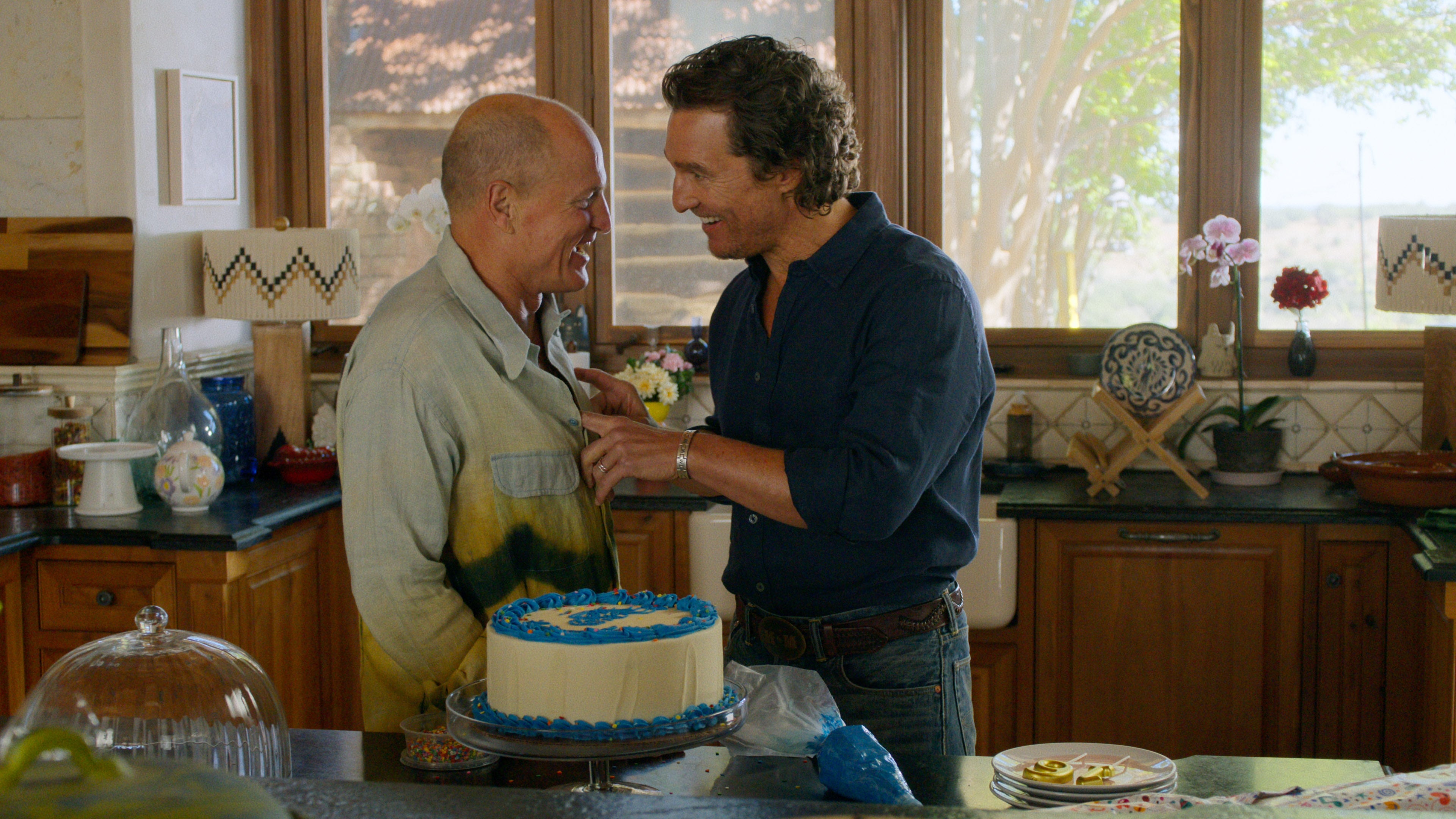
(Courtesy of Apple TV+)
Kelly’s creative challenge with the pilot was to define the visual palette of the show, showcasing the range of stylistic territory that would be traversed throughout the series. From volume work to real-world locations in Texas and a handcrafted rodeo set, the visual language needed to move and explore a scene but also thrive in a traditional studio setting.
“The way the script was laid out, and talking with Trent and Lee and the whole team, the goal stylistically was that the feel can shift from light, buoyant comedy to just a little bit heavier, denser when called for — but always grounded, easy-going, not too heavy-handed,” Kelly said. “That anything could happen at any moment when Matthew and Woody get going. It should always feel alive, fun.”
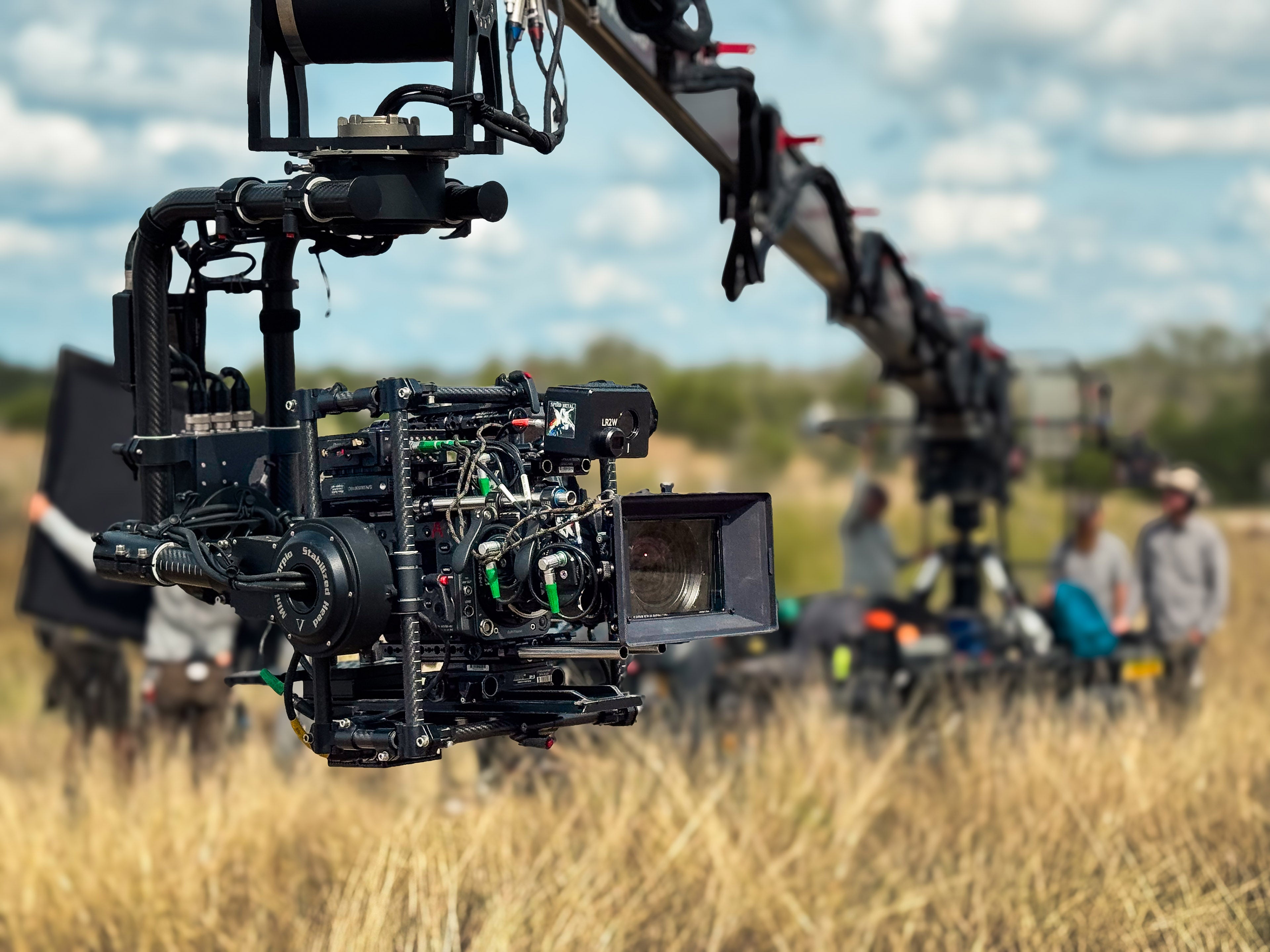
"It's a Texas story, too. We were 90% on location in and around Austin. We shot a bit of stage work for some one-off sets, some driving scenes on a volume stage, but the main big ranch house, that’s a practical location, not on stage,” Kelly added. “So it's definitely a very grounded show in that regard. It was supposed to like you’re in the room hanging with these guys. With a bit of texture and dusty warmth to the image to stay true to the feel of the Texas environments.”
“[So we built] a lighting and camera approach that would support having everyone feel good in the space and some wiggle room for discovery and spontaneity of the performances.”
The exploration of performance became a foundation for each scene. The lighting and composition were generally designed around allowing actors evolve a scene that was already in process.
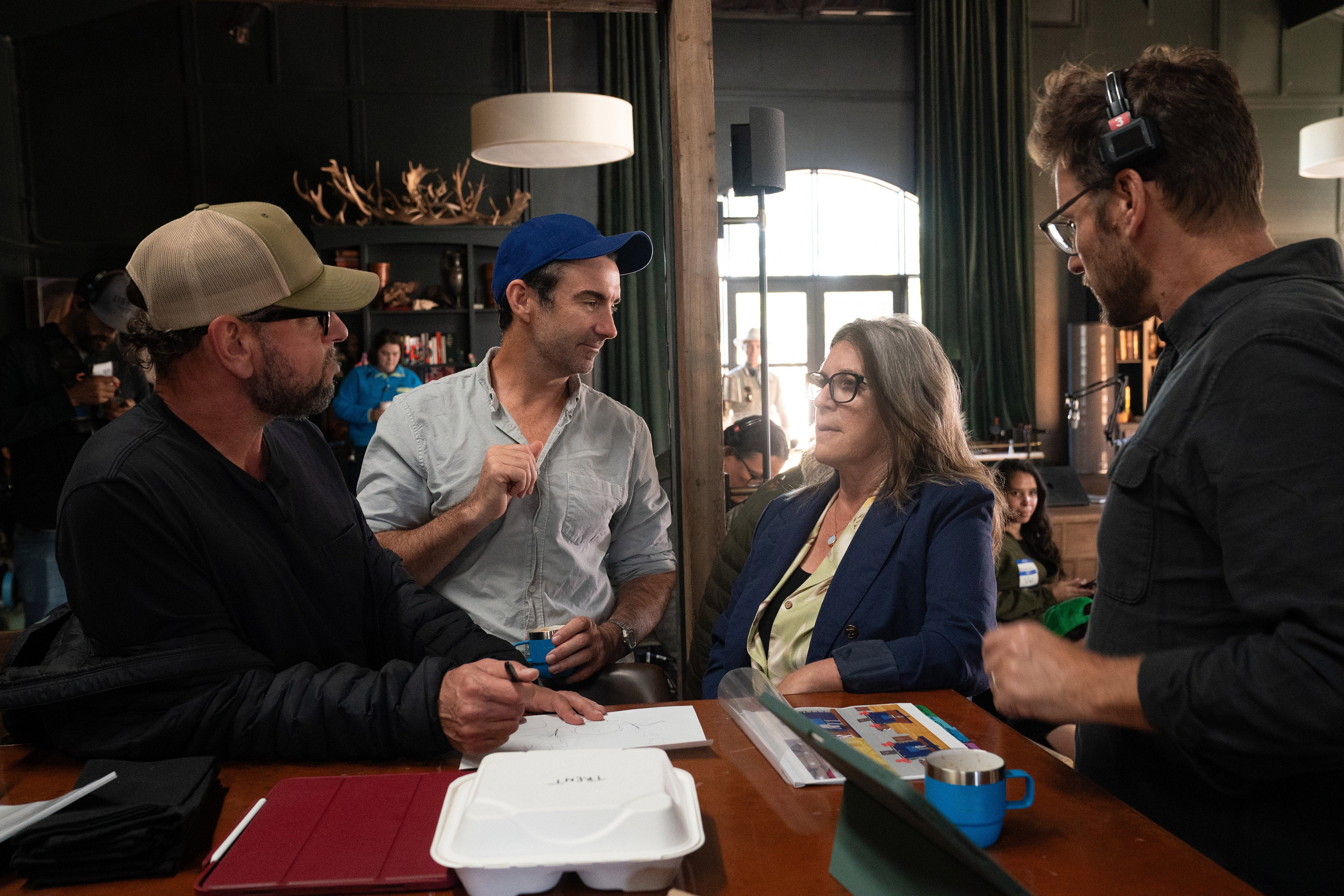
L to R: 1st AD Daniel Shaw, Director Trent O’Donnell, Production Designer Melanie Jones, Cinematographer Gavin Kelly, ASC. (Courtesy of Apple TV+)
“[I tried] to build a nice look to it but also be open to the fact that while shooting things may be explored further as it all unfolds, which could often affect blocking and/or timing with camera work take-to-take,” Kelly said. “We shot a lot of it handheld so that the cameras can dance with the performances when appropriate.”
“I found that exciting. There’s a little bit of a freewheeling quality that I think is super fun and feels right for the series. It keeps everyone on their toes in the best ways,” Kelly added.
“And if things are rolling a certain way and changing slightly take to take because the performances are building while dialing in the sweet spot for the scene, that’s cool. As a cinematographer, I’m trying to do all I can to support that process and that flow on set.”
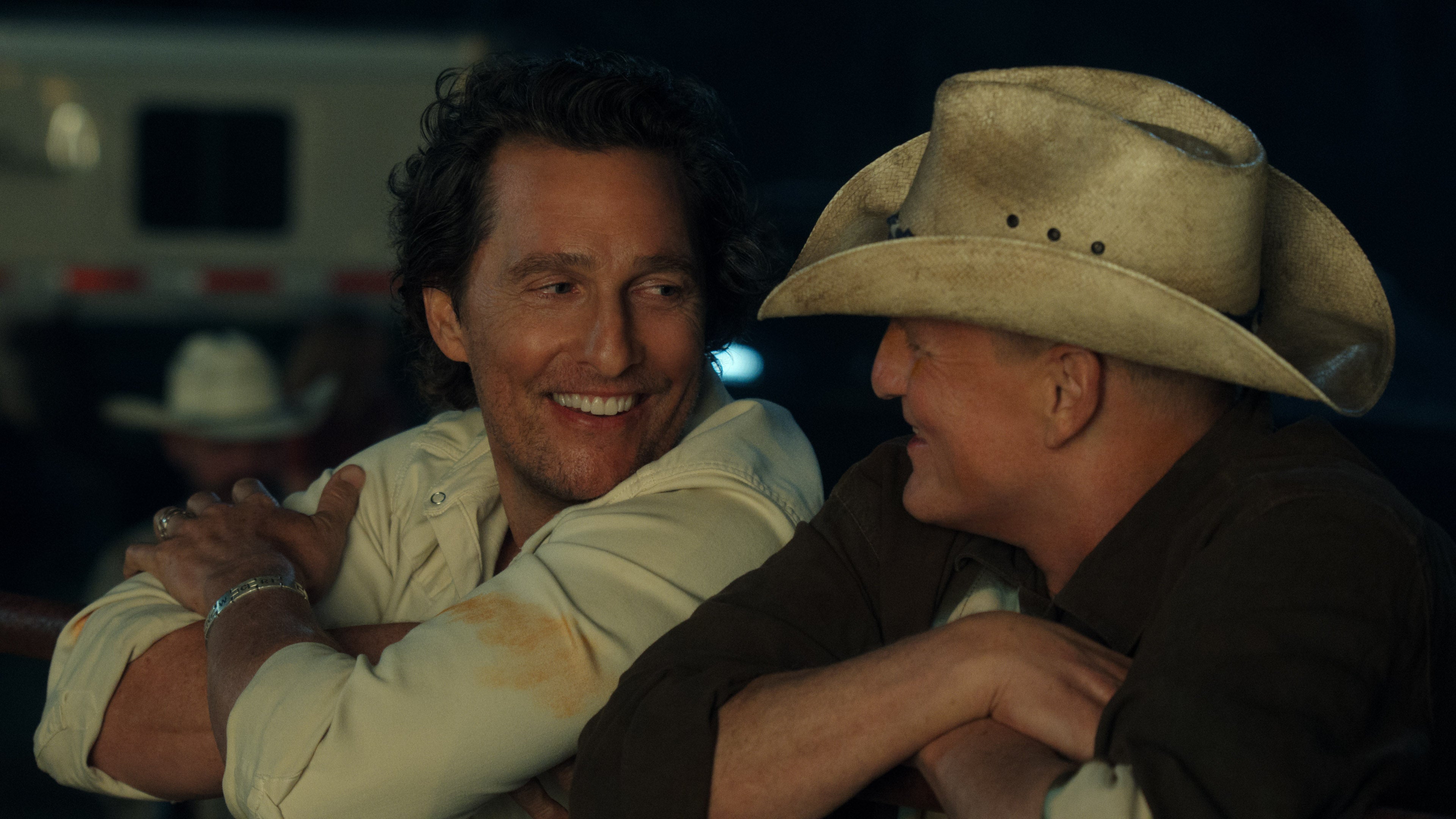
(Courtesy of Apple TV+)
Capturing the Spontaneity of Performances
When Kelly was brought on board, the Sony VENICE 2 was already a part of the visual language of the show, which was paired with Angénieux Optimo zooms. Having worked extensively with the VENICE and VENICE 2, Kelly was comfortable using the system and brought in Panavision Primo primes and the RIALTO Mini to further expand and evolve the look of the series.
"The VENICE 2 was part of the project when I came aboard, which I was pleased about as I’ve shot aplenty on the VENICE and VENICE 2,” Kelly said. “We shot in Super 35 mode at 5.8K, which I loved for this piece. While the large-format look at full 8K is great for some projects, Super 35 mode is the right fit for this show, maintaining a more classic rendering.”
“[Brothers] needed to feel light and natural, and it’s important that you feel anchored in the environment. It's not a hyper-shallow focus show. We generally hold depth of field to feel the characters in the space, so that even if it's a close-up, you're feeling the presence of the other characters.”
Kelly shot often with two or three cameras, leaning on the dynamic range of the VENICE 2 to balance his lighting with the bright Texas sun.
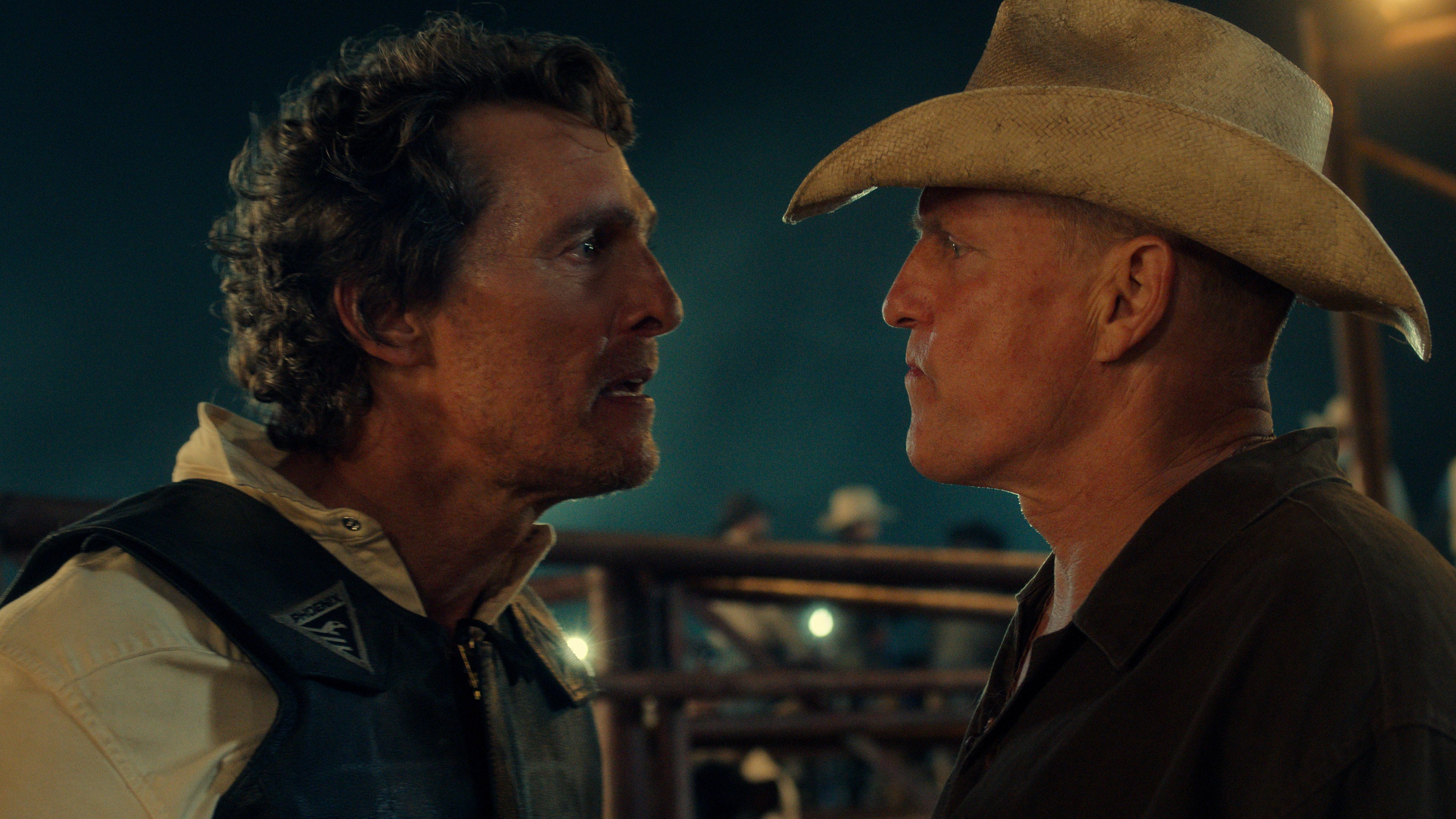
(Courtesy of Apple TV+)
“The VENICE 2 was great because the dynamic range really held well for us,” Kelly said. “There was so much location work; we often had these bright windows as part of our world, and we’re playing on the edges of exposure. We’re keeping our talent in the right range, exposure-wise, while leaning for a nice, rich contrast. And always working to capture a solid image in the midst of the those fast-moving Texas clouds.”
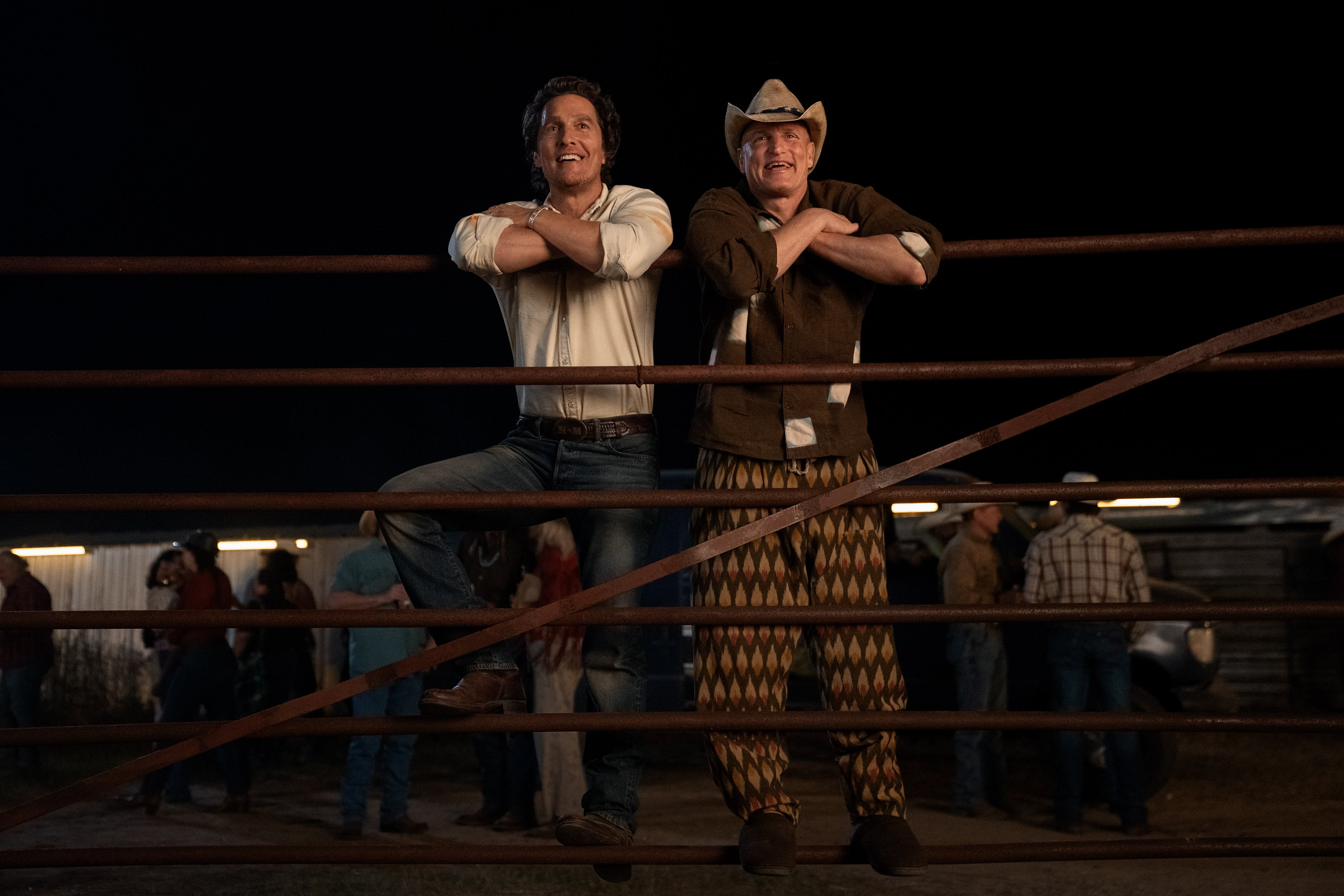
“The Dual ISO helped as well. There's not a ton of night exterior scenes in the show, but the big set piece of the pilot is a Jackpot Rodeo sequence at night in the middle of of nowhere,” Kelly continued. “Lighting-wise, it was to feel rough-and-tumble, a bit dangerous, but all with a rugged, alluring glow. It’s a full-fledged ruckus of a rodeo where we’re flying on and off bulls, with plenty of stunts and action, as well as important character beats, and zero-ing in on performance — all shot over a tight couple of nights.”
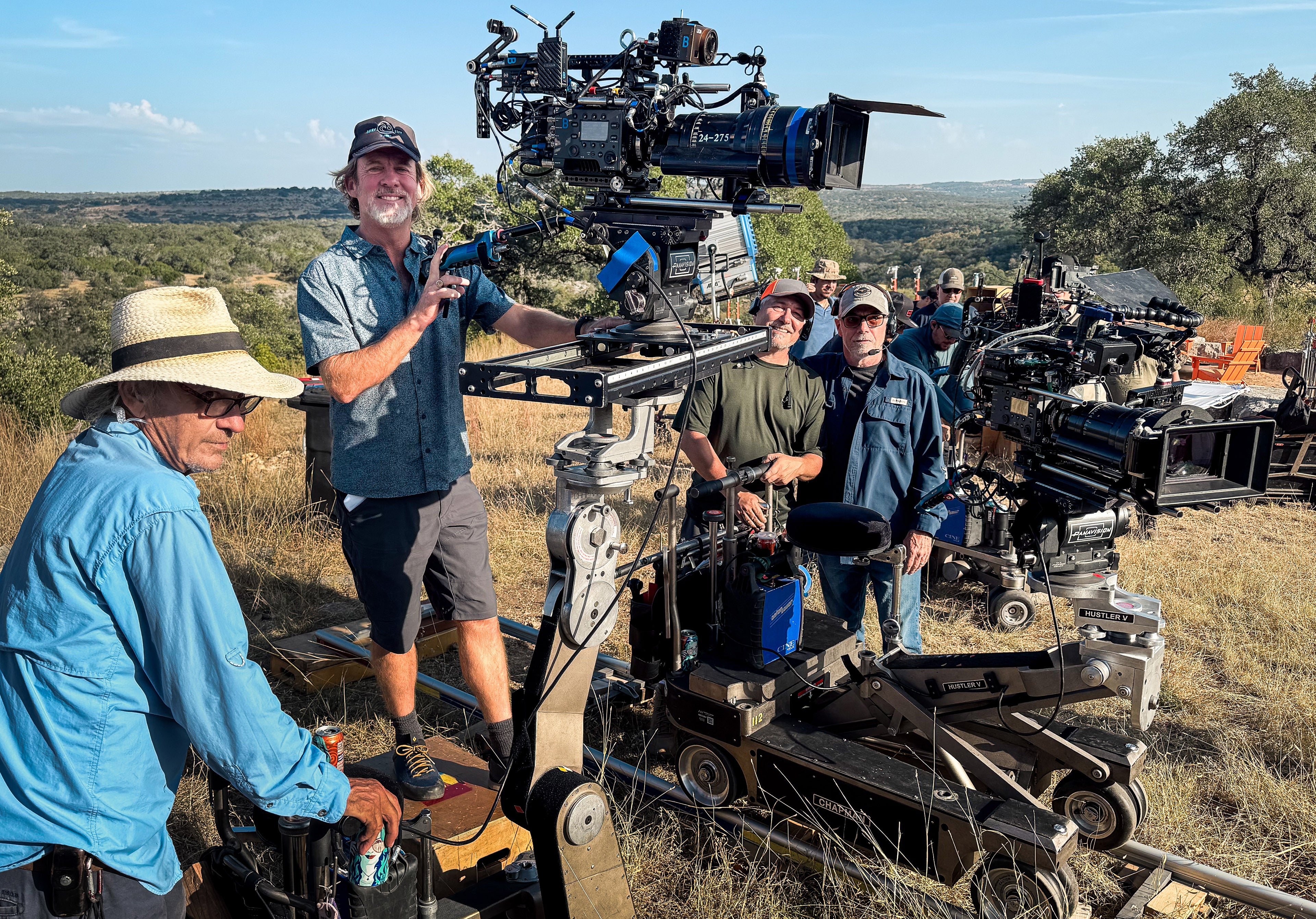
L to R: Ted Davis (Dolly), P.K. Munson (B-Cam Op), Joe Cassano (Dolly), Tim Beavers (A-Cam Op)
During this night sequence, the VENICE 2 let Kelly embrace the mixed-color temperature of rustic practicals rigged strategically throughout the set in coordination with Art, Lighting and Grip departments, giving the sequence a hazy, humid glow against the contrast of the dense night sky. For day scenes, however, creative use of the ISO let the cinematographer tune the sun's extremes to his liking.
“To help things feel grounded, I liked to let let things feel on the edge and a little scrappy at times, even in that it’s a comedy,” Kelly said. “It should feel lived-in, immediate, like we're out there with them. So I’d let it ride hot sometimes in the background, in the highlights, as if the sun's kicking through and we’re really feeling that presence.”
“And so with the VENICE 2, playing with the ISO a little bit helped us do that dance, scene to scene. And of course, in the final grade, we could massage a little further. Overall, for our day work, it was ISO 800, often rated ISO 1600.”
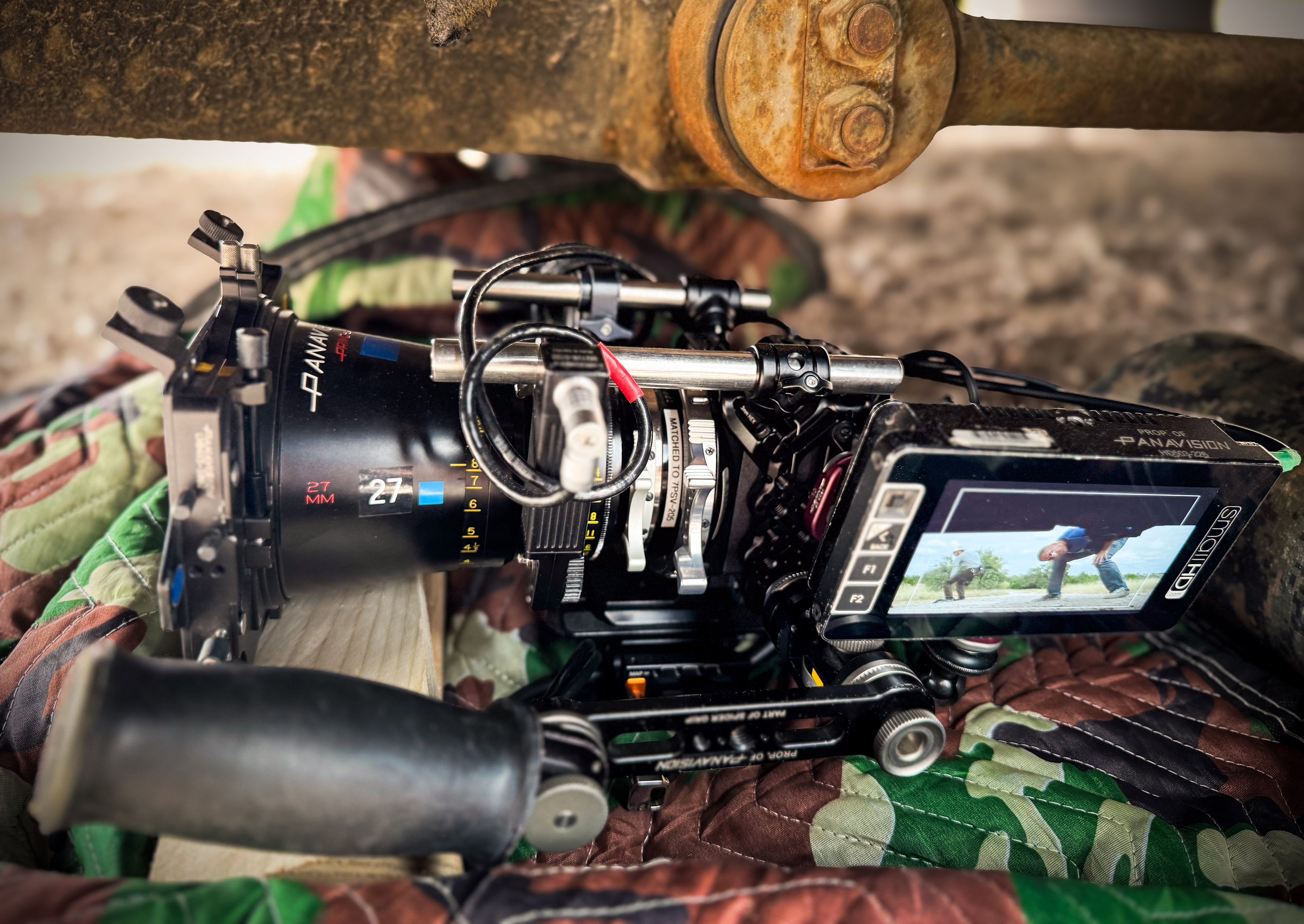
RIALTO Mini setup under the bus
But it was the RIALTO Mini that opened the door to pushing the composition to new limits without putting additional pressure on the schedule or budget.
“I knew we were going to have some sequences and moments where we could really use the RIALTO Mini as for all kinds of shots,” Kelly said. “Like getting the camera in just the right spot under a bus; we had some car work where it just needed to be a really small build that we could tuck in that one spot it’d fit in the corner, and sometimes just handheld in the right configuration to really be loose and nimble.”
“It was definitely a great asset on the show. Just the maneuverability and the fact we could fly it in when we needed to for certain shots, sometimes mapped out and planned and prepped and sometimes just on-the-fly.”
With how Kelly approached the show, the RIALTO Mini gave each scene a certain energy, where a bigger camera would have limited the flow of the performances in how they would traditionally shoot the scene. An example that Kelly gave was a scene where the cast was crammed into a Uber.
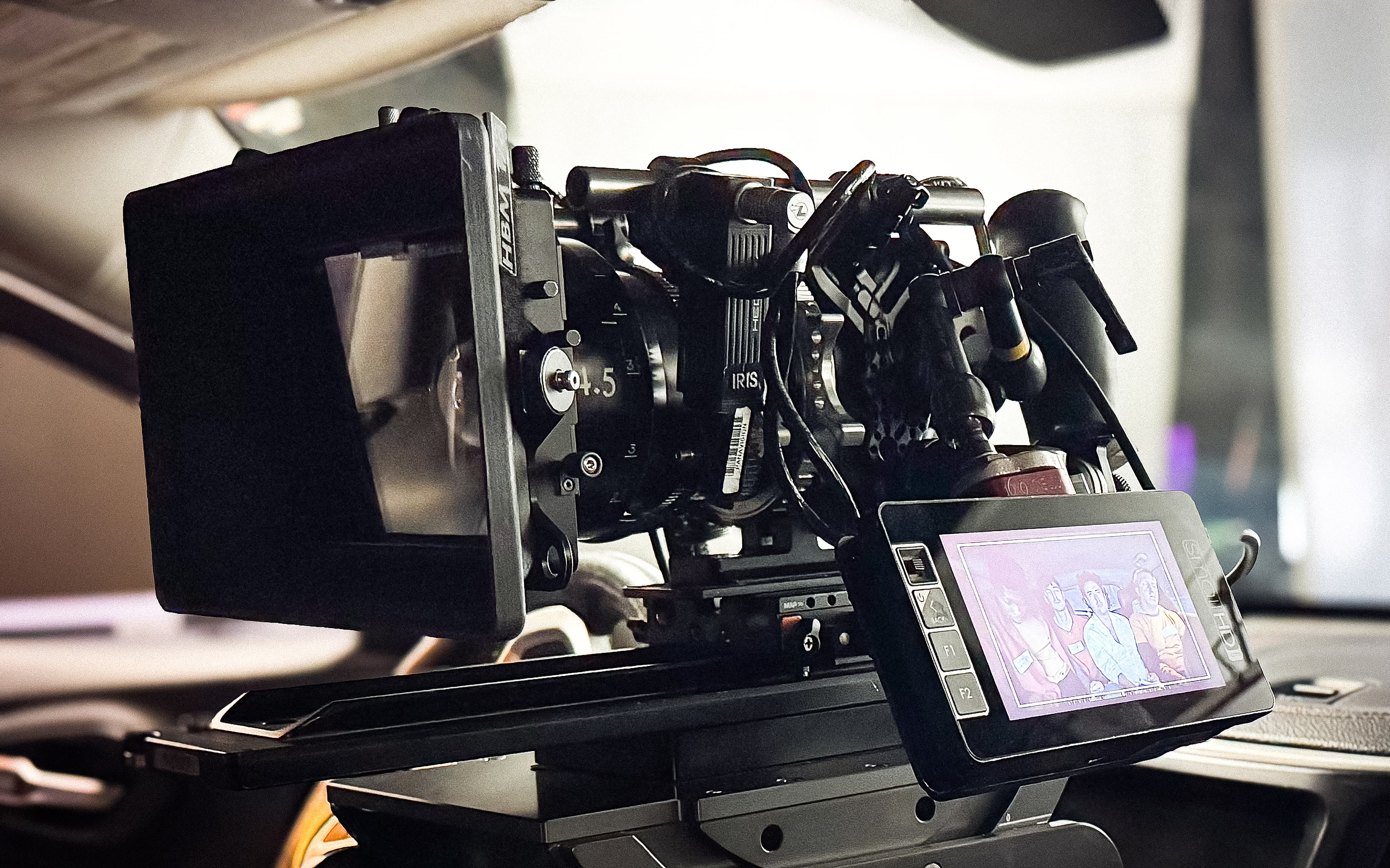
RIALTO Mini car interior setup
“It’s Woody upfront with the driver, and then Matthew is crammed in the back with three other guys,” Kelly explained. “It's not complicated on the page, but technically, it is a little bit challenging, because everyone's riffing, the dialog's bouncing back and forth, it's all in the moment and crammed in a small vehicle for a clown-car type of vibe.”
“So it was vital to shoot multiple cameras, and it was all about the lighting and the camera being able to capture as much in real time, so that everything matched take to take. And the only way to get the camera in the sweet spot, at the right height and angle that held the action in a nice composition without the ceiling coming in and cutting off their heads, was using the RIALTO Mini — just because of the sleek physics of it.”
Having such a compact camera that also offered the same image quality as the VENICE 2 let the performance take center stage. It was all about getting the camera into the right spot and avoiding adding more setups.
“Even built out with the motors, wireless and such, it was still incredibly compact,” Kelly said. “Especially in a handheld setup; when you can move the camera in a different way that's not on your shoulder and not cradled, it opens up opportunities for a different feel when desired.
“I like the idea of having it as a camera that's ready that you can fly in as needed, when your inspired.”
(Courtesy of Apple TV+)
The Creative Opportunity to Discover
McConaughey and Harrelson are actors at the top of their game. In Brothers, their performances are key to making the story of the show work. As the cinematographer, Kelly's goal was to create possibilities for these performances to flourish, and the RIALTO Mini became a key component of that work.
“I like what it does to the energy of working with a great team, a great crew. We were fortunate to be working with excellent Camera, Lighting, and Grip crews in Austin who were always game to roll up their sleeves and creatively make it happen. To roll with it,” Kelly said. “And the RIALTO Mini helped us get there. That's what it is for me. Just expanding the possibilities and flexibility of what you can do with the camera and lenses on set.”
“It can keep everyone excited about the process and about thinking outside the box. That there’s always room to explore telling the story shot-to-shot.”
Brothers premiered on September 23, 2026, on Apple TV. Catch the show now to see Kelly’s compositions and work in action. To learn more about the VENICE 2 and RIALTO Mini, as well as the other cameras in the Sony Cinema Line, visit our Camera Comparison Chart.


