10-06-2026 - Interviews & Behind The Scenes
VENICE 2 and RIALTO Mini Shape Brightest Day and Blackest Night for HBO’s “Lanterns”
By: Yaroslav Altunin
Sixty-seven years after writer John Broome and artist Gil Kane created Hal Jordan, the DC Comics hero returns to shepherd a new Green Lantern into the Corps for HBO’s new series Lanterns. Created by Chris Mundy, Damon Lindelof, and Tom King, the show brings the police procedural genre to a small town in Nebraska before venturing to the stars.
Oscar-nominated cinematographer Florian Hoffmeister, B.S.C (Tár) was invited to helm the first part of the series to set the look before handing off the reins to Emmy-nominated DPs Armando Salas, ASC (Ozark) and Gregory Middleton, ASC, (Moon Knight). Using the Sony VENICE 2 and the VENICE Extension System Mini, also known as the RIALTO Mini, the cinematographers crafted an evolving visual language that took gritty realism from Middle America to an alien planet. Notably, Lanterns was also one of the very first TV series to use RIALTO Mini.
Sony Cine sat down with Hoffmeister and Salas to explore this evolving visual language, how their unique approaches complemented the changes in story, and how the RIALTO Mini became a critical tool for capturing unique moments efficiently.
One Part Whodunit, Two Parts Superhero Action
Rather than tread familiar superhero territory, Lanterns focuses on the creative foundation that makes Green Lantern such a unique character for DC Comics. The story evolves from a murder investigation to something more interstellar, creating two distinct parts that, while cohesive, are drastically different from each other. This lends itself to the unique approach that Hoffmeister usually takes with his projects.
“I have this thing which I live by. I either try to do everything or just the first block,” Hoffmeister explained. “I’ve done alternating [blocks] before and I find it difficult sometimes, because you tune in with the director and then to change that, that’s just something that I feel a little bit precious about.”
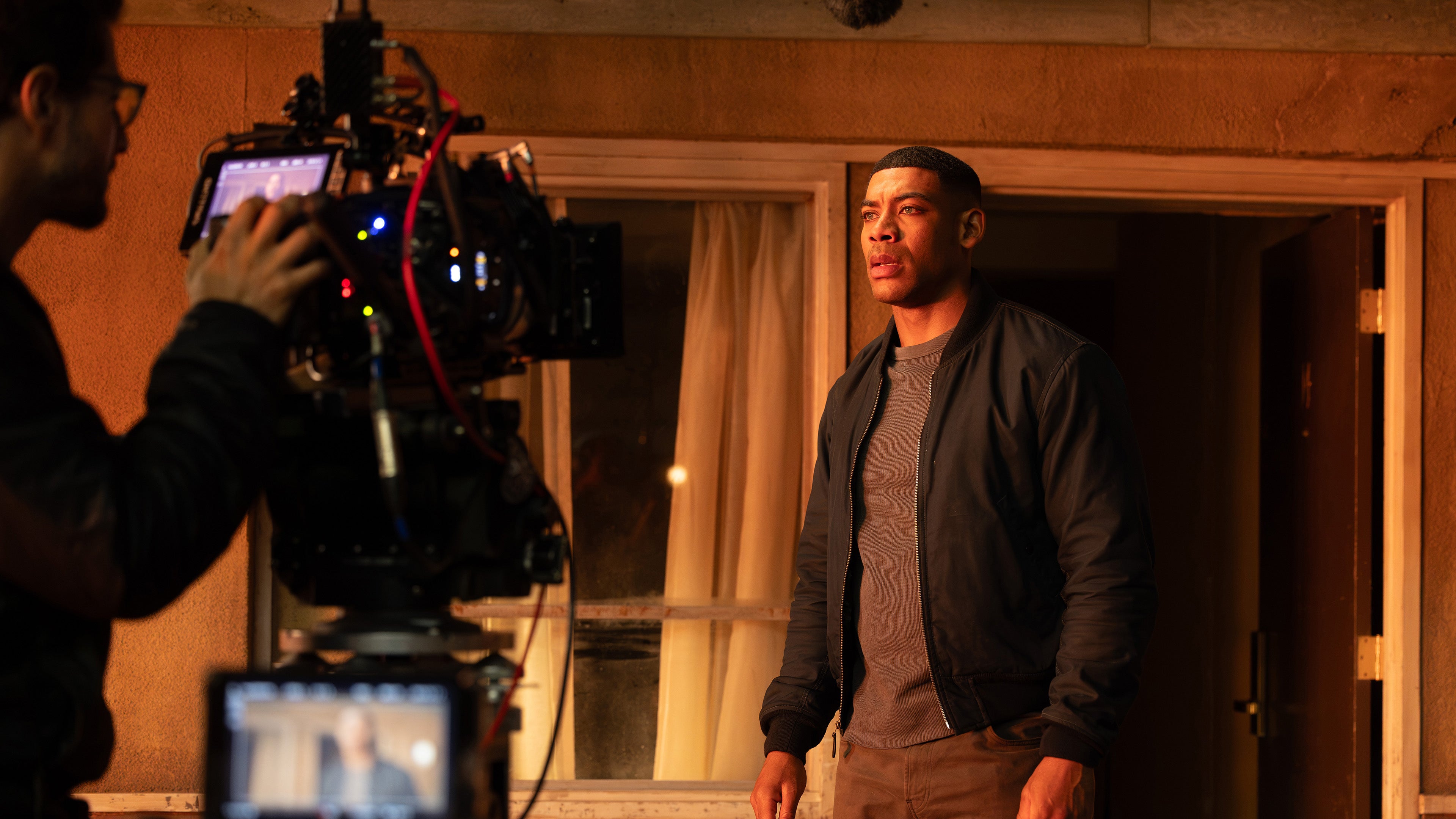
In this first block, which covered Episodes 1 and 2, Hoffmiester and director James Hawes explored a gritty realism in the visual language, showing us a version of Hal Jordan that has seen better days. “When you read the scripts, there was a sense of irony to them. There's a humor there, and it was very apparent that this wouldn't be just a superhero story,” Hoffmeister said. “Somebody in the wide audience that had commented on the trailers coined a beautiful phrase, ‘No country for old lanterns.’ And that, I think, is exactly what we tried to do. A slightly more grown-up, self-referential, ironic, yet entertaining approach.”
“James Hawes did exceptional work on Slow Horses. It was very gritty and rooted in realism, but it also had great performances and irony. So those themes were all over the place when I came on, and I thought that's what would attract me.”
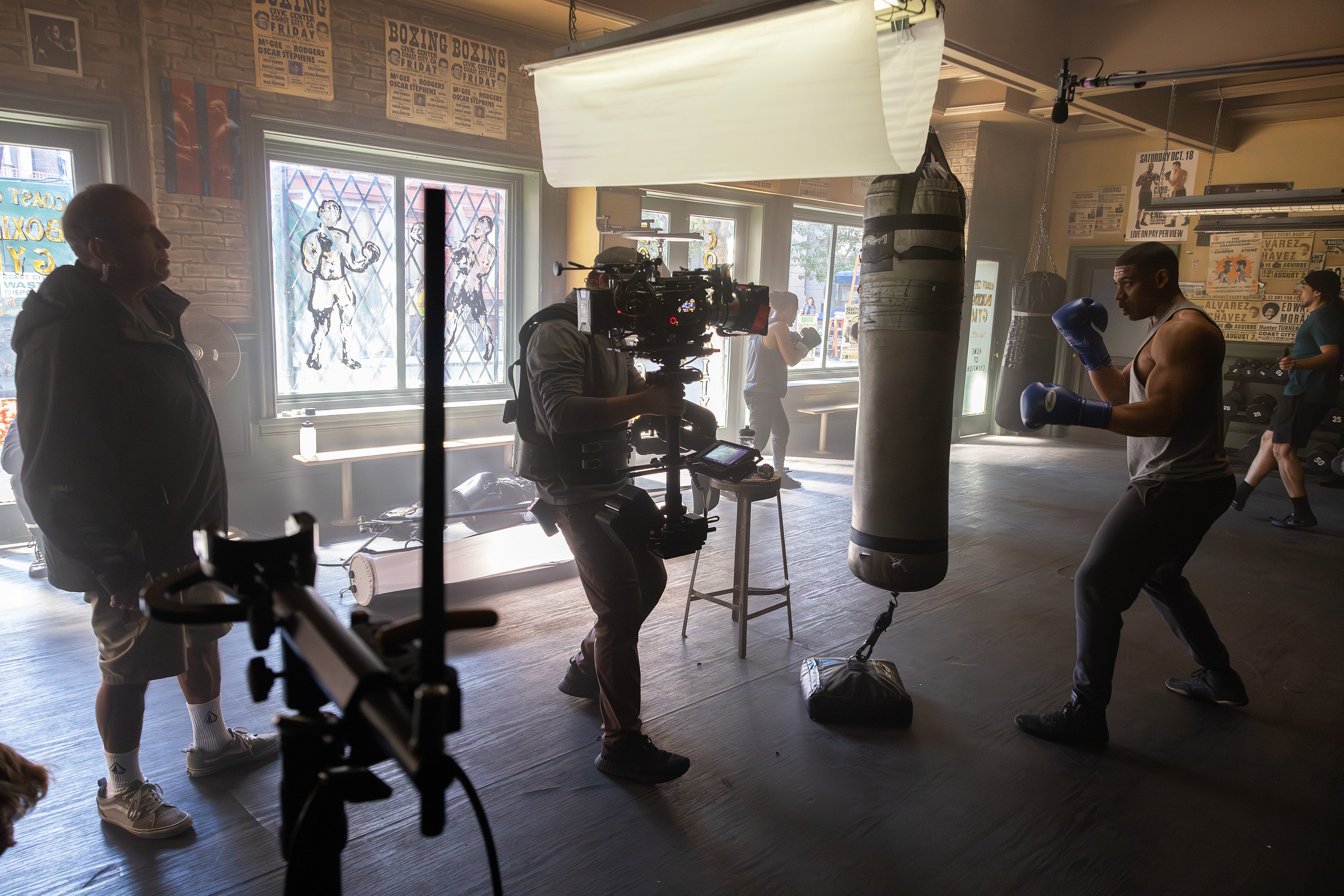
Photo Credit: John Johnson/HBO Max
To ground these first two episodes in the natural world, Hoffmeister focused on three elements. By blending a realistic lighting approach with custom lenses and distinct composition choices, he set the foundation for a drastic evolution when Middleton and Salas would take over.
[This] form of gritty realism, I thought, would root the lighting in a more naturalistic way. So not an over-stylization,” Hoffmeister said. “And I was quite interested in heightening and giving it a bit of a classy look within the lens. So I worked a lot with Panavision, and we spoke to Dan Sasaki, and there's a system called the [Panavision] VA lenses, which allow you to manipulate the elements.”
"So we created a little bit of an anamorphic bokeh without shooting with anamorphic, because I think that would have just been too much.”
The custom-tuned Panavision VAs created what Hoffmeister called a slightly cinematic heightened look, without all the texture that anamorphic lenses brought to the table.
“I think anamorphic is a beautiful thing to shoot, but it's a real decision. You really have to embrace the flares, you have to embrace the bokeh, you have to embrace the lack of close focus,” Hoffmeister said. “So it's a decision that you really have to take, and I also thought it would be a bit on the nose for this, in my own personal taste. [For Lanterns,] it was just to have a stylization as an idea without being too obtrusive.”
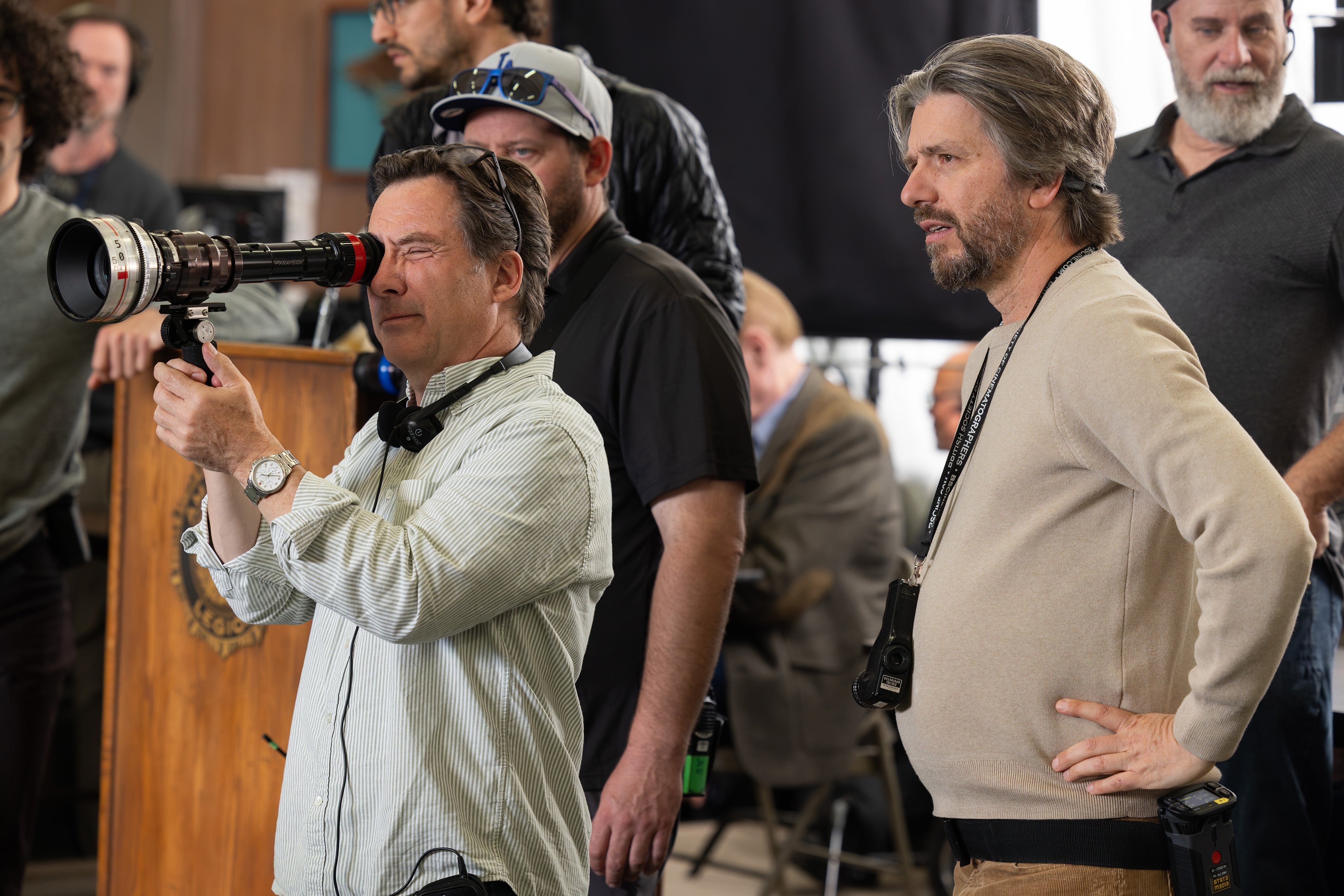
Photo Credit: Matt Kennedy/HBO Max
Hawes then pushed toward more contemporary compositions, such as framing short side and giving his actors more headroom.
“So it was a mixture between a very realistic lighting approach, at least for us, because it gets more abstract and more showy in the later episodes,” Hoffmeister said. “And at the same time, I added this slightly stylized element of the lenses, and then we worked compositionally to be a bit more contemporary.”
When Salas took over the series to lens Episodes 4 and 5, and then 7 and 8, he continued to maintain this grounded realism as the foundation, even though his episodes would take the Green Lanterns off-planet.
“It was about feeling as grounded as possible. If it's hot, [we’re] feeling the sweat and feeling the grit. We wanted to feel as down to earth and as real as possible so that when we started embracing the more sci-fi elements, the audience has fully bought in,” Salas said. “And even when we're going off planet, the look remained tactile and grounded. We attempted to do as much in camera as possible.”
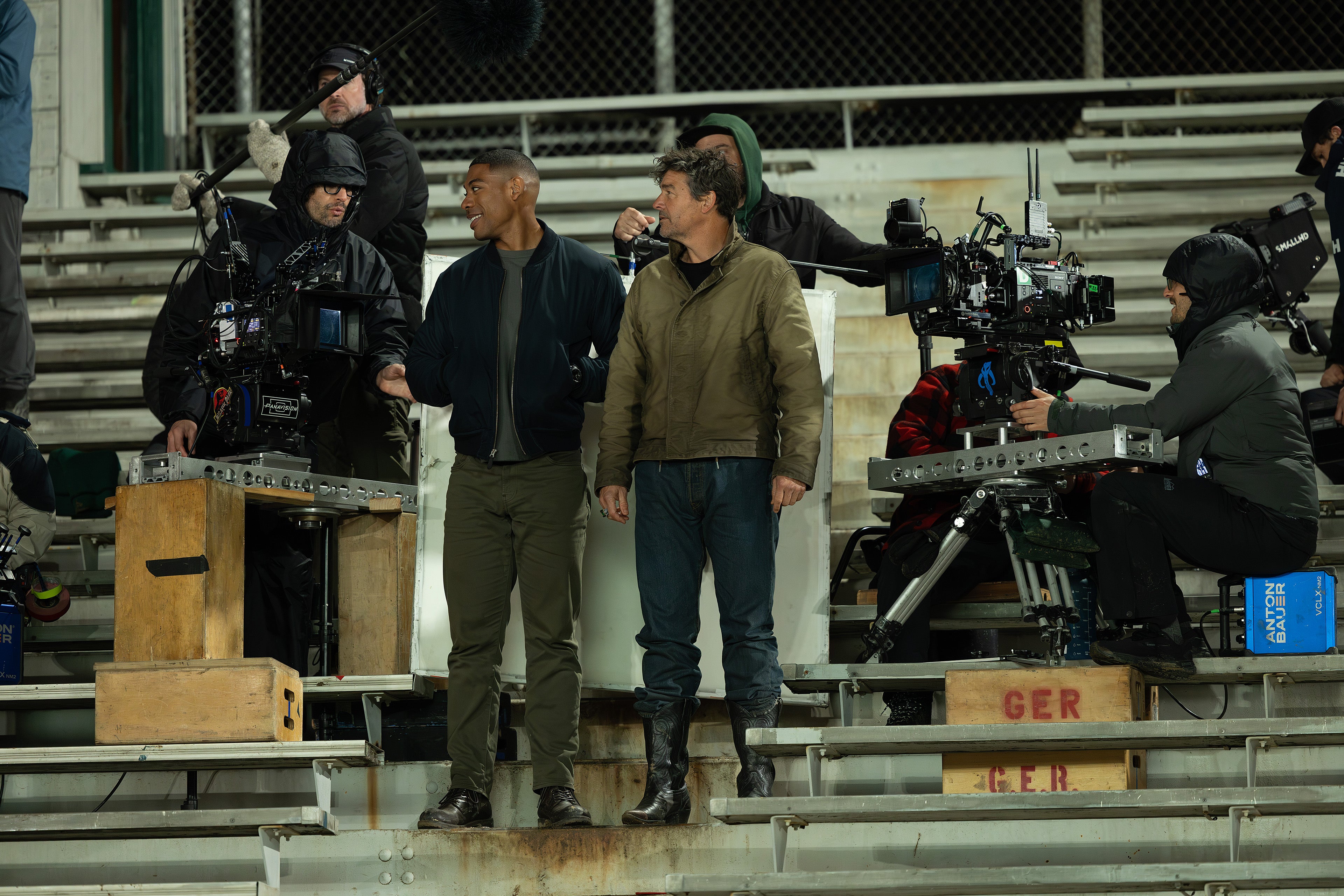
Photo Credit: John Johnson/HBO Max
Framing Lanterns With the RIALTO Mini
The first two episodes of Lanterns see Hal and John explore Rushville from inside a black Buick Grand National. With the way Hawes handled car work during his time on Slow Horses, Hoffmeister needed a camera that could deliver the realism the show demanded, while also keeping the image quality of the Sony VENICE 2 and allowing for his team to work efficiently.
“James in Slow Horses [has] lots of sequences where they literally race through London in cars. He absolutely enjoys the reality of it,” Hoffmeister said. “So in terms of trying to put people into cars, not go on volumes, and rig them with people driving around, I thought that the RIALTO Mini would give us amazing opportunities to just get the camera inside."
“I enjoy the ease and the flexibility and the size of it, and I knew that this would be a real asset for us on this show.”
The RIALTO Mini also offered critical support when doing handheld work. For Hoffmeister, the small camera extension freed up his operators, giving them the ability to disconnect from the shoulder and not have to rely on additional camera support.
“Those two elements, the car rigs and handheld work, are where the RIALTO mini is interesting,” Hoffmeister said. “And of course, if you work on a tight schedule, if you have to do the famous top shot over a bed, it's so quick to put it there. It's such a great asset because they're so lightweight.”
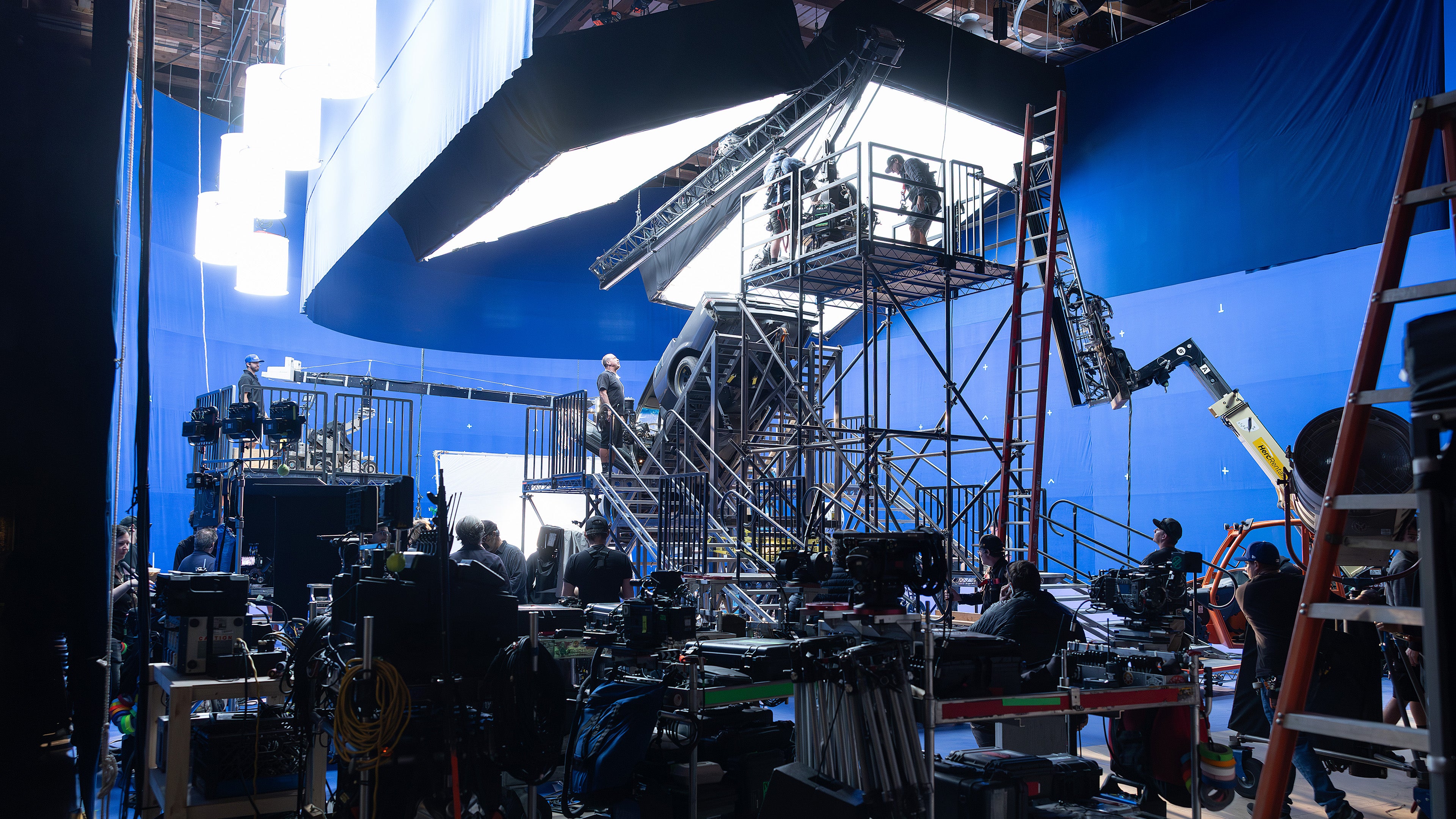
Photo Credit: John Johnson/HBO Max
Having the RIALTO Mini for handheld work also gave Salas a new way to explore a fight sequence. Not only did it allow for new creative angles, but it also increased the safety of both the cast and camera operator.
“For the climactic all-out brawl between Hal and John in a tiny motel set, we shot exclusively with the RIALTO Mini. And even though we could pull certain walls, we almost never did. It was just really close quarters, claustrophobic, and mean,” Salas explained. “The choreography was a tightrope between the actors and the camera. The operator could get really close to the actors without the inertia of a larger camera, and was able to be very responsive to what they were doing.”
“It weighs so little that you time your movements to be motivated by the action without tipping your hand that you know what’s coming.”
“There was less rehearsing with the operator with this bigger camera on the shoulder. The ability to easily move the RIALTO Mini from ground level to above eye level eliminated a lot of the logistics of camera support for a sequence like that,” Salas added. “The fact that you don't sacrifice image quality, that was really the surprise. I think it opens up the possibility to improvise in a way that you can’t with a full-size camera. And then it just becomes another tool in the kit as you’re planning and designing shots with a director.”
An example of this was during a scene in a small medical room where John was on an operating table.
“That was a practical set with low ceilings,” Salas said. “We needed to get an overhead wide shot, and I physically couldn't do it with the camera on a jib. So I either needed to do a mirror or a probe lens, which have their own optical setback.”
“In this case, we just took the RIALTO Mini, slammed it up into the ceiling, and set the frame from a monitor. There was no back to the camera whatsoever, so the lens was essentially six inches from the ceiling.”
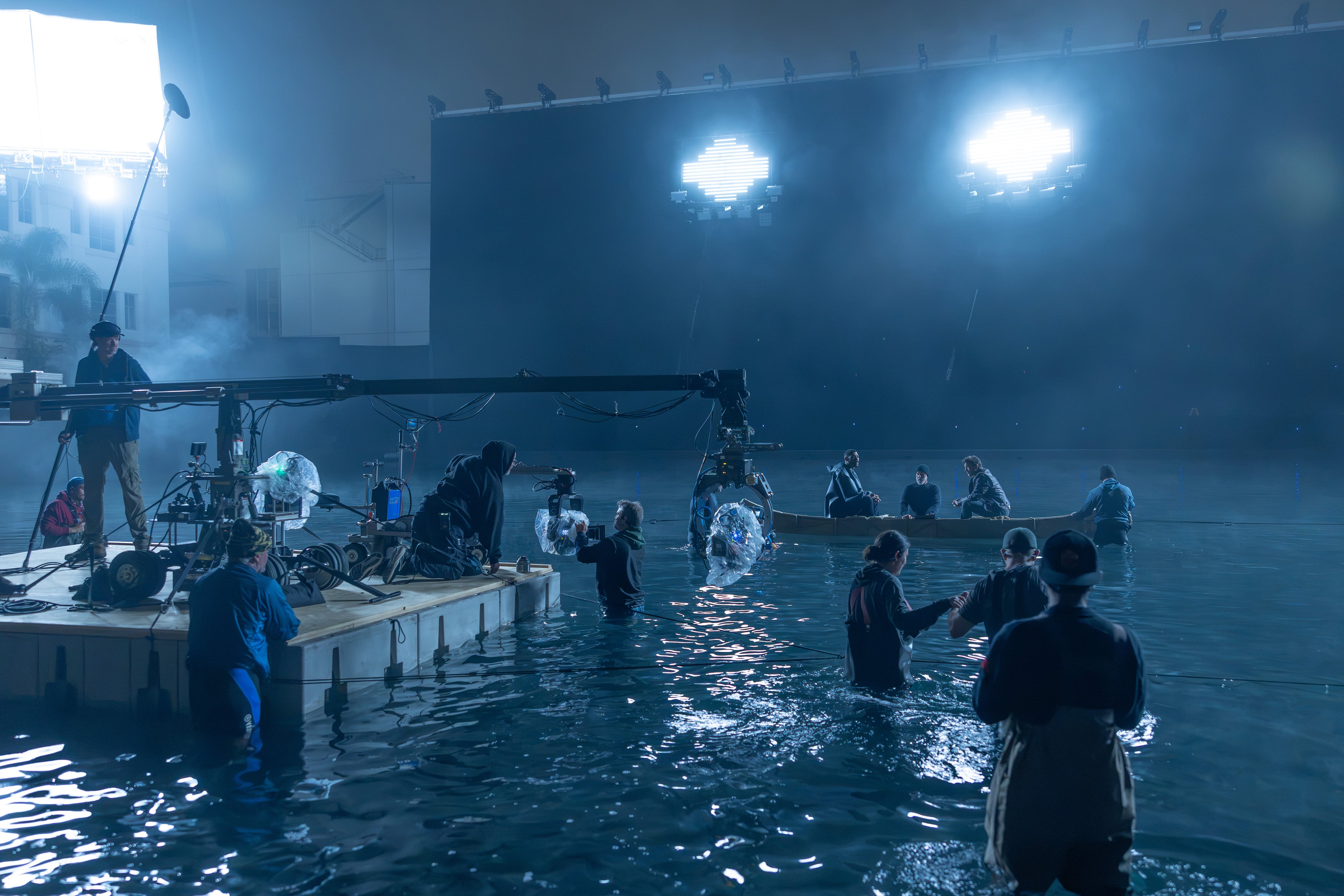
Photo Credit: John Johnson/HBO Max
Blending Gritty Realism and Sci-Fi with Sony VENICE 2
When Salas took over the series, the cinematographer had two big challenges. One was to maintain the look that Hoffmeister established, and the other was to evolve it as the show went off-planet.
“I maintained the look that James and Florian created and then evolved very quickly from there because not only do we go off-planet, but we also have some jumps in timeline,” Salas continued. “The town of Rushville is destroyed in one of these timelines and then revisited later. We go from this very warm and sunny, mostly rural landscape to a grayed-out war zone. So inherently, the look develops with the storyline”
An important story beat that shifts the show's look happens in these later episodes, which take Hal and John off-world to a desert alien planet. To create this extraterrestrial landscape, Salas shot at the Harper Dry Lake Bed in the Mojave Desert, using filtration and creative sun placement to achieve the look in-camera.
"I did some preliminary tests on my DSLR out on location, shooting with some old black and white filters and deep reds and oranges and yellows and then narrowed them down to a few that I then went back and tested on the VENICE 2,” Salas explained. “A combination of a Deep Yellow #15 with a polarizer and very heavy internal ND [of the VENICE 2] made the sky about four stops underexposed. It drained all the blue out of the sky, so it was basically just a dusty dark gray.
“The skin tones and desert floor were also heavily affected, which was okay in the reality of this other world and for this kind of long dusk period.”
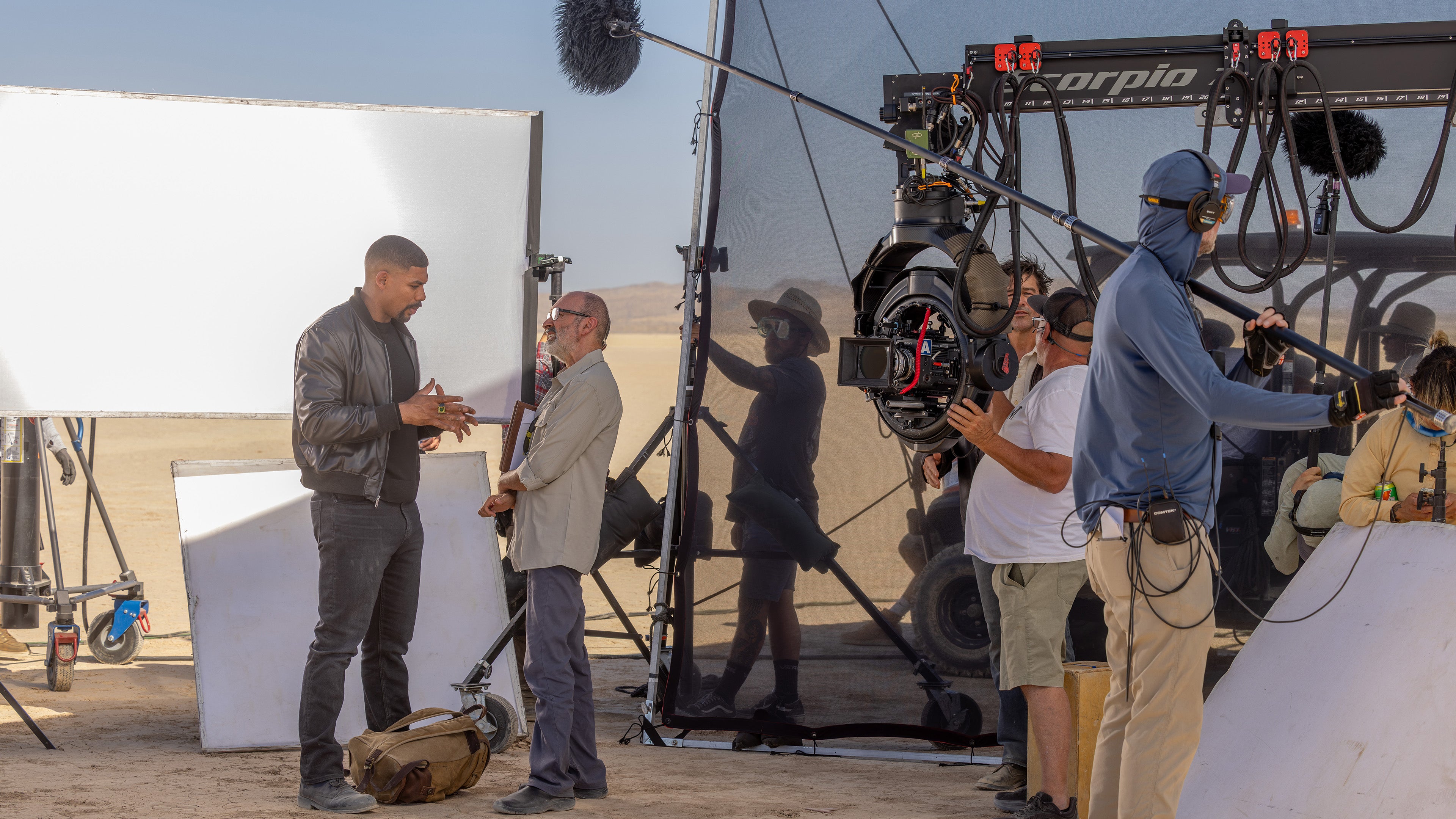
Photo Credit: John Johnson/HBO Max
The new LUT Salas created drained the color out of the blacks and pushed them toward green and cyan, which helped balance the skin tones and had the added benefit of turning the sky a dark grey-green. This gave the VFX team an easy way to rotoscope these shots for sky replacement and allowed Salas to avoid additional blue screen work for set extensions.
“We shot all the wides with the sun very high in the sky so that the shadows essentially disappeared, and then for the close-up work, we covered [the cast] with condors using gray grid cloth to have a soft, base ambient light that felt appropriate for dusk,” Salas said. “The internal NDs [were] key in the desert. We were using a Yellow 15, a polarizer, and a 2.4 internal ND that was the perfect sandwich, and the light was so consistent for 80% of the day that I didn't have to adjust filters or even T-stop.”
To capture all of these hectic moments, the production ran a plethora of cameras and multiple units. Neil Chartier, who was the B Camera 1st AC with Hoffmeister before moving to A Camera 1st AC with Salas and Middleton, kept the many cameras and lenses functioning.
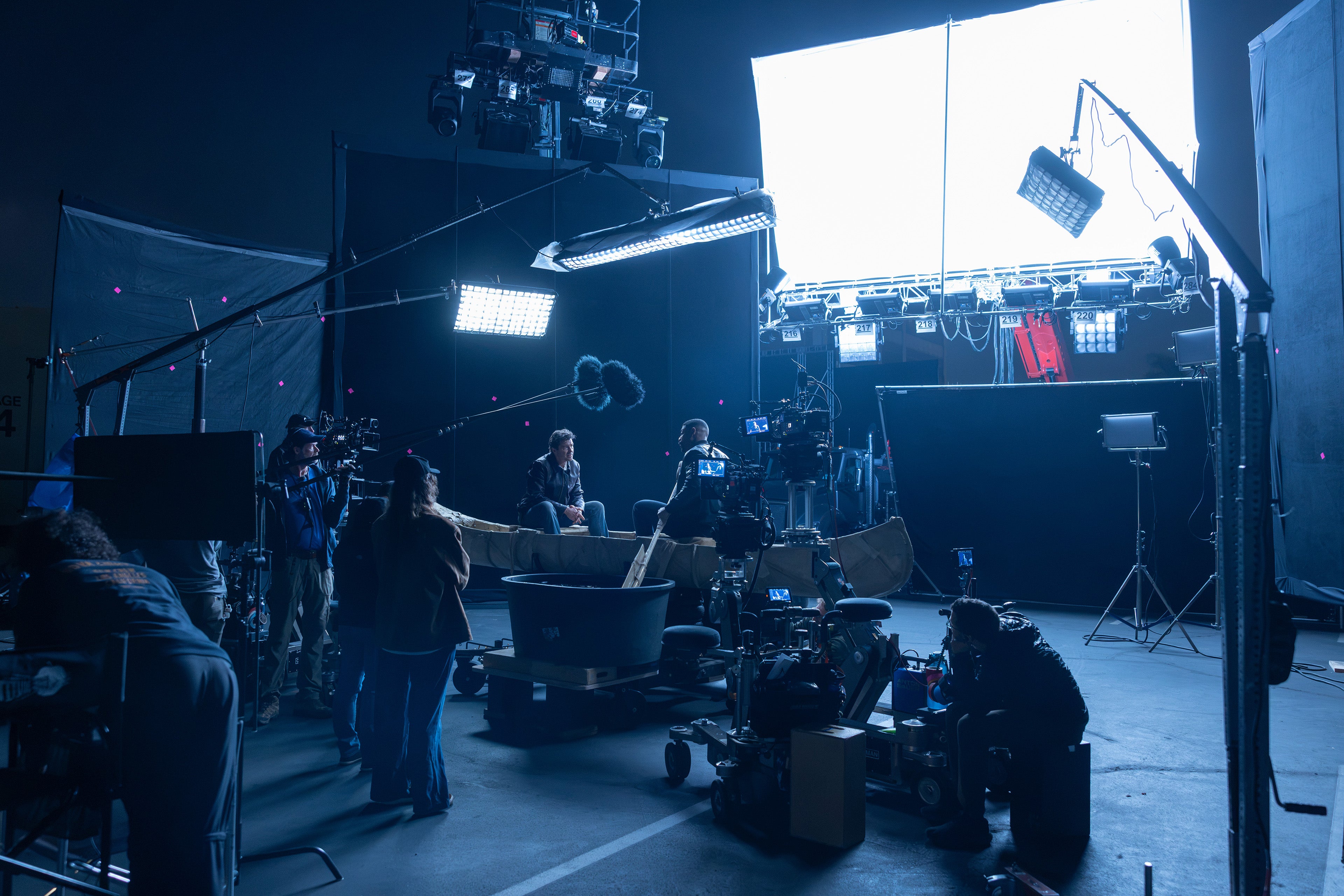
Photo Credit: John Johnson/HBO Max
Pushing to the Very Edge
With the show bouncing between a real-world location and alien landscapes, Hoffmeister and Salas pushed the VENICE 2 to the extreme. From the Mojave Desert and Barstow, California to the Paramount Studios water tank, the VENICE 2 experienced a wide range of extremes, both physically and creatively.
“For moments in the Paramount water tank, we discovered once we put the underwater housing in and the character is being dunked underneath, it looked better with a 90-degree shutter at 48 frames per second. And we were already at the max of our lighting capabilities there,” Salas said. “Having that ability to get two stops more light by switching the native ISO [to ISO 3200] makes those decisions easy.”
“We were in a high-contrast environment because we were shooting it in California, albeit over the winter, but the sun is quite strong,” Hoffmeister added. “So I like how the camera keeps the highlights and the color.”
Either with the VENICE 2 or the RIALTO Mini, both cinematographers needed to work at the edge of what was technically possible.
“The way TV has gotten to look as good as it has is essentially, yes, bigger budgets, but mostly it is gains in efficiency,” Salas said. “We're able to get really sophisticated with the lighting and with the camera movement in a very short period of time. So you need vendors and partners that deliver.”
“Everything just needs to perform perfectly, 100% of the time, or you're cooked, because you're always at the very edge of failure in terms of time.”
Stream Lanterns now on HBO MAX to see the incredible work of Hoffmeister, Salas, and Middleton. To learn more about the VENICE 2 and the other cameras in the Sony ecosystem, visit our Camera Comparison Chart.


