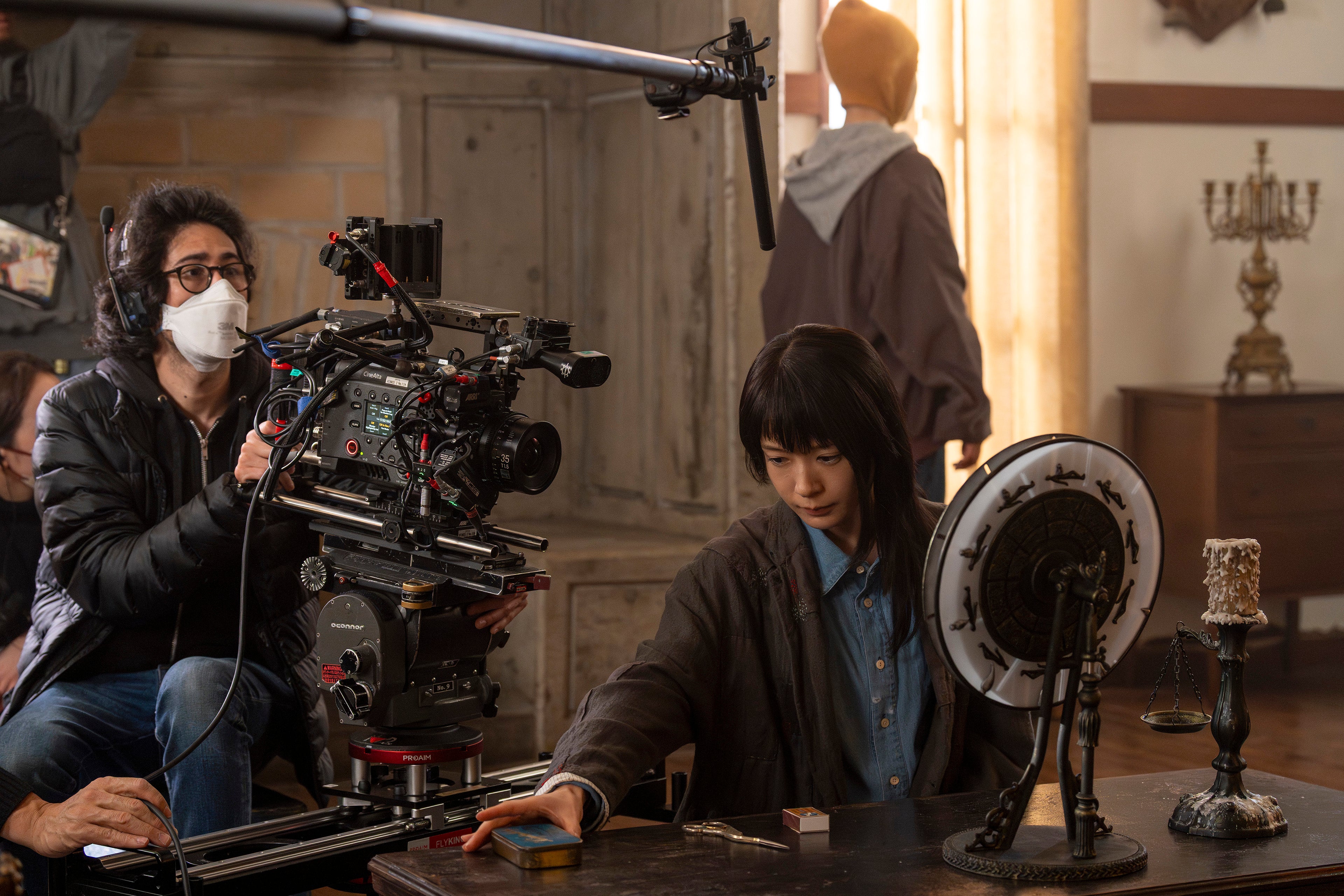
09-29-2026 - Interviews & Behind The Scenes
Sony VENICE 2 and FX3 Capture the Chills of Supernatural Horror in “Never After Dark”
By: Yaroslav Altunin
Never After Dark is a Japanese-language film directed by Dave Boyle (House of Ninjas, Man from Reno). Following the story of a medium who must face a powerful entity in an isolated house, the fantasy horror builds a visual language inspired by classic horror films and mixes it with a modern approach to composition.
After honing his creative talents in the commercial space with spots for Discover, Google, and Nike, DP Patrick Ouziel was brought on board to tackle the challenge of capturing a story told in a language he doesn’t speak. Using the Sony VENICE 2 and FX3, the cinematographer used mixed frame rates, hard light, and depth-of-field control to bring Never After Dark to the big screen.
Sony Cine sat down with Ouziel to learn more about the unique techniques he brought over from the commercial world, how he and Boyle developed the visual language, and how the Sony Cinema Line was a crucial toolkit for working efficiently.
Building a Visual Language by Looking to the Past
After dozens of commercials and short films, Never After Dark would be Ouziel’s feature debut, one that would see his work premiere at SXSW in 2026. After crossing paths with Boyle when the director was prepping Man from Reno, on which Ouziel also worked as a camera PA, the two creatives would orbit each other before finding the opportunity to work on Never After Dark.
“Having seen Man from Reno, I just love [Dave’s] style as a director and the way he moves the camera,” Ouziel said. “He's very into elegant blocking and scenes that are covered with stately dolly moves. It spoke to me in terms of his style of filmmaking, so it was really exciting to get asked to do the film.”
With the script in Japanese, Ouziel received one of the only copies translated to English. Boyle himself is fluent in Japanese and has directed several movies set in Japan, or featuring Japanese and Japanese-American casts.
"I read the script, and I loved it. So I pulled some stills from ShotDeck, just based on what was coming into my head from reading the script, and Dave really liked the stills,” Ouziel said. “[The project] was a little surprising, because the film is in Japanese. Dave had at that point done a whole series in Japan called House of Ninjas, and Dave speaks fluent Japanese.”
“So he's very comfortable working in Japan, both on the industry side and then on the language side of things. But for me, I don't speak Japanese at all, so they hired a translator, and I had an English version of the script that was just for me.”
"The other person who made this entire film possible for me was my translator, Tsukuha (Tsu) Inagawa," Ouziel added. "Most of the crew spoke only Japanese, and I spoke no Japanese other than some basic phrases and greetings. Tsu ended up occupying a true managerial position within the camera department, ensuring all my notes about upcoming scenes or gear were communicated to the camera department and production team. I couldn’t have done it without her."
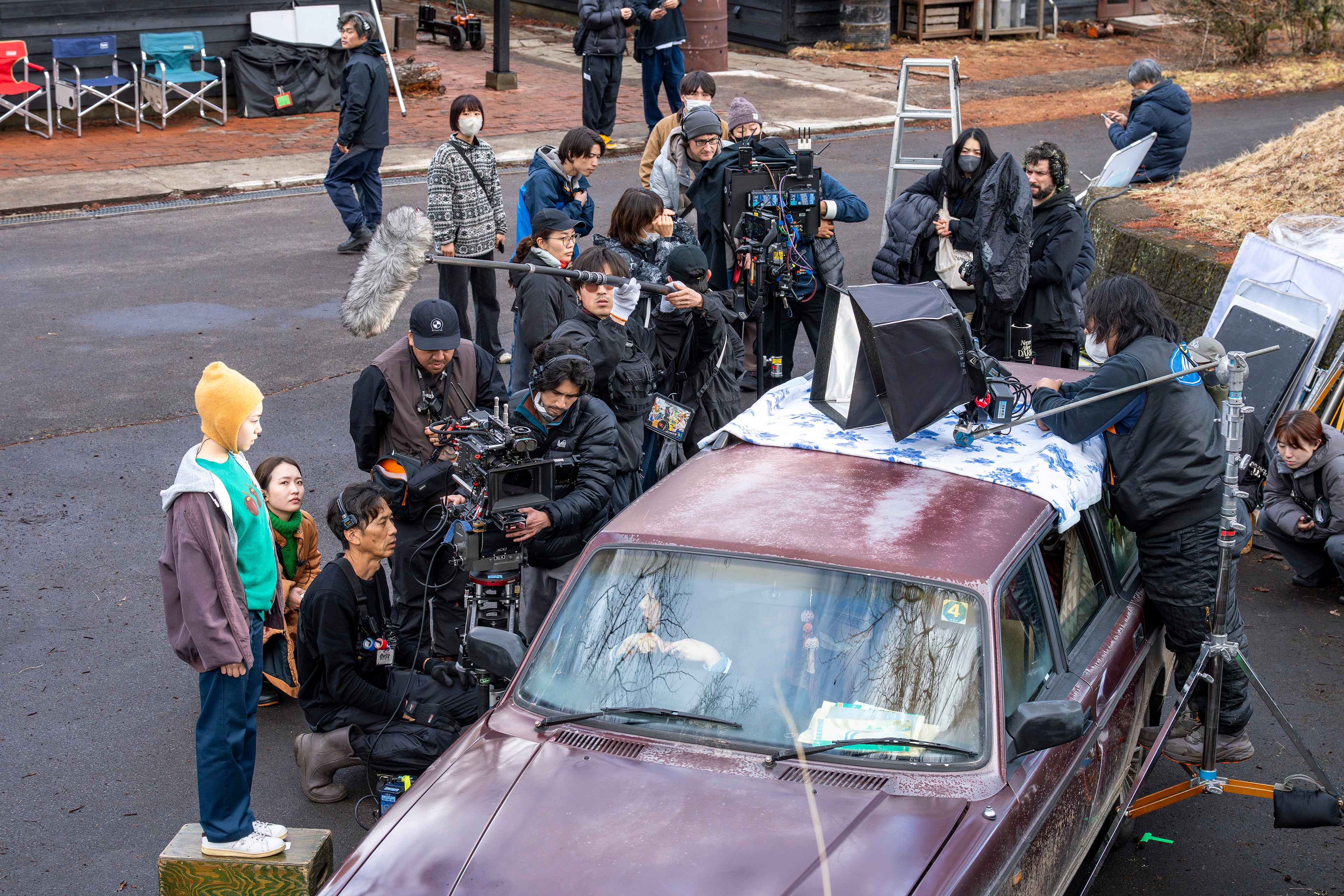
Never After Dark is also a period film, which added extra layers to the visual language for Ouziel to tackle. Here, he and Boyle leaned on references from iconic horror films to build their own unique look of Japan in the 90s.
“The film is a period piece set in the 90s, but there was a desire on Dave's part to lean into having a bit of a retro feel to it,” Ouziel shared. “Visually, there were a few things that we talked about in the beginning. [David] referenced some older films like Don’t Look Now and The Changeling. One is from the 70s, and the other is from the early 80s.”
“And even The House of the Devil, which he had me watch. Though it's a newer film, it references, visually, a lot of older films in terms of the zooms and the lighting.”
Ouziel and Boyle wanted that visual movement of a zoom lens that was prominent in the 70s. Still, the duo also weren't afraid to break away from being naturalistic and leaned into unmotivated lighting and compositions that let the audience feel the movie.
“It's very easy today, with how good the cameras are, to have [light] coming through the window and then you add a little bit of fill with a LiteMat,” Ouziel explained. “And I've done that many times. I've shot commercials, things when you're moving quickly, and it can look really nice. I think people want things to feel natural and not over lit.”
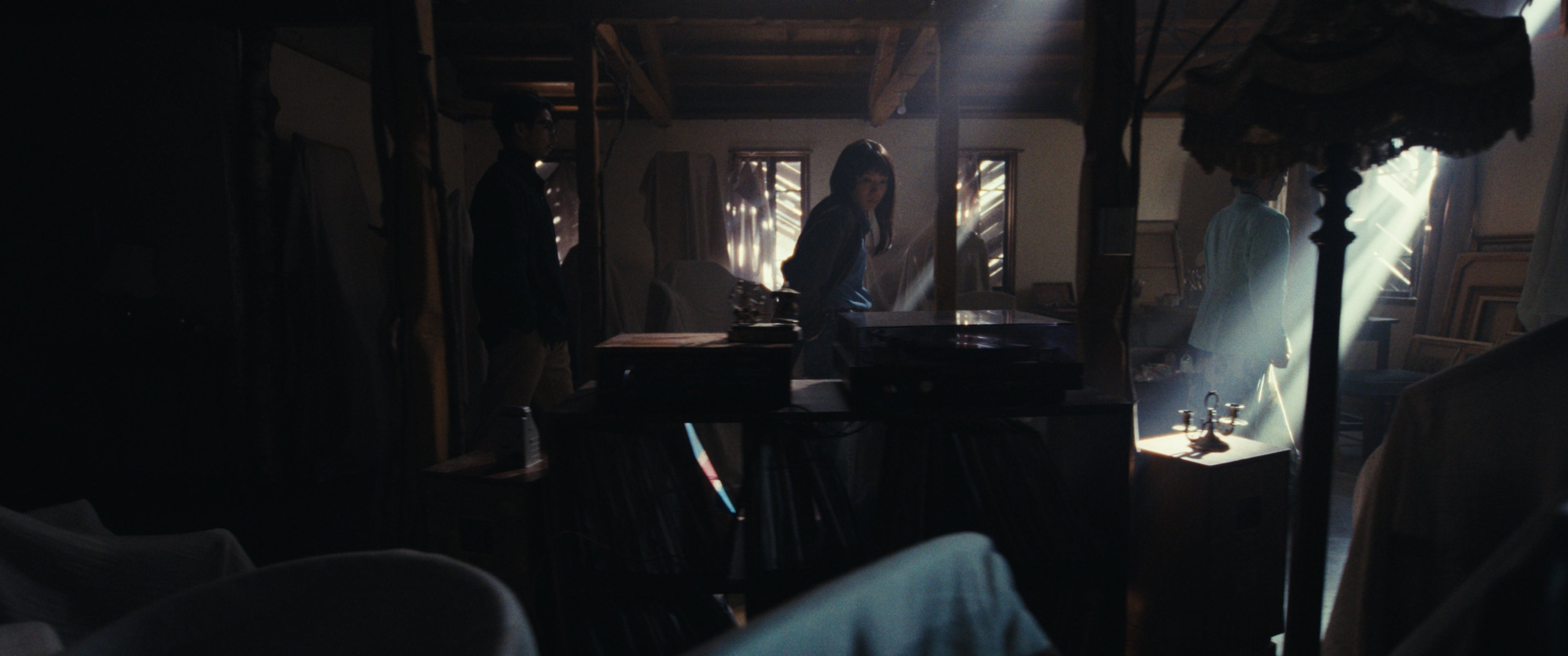
“But I always go back and watch things like Road to Perdition, and I see the way Conrad Hall is just putting down little inkys (a traditional 200-watt incandescent tungsten Fresnel spotlight), and uplighting a wall in the background behind a sofa in a way that doesn't really make any sense,” Ouziel added. “It really is like painting with the light and deciding that I just want a splash of light on this area within this frame.”
Ouziel also looked to the 1971 film Klute, directed and produced by Alan J. Pakula and starring Jane Fonda and Donald Sutherland. Here, the cinematographer embraced harsh shafts of light across faces that only illuminate the eyes.
“I think DPs are always afraid of over-lighting. I think that's one of the big sins of cinematography, over-lighting and making things feel like it's fake or something in a way that takes the audience out of it,” Ouziel said. “So I’m always trying to find how I can be expressive with the lighting in a way that is more than just purely being naturalistic. And that was one of the main drivers for the general approach [for Never After Dark].”
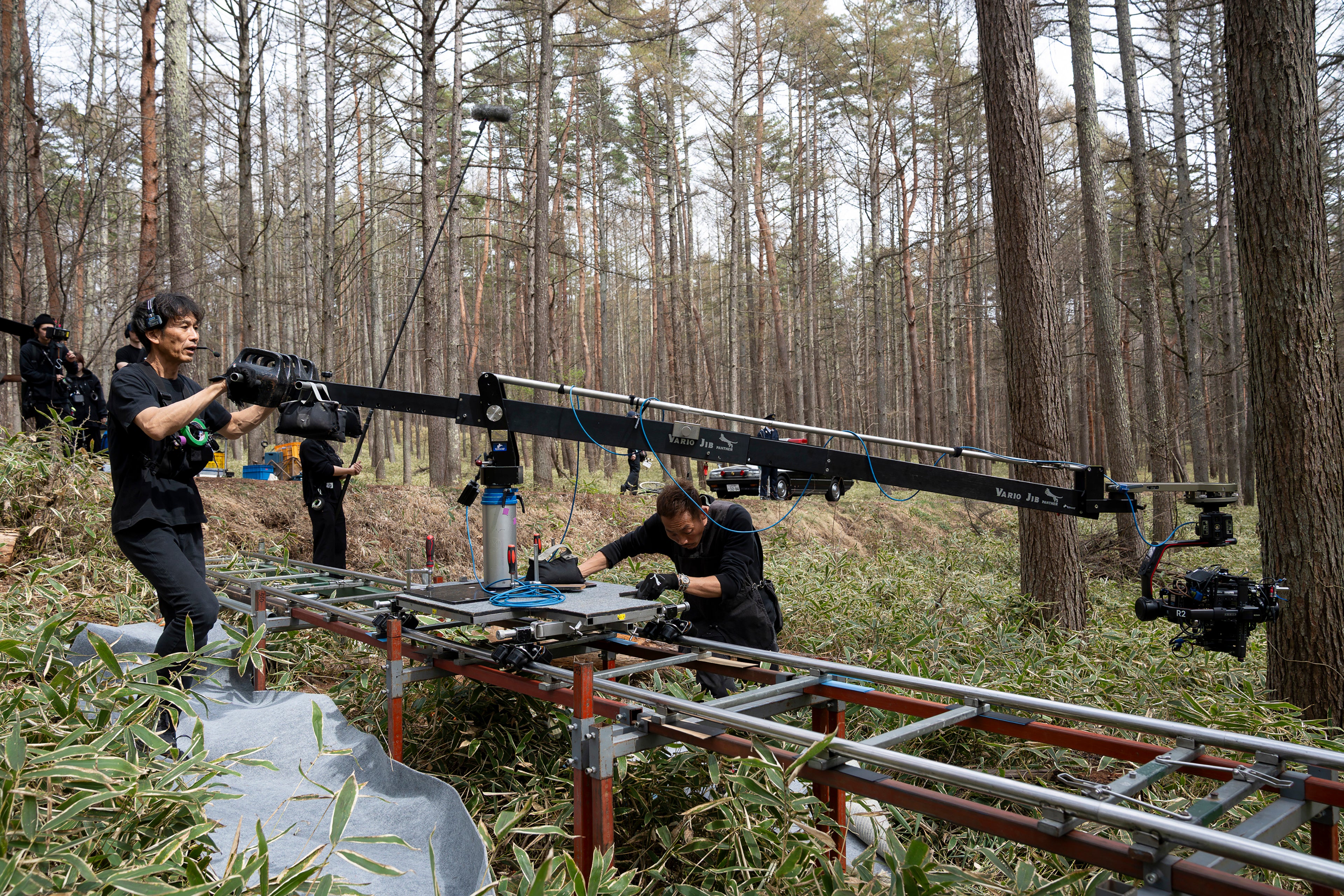
Capturing Reality and the Supernatural
With the film living in the real world as well as the realm of the supernatural, Ouziel embraced the Sony VENICE 2 and FX3 to stay within budget and work efficiently, while still having creative opportunities to experiment with frame rate and exposure to capture both worlds.
“I've been shooting Sony for many years. When I was a kid, I had a Sony DCR-VX2000, and then my first big camera was an F3. Then I bought an F55,” Ouziel said. “So I've been entrenched in Sony for a long time. A lot of that actually comes from my time at Videofax. They raved about the F35, and that definitely imprinted on me a strong admiration for the engineering of the Sony cameras.”
With such a long history with Sony cameras, Ouziel has developed a creative trust between what he wants to achieve and the tools at his disposal. For Never After Dark, having the flexibility of resolution and sensor crops allowed for creative lens choices.
“I shoot VENICE basically on every project where the camera choices are up to me. And I do that because I think the camera system is so flexible,” Ouziel said. “We shot with full-frame [Sigma] primes in 8.2K, and I also always shoot with like a 10% safety, because I like to be able to stabilize and reposition in post. And because the sensor is so high resolution, it's really easy to do. You don't lose out on anything, and I love that the sensor lets me do that.”
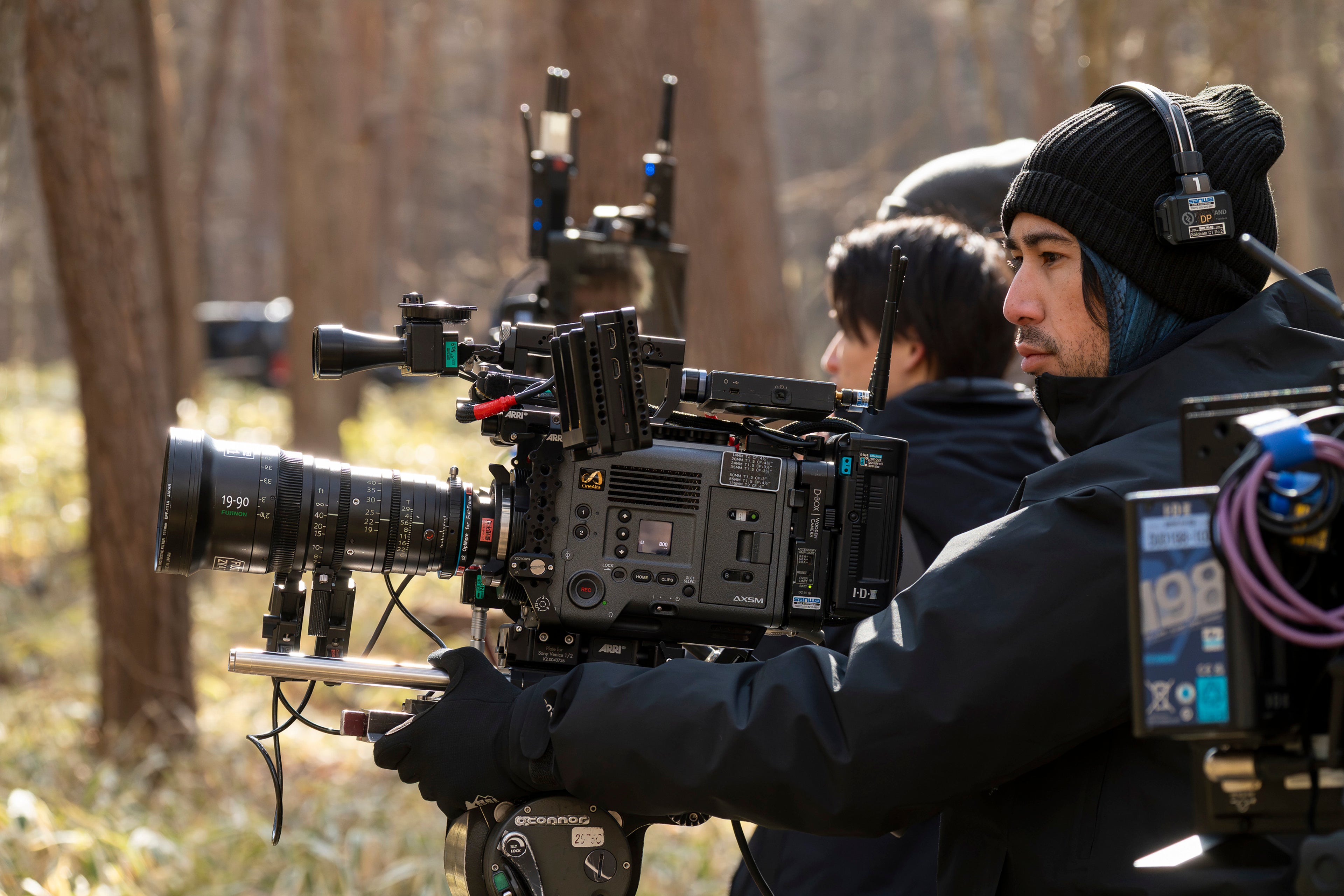
“We also windowed down to Super 35 for all the zoom shots, because we were using a Fujinon 19-90mm T2.9 Cabrio. I don't think that there are as many good full-frame zoom options that have a big enough range, unless you get into, like, the big studio, like 12:1 Angénieux stuff.
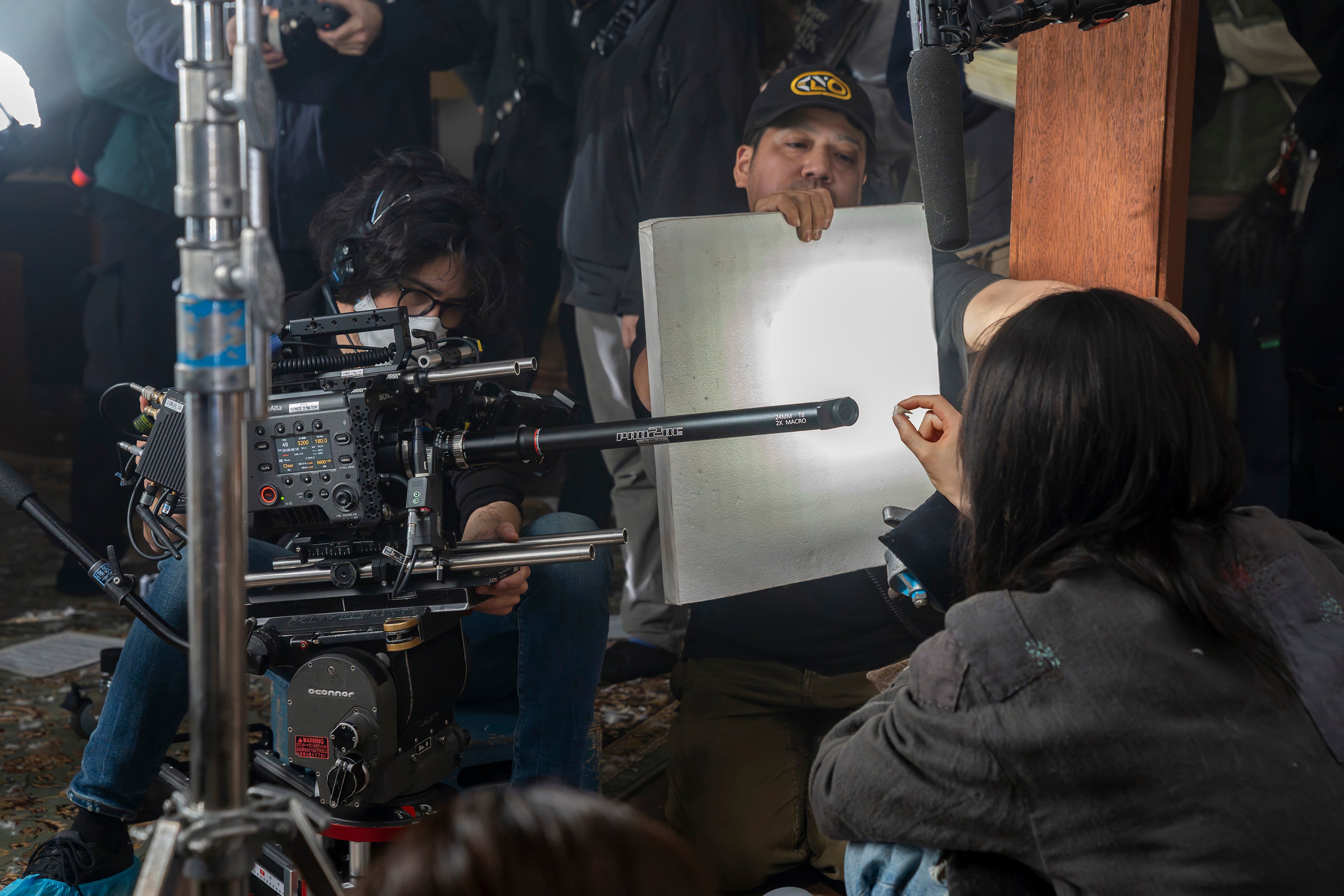
The Sigma full-frame primes and the Cabrio zoom were also paired with a Laowa probe lens. Here, Ouziel balanced ISO, frame rates, and depth of field to create a consistent visual language across this range of lenses.
“I'm a very pragmatic person. I want to be able to switch to a zoom shot and not rebuild the whole camera. And the Cabrio lets me do that. We can use the same matte box and everything, and then just window down on the sensor,” Ouziel said. “I do a lot of commercials, and we're always doing probe shots using high ISO, and we did probe shots on this movie as well. That was the kind of stuff that I think Dave saw in some of my commercial work, some of these funky camera angles, and wanted in the film.
“So we had a Laowa 24mm T8 probe, but at T8, it's nice to be able to bump it to ISO 3200 and just shoot. Or like, you’re shooting at 24fps, and then you want to go to 60, then you can easily bump to 3200 and just shoot at 60.”
While Ouziel mentioned that the Sigma primes can be really sharp when paired with the 8.2K resolution of the VENICE 2, this is by design. Having a clean image as a foundation lets Ouziel adjust the look in post without baking in creative decisions that can’t be changed later.
“They're clean lenses, and I didn't shoot with any diffusion, but we shot with a lot of haze that already lowers the contrast and softens the image. The haze made a huge difference because the entire movie had haze,” Ouziel said. “I’d always rather start with the clean image and then dumb it down in post, and that's what we did with this movie.”
“We shot in 8.2K, and we used Filmbox for all the texture in the film. And when you do Filmbox in 2K, if you just put the 8.2K footage in a 2K timeline, it has a really nice soft grain. And then the way that Filmbox halation softens the image is really nice. ”
“We had to finish in 4K because of sales company requirements, so I found Filmbox settings that softened the grain and the whole image to look like the default 2K output that Filmbox gives you.”
Ouziel also demands complete control over his depth of field. Because he’s switching between full frame and Super 35 glass, and also working with a wide range of T-stops, having the internal NDs and Dual Base ISO allows him to adjust the depth of field to match creative moments.
“I'm a huge stickler for depth of field and what it looks like exactly on every shot,” Ouziel said. “I want to tweak that on every shot if I feel like it's not right. Being able to change the ISO or change the ND and then just audition a depth of field change is really amazing. It’s a huge creative tool.”
Inspired by cinematographer Claudio Miranda, ASC, and his work with the VENICE cameras, Ouziel embraces changes in depth-of-field as a creative tool. But the internal NDs also support his creativity in different ways.
“I'm also not a huge fan of filters in front of the lens. So being able to have all the NDs behind the lens and avoid reflections is also huge for me,” Ouziel said. “It’s why I don't typically shoot with diffusion in front of the lens. I just like to avoid any of the double reflections. So having the NDs behind the lens is perfect.”
Two Different Types of Night
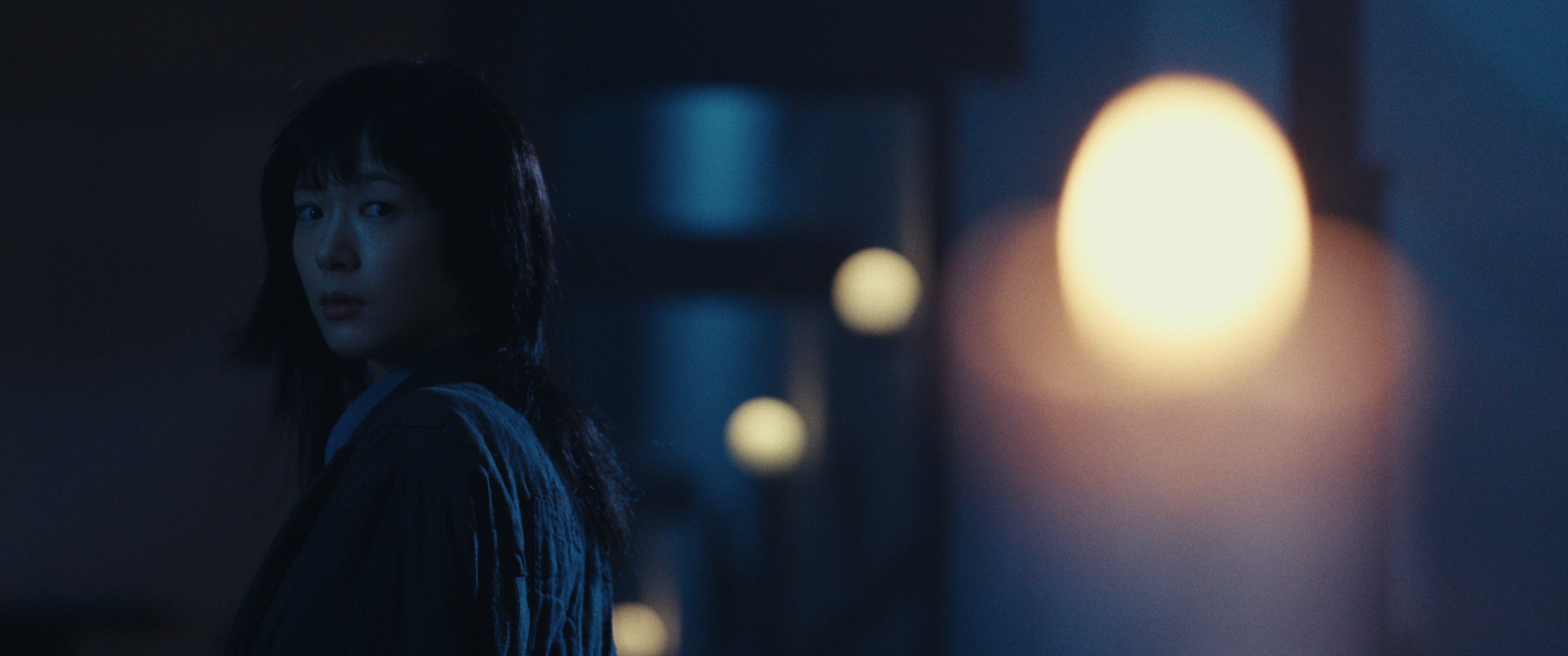
All of these creative tools were critical in keeping the look of Never After Dark consistent, which had night scenes based in reality and also within the supernatural world. This ceremonial night, as Ouziel called it, skewed in color, but also needed to fade in on screen, which the DP did in-camera.
“Within the film, the medium does these séances where she goes into the spirit world, and in the script, it's called ceremonial night. And then there's obviously just real-world night scenes,” Ouziel said. “So one of the bigger discussions we had early on, Dave asked me to put together a deck with some images and conceptual ideas of what I wanted for each of those and how to differentiate when she's in ceremonial night versus when she's in the real world."
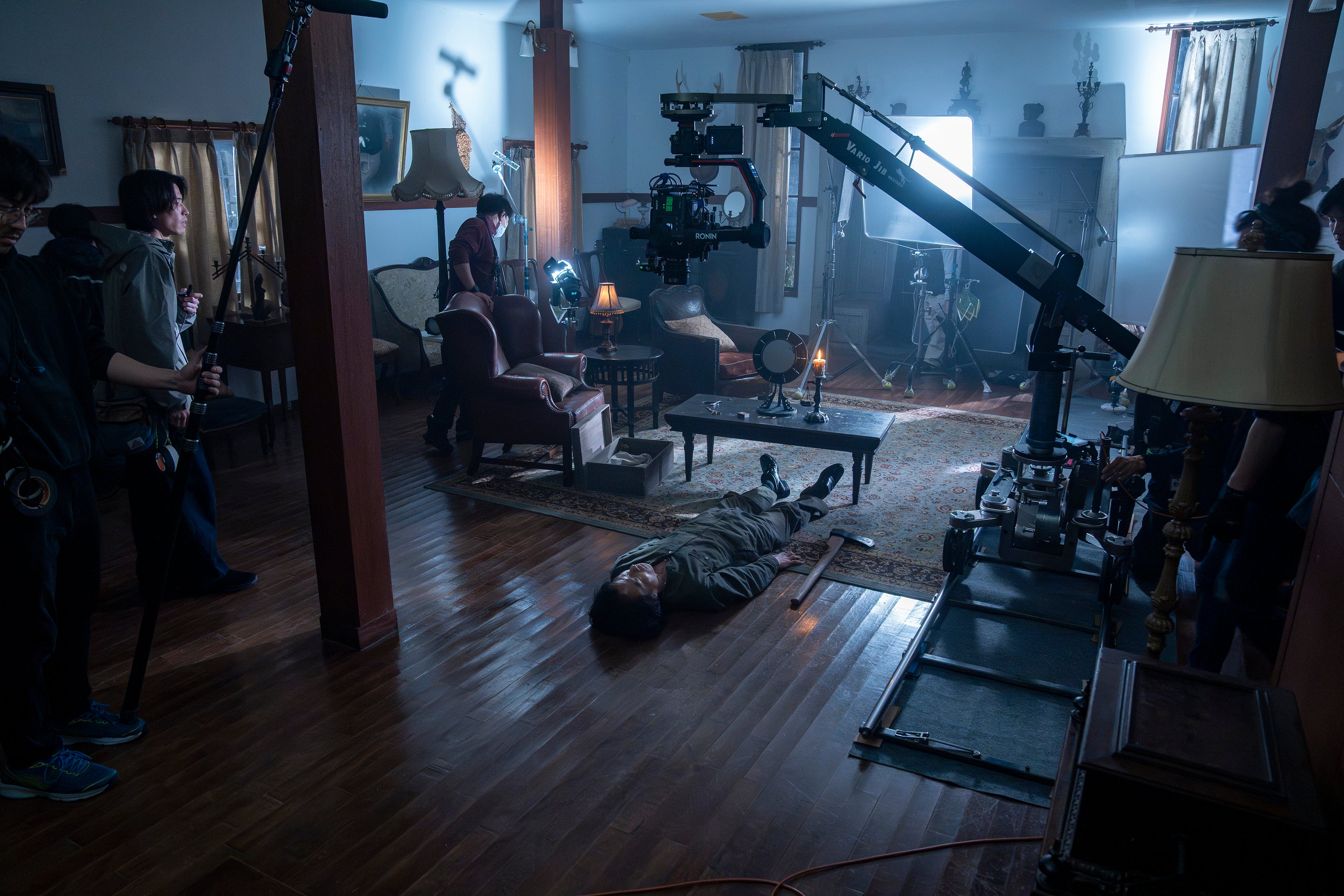
“That was one of the stronger decisions we had to make in terms of concepts,” Ouziel continued. “Moonlight during the regular night scenes would be pretty neutral. We would lean into, like The House of the Devil and those very old-school night interiors, like harder light, just unmotivated little splashes around the set. Even in the night exteriors, we’d put a big light on a condor and shine it through the trees so it's like in Halloween where all the shadows from the trees are on the house.”
“And then for the ceremony night, [we went] with a much stronger color choice, a cyan hue. And then I wanted defined beams, so we hazed up the house and had them go through the windows.”
These ceremonial night scenes were further adjusted with creative use of frame rate and altered again in post-production.
“We also flipped all of those scenes too,” Ouziel said. “When she goes into the spirit world, everything is mirrored, which is just a post thing, but conceptually, we had it in our deck. And then the very first time she goes into the ceremony, we actually shot those all at 30 frames per second. Just to give it an almost imperceptible feeling of slow motion so it feels like it's otherworldly.”
“So it's two or three shots that we have in that slow motion, and then we cut to a different shot and back to 24. I think that was enough to give the audience a subconscious feeling of something's shifted.”
One of Ouziel’s favorite shots was a transition from day into ceremonial night, which was initially planned to be handled with VFX but was tackled mostly in-camera when the team got into production.
“The script says that you see the light on her face change from daytime to the ceremonial night. It always was going to be some sort of lighting transition, and when we started talking to Hidenori Nagata, my lighting director, he was very excited to start wide and push in and then do the whole lighting change as we do the dolly push,” Ouziel shared. “It was really cool to see because we shot it all at night. They had lights that were hitting the walls that were outside the room, and they lit it to look like daytime.”
“And it wasn't purely DMX changes. There were certainly DMX changes happening, but there were a bunch of people outside turning flags, and to see it all happen on camera was like a cool magic trick. I think it's a cool shot of the movie too, where there's very minimal VFX to help smooth out some of the LEDs that weren't fading totally smoothly. But the whole thrust of the shot is all in camera.”
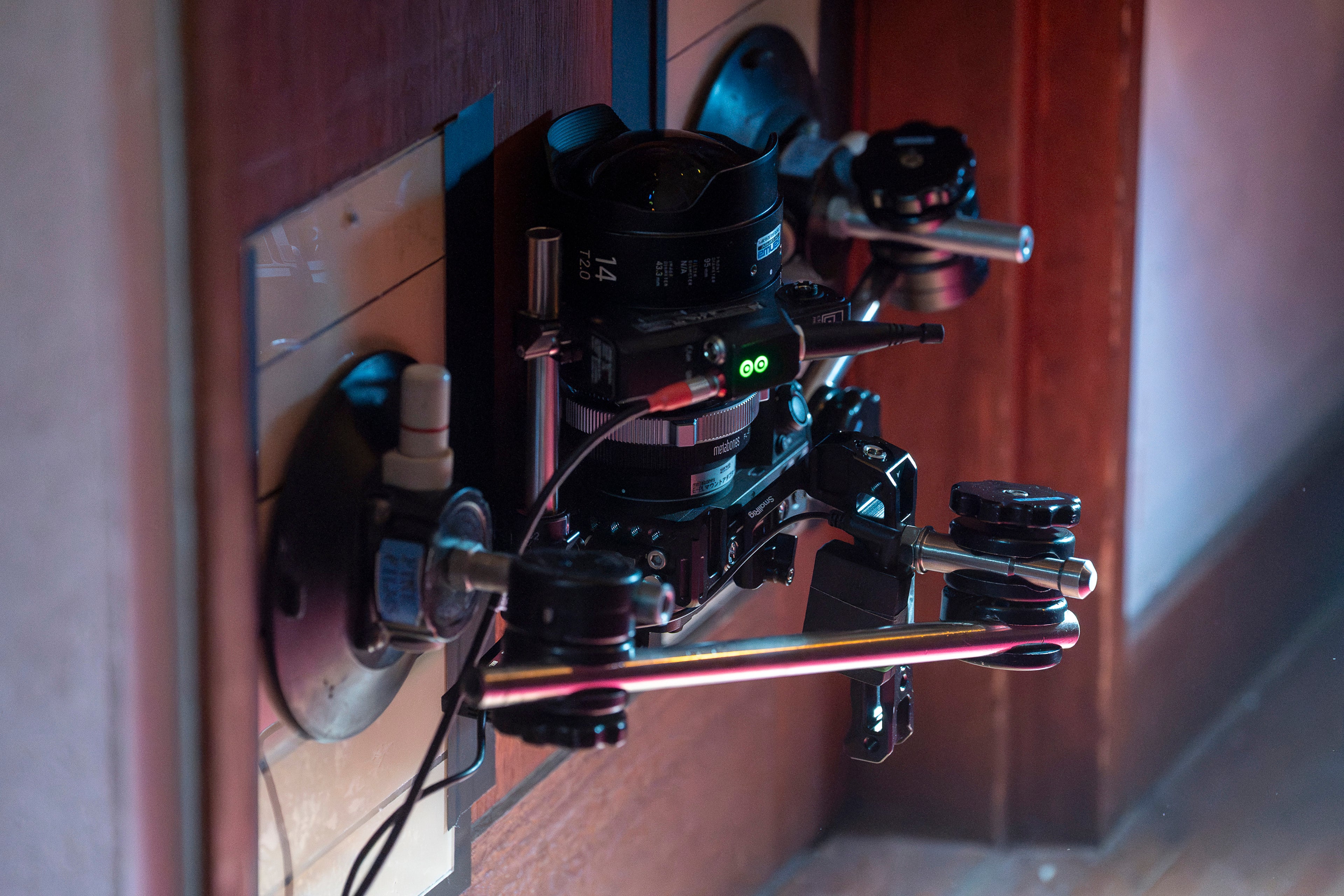
To make sure all of these exposures were exactly how he envisioned them, Ouziel makes liberal use of High/Low Key, a favorite feature of his on the VENICE 2.
“I’m always preaching the gospel about High/Low Key because it was something that I used on the F55 all the time,” Ouziel said. “It's such a fast tool for checking the highlights and sometimes better than checking LOG.”
“It’s one of those things that just makes me move really quickly because I can very quickly hit the button and see that everything's there. So that's one of my favorite features that I think helps me as a DP, just to be confident.”
Due to his familiarity with the Sony range of cameras, the VENICE 2 brings a sense of predictability and comfort to each project. This even extended to the FX3, which Ouziel used for moments when the VENICE 2 was too big to use efficiently.
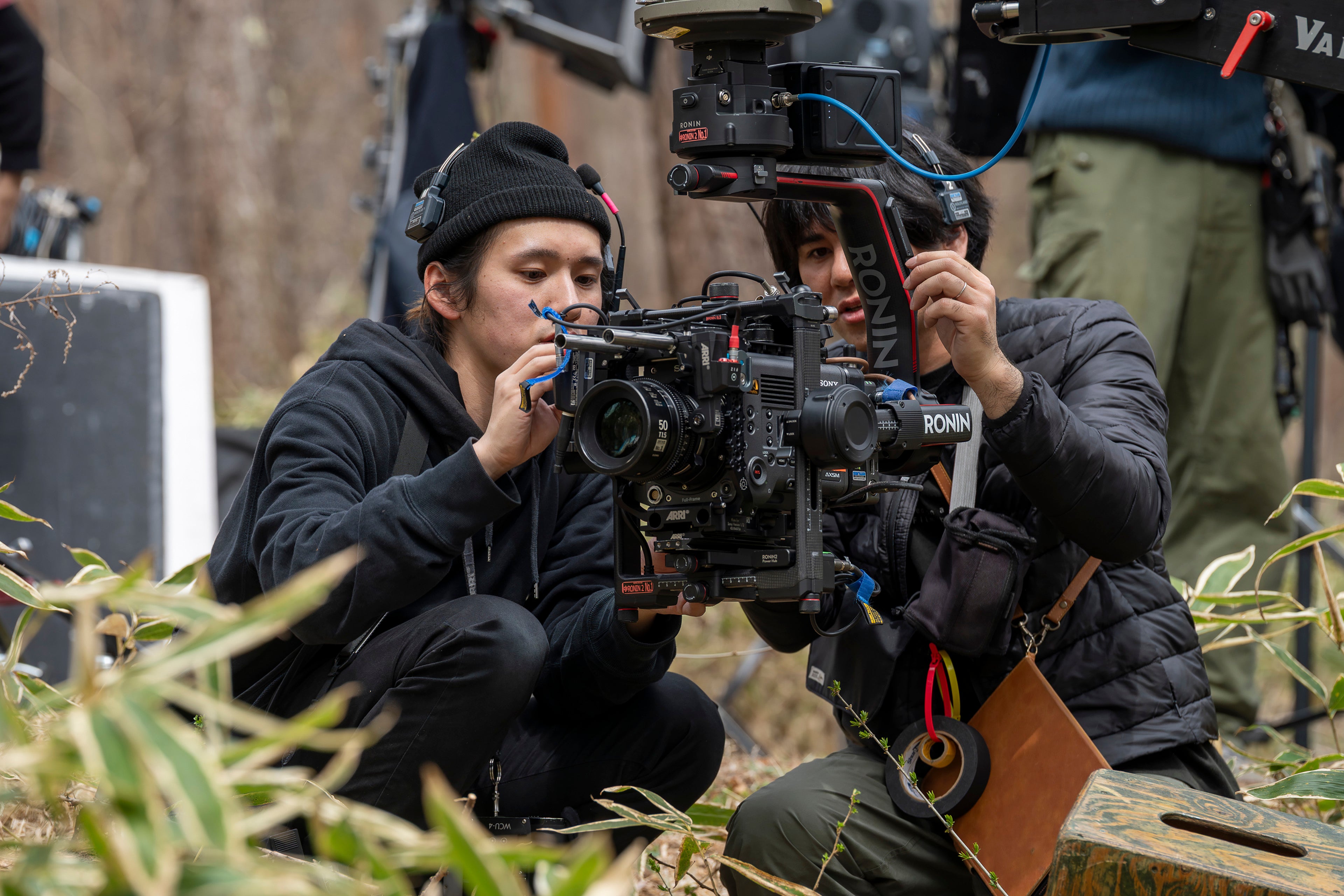
“I think that's why I keep coming back to it. I don't want to have to worry about ‘Is this camera going to hold up?’” Ouziel said. “I like the way that it always delivers for me. Same with using the FX3. I hadn't seen that on a big screen, and it was surprising to see. We used it for rigging the camera to stuff and car-mounted shots, and some scenes where we didn't have Steadicam that day. I just walked with it on a Ronin, and I think it matches really well.”
Bring It All Together
Ouziel often used the VENICE 2 with a 6K sensor on commercials because of data concerns. 8.2K in X-OCN ST can strain the budget of a film like Never After Dark, but with this project, the cinematographer discovered how versatile X-OCN could be.
“Now I actually shoot X-OCN LT all the time, because through this film, I realized that the X-OCN LT looks amazing and holds up on a big screen. And we also checked with Fotokem to make sure that they were happy with the LT choice,” Ouziel said. “I'm not going to insist on something that both doesn't have a huge impact and also costs more money when I'd rather spend money on other things. So I think the fact that the LT looks, to me, almost indistinguishable was nice. And I’ve carried that through [onto other projects]. I basically use it on everything. And I'm often making the case to producers.”
On this project and those in the future, Ouziel is a cinematographer who makes sure a film or commercial can thrive creatively, no matter the budget. But when it comes to telling stories in the medium of cinema, it is the appreciation of the final result that keeps bringing him back to set.
My hope with any movie that I make is that someone steps away from it and is engaged with it,” Ouziel said. “If it's a comedy, they found it funny; if it's a drama, they are engaged in the drama or moved by something in the film. It is still the ultimate joy and satisfaction that the movie as a whole comes together and people appreciate it as a piece of filmmaking and a piece of cinema.”
To see Ouziel’s work on the big screen, Never After Dark premiered in theaters on September 25, 2026. To learn more about the VENICE 2 and the other cameras in the Sony family, visit our Camera Comparison Chart.


