08-04-2026 - Interviews & Behind The Scenes
“The Devil’s Mouth” Takes Sony Into Thrilling Murky Depths
By: Yaroslav Altunin
The thriller genre and the shark have been a constant companion ever since Steven Spielberg and Bruce teamed up on Jaws. With The Devil’s Mouth, a feature film directed by Jeff Wadlow for Amazon Prime Video from the Hollywood Blacklist script penned by Aja Gabel and Myung Joh Wesner, the genre receives a new installment to the pantheon.
Following a group of five college friends who explore an underwater cave system in Thailand, The Devil’s Mouth features an impressive list of underwater locations and sets. To capture the thrills and horrors of these underwater elements, DP James Kniest (American Horror Stories, The Haunting of Bly Manor) reunited with Wadlow for their first feature film together, where the cinematographer utilized the Sony VENICE 2, the VENICE 2 Extension System, and the FX3 to blend real-world locations and expansive set pieces.
Sony Cine sat down with Kniest to learn more about his creative approach, the challenges of underwater cinematography, and how the Sony Cinema Line gave him the support he needed to thrive in the water.
When Travel Brochure Meets Underwater Horror
Both veterans of the horror and thriller genre, Kniest and Wadlow spared no time prepping their first feature film together. While a horror/thriller at heart, The Devil’s Mouth begins as a coming-of-age adventure for a group of college friends on their last adventure before their life begins in the real world.
“I got the script and it was all water, all sharks, adventure and excitement,” Kniest said. “We're in a whole other country, so there were a lot of physical and logistical challenges. But I had a fair amount of time to prep, which was great because we were able to really get a lay of the land and get to know the crew.”
“The crew was absolutely amazing. They were the same crew, for the most part, that came right off of Alien: Earth with Dana Gonzales, so they just were already in sync and firing on all cylinders.”
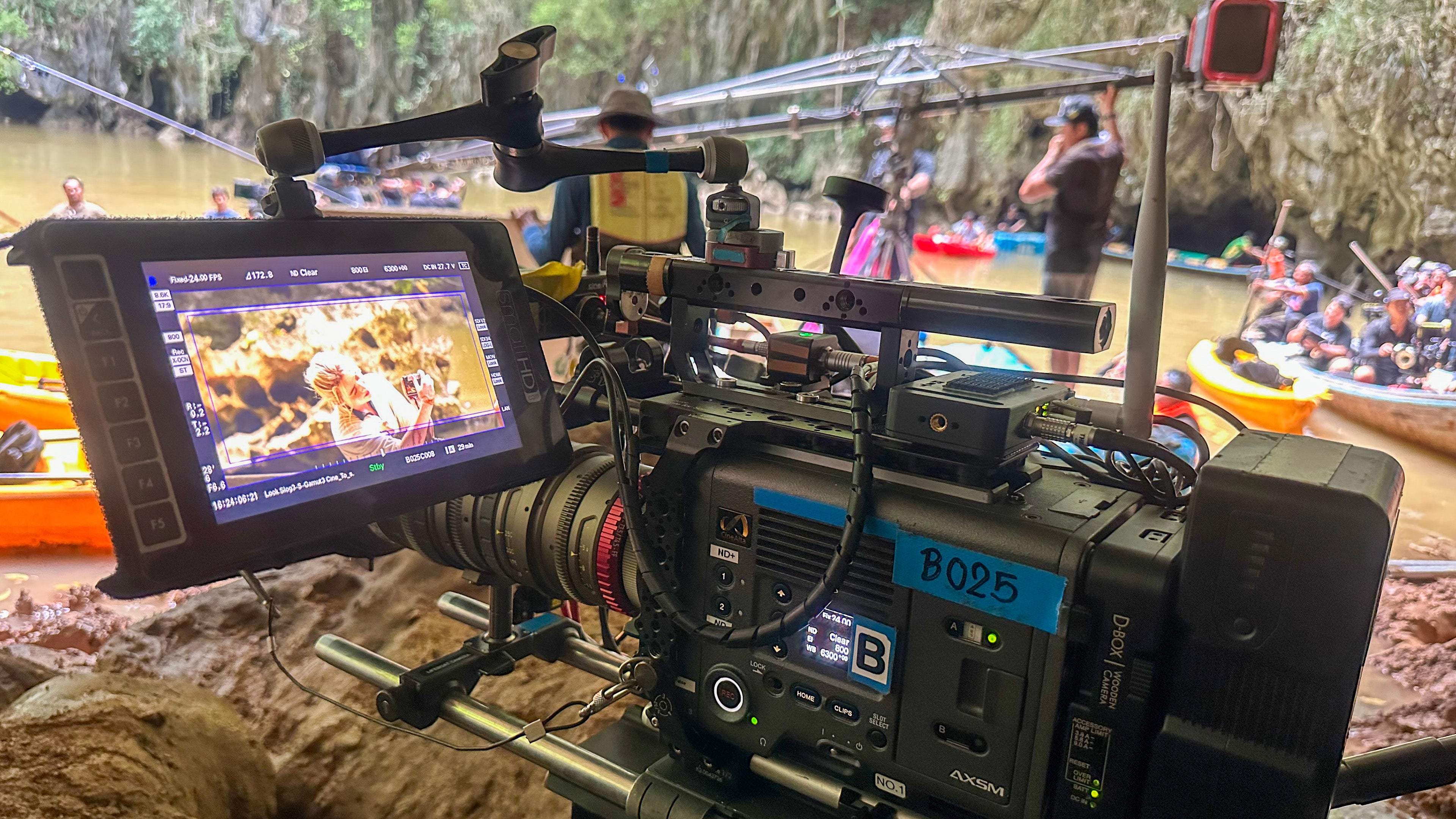
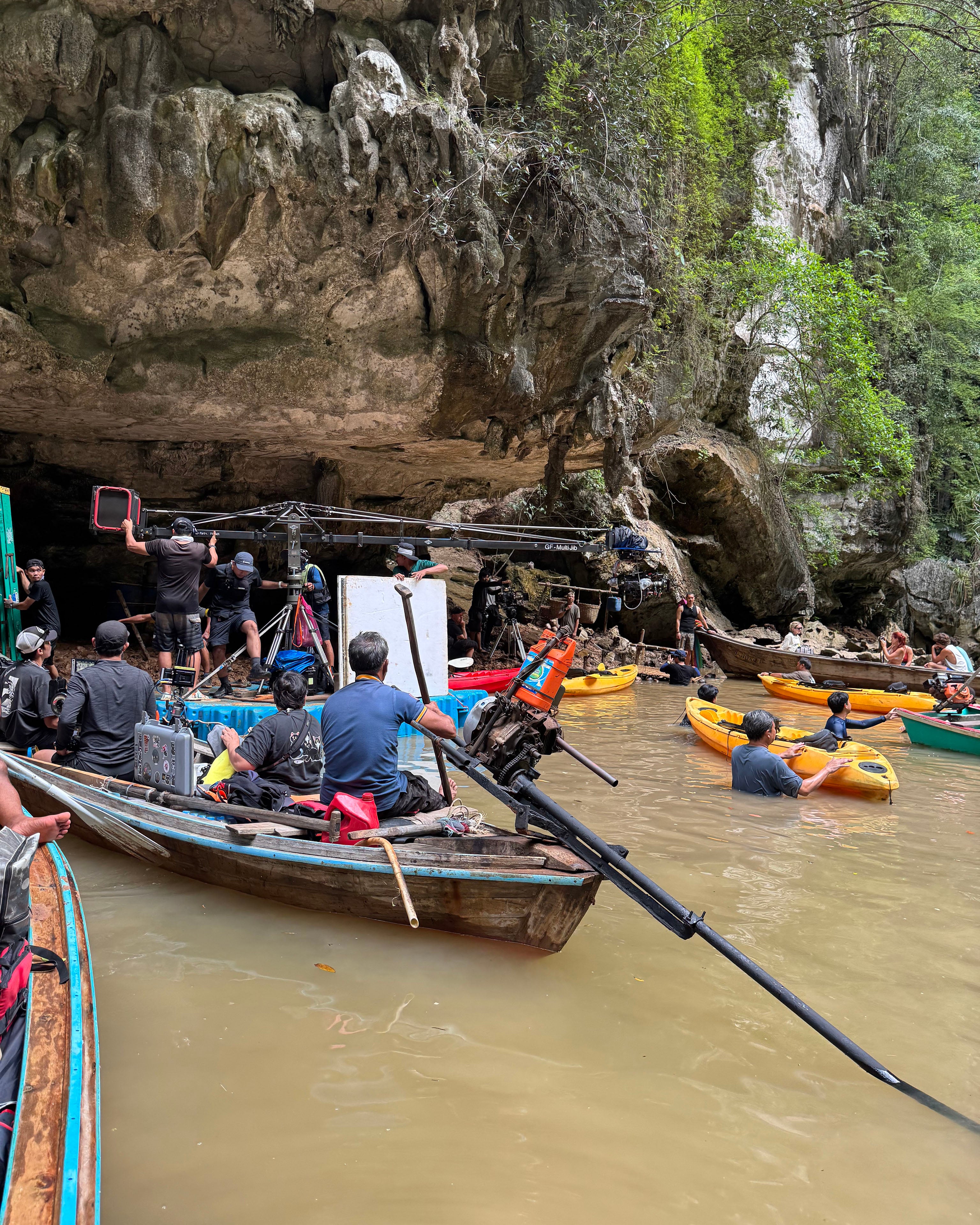
Shot in the mountains of Chiang Mai, in the rivers, caves, oceans and islands around Krabi, The Devil’s Mouth leaned into the grandeur of real-world locations before stepping foot onto the sound stages in Bangkok. For Kniest, the challenge was balancing the logistics of these remote locations with his creative approach, as well as the inherent real-world obstacles that would affect the visual language.
“I had done some underwater work on a show called The Haunting of Bly Manor, up in Canada, and then I had just done a whole episode with a lot of underwater work for American Horror Stories with Alicia Silverstone,” Kniest said. “[On this project] there were all kinds of above water, below water, transitioning from the surface to below, and then working in the real environment and also working in tanks on stage. And all these elements come together, and they all have to cut seamlessly.”
“There are things you really need to pay attention to along the way, with water color and clarity and having some continuity between the real locations and the tanks. So it's something you have to track all the time.”
Battling tidal surges as well as flora and fauna, Kniest and his team shot in real cave systems to establish the locations that would later be filmed on stages. These went hand in hand with the vibrant beauty of Thailand’s natural landscapes, creating a critical juxtaposition that enhanced the horror and thriller elements later on in the film.
“Jeff said the beginning of this movie should feel like a tourist brochure for Thailand,” Kniest said. “Just really beautiful and inviting. And these kids are having a blast and the water's gorgeous and the islands are beautiful and verdant.”
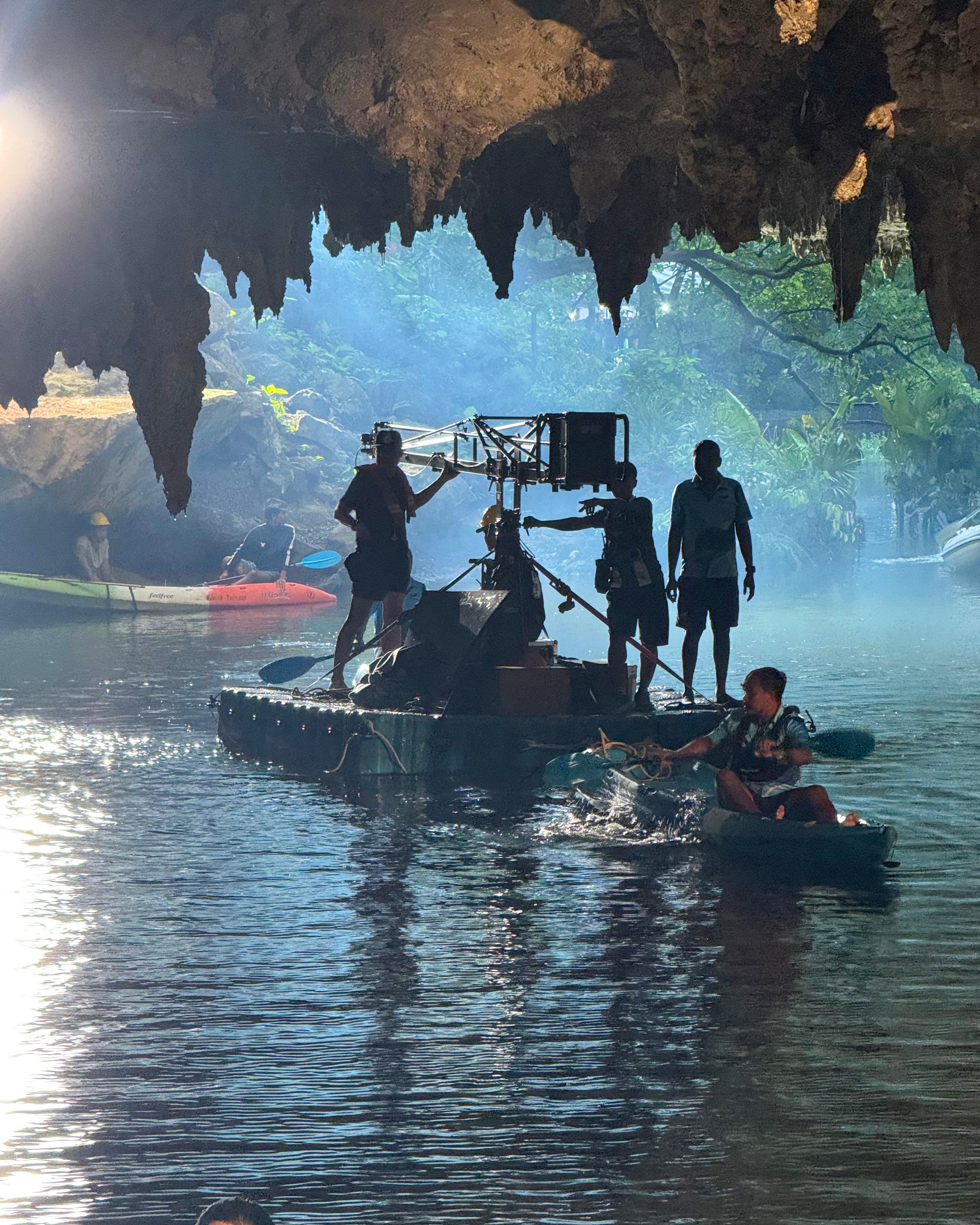
“We were out in the ocean with four cameras, water housings, and we had the barge with a Technocrane. I think we had 31 boats in our flotilla at some point.”
Lighting Places Where Light Doesn’t Exist
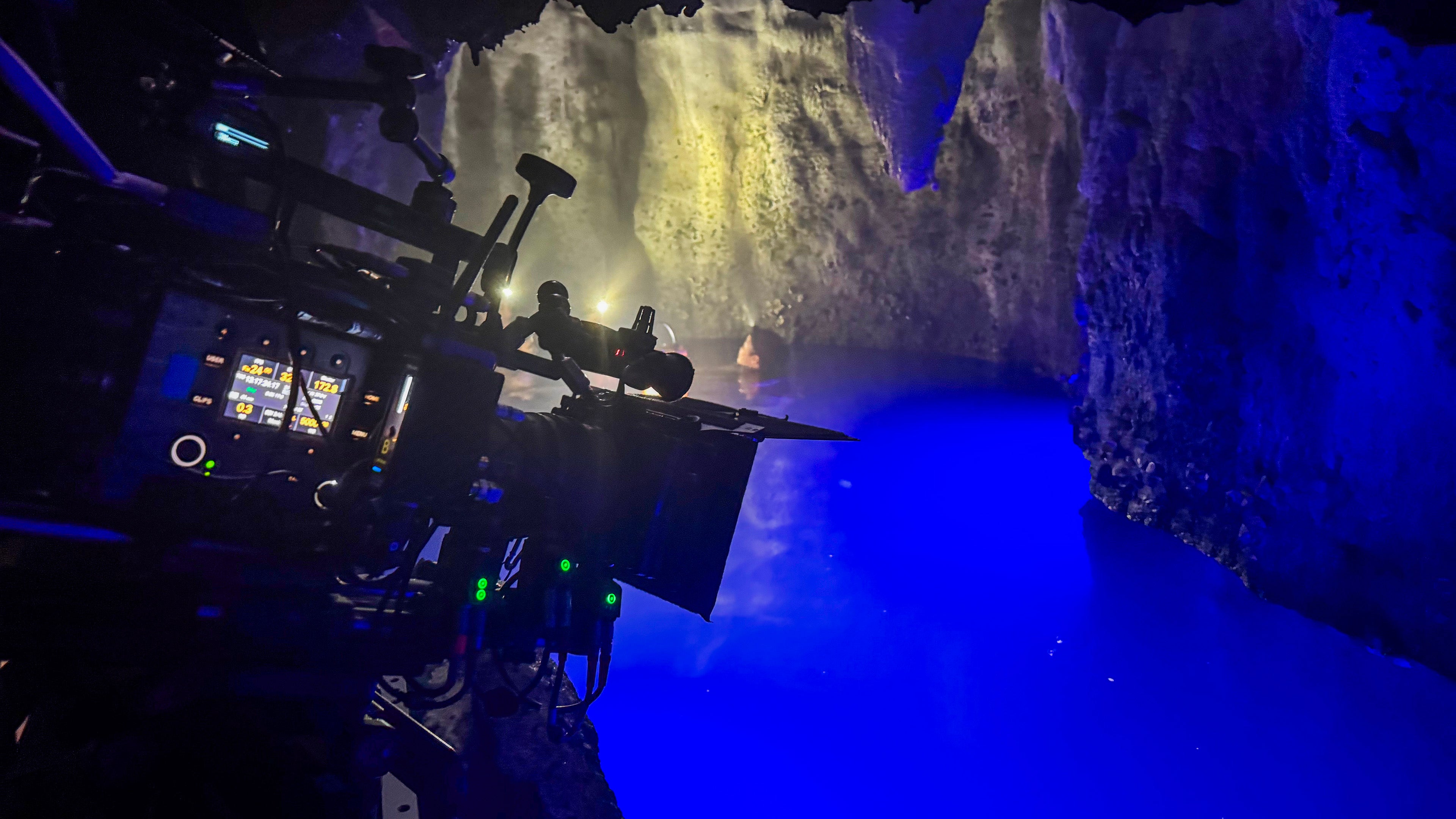
When Kniest and his team finally ventured into the cave systems and their soundstage counterparts, lighting became the next challenge for both the story and the camera department. Because natural cave systems usually have little to no light, new lighting rigs and setups had to be created, which felt believable within the story but could also function both in and around water.
“I worked really hard in trying to devise plans where the light wasn't very obvious, unless it was obvious, like a headlamp,” Kniest shared. “We also shot with four cameras the whole time. So there wasn’t really any place to hide lights. It was a lot of working very hard on every setup to figure it out.”
“The coolest part was that we made a bunch of stuff. There wasn't a lot of underwater and wet equipment in Thailand,” Kniest continued. “This gaffer that I had, we call him Ajahn, which means professor in Thai, was really smart and he built some underwater lights from pool lights and a big bin about three feet in diameter. He cut round holes in it, we put five or six small pool lights in there, all battery operated, all low voltage, and then cut another one of those tubs out again to make a snoot and sandwich diffusion in between.”
“He made floating lights on little rafts, and then we put a lot of lights up in the ceilings in different places that when the ceiling pieces would move, they would reveal an opportunity.”
The cave set on the soundstage was built around a huge water tank and movable walls that could be altered to work as different locations inside the cave system. Here, Kniest found he could create subtle shafts of light that added ambiance and depth.
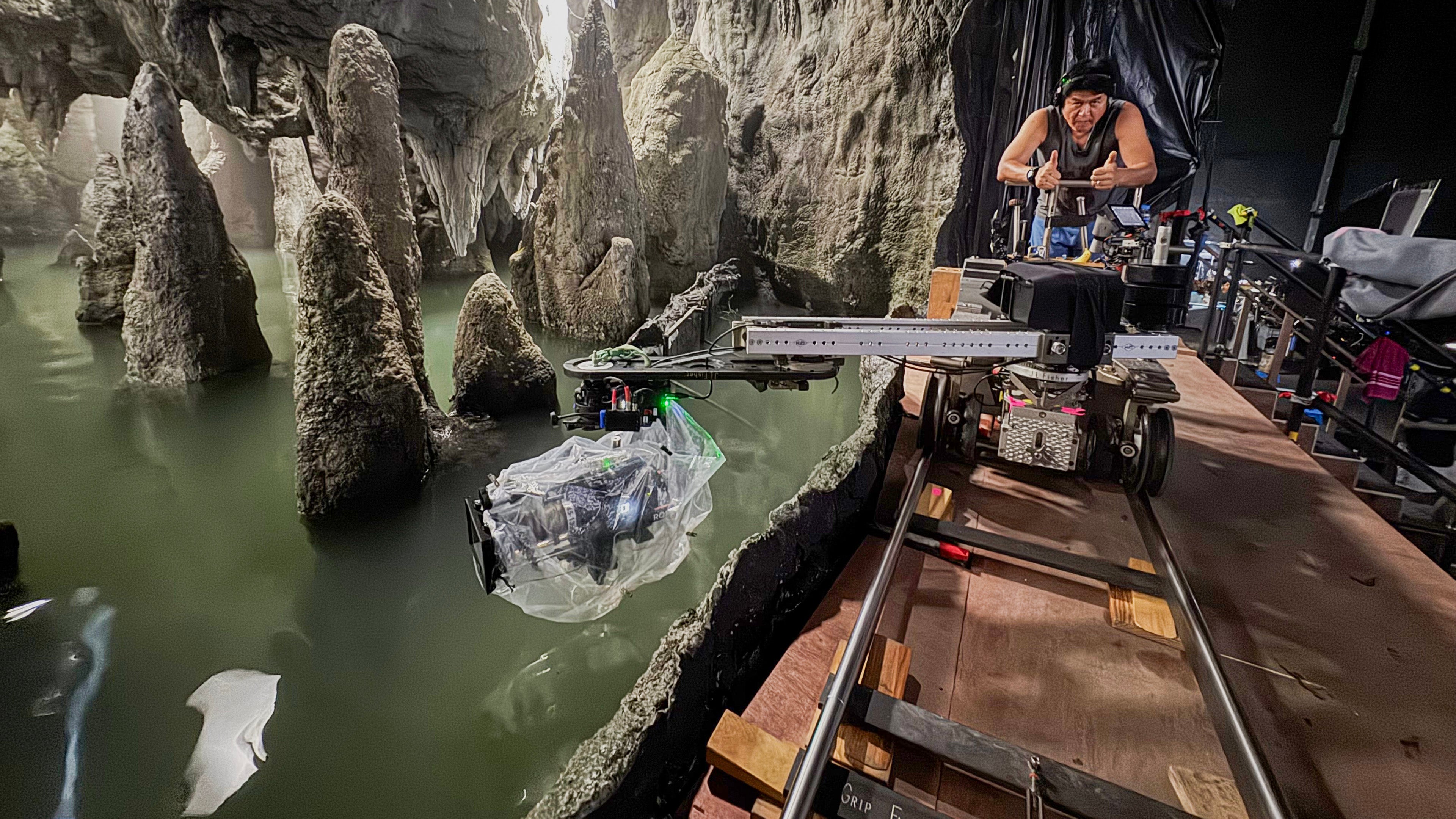
“A lot of them had ceiling pieces, because it's a cave. I have a ceiling on top, no windows, and then water on the bottom. So a lot of it came down to, what can we do, how are we going to shape [the light], how are we going to paint [the scene]?” Kniest said. “Working with a production designer, he started making holes in some of the ceilings and attached ceiling pieces on motors that could move. He had to make this area look different from cave to cave to cave.”
To supplement the few lighting opportunities afforded by the set, Kniest looked to the story to find other ways to light a scene.
“When we talked about lighting, we asked, ‘Do these characters have headlamps or flashlights?’ So we added headlamps, which at first scared the hell out of me, because as two people are talking, how am I going to control that? What's it going to look like? It's gonna be super flat,” Kniest explained. “But it ended up working really well, because [the actors] ended up keying each other quite a bit. And it gave us a motivator. Maybe if somebody was off frame, you could have a light as if they're turning their head or it was skipping off the water.”
“Also, while we were scouting real caves in the remote mountains near Chang Mi, the Thai guides carried us on flat bamboo rafts with beautiful soft paper lanterns on the front to illuminate our way and light up the stunning cave formations. This inspired the idea that Wat, the cave guide in the story, would have something similar. So we designed a soft, warm lantern that floated on a small round buoy that he swam with to help light his clients way through the caves. This again gave me a motivator for light which was very helpful.”
However, one creative obstacle was turned into an opportunity. With water rarely being truly clear, Kniest embraced the visual elements of the murky water to enhance the horror and thriller elements of the film.
“Color changes daily in the real world based on light and what's in the water column, from sediment and moss,” Kniest said. “And then on stage, one of the things that was a constant battle is water clarity with people coming in and out of the tank. Plus, we were turning sets over daily to differentiate each cave from another. Moving the rocks around added particulate matter and stirred up what had already settled to the bottom.”
“But I really embraced it, and I think it saved me because it helped match the tank to the real world water column. And I think that really helped in the long run. There's an element of fear there, right? Some dark water with a shark threatening you that you can't see. I think that lent itself to some tension and some surprise.”
“Some of these pool lights that we've made have a green spike in them. In lieu of correcting that, we just embraced it, which helped give it some green undertones that really helped match the water on location. We leaned into what was already there and then tried to keep it aesthetically pleasing.”
The Toolkit That Made It All Possible
This entire cave set took up the whole volume of the soundstage, with a water tank measuring about 180ft by 80ft wide, and six feet deep. Within this space, Kniest leaned on his previous experience with underwater cinematography to bring the world of The Devil’s Mouth, and the shark, to life.
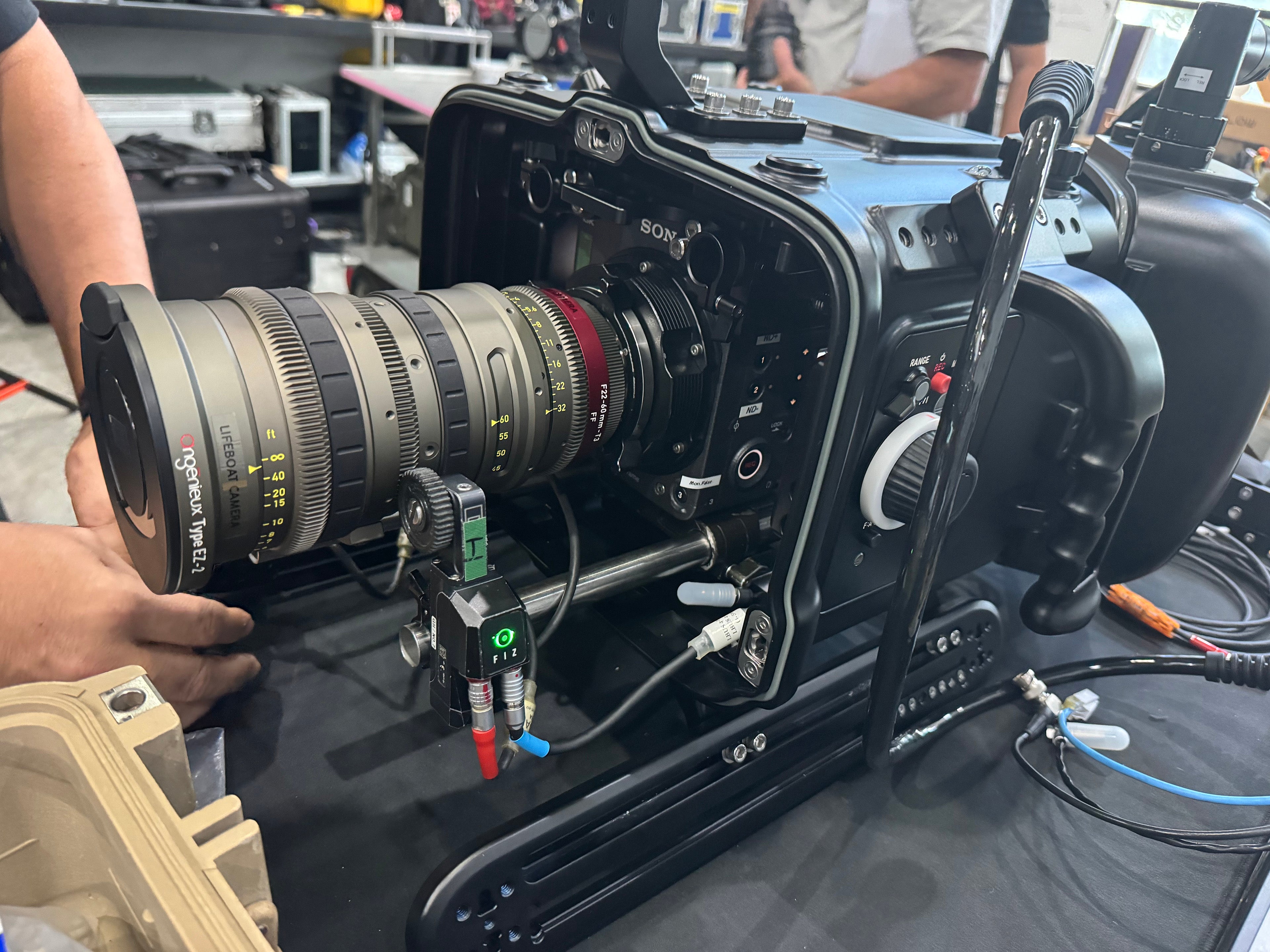
“We had four Sony VENICE 2s with two RIALTO’s,” Kniest said. “And one of the things that was important to me was being able to live in the [underwater] housing, so I had to vet some zoom lenses. Bringing a housing up out of the water and changing lenses is a really big time constraint. Also, every time you open and close a housing, you're introducing possibilities for disaster, so zooms were really important to me.”
The VENICE 2 Extension System, also known as the RIALTO, was a critical support system for capturing up to seven pages a day.
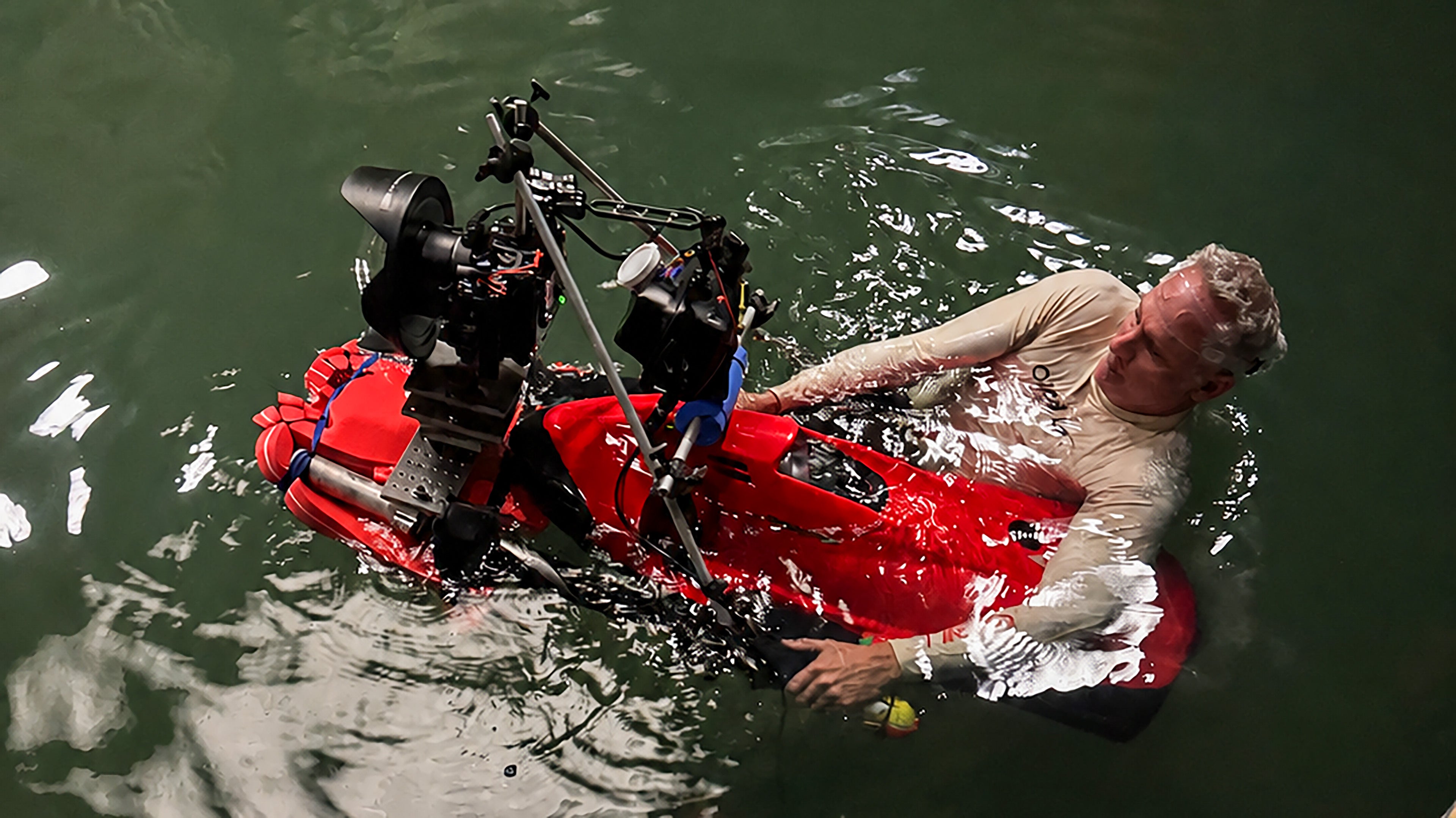
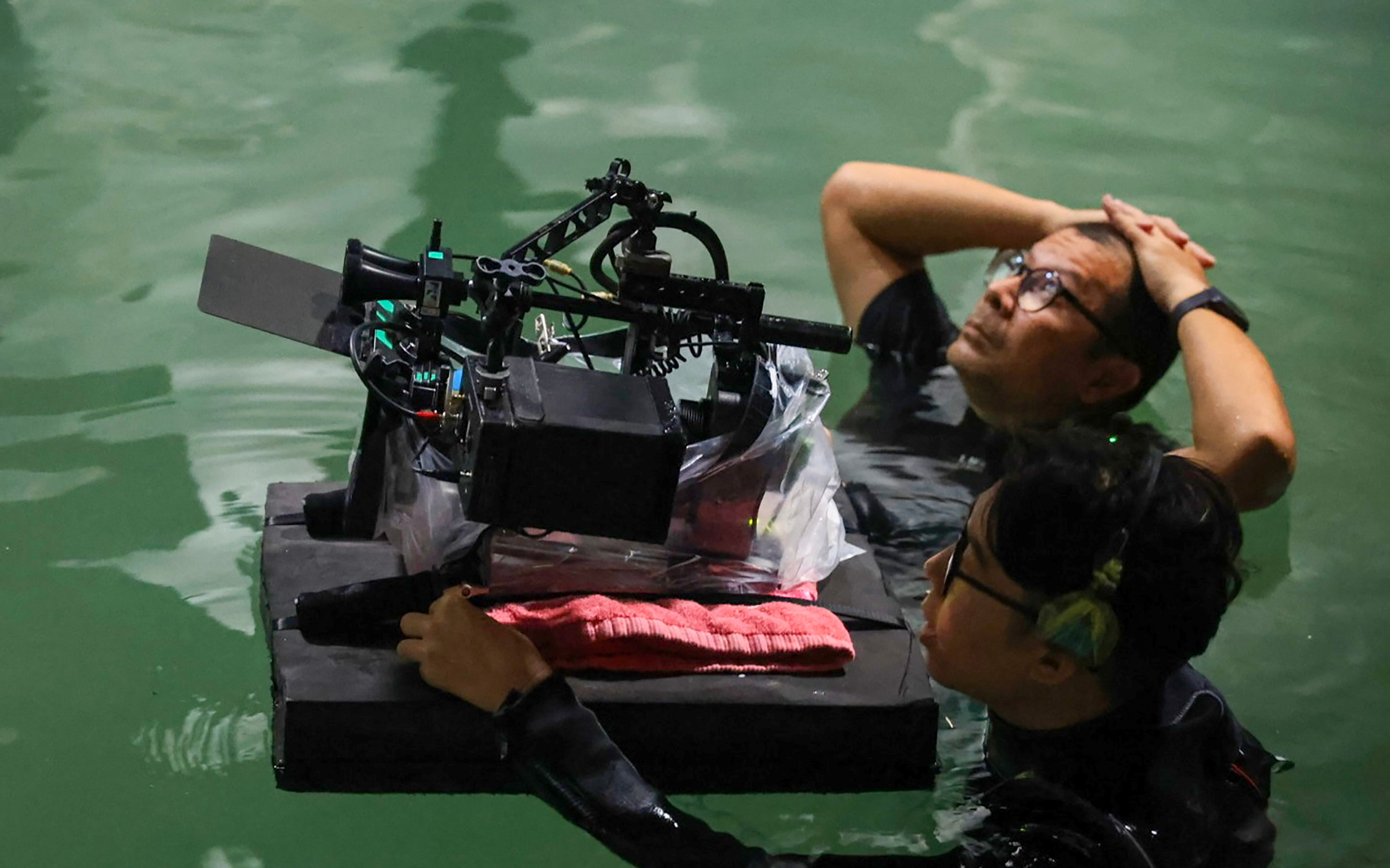
“I'm a huge RIALTO fan, and what we do sometimes in the real environment is we would have the RIALTO in a homemade splash bag that we made with shower curtains. The RIALTO could be hand held or often floated on a thick buoyant pad. It was attached to the camera body via the long cable and the camera body was in a boat that floated along,” Kniest shared. “We could walk in shallow water, and it just gives you so much freedom.”
“It was a really helpful tool for us, especially in this one location where the water was really shallow, and the kids were swimming at night, and we were able to walk along with the camera but drag the body along in a little rubber raft behind us.”
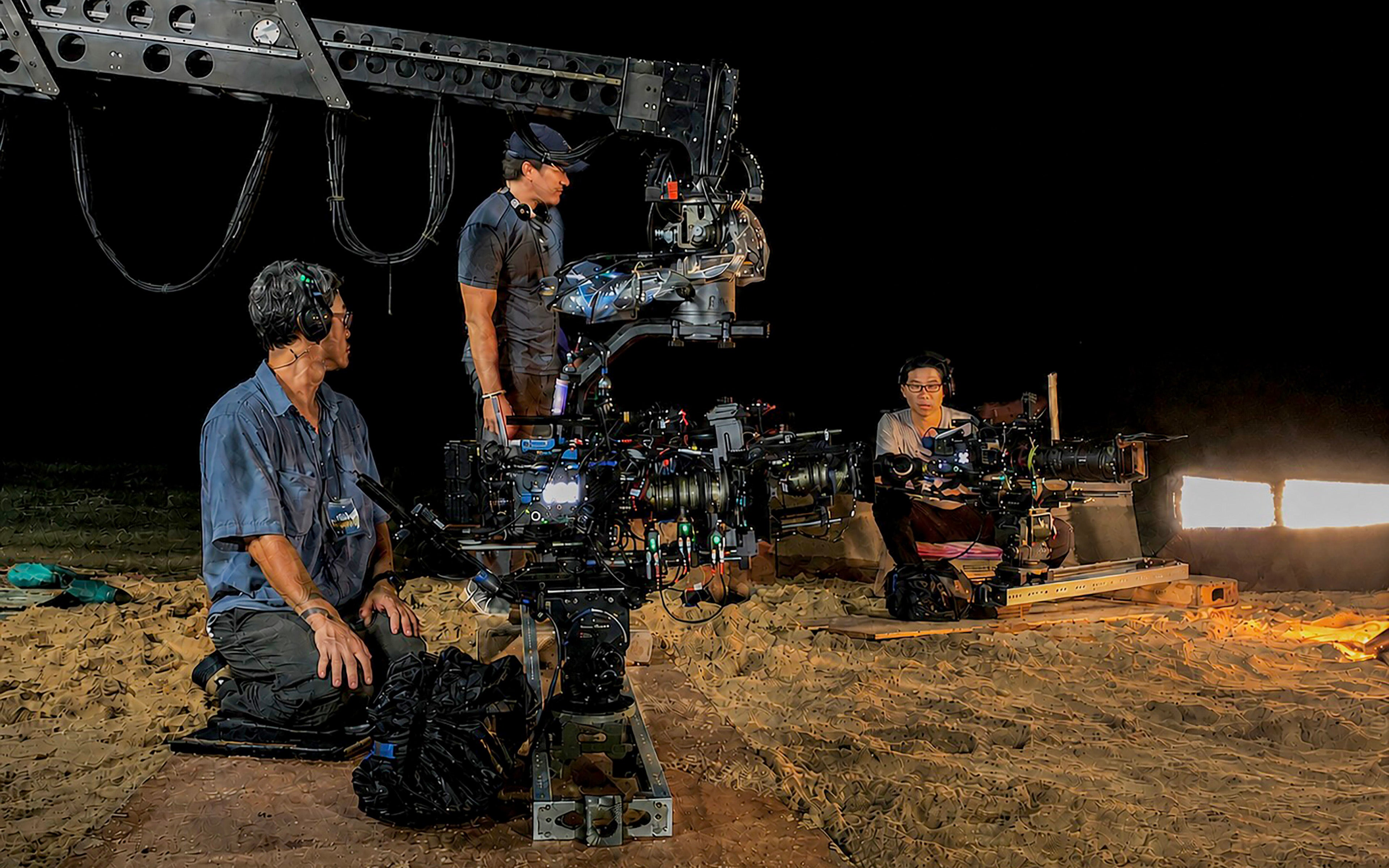
To overcome the lighting challenges, the remote capabilities of the VENICE 2, as well as the Dual Base ISO and the internal NDs, offered opportunities to efficiently expose the frame. With most of these cameras in underwater housings, the cameras were remotely linked, allowing Kniest to make adjustments on the fly.
“I already knew I was going to be in dark spaces and that lighting would be challenging in terms of boosting the levels,” Kniest said. “So ISO 3200 is very sensitive, and it's such a clean image. Coming up through film, I was a big meter guy, and I metered everything. Now I build a LUT that protects underexposure, and then I tend to light by my eye.”
“I’ll check false color and my waveforms to see if it’s too bright, if it's clipping, or if there's nothing in that exposure. But it's a lot easier with that high ISO to just light by your eye.”
“The other thing is the one-stop internal NDs, which are just so useful for me, especially with four cameras,” Kniest added. “We have four remote setups with an iPad and single channels where we're constantly changing ISO a little bit, dropping in NDs, or sometimes I'll even play with the shutter angle just to get the exposure exactly right.”
For his lenses, Kniest chose a range of Angénieux zooms, which provided much-needed utility to maintain the pace of the production but also flared in ways that allowed the cinematographer to add a creative touch to the frame.
"We ended up using all Angénieux Optimo Ultra Compact zooms for the surface work and then the Angénieux EZ series zooms for the housings and then some of the surface work as well,” Kniest said. “I carried two of each EZ1, EZ2 and an EZ3, [which] we had shared between cameras. I had an Angénieux Opimo Ultra 12x that was our land camera that could snipe across the whole tank or across the river valley. And then an Angénieux Ultra Compact wide played on the Technocrane a lot.”
“It gave us so much, especially in real rivers. You can reach for things. I like my B and C camera operators to be on zoom so they can get a variety of shots within one setup and without having to swing a lens. The EZs also ended up having pleasing flares that weren’t distracting.”
For specialty shots and the FX3, Kniest used the Sony G Master zooms and Sigma primes to achieve wide-angle shots and the POV of the shark.
“We use the G masters in the FX3 housing, and then I did a lot of lens testing because the characters wore headlamps all the time,” Kniest said. “In the [underwater] housings, you already have that lens to deal with plus the taking lens on the camera.”
“I also carried a set of Sigma primes because of their fast speed, full-frame capabilities, and light weight. We use a lot of the super wides at 12mm and 14mm for high and wide stuff.”
Crafting Horror Thrills When In Sync
The Devil’s Mouth was a fast-paced production that ventured to stunning yet remote locations, and allowed actors to thrive in scenes that take a village to put together. For Kniest, the crew and his toolkit are powerful allies to make these cinematic moments happen.
“I gravitate towards stories where there are different interpretations of how you can see these different environments and how you can craft those different environments,” Kniest said. “I love doing that as a team with the production designer and the director. And I usually rely heavily on the key grip and gaffer departments to all work together in synergy to create these environments that we shoot in from the outside in.”
“What I love so much is the [Sony] family of cameras that are just compatible all the way through,” Kniest said. “It's so comforting to know that there's different tools, depending on your situation, that open up another world of, ‘Hey, we have all kinds of affordable, approachable, readily available tools to cover an action scene or a stunt scene.’”
The Devil’s Mouth was released July 29, 2026, on Amazon Prime Video. To learn more about the Sony VENICE 2 and the other cameras in the Cinema Line, visit our Camera Comparison Chart.


