07-02-2026 - Interviews & Behind The Scenes
Colin Hoult, CSC ASC Mixes Young Romance and On-Ice Hockey Thrills For "Off Campus"
By: Yaroslav Altunin
Off Campus is a Prime Video series that explores an unexpected love story between a music student and a star hockey player at the fictional Briar University. Created by Louisa Levy and based on the book series of the same name by Elle Kennedy, the series is a college soap opera following an elite ice hockey team and the women in their lives. As they grapple with love, heartbreak, and self-discovery, they forge deep friendships and enduring bonds while navigating the complexities that come with transitioning into adulthood.
Colin Hoult, CSC ASC and Nick Thomas, CSC were brought on to lens the series, with Hoult shooting the pilot and crafting the look of the show. With the Sony VENICE 2 and FX3, the duo captured intimate moments of newfound love and the intense competition between hockey players on the ice.
Sony Cine sat down with Hoult to explore how he crafted the look, the unique camera rigs he created for the show, and how the VENICE 2 and FX3 enabled him to capture feature-film scale on a television budget.
Finding the Visual Language of Off Campus
While set in the present day, the visual language of Off Campus reaches into the past to draw on the nostalgia of an era when romantic comedies dazzled the box office. When work began with showrunners Louisa Levy and Gina Fattore, Hoult looked to the films of John Hughes or Joel Schumacher to find the visual language of the series.
“It felt like the 80s. Like the work of John Hughes or Joel Schumacher and those types of 80s filmmakers,” Hoult said. “And so I think right off the bat, we all had a similar [awareness] about the feeling we wanted to give audiences visually.”
“We really wanted to achieve as much scale as we possibly could,” Hoult continued. “We wanted to be able to show these large arenas and these big hockey games, show how heroic these young men were playing the sport that they love, and show how that influences all of the friends and family around them.”
To explore the colors and looks of this era, Hoult looked to Company 3, where colorist Anne Boyle crafted a series of LUTs for the show.
“We did our post at Company 3 with colorist Anne Boyle, and she helped us create a couple of LUTs for the show,” Hoult said. “We wanted to have a filmic, almost 80s vibe. And the fact that the VENICE 2 responded so well to that LUT helped us narrow how the colors were reproduced.”
With romantic comedies, the central characters drive not only the narrative but the visual language and tone of the show. In Off Campus, the characters of Hannah and Garrett would inform how the rest of the cast were framed and what perspective the audience would have.
“I think that a lot of it obviously comes from the characters and how they want to be portrayed,” Hoult said. “Hannah and Garrett were the hero couple of season one, so early on, the pilot director Silver Tree and I talked about how we should always feel like we're on their side of the room or their side of the story? Seeing the world a little bit more from their perspective.”
“We wanted very much for the camera to be close to them. So we started talking about having a hero lens that they would get photographed with, and we ended up narrowing it down to a 75mm Cooke SF anamorphic,” Hoult continued. “We agreed, as much as we could and whenever it made sense, to cover them with that closer [focal length], and then use over the shoulders and be further away and use more telephoto lenses on the other characters.”
“This way, we'd subconsciously always be on their side of the room.”
This approach was also applied to the hockey games with Garrett and his teammates. Instead of being on the outside looking into the rink, Hoult shot on the ice as much as he could.
“The thing about the hockey sequences, it wasn't hockey for hockey's sake,” Hoult said. “Every play was choreographed and preplanned because everything was trying to tell a specific story beat.”
“In the first block, we were very conscious of having to shoot around the real crowd, and we only had about 300 background actors. So we had to choreograph everything specifically to fit inside that background. Only a few times did we paint in additional crowd. Later in the season visual effects gave us more freedom to move the camera.”
Bringing the VENICE 2 and FX3 Onto the Ice
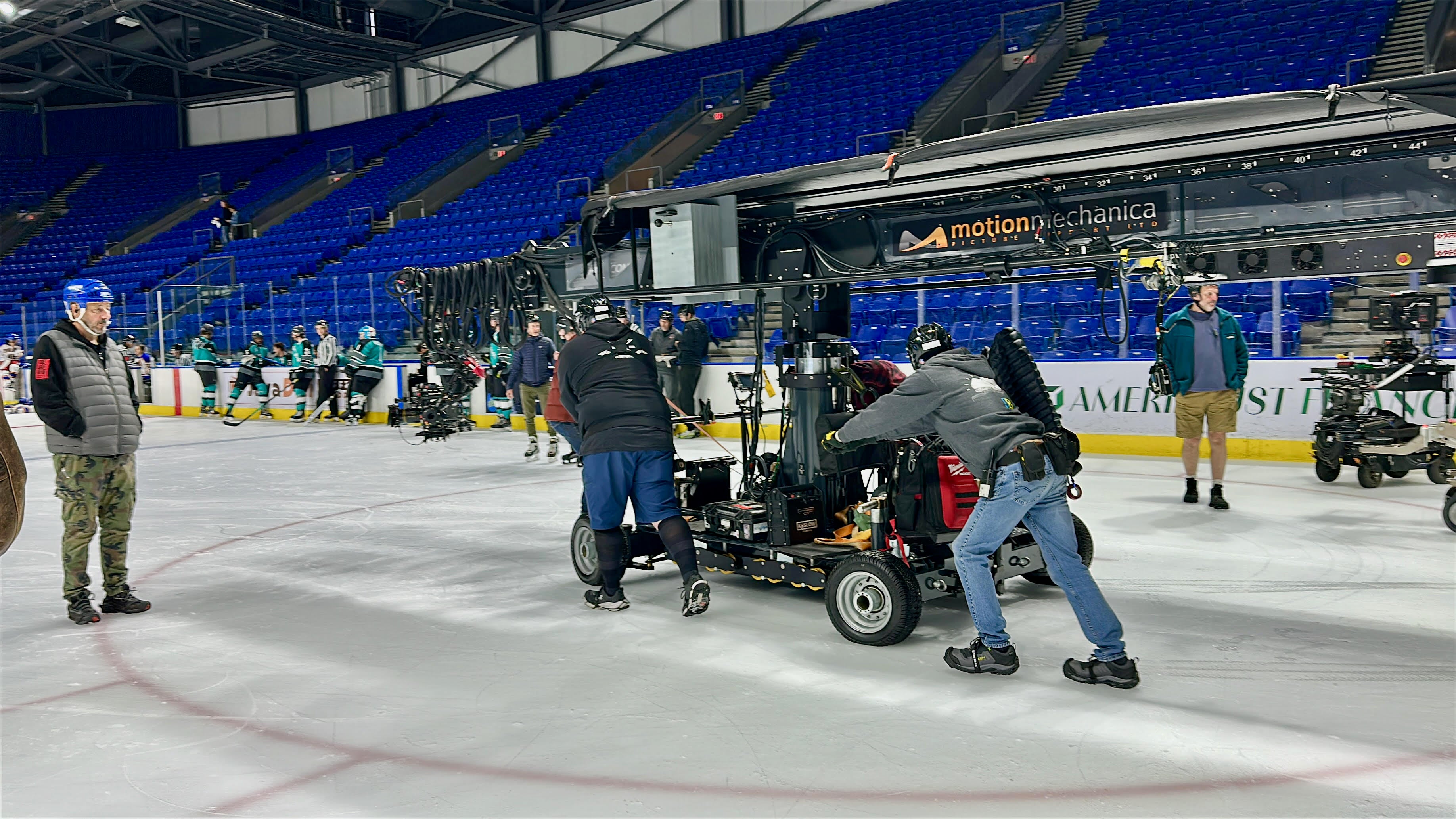
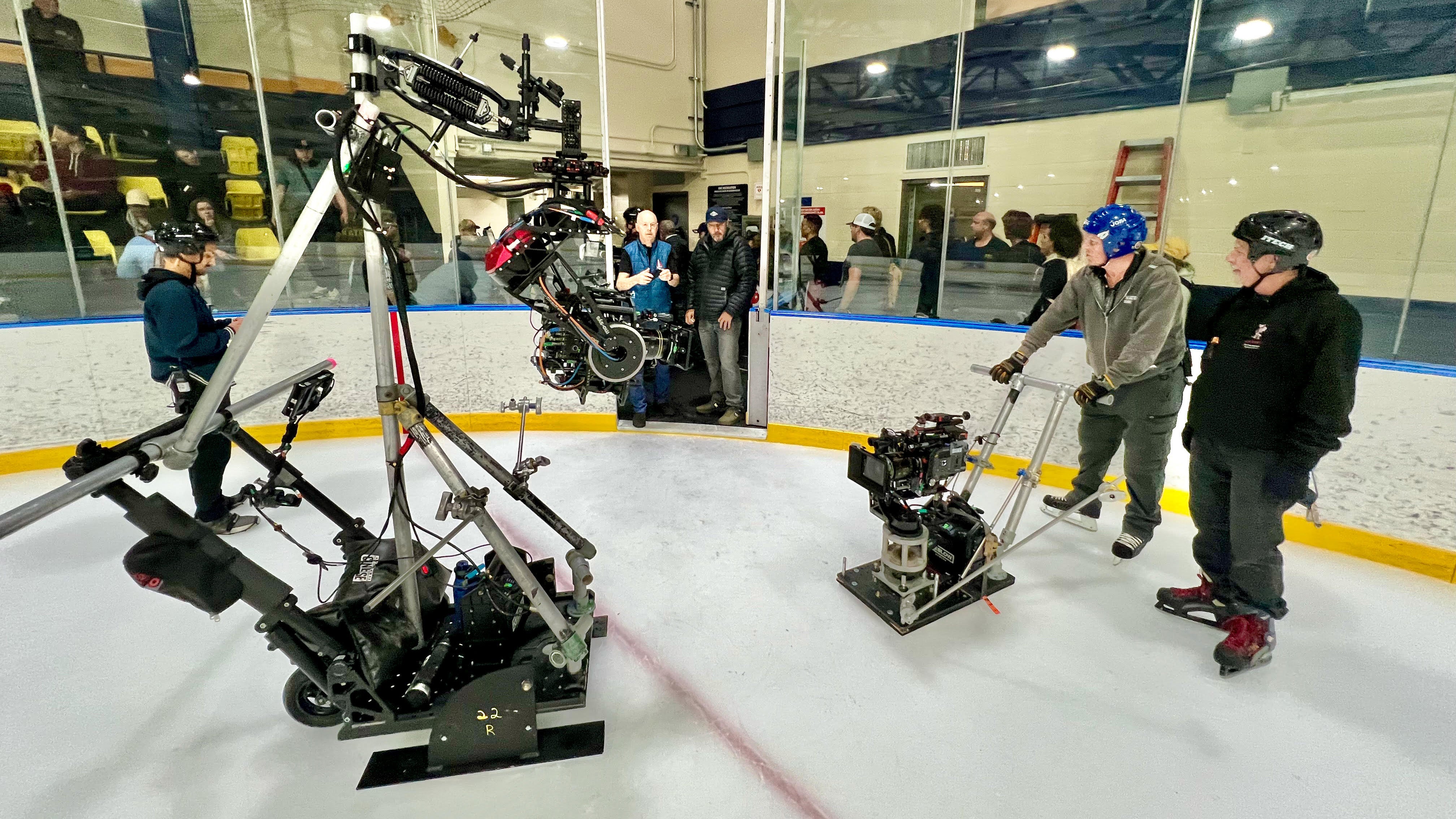
These hockey sequences were filmed in three different ways using a series of VENICE 2 cameras and the FX3. While the initial coverage was filmed in a more traditional way, Hoult and his team created two specialty rigs for the other two perspectives.
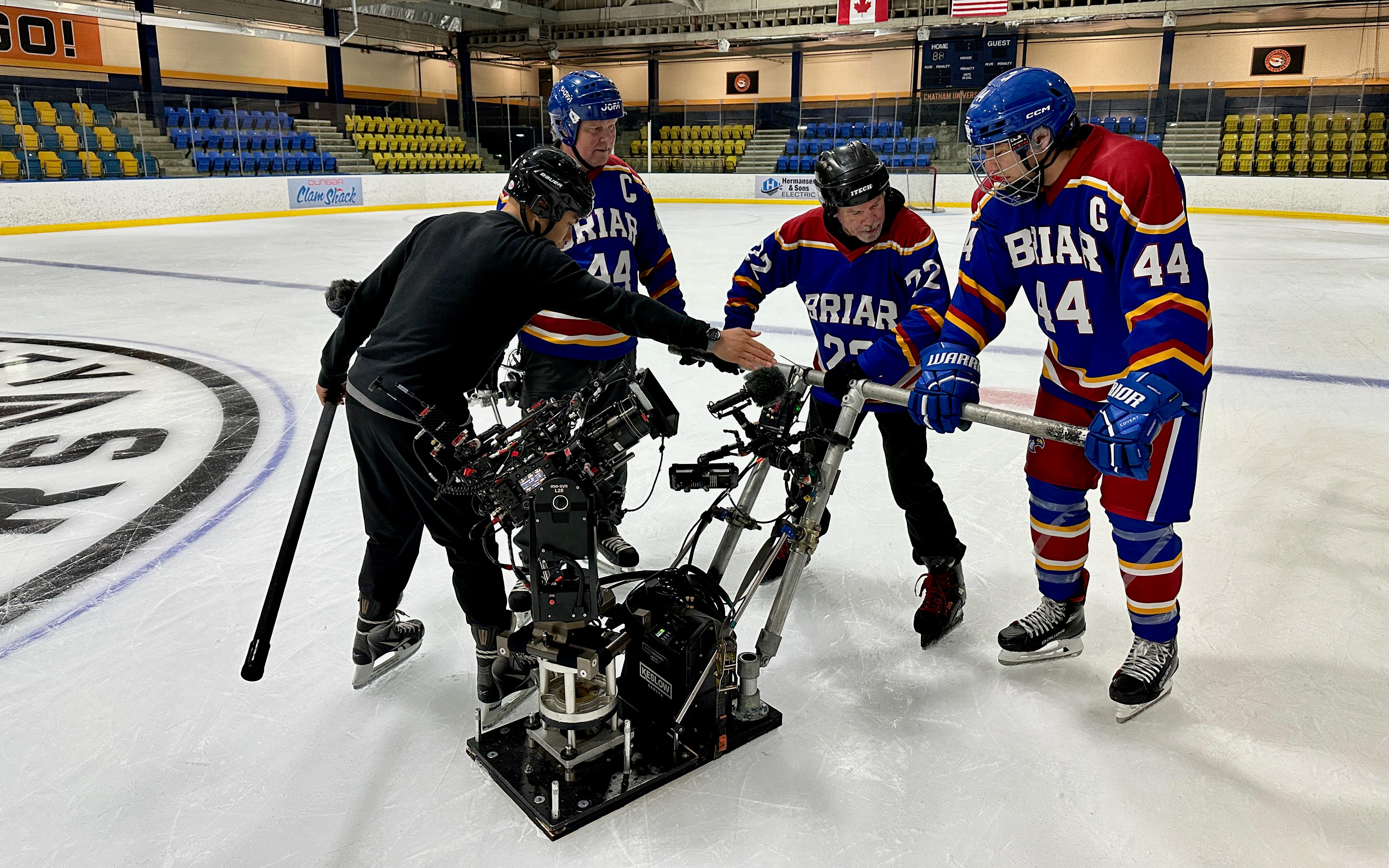
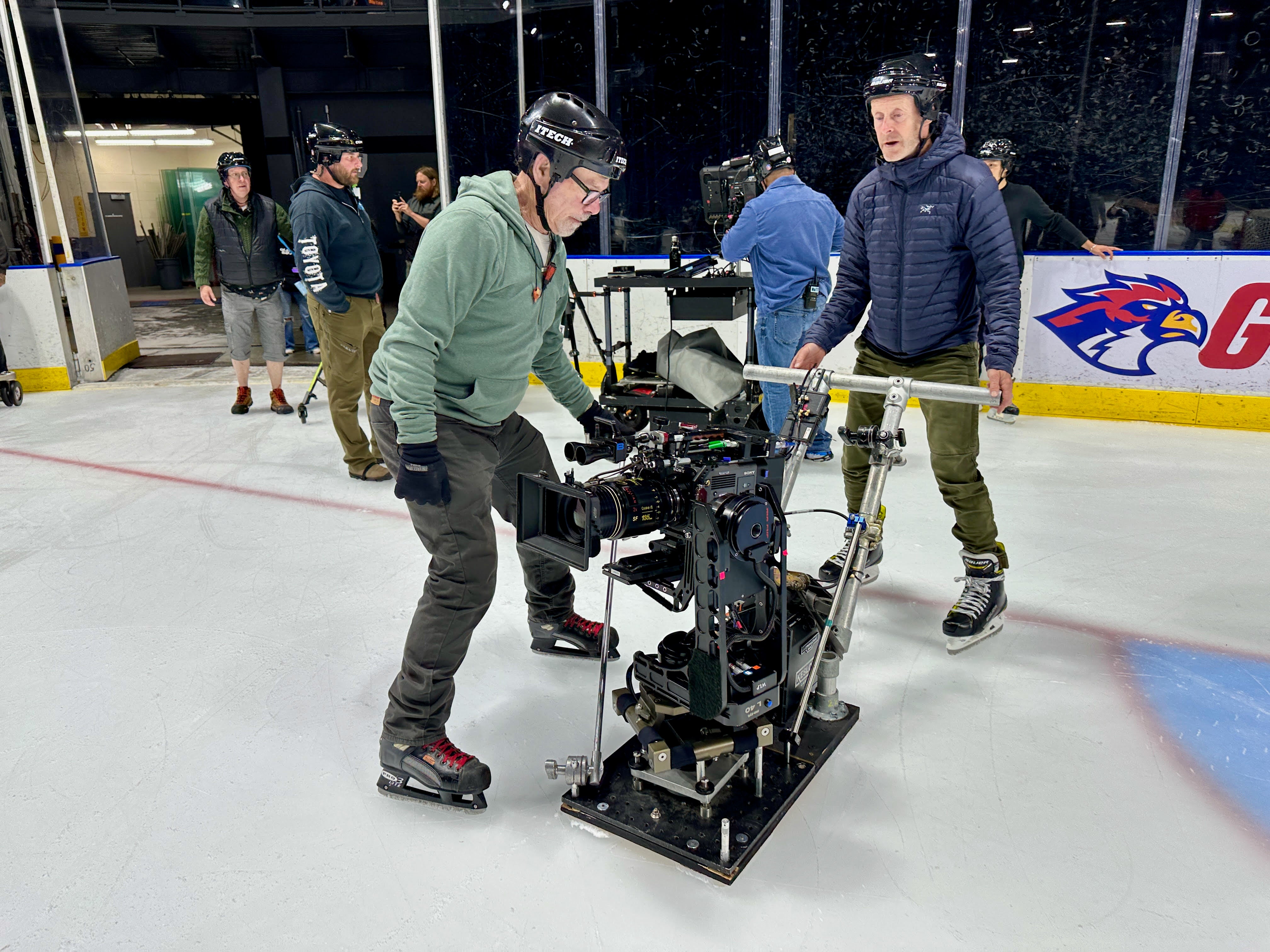
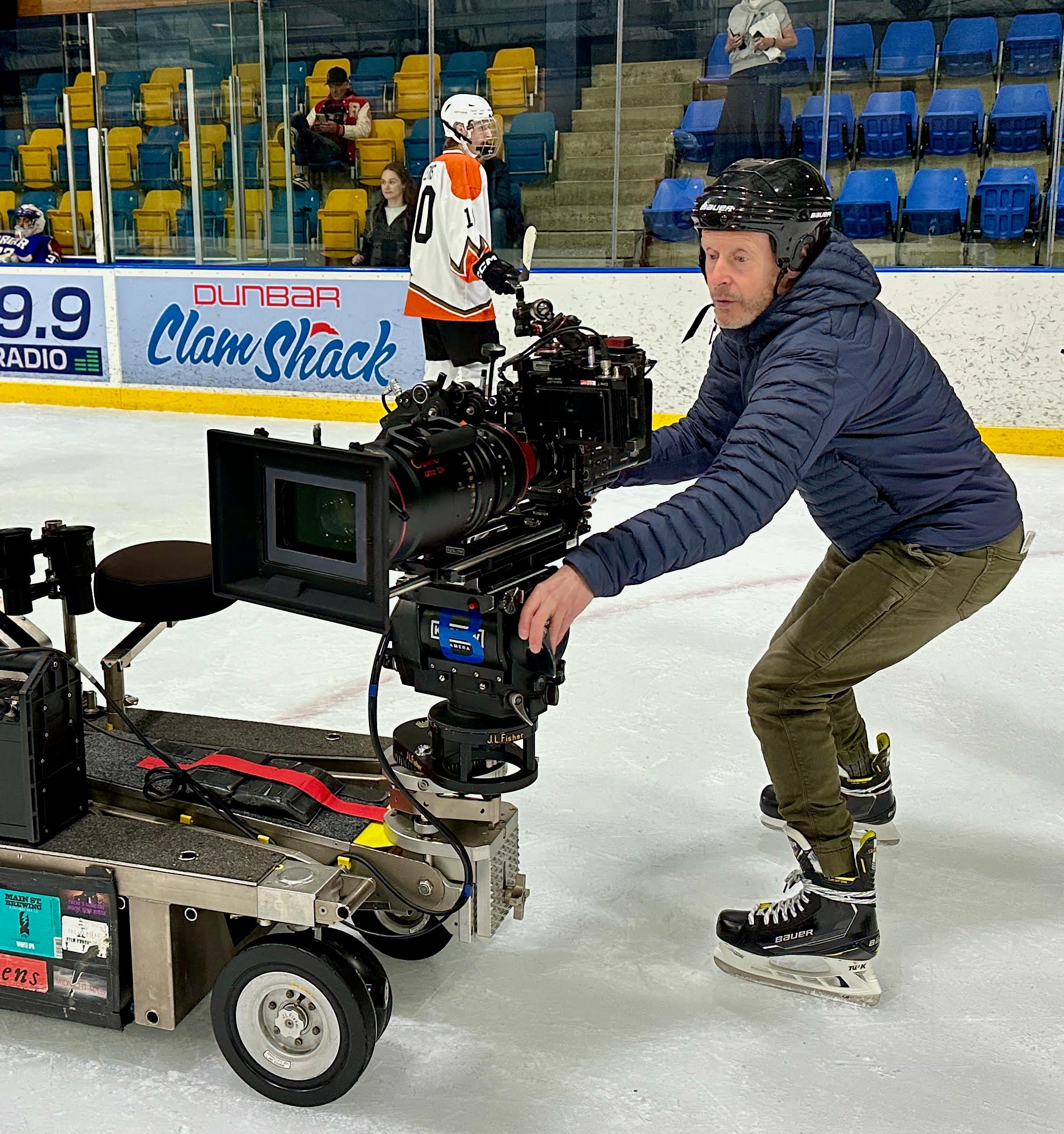
“We would use three or four Sony VENICE 2 cameras on the ice, on techno cranes, and with long lenses,” Hoult explained. "We would also build different rigs, like putting an L-40 remote head on a little push sled and actually have the actors themselves push the camera around the ice to capture some of their in-game close ups.”
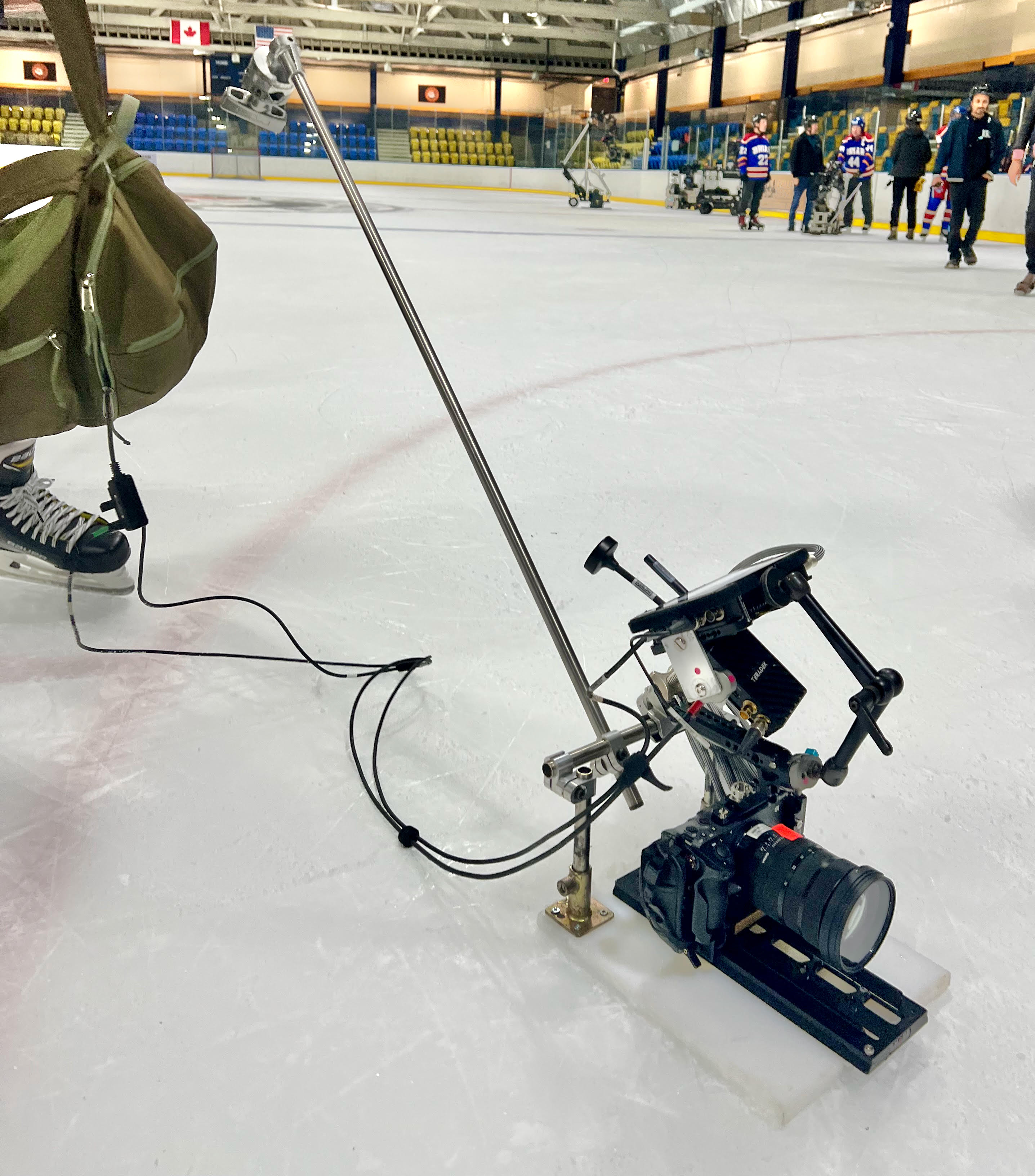
“And then the FX3 came in really handy because we ended up building a small rig with a tiny platform right on the ice with a tilt plate. We put the FX3 about two inches off the ice, and Sean Elliott, our camera operator, who is a really good skater, would just fly around the ice with this thing pretty much like a hockey stick and swing it around everywhere and capture the action.”
When using the FX3 rig Hoult relied on Sony G Master and Sigma E-Mount lenses with autofocus, freeing Elliot and the camera team from having to chase focus and allowing them to explore unique compositions and frames.
“To keep things moving quickly and not worry about a focus puller trying to get reception and trying to be able to focus as the thing went around, my idea was to just use the Sony's autofocus system,” Hoult said. “And that worked brilliantly. In fact, some of the operators and focus pullers were a little stunned at how smart it was at tracking things.”
"The most ooo’s and aah’s that we got were from the producers and directors' tent watching the FX3 do its thing with Sean's skating prowess.”
With Elliot flying around the ice with the camera, camera shake proved to be a challenge early on. Here, the FX3's stabilization provided additional support for the composition.
“Because it was all locked off, it was a little shaky, but the stabilization of the camera and the lens took a lot of that stuff out,” Hoult said. “So where you would need 10 different things on a bigger camera to make it that smooth, this camera took care of so much of that internally.”
“I find the lighter you can make something, it’s easier to get it started, and importantly, it’s easier to stop it on the ice,” Hoult added. “You get something that weighs too much, it gets a lot of momentum behind it, and it's hard to put on the brakes.”
Always Shooting at ISO 3200
Control over depth of field and exposure was a critical tool on Off Campus. Hoult often found himself in situations where he had to shoot through rain, wanted to use long focal lengths with slow apertures, and shoot at varied frame rates for creative effect. With the VENICE 2’s internal NDs and ISO 3200, Hoult used depth of field and exposure as creative tools instead of a technical solution.
"The pilot had not only the hockey game, but it also had a concert with Remi Wolf that was meant to be a university quad party,” Hoult said. “And that was challenging because we had to do it really fast over two days and nights. That was where having 3200 ISO on the VENICE 2 was really great. [I could] shoot night photography at a T5.6 and use the telephoto lenses to hide the unwanted Vancouver rain or make the party crowd seem larger than it actually was without having ridiculously shallow depth of field.”
“But one of the things we didn't want to do was have shallow depth of field for the sake of itself. We wanted to be able to see our environments, we wanted to be able to see the sets, and we wanted to be able to hold focus across groups of people.”
Hoult nearly always shot at ISO 3200, enabling him to capture night sequences with deep focus and to provide a spatial shift to romantic moments that needed to linger.
“Quite often, we would do parts of sequences at 48fps,” Hoult said. “So I would always have the exposure to do that in my back pocket. If we wanted to move to a 300mm lens, I could shoot that at a T5.6 and get the feel that we wanted to achieve.”
“It gave things a romantic quality and helped direct the audience’s eye.”
The series also had moments that lived within the realm of social media, which locked in the frame onto a phone screen. Here, Hoult leaned on the VENICE 2 to capture the world within the screen.
“This show has a lot of inserts on phones and a lot of social media content,” Hoult said. “Being able to hold the focus across the entire phone screen is narratively important to us. And it's something that's done easily with the VENICE 2 because an iPhone screen can only be so bright. So being able to shoot it at a T16, potentially, and hold all that information, that's important for us narratively.”
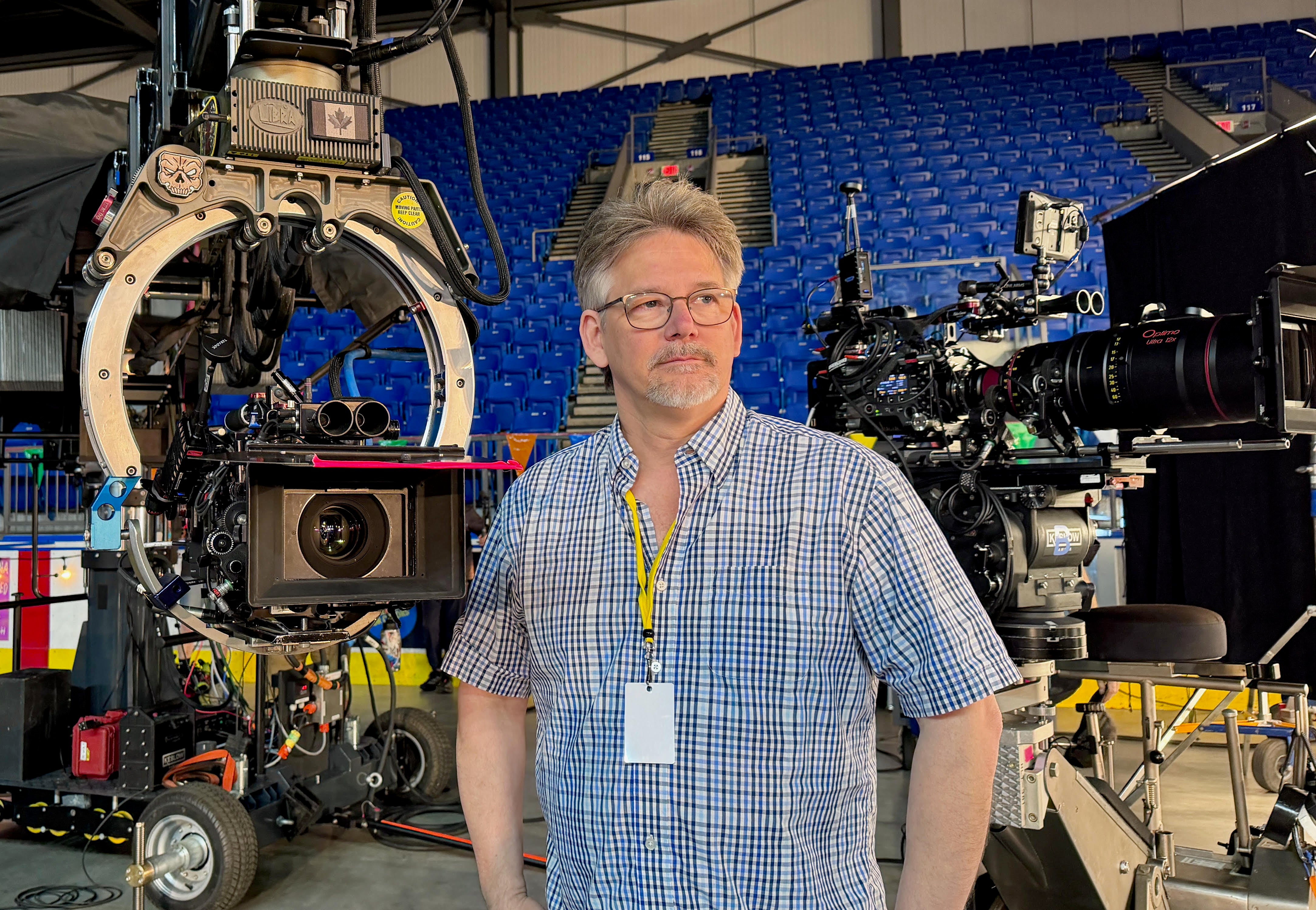
When the show left the phone screen, the narrative of Off Campus traveled from present to past. To capture both worlds while keeping them united, Hoult used a set of Cooke SF anamorphic lenses for the present and a set of Zeiss Supreme Radiance primes for flashbacks. The Cooke 75mm was the hero lens, providing the portraiture look that Hannah and Garrett needed, while an Angénieux Optimo Ultra 12x let Hoult get close to the action on the ice from a distance.
Even though the Cooke lenses only covered Super 35 and the Zeiss covered Full Frame, the VENICE 2 gave Hoult a single platform for all of his lens choices, letting the cinematographer drive the narrative from his visual language.
“We used Zeiss Supreme Radiance [for the flashbacks], which are Full Frame,” Hoult said. “They handle flares very differently, and I would blast light into the lenses to get different, lowered contrast feelings and different flares. Both Hannah and Garrett have flashbacks with a similar look, and this was our way of saying that these guys have more in common than they initially realize.”
Finding Humanity On and Off The Screen
At its center, Off Campus is a human story. It catalogs the relationships that evolve in our formative years. But it was the humanity behind the lens that pushed the series to new heights, garnering it a second season.
“One of the most incredibly pleasant surprises was how hardworking and human the showrunners are. Louisa and Gina are two of the nicest people you'd ever meet, and they spent every waking moment trying to make the show the best it can possibly be,” Hoult said. “Louisa's father was a chief lighting technician, and so she has a special place in her heart for visuals and is always looking to make things better, but in a warm and human way.”
"Her energy and her personality are a good portion of that warm feeling that the show gives out. I think it comes from her.”
Catch Hoult’s work on Off Campus by streaming the series on Prime Video. To learn more about the Sony VENICE, FX3, and the other cameras in the Sony Cinema Line, visit our Camera Comparison Chart.


