06-09-2026 - Interviews & Behind The Scenes
Sony RIALTO Gives Life to John Travolta’s Nostalgic Directorial Debut
By: Yaroslav Altunin
Propeller One-Way Coach is a unique film that blends the creator’s personal life with a nostalgic love for 1960s aviation. Written and directed by John Travolta in his directorial debut, the film is based on his 1997 children's novel of the same name and follows a young aviation enthusiast and his mother on a cross-country flight to Hollywood.
To capture the color and textures of the era, Travolta brought on DP Paul de Lumen, who utilized the Sony VENICE 2 with the VENICE Extension System 2 in order to catch intimate moments within the tight confines of the historic planes used for the film.
Sony Cine sat down with de Lumen to explore how Edward Hopper inspired the look, the different challenges he faced shooting inside vintage planes, and how the VENICE Extension System 2 brought creative freedom to Travolta’s passion project.
Crafting an Era-Defining Look
Propeller One-Way Coach explores the awe of aviation and the stories of those who dream of flying. Set in 1962, the project was mostly shot inside vintage propeller and jet planes, with visual effects mostly being used to make those grounded planes fly. For de Lumen, finding his way into the story began with the wonder of flight, both his own and that of the main character.
“I was really drawn into the point of view of the kid and the narration, and it reminded me of A Christmas Story, or Stand By Me, in the way that it was presented and the way that it flowed,” de Lumen said. “I connected with the curiosity of the kid and the wonder and magic of aviation and these cylinders that are flying through the air with propellers and eventually jet engines.”
To find the film's look, de Lumen compiled a reference book of photos featuring planes flying through the sky, in the clouds, over forests, and over cities. Through this, he and Travolta bonded over the awe of aviation. The cinematographer then drew from American realist painter Edward Hopper, whose color palette had a serendipitous connection to a physical location in the film.
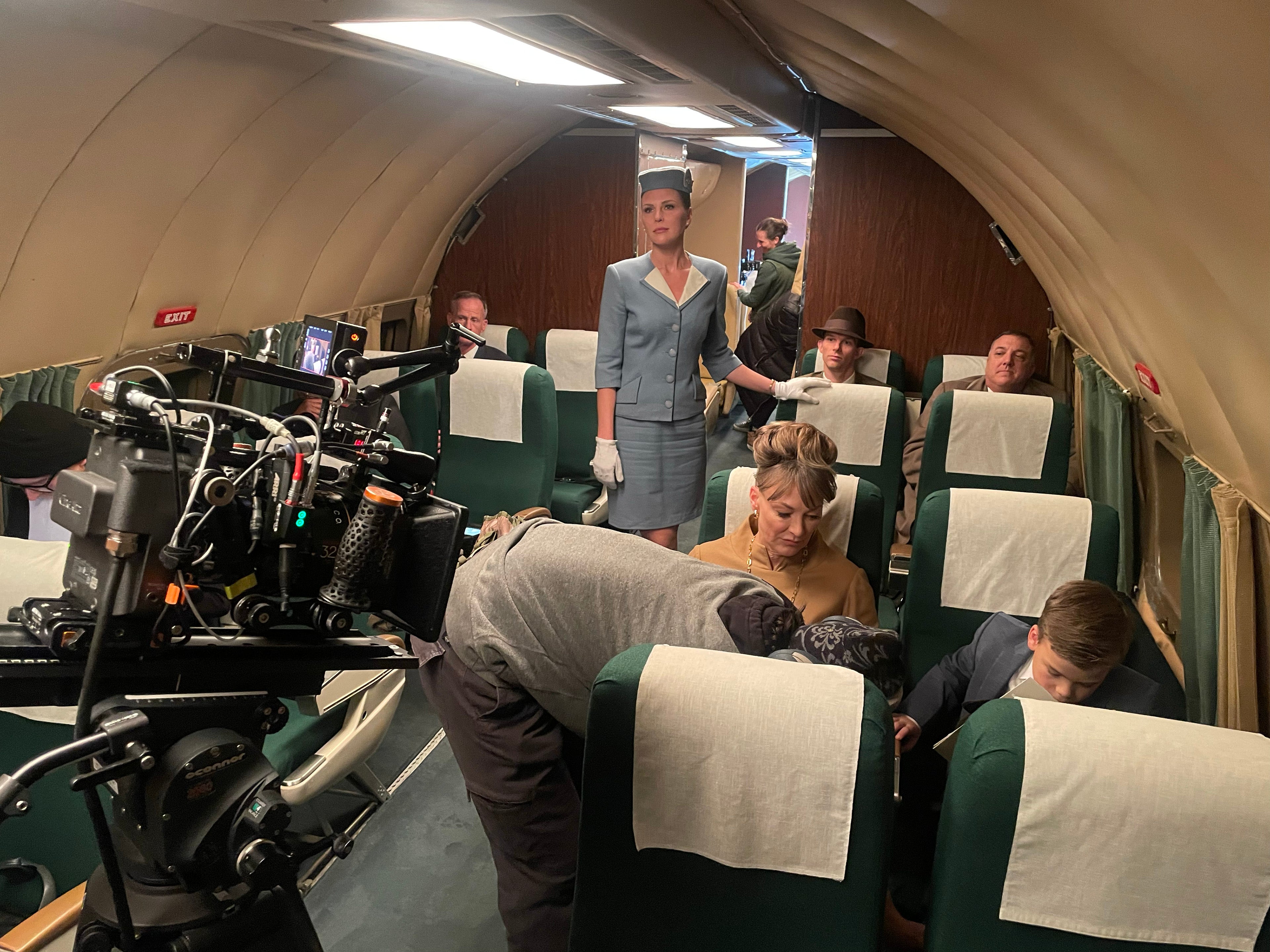
"There's a lot of green in [Hopper’s] paintings, and the propeller plane that we shot on, which is the Constellation, had this green interior that Hopper often had in his paintings,” de Lumen explained. “We also liked the images from Mad Men, in terms of the grain and the color saturation. I drew upon that, and also from Janusz Kamiński's work on Catch Me If You Can, in terms of the softness of the lens and the nostalgic feel of that era.”
This combination forged the visual language of Propeller One-Way Coach, which utilized not only period-accurate airplanes but also the costumes and the fabrics they were made from.
“That was John's superpower. He is so in love with the 1960s, because of his childhood, he would identify fabric, he would identify hairstyles, he would identify collars,” de Lumen said. “There are so many little details that he would adjust to make sure it was completely accurate in the frame. To me, that was such a joy.”
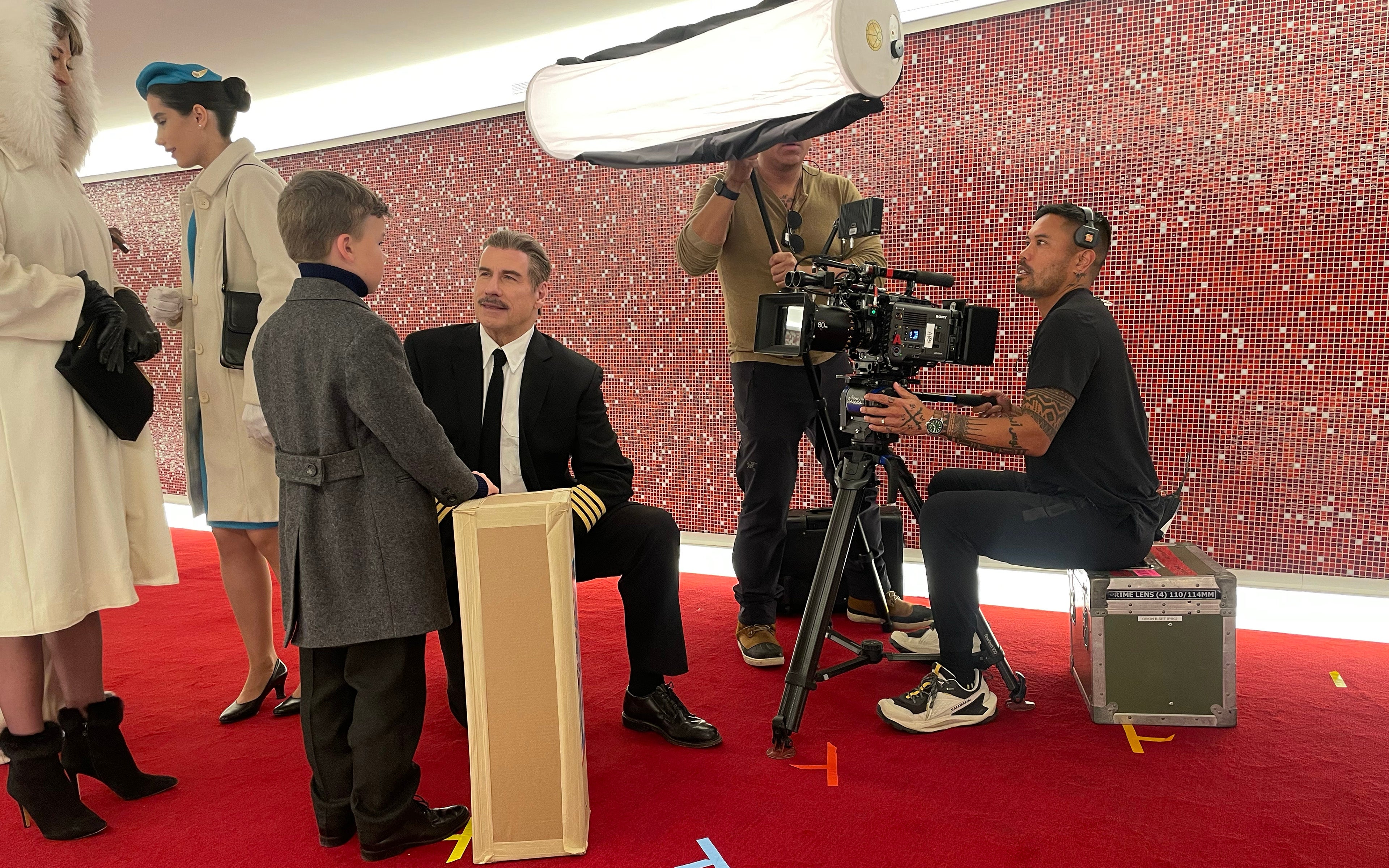
Parts of the film were shot at the historic TWA Hotel, which was once a terminal for the now-defunct airline. Here, a Lockheed Constellation sits at its door, which Travolta and de Lumen used for exterior shoots. To capture the interiors and taxi scenes, Travolta used his personal Constellation, a plane that still functions but can’t fly, before moving production to Air Hollywood in Valencia, where an assortment of fuselages from different eras are stored.
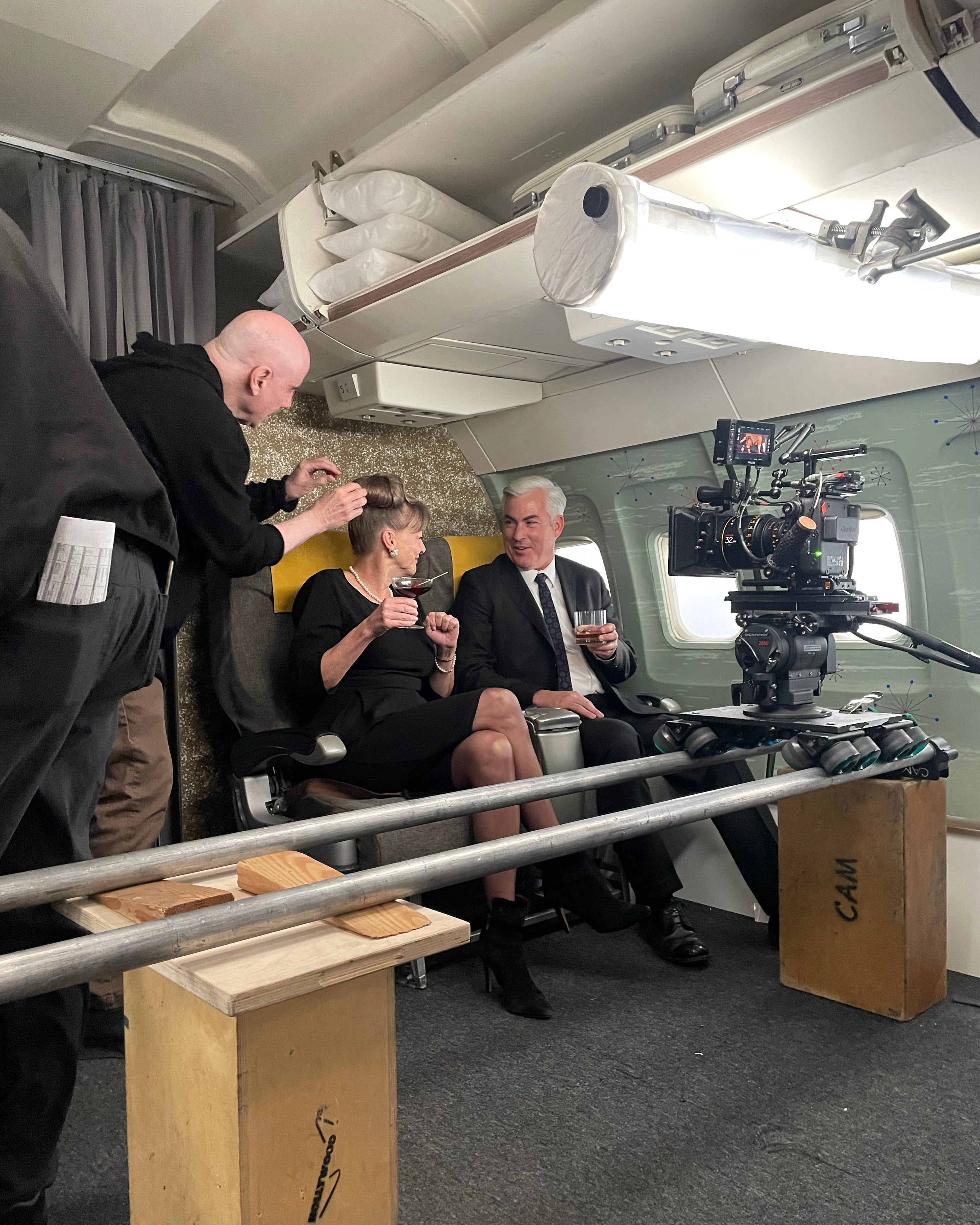
"The taxi was pretty fast on the runway, up to almost the speed to take off,” de Lumen said. “I was on a truck with a high hat getting different angles of this taxing scene, and once the plane [in the film] was up in the air, we would shoot on the runway. I would duvetyne the windows for night scenes, and sometimes for day scenes, I would put diffusion on the windows so they were blown out.”
“Then for the scene with his mom, where he's describing the sunlight coming through the window and the plane banking, I was able to put a light on a jib to mimic as if the plane was turning.”
“One of the things I talked about with John is that in an airplane, the light is constantly changing,” de Lumen added. “The clouds change, the softness, the warmth, the coldness of the sun, and the weather is always changing. I tried to do that constantly with the plane in terms of color temperature and had it flow through the scenes.”
Why de Lumen Chose the Sony VENICE 2
To shoot within the confines of the vintage airplanes while capturing the specific color palette he and Travolta chose, de Lumen needed a camera system that could handle the textures of film stock but be small enough to be used inside a 1960s airliner.
With the Sony VENICE and the VENICE Extension System 2, de Lumen found a system that was versatile to fit both needs, but would also support him in meeting his lighting needs.
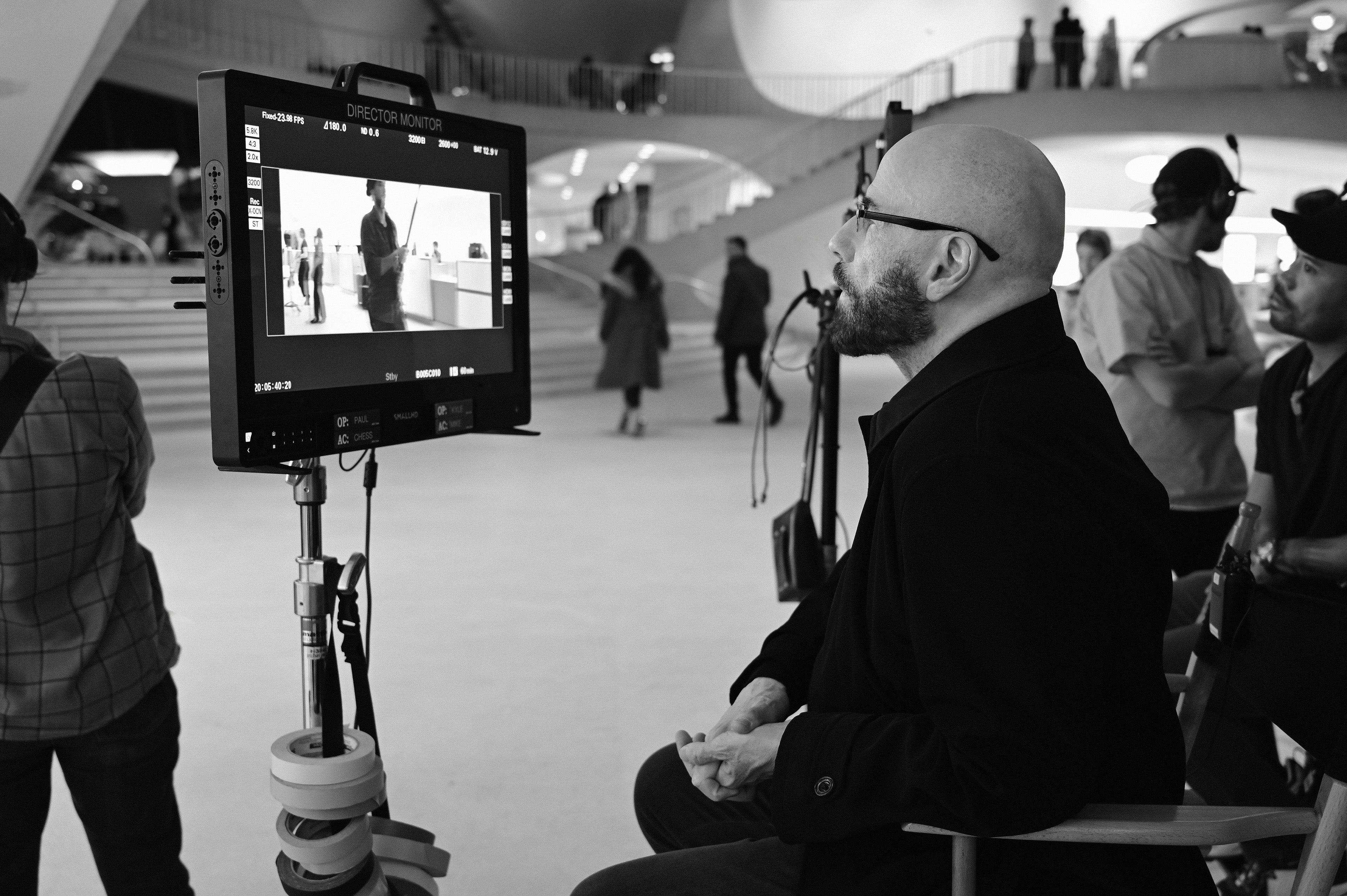
“The Dual ISO was really important to have because our shooting schedule was only 10 to 12 days,” de Lumen said. “At the TWA Hotel, I couldn't use vast amounts of lighting for our wide, and I had to let the practicals sing. I was scared of it being too noisy, but thankfully with the VENICE 2, it was still solid at low light conditions at [ISO 3200].”
“The sensitivity really helped me embrace the practical lighting in the terminal, and it helped me move faster.”
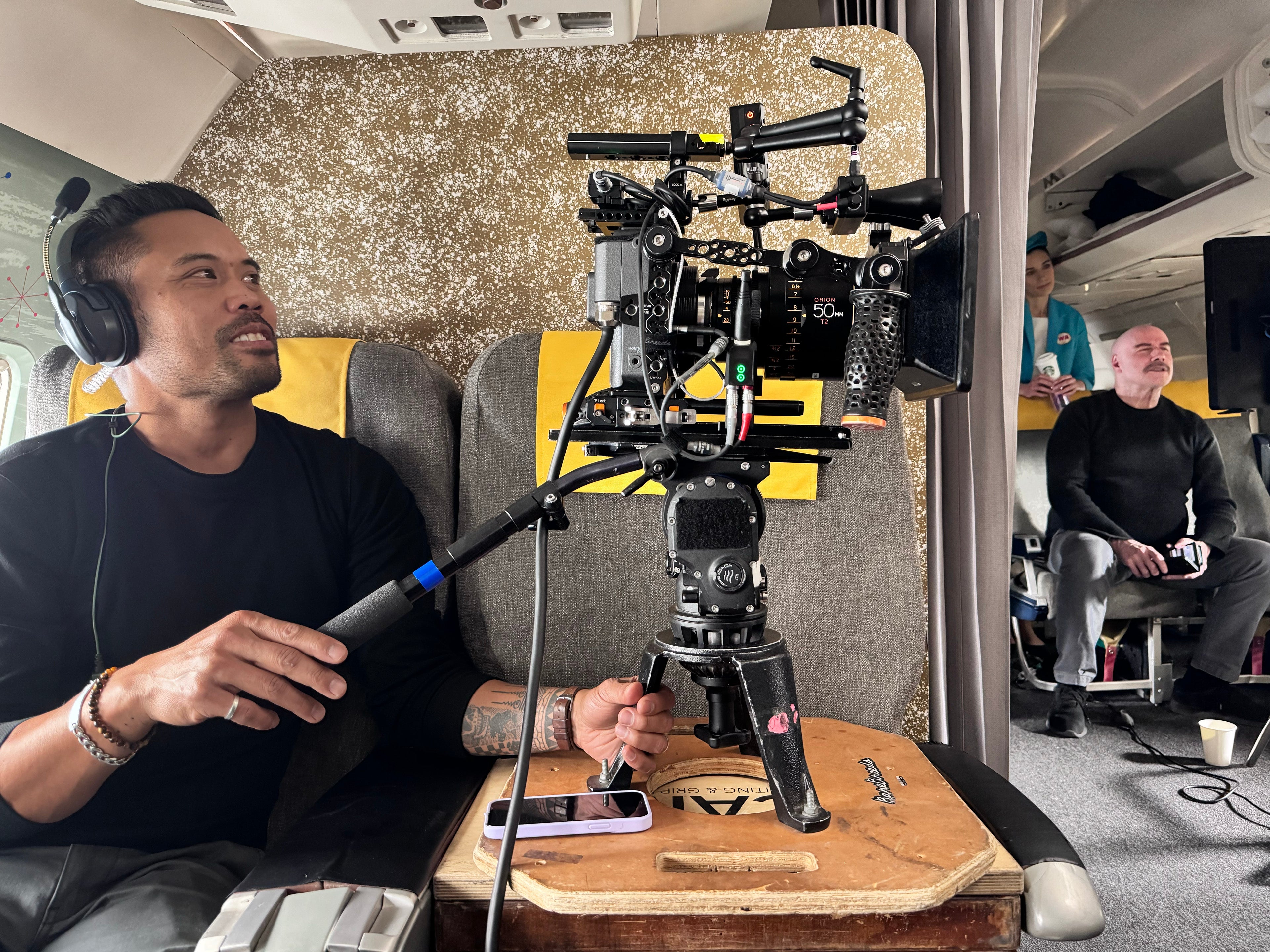
Inside each airplane, the RIALTO 2 was used either handheld or with an Easyrig to free de Lumen from the limitations of a studio build and keep the film on schedule.
“Any time we were inside the plane, I was on the RIALTO 2. Even if I was on a hi-hat,” de Lumen said. “We used a 40ft cable, and we tucked the body maybe like 10 rows down, so the only type of tether we had was this cable that came in through the bottom [of the rig].”
“Some of the configurations for the plane were a little bit tight, so we couldn't even fit in a Steadicam. I had to use an Easyrig for some of it and stabilize it a little more in post. Having that low profile for the Easyrig helped a lot because then it was just the cable on my back with the grips wrangling the cable.”
To embrace the inspiration he found in Kamiński's compositions in Catch Me If You Can, de Lumen chose the Atlas Orion anamorphic primes as his main lens set. These were paired with a spherical Angénieux zoom for certain exteriors.
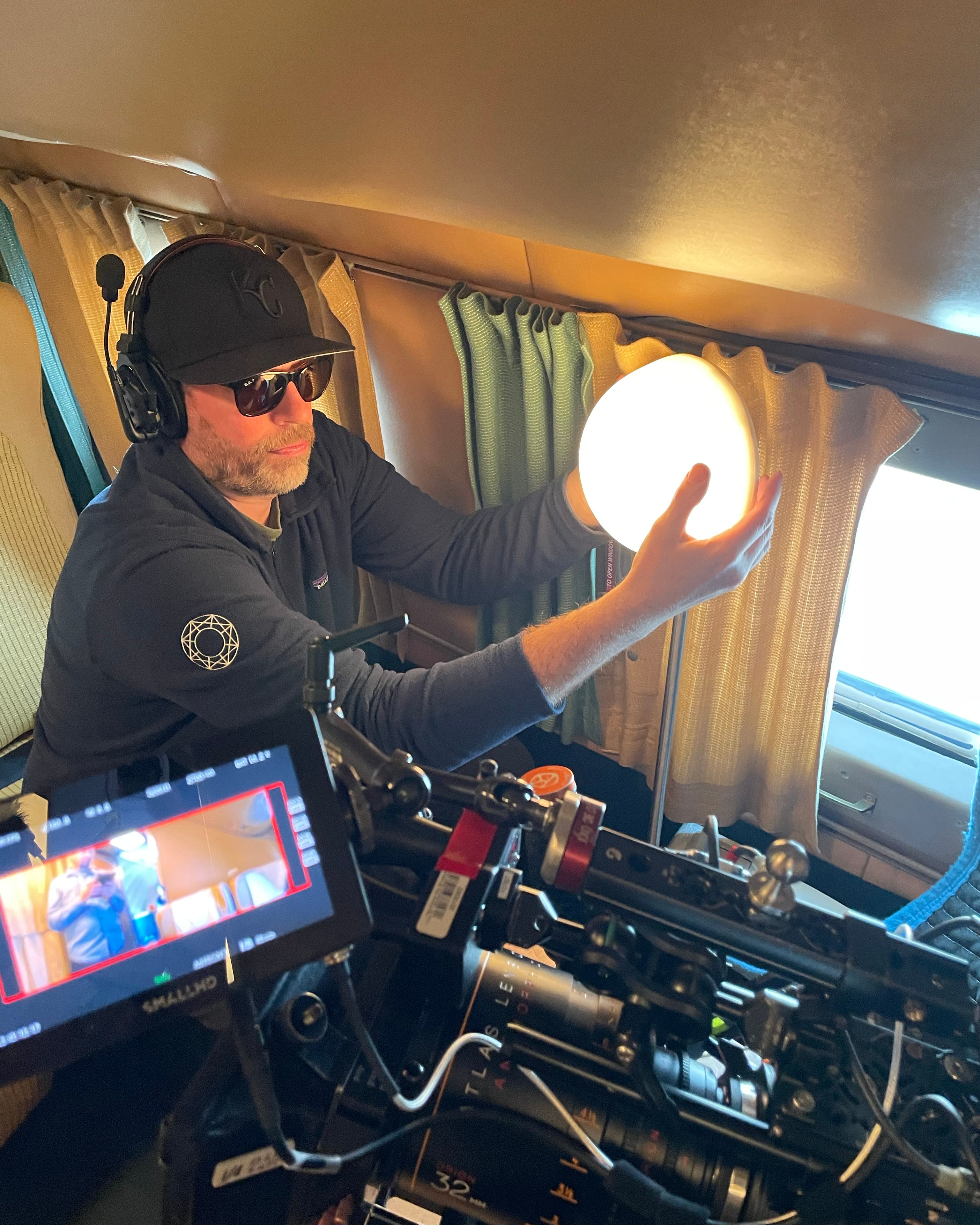
[The Atlas Orions] have more of a vintage feel, and I softened them a bit more with Tiffen Black Pro-Mist Filters to have the blooming of the practical lights,” de Lumen said. “Then, for the runway exteriors, I needed a zoom because I was coordinating with the plane and the car, and I needed to adjust my frame from the camera. A prime wasn't really practical for that. I went with the old Angénieux vintage zoom and it matched the Atlas Orion’s really nicely.”
“For anamorphic, we shot at 5.8K Super 35 and for spherical we used 5.5K that we cropped for 2.39:1,” de Lumen continued. “It was so nice to have above 4K for the imaging, and then for special effects, it was nice to have the extra resolution as well.”
De Lumen also built a LUT based on the Vision2 500D and 320T film stock used on Mad Men by matching different colored elements and fabrics between the film stock and the VENICE 2. When textured with grain that matched those film stocks, the Edward Hopper greens finally sprung to life. And even with limited lighting at his disposal, de Lumen trusted the VENICE 2 and the RIALTO 2 not to break down from the grade.
“I was impressed with how little RIALTO 2 broke down in terms of low-light situations,” he said. "I was afraid that in low light, because I was pushing grain with my LUT, the image would get mushy. But the visual grain didn't break down at low light. To me, that was the most exciting thing because I was able to push it without breaking our LUT.”
“The sensor and the form factor [of the RIALTO 2] really enabled me to stay on schedule and maintain visual integrity throughout the whole project. It has an ability to handle low light and not break down so that I could move fast in terms of using practical lighting.”
A Cinematic Gift Celebrated at Cannes
Propeller One-Way Coach premiered at the 2026 Cannes Film Festival, where Travolta received an honorary Palme d'Or and a prolonged standing ovation. This celebrated film, which began as a children’s book, was written by Travolta for his family, not only to be seen by them, but also for them to be in it.
“All of the roles were either friends or family. The reporter at the end is his older brother, Joey,” de Lumen said. “John actually wrote it for his family as a gift over the holidays. For them to be in it and to be part of making it, it made for a very good energy on set.”
Stream Propeller One-Way Coach now on Apple TV+ to see de Lumen’s work. To learn more about the Sony VENICE 2, the RIALTO 2, and the other cameras in the Sony Cinema Line, visit our Camera Comparison Chart.


