09-10-2026 - Interviews & Behind The Scenes
Philip Lozano, AFC and VENICE 2 Set Fire to a Cult Classic for “Evil Dead Burn”
By: Yaroslav Altunin
Created by filmmaker Sam Raimi, the Evil Dead franchise has grown into a horror phenomenon comprising six feature films and a television series, with the original trilogy earning cult status among genre fans.
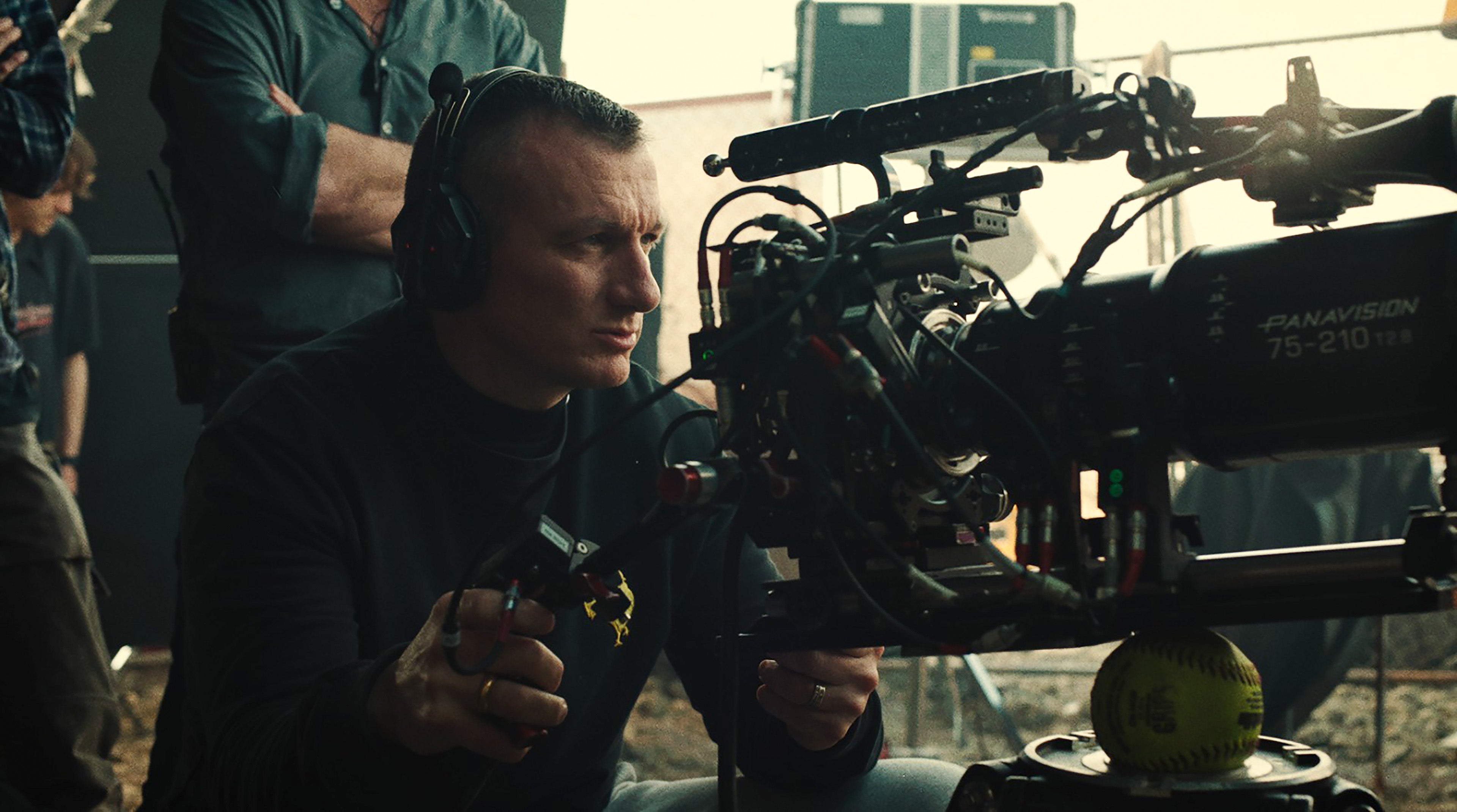
For Evil Dead Burn, the sixth feature-film installment, director Sébastien Vaniček (Infested) and DP Philip Lozano AFC (Monitor) took on the monumental task of treading new ground while paying homage to the foundation laid by Raimi and directors Fede Álvarez and Lee Cronin. For the very first time, Lozano leaned on the Sony VENICE 2 and RIALTO Mini to capture the nuances of fire and the violent, visceral, and handheld style of Vaniček's creative direction.
Sony Cine sat down with Lozano to learn more about the creative challenges he faced, the importance of fire and shadow in the film's visual language, and how the VENICE 2 and RIALTO Mini made the impossible a reality.
Embracing the Brutal, Violent, and Visceral
Filmed primarily in New Zealand, Evil Dead Burn would be Vaniček’s second feature film and his first time working with Lozano, a cinematographer who prides himself on hiding his visual language between the layers of a story.
“The script was a very interesting and smart combination of an indie movie, in the fact that the director also wrote the film, so it's something that's personal, it’s not just a popcorn movie,” Lozano said. “And at the same time, I knew that if we were to achieve all the visuals and shots, it was gonna be something also quite huge. So seeing all the potential and the adventure, I was like, ‘Yeah, I want to do this project.’”
But it would be Vaniček’s visual and creative style that drew Lozano deeper into the project, giving him the opportunity to go beyond the genre.
“I think Sebastian's own DNA is so different. He has a very brutal, violent, visceral, handheld style,” Lozano said. “He literally told me, ‘I want to do the most violent Evil Dead ever done.’ He wasn’t into doing just another bloody and gory movie.”
“Sebastian is a very visual director. All of his visuals and references were so strong and interesting that, on top of being a good movie, it can also be a very visually interesting movie.”
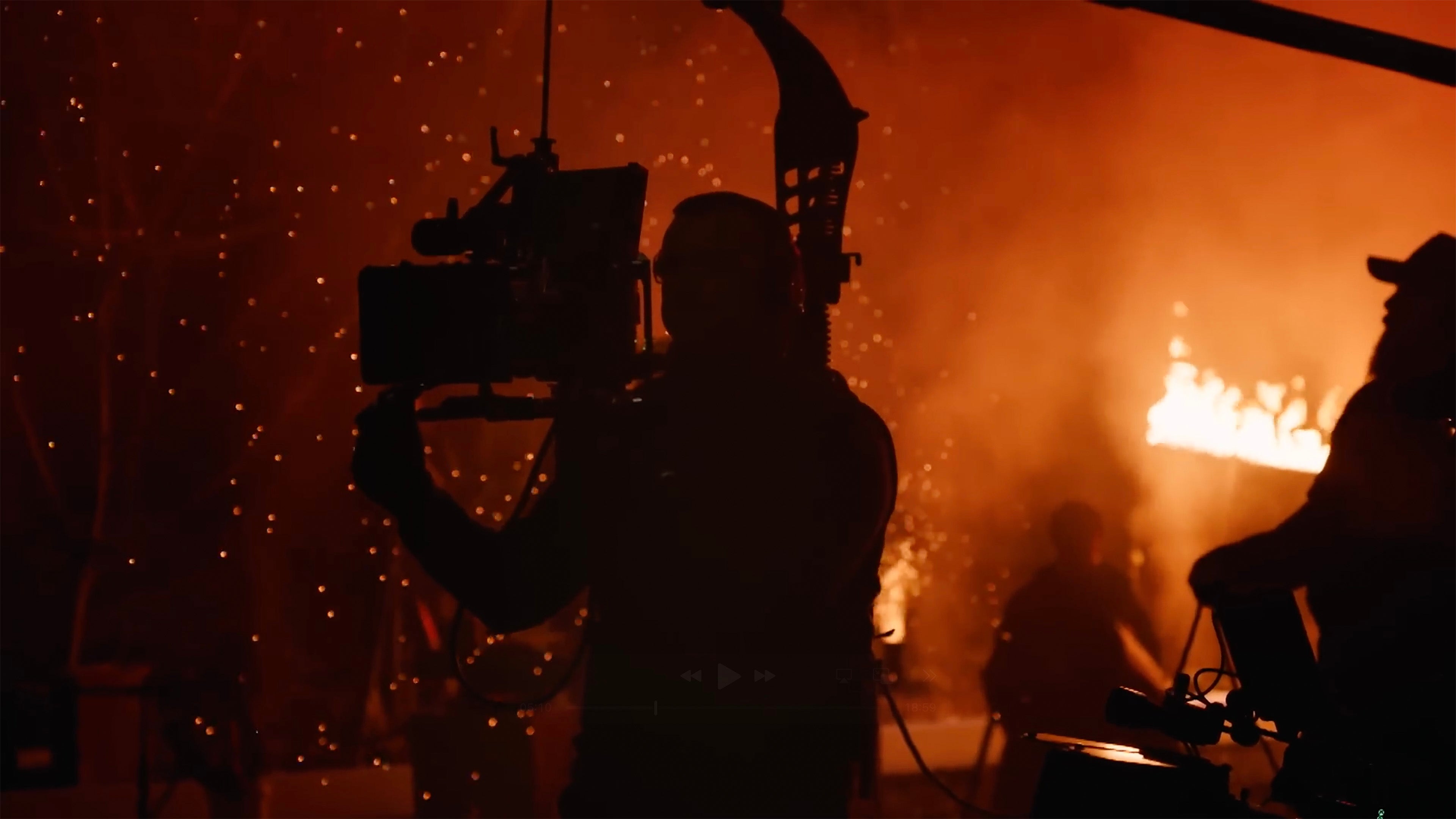
For the duo, the goal was not only to give audiences the horror thrills they were expecting, but offer a physical impact that they would take with them beyond the movie theater.
“In terms of how to operate the movie and being handheld, Sebastian told me, ‘I want the audience to feel like they were punched in the face when they come out of the movie,’” Lozano said. “He really wanted people to viscerally feel the movie through all the [filmmaking] techniques, not only cinematography, but also through prosthetic and blood.”
“And at the same time, [it was about] respecting and embracing what the Evil Dead franchise is, while proposing something that is very fresh and new, that’s never been done before.”
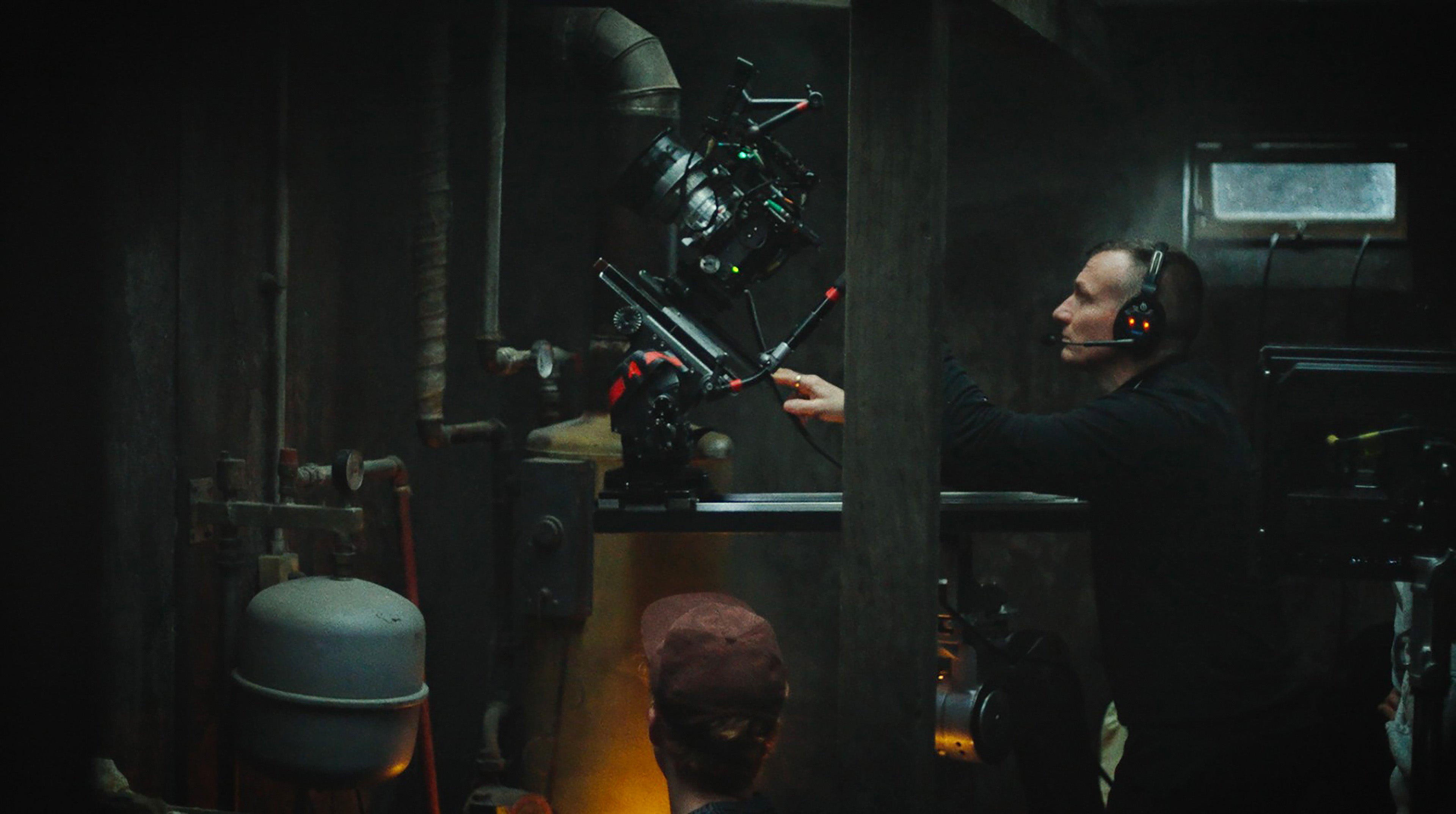
Image Credit: David Fontão
Capturing What’s Never Been Done Before
Evil Dead Burn not only had an ambitious shooting schedule but an equally ambitious shot list. In addition, Lozano wanted to embrace the fire and shadow elements inherent in the franchise and genre.
“When talking about narrative, doing horror or thriller, it's very tricky because I'm not the kind of DP that likes to over-light the scene, in general,” Lozano explained. “The tricky part of getting that darkness, not like pitch black, but when you need to have subtle details to get some depth and volumes, and people being able to see something, then you're on the edge, and it falls apart quickly.”
“When we were all kids, the reason we asked our parents to leave the door open was that when you can't see, your brain starts to be like, ‘Oh, what's in the darkness?’”
After a long session of testing various cameras, including the VENICE and VENICE 2, Lozano settled on the latter. The high-resolution sensor, the internal ND filters, and the RIALTO Mini gave him the toolkit he needed to capture the nuances of shadow and the color depth of fire.
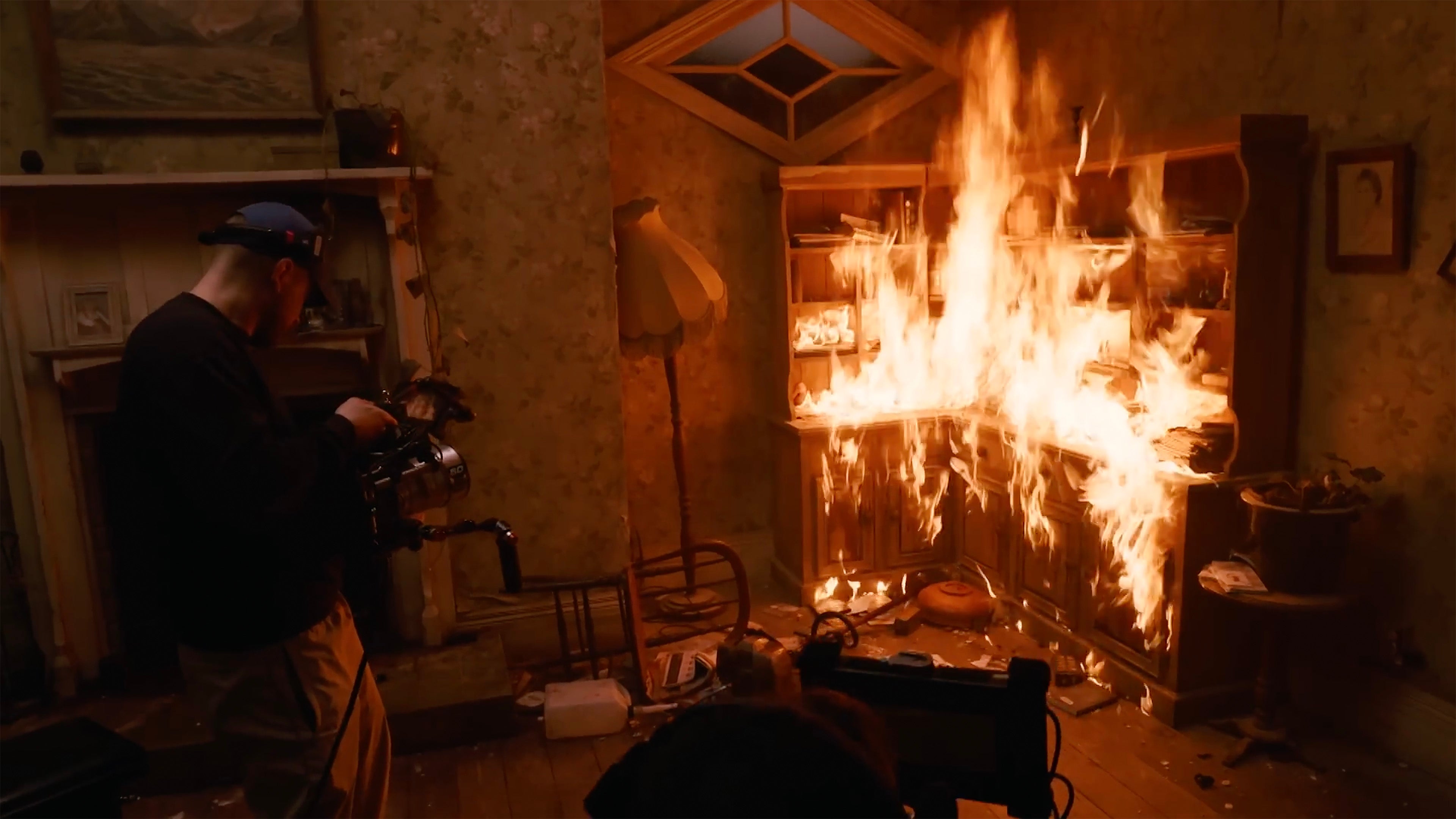
“The fire in the movie was such a big challenge because some of the crew wanted the flames to be CGI flames,” Lozano said. “And I was like, ‘No, no, no, the movie is called like Evil Dead BURN.’ It's almost like a character in the movie. So I wanted to shoot as much of the fire and flames in camera.”
“Something that I really liked about the VENICE 2 is the internal ND…to be able to capture not only all the latitude of the flames, but I also wanted to give some depth inside the flame itself,” Lozano said. “The red, the yellow, the white, all the color depths that I like because they give some volume and depth to the image itself.”
While he initially didn’t think he would need the higher resolution, Lozano’s camera test revealed an interesting effect of the smaller pixel pitch found in the 8.6K sensor of the VENICE 2.
“At first I didn’t want more resolution,” Lozano said. “But the more resolution you get on the same [sensor] area, the smaller the pixels are. So the smoother the skin tones are going to be, and it's gonna look less like video.”
As a cinematographer who built his career during the days of celluloid, Lozano strives to “kill the digital look” in his projects. This led him to shoot Evil Dead Burn in 8.6K with a 3:2 aspect ratio on Panavision Ultra Vista lenses to modify the digital look to his taste.
“What really matters to me are the lenses. I hate the modern look and modern lenses, even though they might be super small,” Lozano said. “I come from a film stock background, and my game is to kill the digital look. I'm a Panavision guy. I love anamorphics. So we shot in anamorphic on Evil Dead Burn with the Panavision Ultra Vista lenses.”
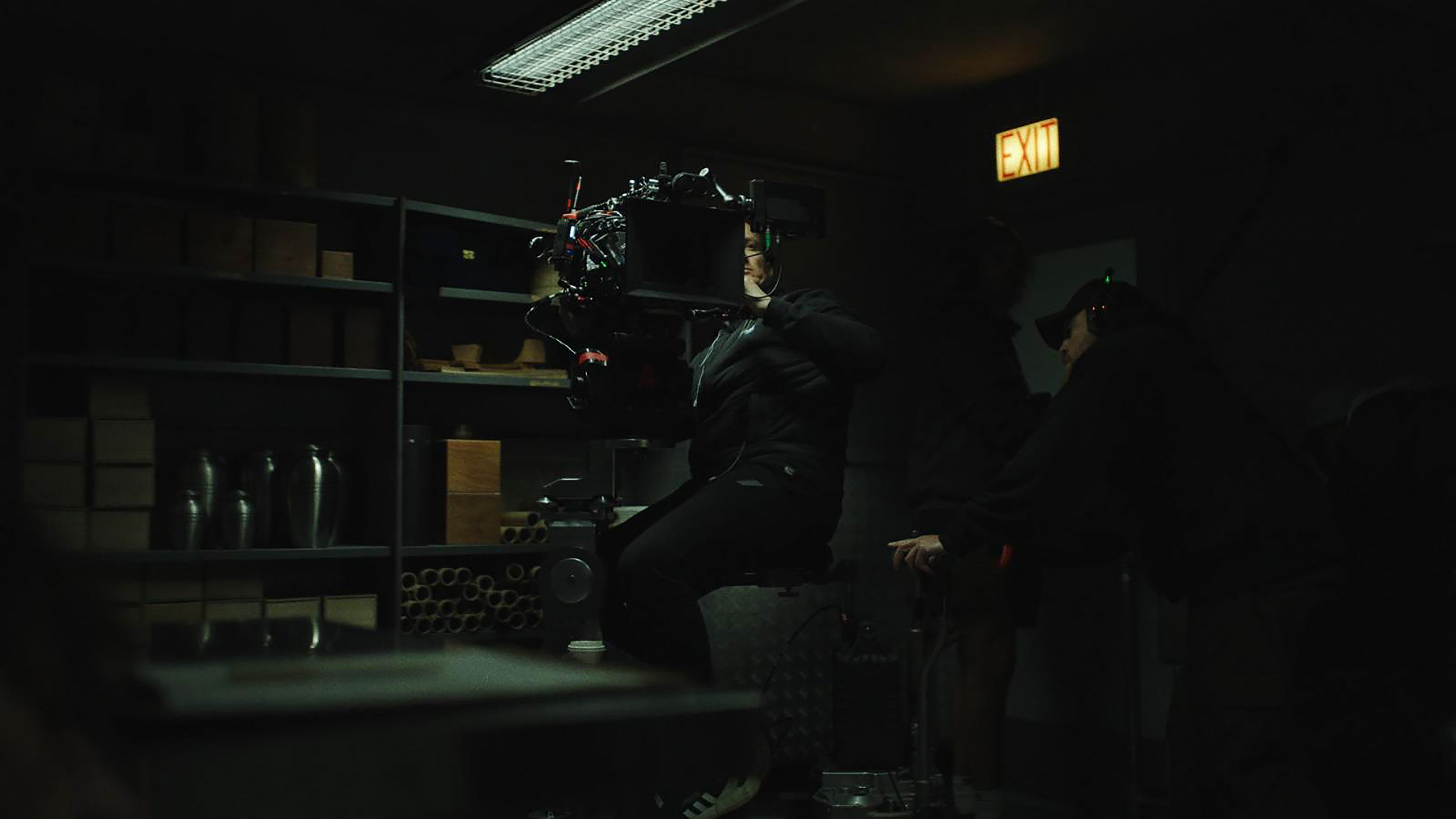
Image Credit: David Fontão
While these anamorphic lenses gave Lozano and Vaniček the look they were searching for, they were heavy and cumbersome to use handheld. It was here that the VENICE 2, with the RIALTO and RIALTO Mini, became a crucial creative tool.
“Because so much of this [film] was handheld, I usually [used] the EasyRig,” Lozano said. “And this time, I also used the Blkbird Mantis [with the EasyRig] for the first time. It was so convenient because I could hold the camera for hours. I was jumping from the RIALTO to normal mode to a dolly. It definitely made a difference.”
The compact nature of the VENICE 2 camera system allowed Lozano to capture coverage in tight spaces, while also moving fast on set. Even with the 135mm Ultra Vista, which weighs more than double the RIALTO, the cinematographer could use the large lenses handheld to achieve that visceral, handheld style the film needed.
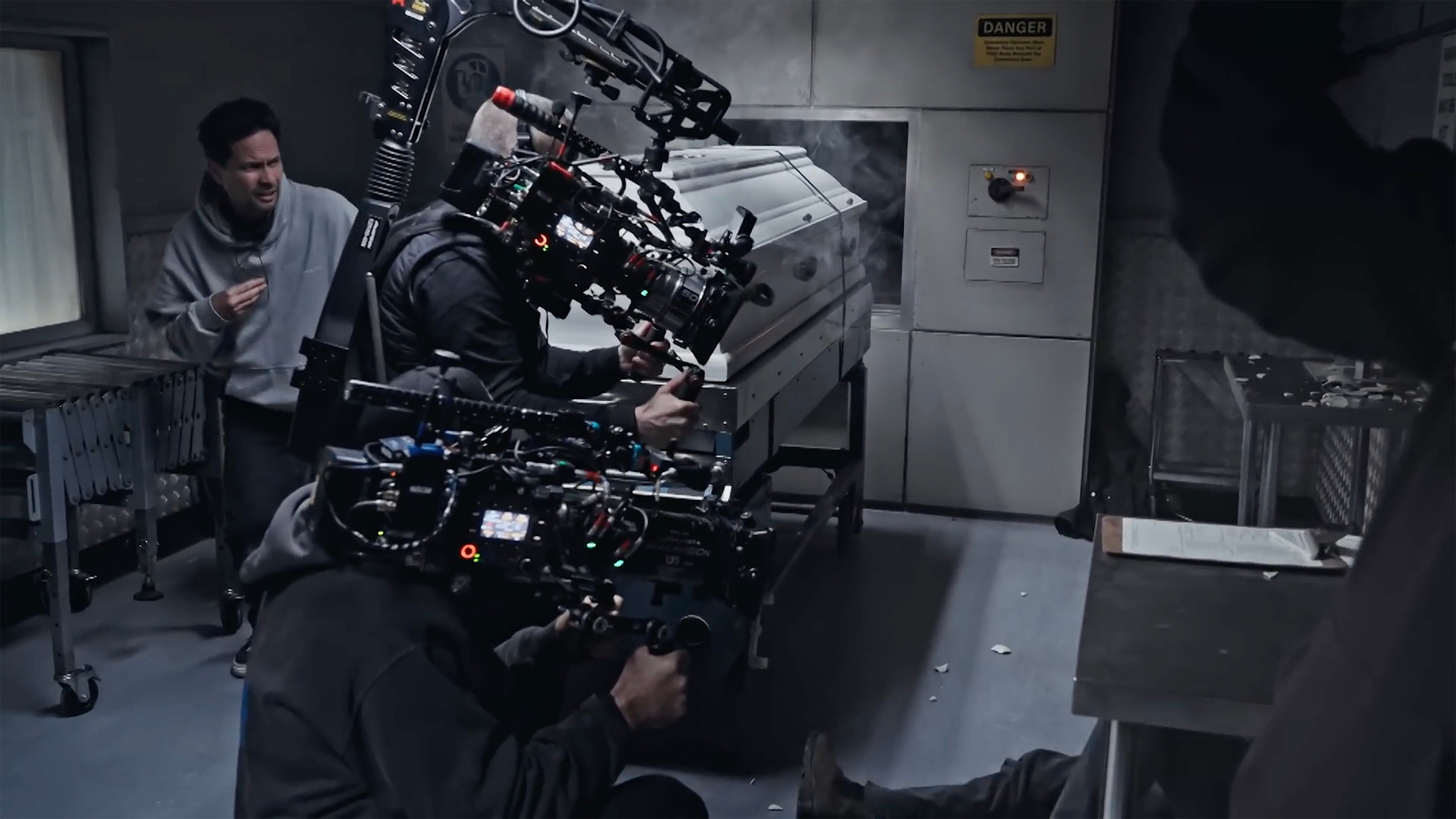
“We used the RIALTO…on a whole sequence in a car where there is a fight scene,” Lozano said. “When you come to be shooting into such a tiny space, obviously having a camera like the RIALTO Mini, it matters a lot and permits you to be able to do certain stuff.”
“With the reality of the schedule, and space inside the car, I always had my face against the window with the RIALTO Mini doing some crazy move,” Lozano continued. “Honestly, I would never have been able to do that scene without that kind of tool.”
With all the challenges posed by a strict schedule and budget, Lozano relied on the VENICE 2 and its expanded ecosystem to make his days. Between SFX, prosthetics, and nuanced lighting, the challenge was finding balance. Yet with the latitude offered by the VENICE 2 and the depth of the X-OCN XT codec, Lozano met each challenge with options instead of compromise.
“The VENICE 2 gives you a lot of latitude between lowlights and the highlight, and my job is always to try to make sure we're never underexposed or overexposed and to keep a good balance, “ Lozano said. “And because it was for the big screen, I definitely wanted more for the color grading. I used [X-OCN XT] to get more options for colors and more options for lowlights.”
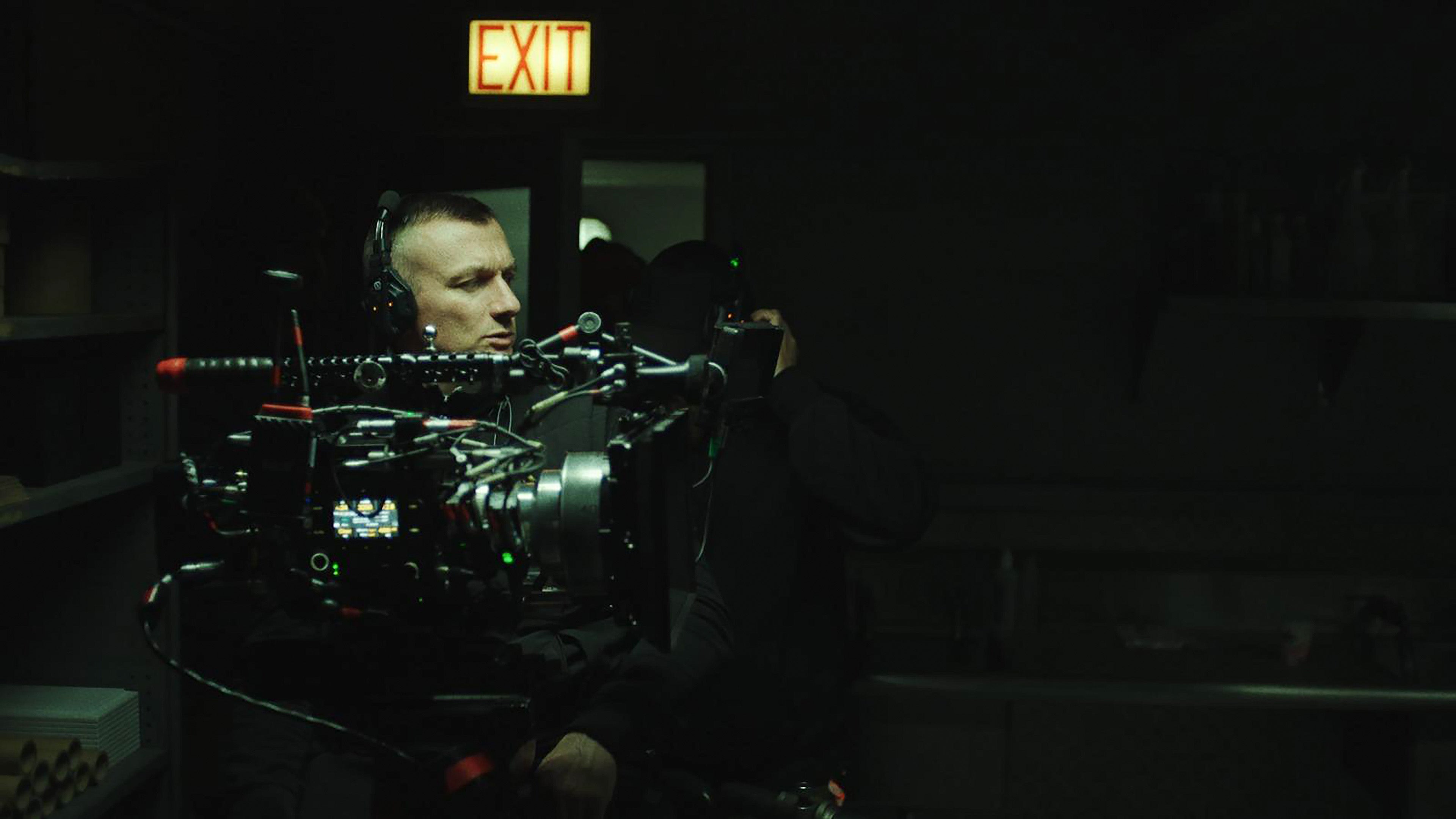
Image Credit: David Fontão
The Most Important Thing
As a cinematographer who hides among layers of story, Lozano’s goal is to put the audience first. To make them believe the world they are seeing, even if the story is about the fantastic and supernatural. It’s not about showing the techniques, but about collaborating with his fellow artists and his tools, like the VENICE 2 and RIALTO.
“The goal, I think, when doing narrative, either TV shows or movies, is to make the audience travel through a story,” Lozano said. “My work is to create, obviously, with the artistic direction, with the director, his idea, and all the artistic collaborators in the movie, is to create a world where the story takes place. To make it real and to make it feel like people enter that word, and not to see just the technique.”
Evil Dead Burn premiered in theaters on July 10, 2026. To learn more about the VENICE 2 and the other cameras in the Sony Cinema Line, visit our Camera Comparison Chart.


