11-17-2026 - Interviews & Behind The Scenes
How Sony and Renan Öztürk Honored the Beautiful Majesty of Chomolungma for “Tenzing”
By: Yaroslav Altunin
Directed by Jennifer Peedom (Sherpa) in her narrative feature debut, Tenzing is a biographical film that tells the story of Tenzing Norgay and his 1953 ascent of Chomolungma — the Tibetan name for Mount Everest — with New Zealand climber Edmund Hillary. Shot on location in Kathmandu and the Everest region, as well as atop living glaciers in New Zealand, the film grounded the story in real locations much as possible.
DP Stefan Duscio (The Invisible Man) lensed the film, alongside an extremely experienced and talented climbing crew led by expedition filmmaker Renan Öztürk (Sherpa, Lost in the Arctic), on the Sony VENICE 2. Öztürk served as second-unit director and climbing director on Tenzing, braving extreme locations and dangerous weather to help the production team experience the film’s story.
To truly understand the creative scope of the production, Sony Cine sat down with Öztürk to explore the challenges of shooting in such remote locations, why they were so critical to the story, and how Sony weathered the extremes of Chomolungma to bring this film to life.
Lifetimes of Experience
The story for Tenzing came from Peedom’s 2015 documentary titled Sherpa, which was filmed during the 2014 Mount Everest ice avalanche and included archival footage of Tenzing Norgay and Edmund Hillary, as well as interviews with Norgay's children.
“Norbu, who is Tenzing's son, was a subject in Sherpa and gave a powerful interview there. So both Jen and I have had this deep connection with Norbu over the years,” Öztürk said. "And Jen recognized it with Norbu from the beginning that this is a powerful story that needs to be told.”
"[It's] one of the most hopeful true stories that touches upon so many beautiful themes. Not only climbing, but overcoming ego and being an outsider, because Tenzing was also an outsider even to the Sherpas. He came from Tibet and was exiled across the mountains.”
After working with Peedom on Sherpa, Öztürk reunited with the director once again to take some of the experiences from the documentary and help make them into a film that could dig deeper into the nuances of Tenzing’s journey. But to truly capture that journey, the production team needed to venture into the landscapes of Chomolungma and other mountainous regions.
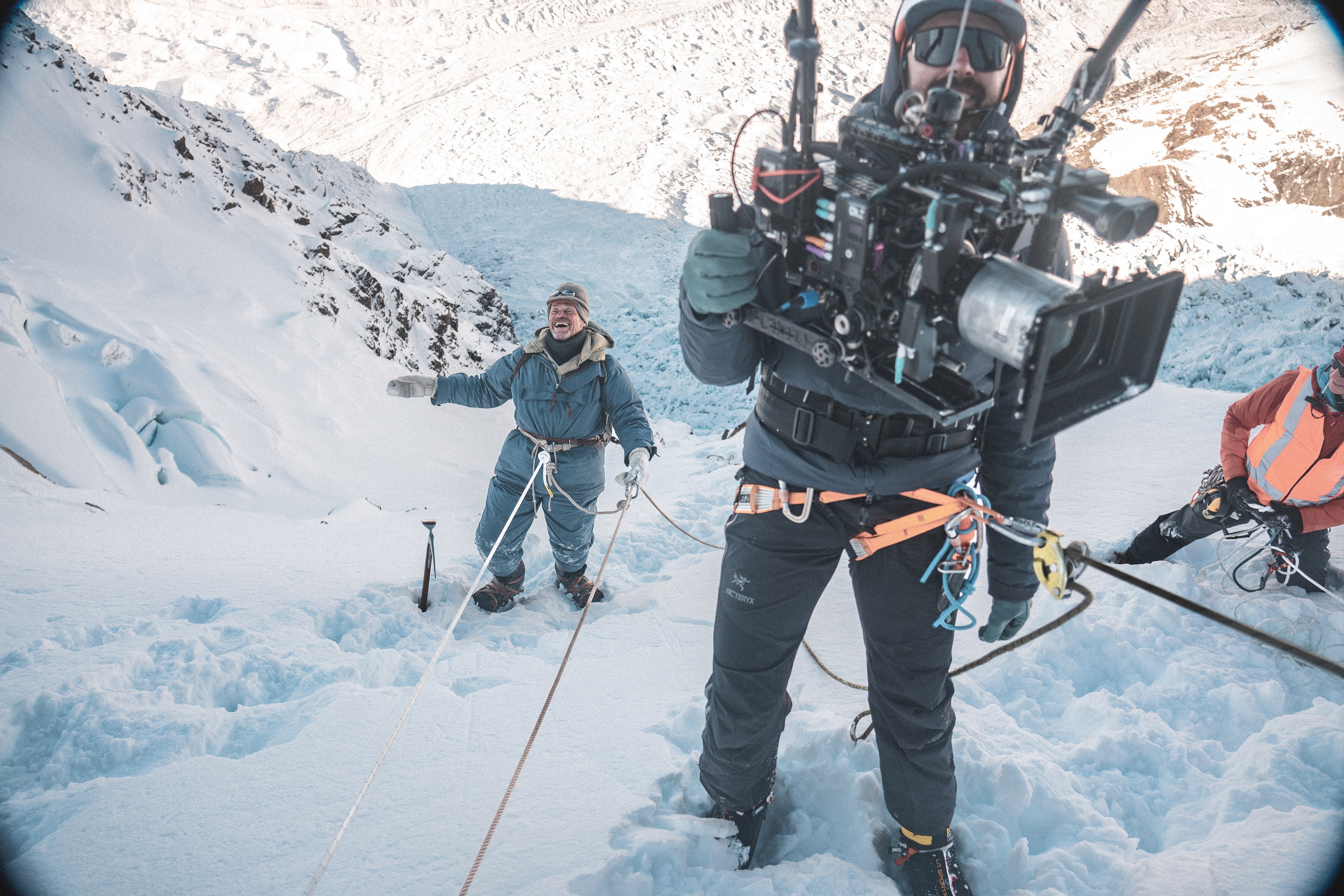
“It was super important for us to shoot on the mountain and in the elements for this,” Öztürk said. "These landscapes are so powerful, and they tell their own story. You can taste it on the screen when it's real.”
Extensive scouting was done over the course of three months with the help of Guy Cotter, a legendary Kiwi mountain guide. However, these remote locations and glaciers evolved like all natural things, changing and moving with time. Once a location was scouted, the team had to shoot quickly before it became dangerous for the cast and crew.
“It was a very crazy extensive scout across all of Nepal, many different Himalayan places, and deep into the glaciers of New Zealand on active glaciers that are moving,” Öztürk explained. "You want to shoot a stunt scene on a crevasse, but in a month it's going to move down this moving river of ice and collapse. And you don't want to put people in that danger.”
“This was a scout that lasted a lifetime, because not only was it really long, but it took these lifetimes of experience to understand how to piece it together,” Öztürk added. “All of Tenzing was shot in this Alpine-style where you go in, you build the cable camera or camera really quickly and efficiently, and then when the storm comes in, you’re so fast that you can pair it all down, break it all down, and either use the skills of the team to get out to safety or pack up before you can get extracted.”
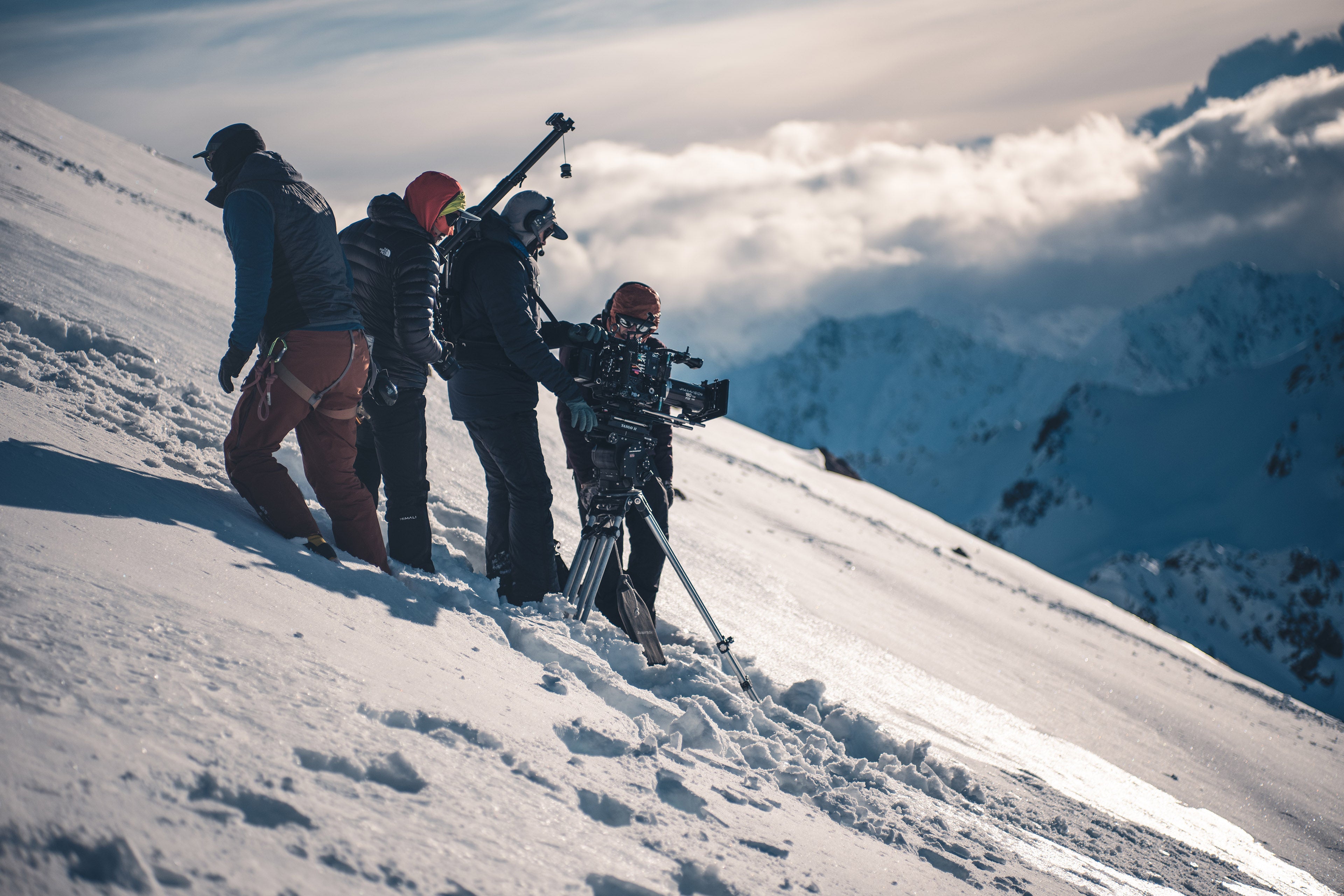
The crew behind Öztürk and Peedom were not only exceptional climbers and athletes but also experienced filmmakers known for taking high-end cinema cameras into the most remote locations in the world.
“Our unit was built of people who wear many hats [and who] I've worked with for over 10 years,” Öztürk shared. “Some of whom you have summited Chomolungma multiple times with high bit-depth cameras. And the other secret weapon that we had was Pemba and Ngawang, two young technical Sherpas from Phortse, who we've also been working with since the days of the Sherpa film.”
“This is a narrative film for Apple, so we built this strike team of ultra athletes and people who are comfortable in the mountains and are impossible to kill,” Öztürk continued. "But they also have Hollywood AC and drone and everything skills. We were able to go to more difficult location with actors, and also shoot with Pemba and Ngawang because they're part of our AC team and they're stunt doubles for Tenzing himself.”
Öztürk and his team were the only unit that could shoot sunrise and sunset in these remote locations, especially in New Zealand, where the main unit and cast had to be flown in on helicopters that could only fly when it was light out.
“We could shoot really unique things that rely on being able to withstand being on the mountain and continuing to shoot through storms and extreme cold conditions or pushing into dark on the glacier,” Öztürk said. "You've got to put skins on the bottom of your skis and then put the entire kit on your back and hike it out at night in 70mph winds to get back to a hut that you didn't plan to sleep at.”
“We were lucky to be able to spend the night on the glacier a few nights and get different lighting scenarios that doubled for the summit scenes.”
Blending Two Worlds
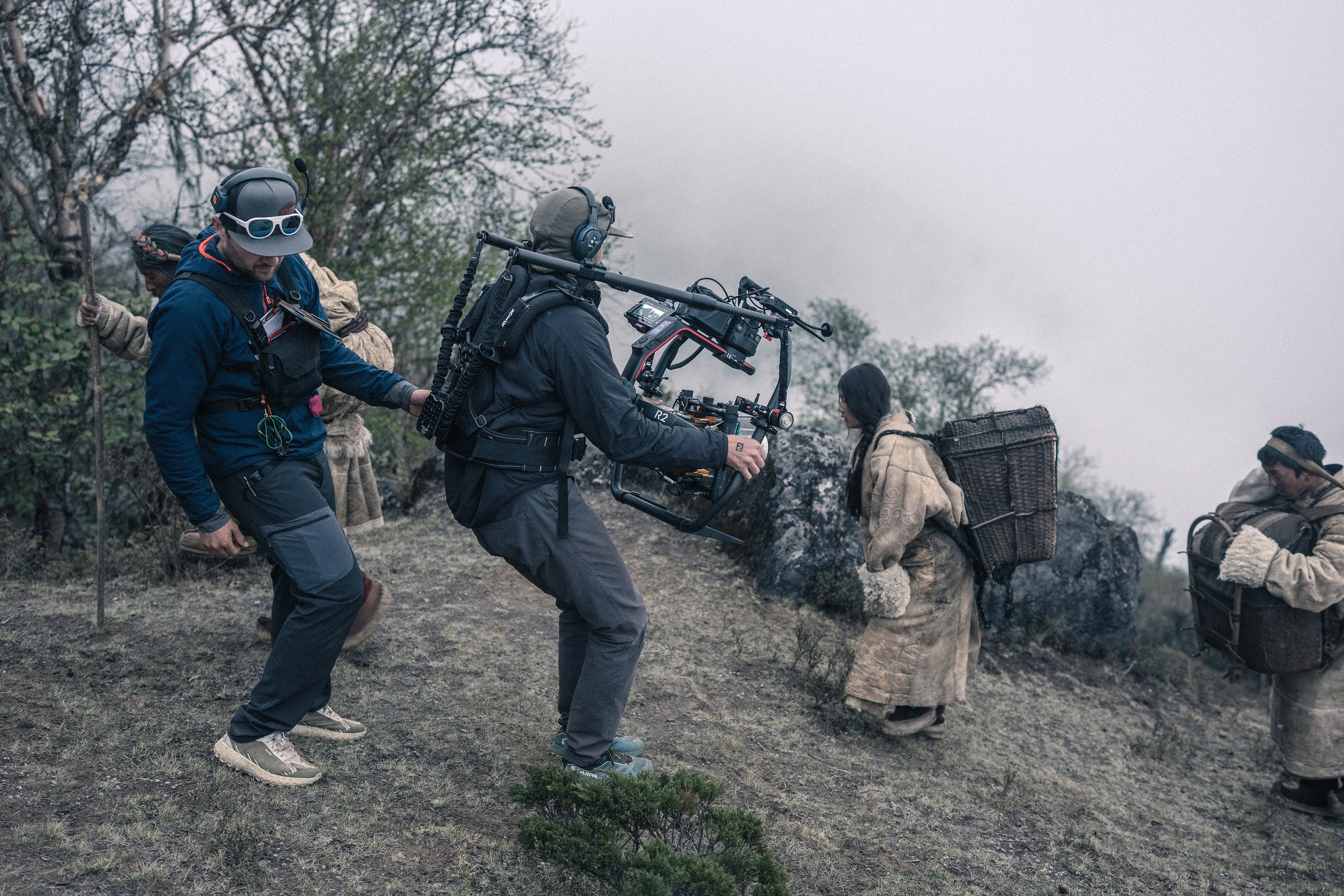
While Genden Phuntsok and Tom Hiddleston, who played Tenzing Norgay and Edward Hillary, respectively, were brought to the Everest region to shoot several scenes, the environment was too dangerous to go higher up the mountain. To capture the cast in these mountainous and glacial landscapes, the team shot in New Zealand, where foreground elements with the actors would later be combined with background plates shot on Everest.
“The way the plan evolved was — because it's physically impossible to put a crew that size in the death zone on Chomolungma — we shot the foregrounds in New Zealand on some of the last remaining active glaciers on Earth,” Öztürk said. “And then the backgrounds [we shot] on Chomolungma herself, and then merged the two in this really smart way with VFX supervisor Jason Hawkins.”
“He learned and studied the light, and the scenes that were shot on the glacier in New Zealand were perfectly matched for light,” Öztürk continued. “And then Stefan Duscio, the DP, and I and his AC, and Pemba and Ngawang…we went all the way to Everest Base Camp, through a big snowstorm, and shot all these strategic high-resolution plates of the mountain herself to match these foreground images.”
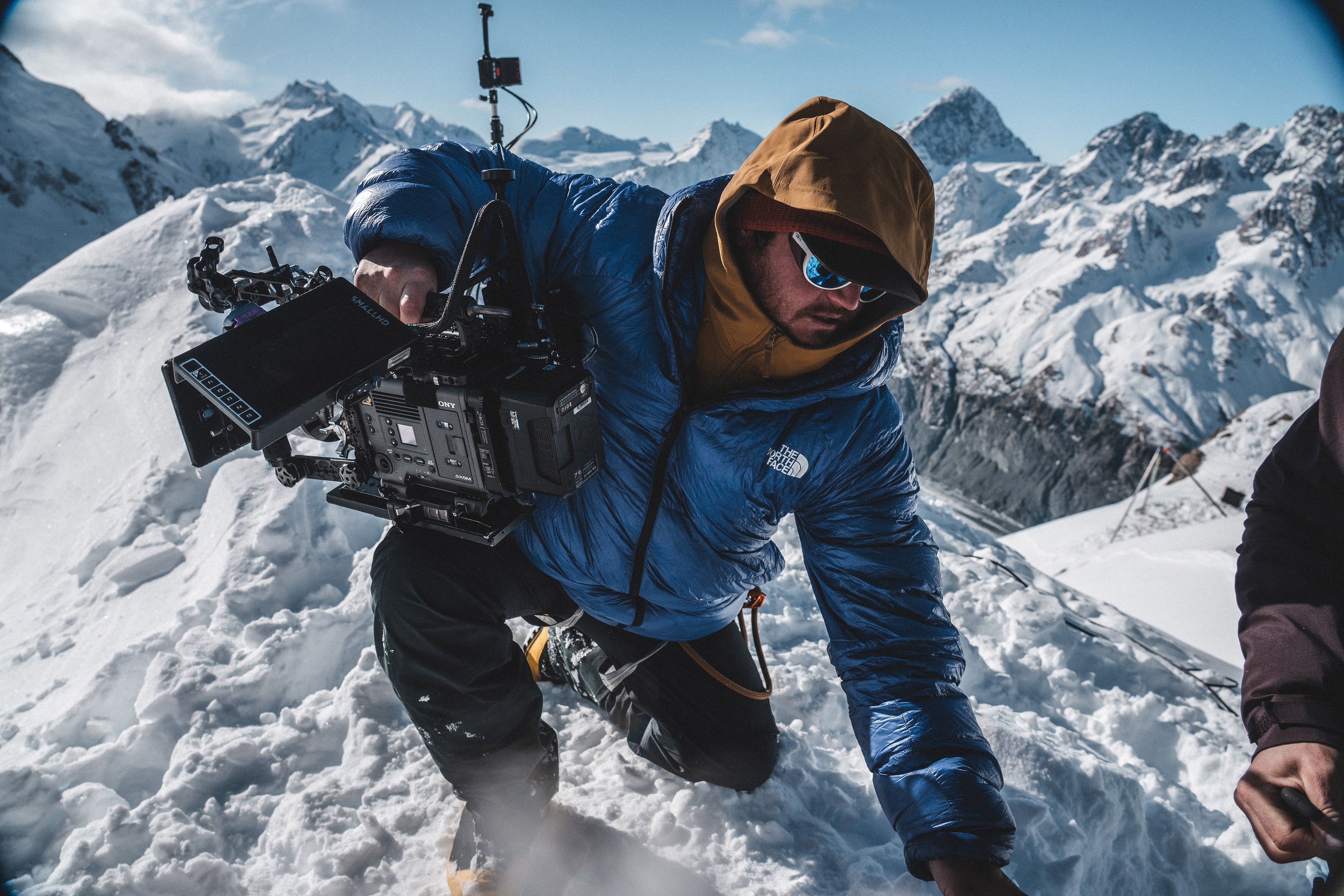
To capture these elements, Öztürk and his team needed a toolkit that matched the filmmakers' experience and sophistication. In such remote and dangerous locations, they needed to react to what was happening around them and let the environment guide them as they developed the look.
"When you're dealing with a landscape like this, the camera technology, especially with the VENICE 2, you’re putting it through the paces in those insane subzero temperatures and altitudes and beating it down,” Öztürk said. “[The VENICE 2] gave us more range to work with as opposed to some other cameras that we also shot that we broke. "
“The VENICE 2 was the burliest of the burly that lasted the entire production, being pinballed down crevasses, and dragged to the top of the Himalaya — the highest the camera has ever been in the IMMORTAL head on the heli for the final plate shoot,” Öztürk added. “That made me really happy that we were able to honor Chomolungma in that way and do her justice.”
Duscio operated the VENICE 2 in the IMMORTAL Phoenix to capture specific shots of the mountain, which was rigged to an AS350 B3 Helicopter.
“He was letting the light at the roof of the world guide him,” Ozturk said. “Overall, the look of the film was a little quieter, and I think we let the VENICE 2 sensor and the Panavision Ultra Vista lenses help tell the story and guide the performances."
“I knew the VENICE 2 was going to handle those conditions because we had just shot Lily James in Yellowknife in the Northwest Territories in -40F. If it had survived that, it was going to [work for this film], and the NDs are not going to stick.”
Transforming the RIALTO 2
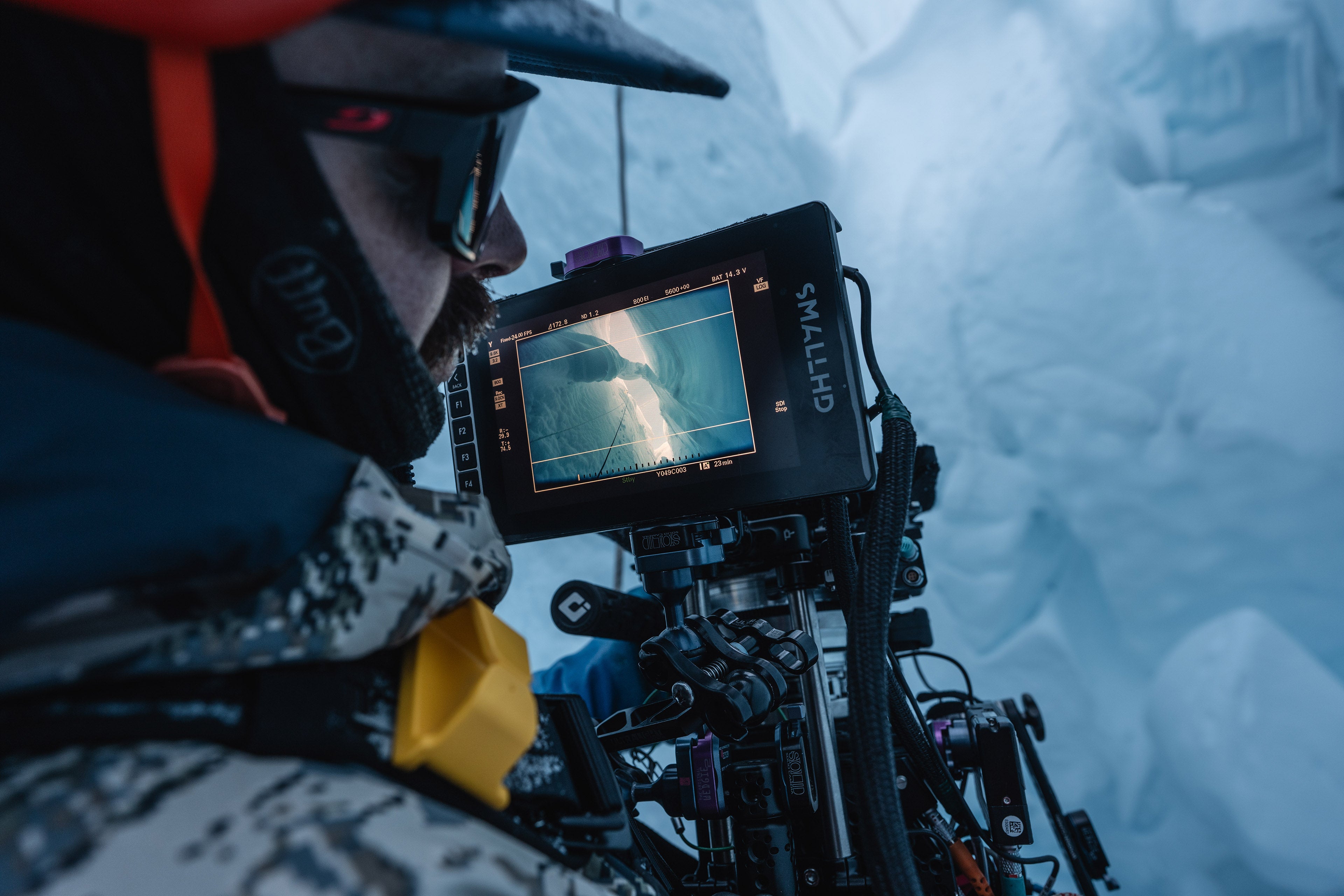
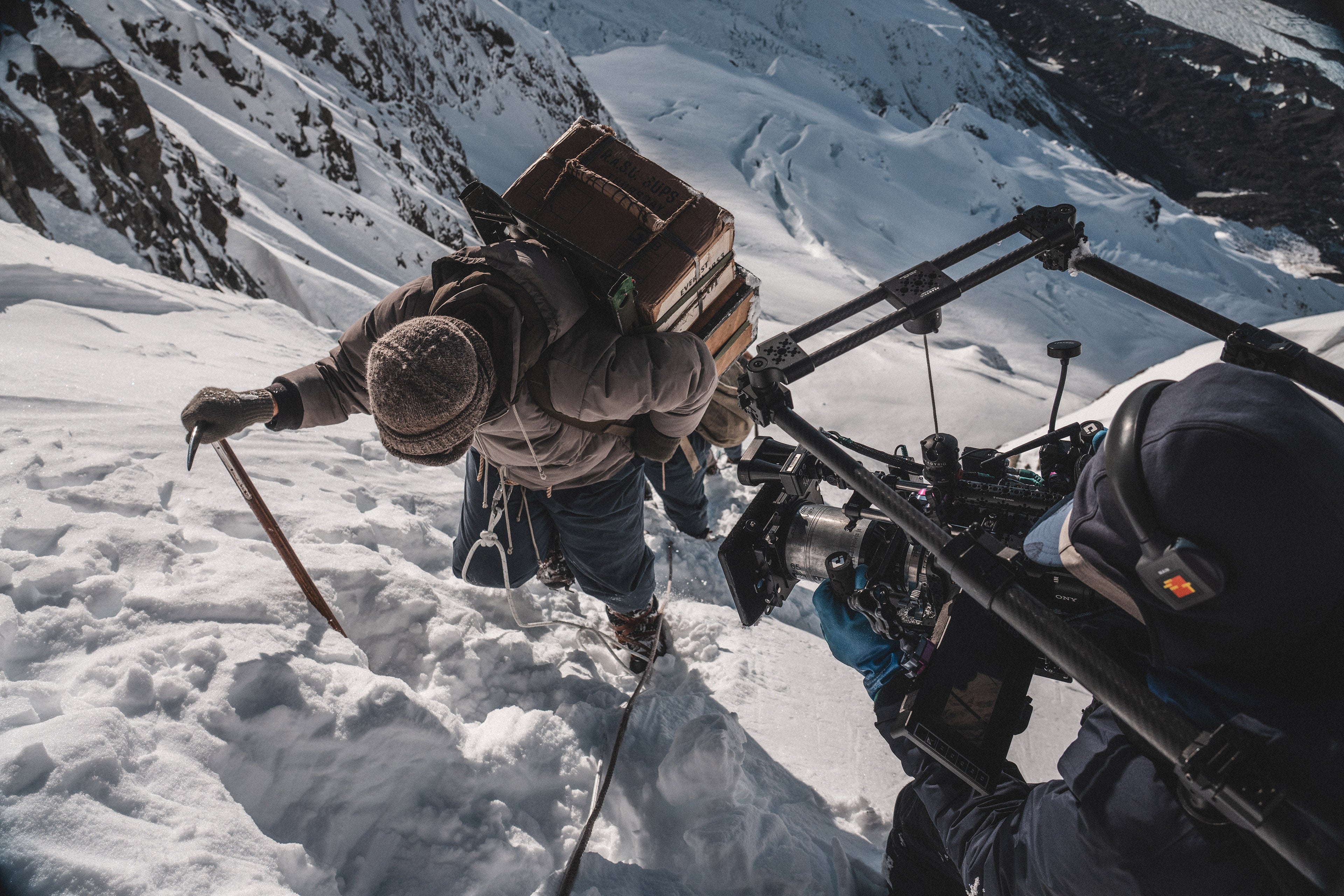
For sequences that required the camera to be with the operators on the sides of glaciers, atop a mountain, or within a crevasse, the VENICE 2 was utilized with the VENICE Extension System 2, also known as the RIALTO 2. To navigate these extreme environments, Öztürk and his team developed a custom rig to give themselves expanded creative opportunities.
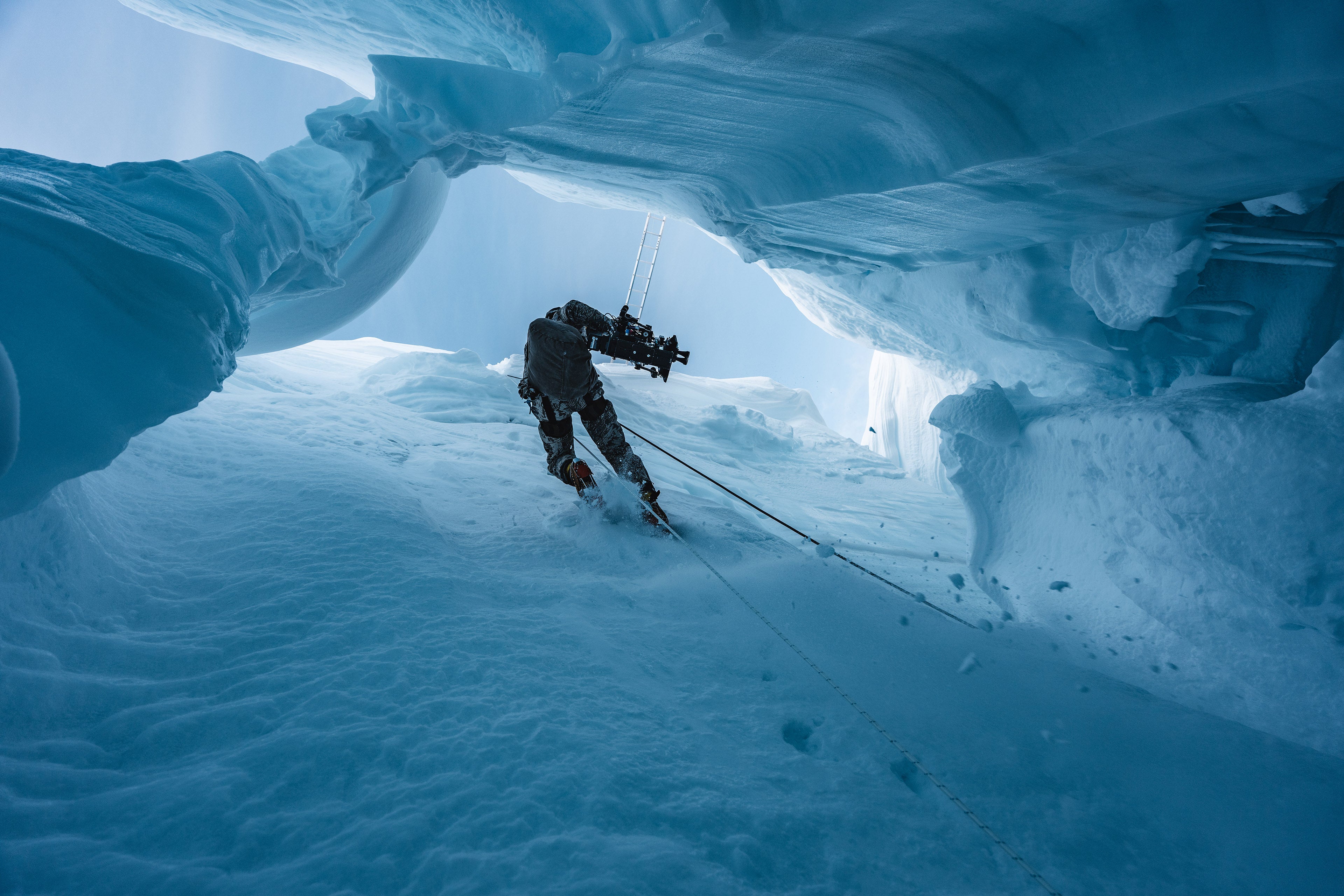
“The RIALTO 2 gives you the options, especially for us,” Öztürk said. "We built this thing called the Cine Pig, which is essentially a climbing haul bag with an aluminum frame that the [VENICE 2] body goes in, and then the umbilical cord can go down into the crevasse or can go up on a wall.”
“It allows the operator, who's a climbing operator, dangling from a rope doing this crazy Cirque du Soleil stuff to get into position and hold the camera way out there. It can separate that weight and [we could] be more creative with the cinema lenses that are already massive,” Öztürk added. “I'm really grateful that this technology even exists. We are so lucky as creators these days with how advanced it's getting. When you have that much of a powerful paint paintbrush, you want to use it in the best way possible.”
“Personally, I used to risk my life more climbing, like, to get a first ascent of a mountain, but now I'd rather risk everything to put this camera in a place where it's never been and to come away with something you can share.”
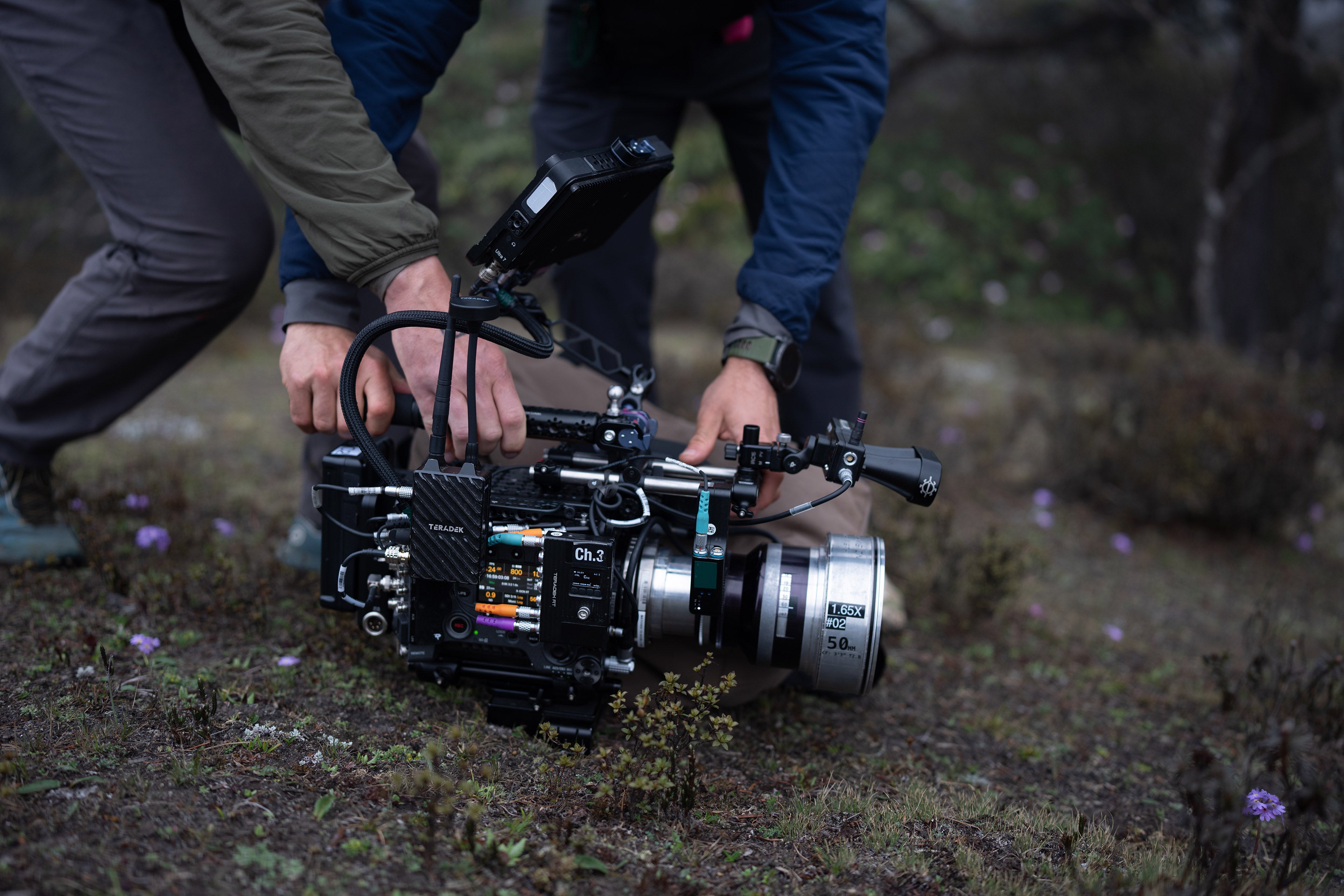
Creating in Nature with Sony
Tenzing was one of the most daring productions for Öztürk. The challenges of capturing stunts in real locations, as well as landscapes audiences may never see in real life, were a creative adventure. But with such a long history working with Sony as part of his toolkit, Öztürk had the confidence that the cameras in his hands could venture into any place his experience would take him.
"I've wanted to work with Sony since [almost] 15 years ago with the original A7S that I brought into the Burmese Himalaya on a Nat Geo North Face expedition,” Öztürk said. “It delivered double-page spreads in the article, photography, and an hour-long documentary TV special. It went from sea level to 18,000 feet, and since then I've seen how the Cinema Line has progressed. It’s been this really slow and controlled beautiful thing.”
“There's nothing holding you back. It's just more resolution and better low light and still incredible color science.”
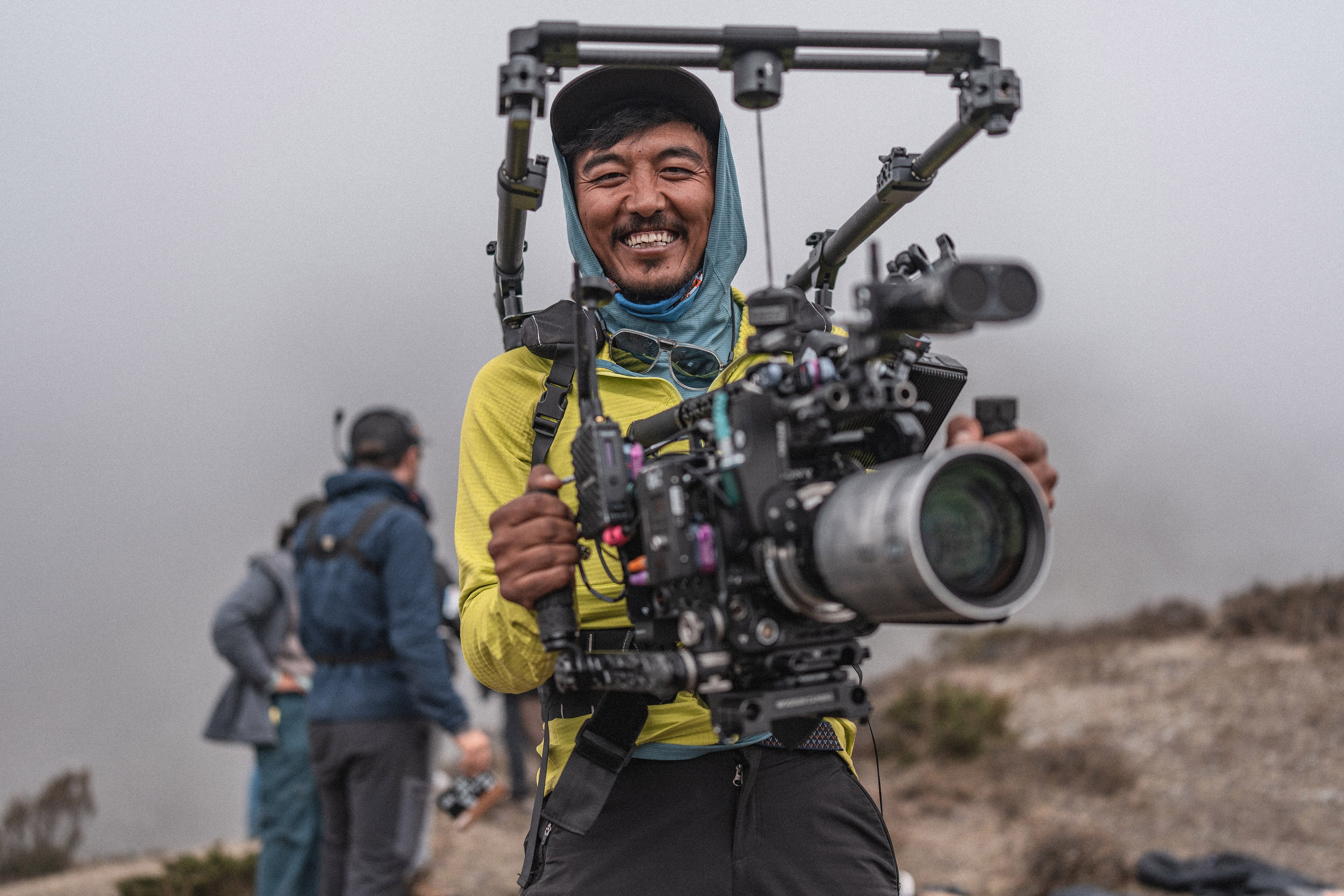
For the cast and crew that joined him, it was an experience of a lifetime, and this approach was necessary to give the film a presence that could not have been achieved on a soundstage.
“It was a no-green screen production, and there was a lot of risk. I thought that this production pushed the limits more than anything I've done with that amount of crew and the risks that everyone took, because the story was so powerful and worth it,” Öztürk explained. “The two major stunts were shot for real. The summit was this really daring thing that Jen and Stef did with Tom and Genden, the two lead actors. They actually climbed to the top of this serious peak in New Zealand so that they would look out at the landscape and feel things for real. And that was our approach the whole time.
“It's not just the visuals of it. But it's about how it makes the actors feel, the crew feel, everyone. It was this wild adventure.”
Even Willem Dafoe, who played John Hunt, a British Army officer who led the 1953 expedition to Mount Everest, got the chance to perform in this space that few people can reach. With the VENICE 2, Öztürk and the production team could capture these creative moments with confidence.
“When we were on the side of the mountain, and I was directing Willem Dafoe, and he was hanging off a face that was 3000ft tall, and he wanted to do his own stunt, the VENICE 2 gave me a lot of confidence,” Öztürk said. "It had been through so much already, and it never faltered. Every ND swipe and every boot up and boot down, it's the ultimate bomb proof, burly reliability and the highest resolution that's out there with that beautiful color science that's incredible for skin tones.”
Sharing a Simple Message
Crafting a film like Tenzing required a team of climbers and expedition filmmakers with several lifetimes of combined experience. It was a massive undertaking that brought an unbelievable story to the big screen. Yet for Öztürk, the message of the film proved to be a simple exchange between filmmaker and audience.
“To me, the film's most important line is when [Tenzing] goes to the Rimpoche, a holy man, and asks, ‘How can I overcome my ego and climb this mother goddess that our culture tells us not to climb but I'm being drawn to her’” Öztürk shared. “And the holy man says, ‘Just climb her as if you're climbing into your mother's lap.’ And that signifies the purity of ego and spirit, just to climb with pure joy. You see that in a lot of people who are successful. They somehow found this great joy in what they're doing, whether it's an athlete or a DP or a photographer.”
"Bringing that joy is some kind of a secret unlock that expands creativity, and that's part of the hopefulness of the film and that the most simple message that it comes down to for me.”
Tenzing was made available to stream globally on Apple TV on October 16, 2026. See the film now to witness the work of Öztürk, Duscio, and the other creatives that brought Tenzing to life. To learn more about the VENICE 2 and the other cameras in the Sony Cinema Line, visit our Camera Comparison Chart.


