09-24-2026 - Interviews & Behind The Scenes
How DP Doug Emmett Built Hulu’s “Furious” Into a Neo-Noir Thriller
By: Yaroslav Altunin
Created by Elizabeth Meriwether (New Girl, The Dropout), Furious explores the seedy world of New York City and the trauma powerful men leave in their wake. Loosely based on Black Widow, a 1987 film by Ronald Bass, the series follows an FBI agent hunting a calculating serial killer, blending dark elements of abuse with Meriwether’s flair for levity.
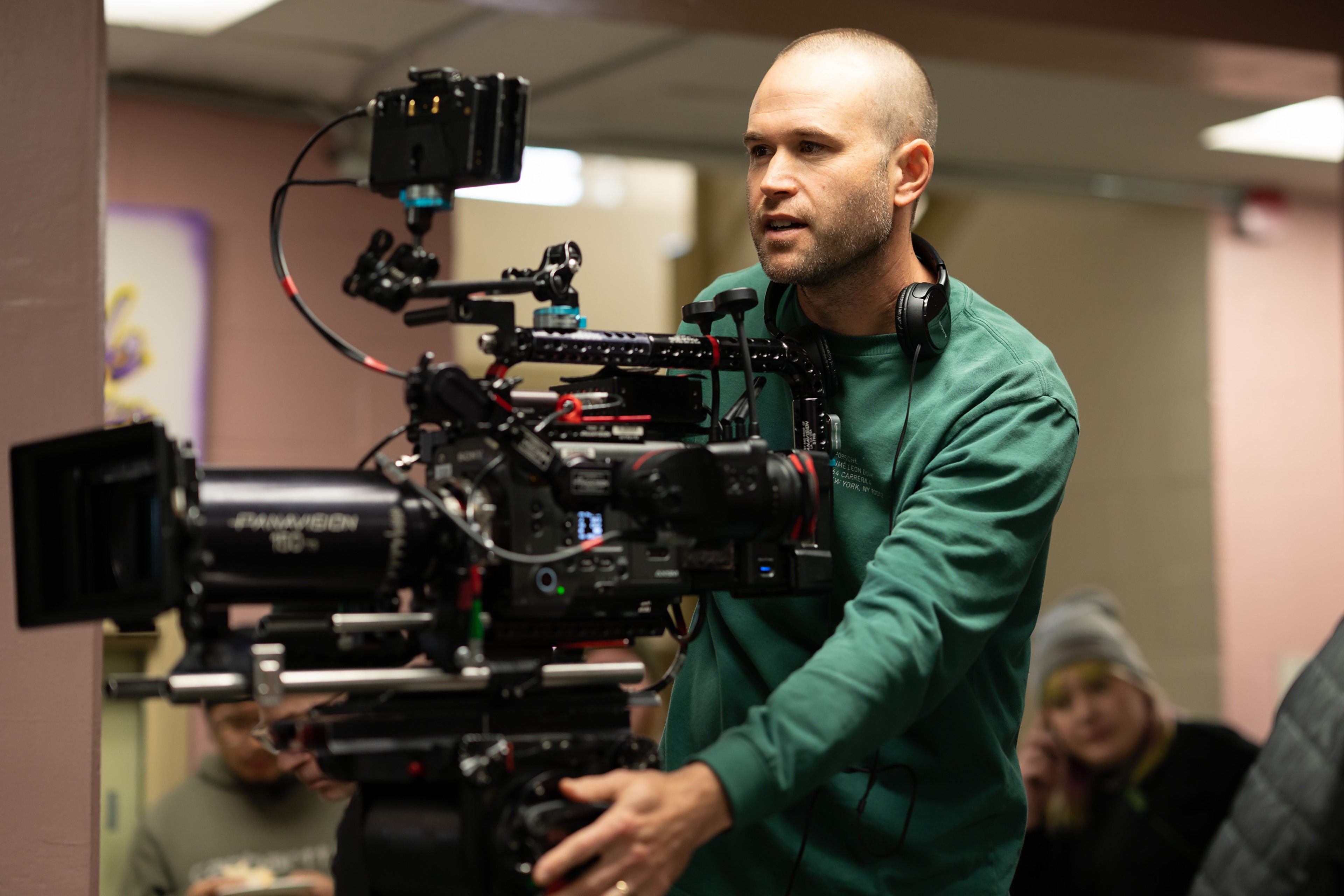
To capture this gritty story and its visual language, DP Doug Emmett (Lucky) was brought on to set the look of the show. Using the Sony VENICE 2, the RIALTO 2, and the FX3, Emmett and DP Brian Lannin (Dying for Sex), who shot the second and final block of the series, looked to early crime thrillers for inspiration, building up layers of obstruction in their frame to weave together both story and visual language.
To learn more about the production, Sony Cine sat down with Emmett to explore how he and Lannin crafted the visual language, the challenges of shooting in New York City, and how the VENICE 2 and RIALTO 2 allowed for new creative opportunities.
Honing In on a Cohesive Look
Furious focuses on two characters that initially are shown to have a traditional protagonist and antagonist relationship. However, in the early building blocks of the show, both FBI agent Alice (Emmy Rossum) and serial killer Catherine (Lola Petticrew) were treated as protagonists, leaving breadcrumbs for the audience as the twist unfolded over the episodes.
“We treated both Catherine and Alice as protagonists in terms of how we lensed them and how we chose what perspective we're in,” Emmett said. “So much of filmmaking is about photographing a perspective. Whether you're backed up on a long lens far away, being voyeuristic, or you're really close up and it feels really intimate and then seeing their experience over their shoulder and trying to put you in their first-person perspective.”
Keeping these individual threads consistent demanded that all departments stay in sync on story decisions to balance the dramatic elements of each reveal with the levity of Meriwether’s writing.
“We had eight weeks together to prep the show, which is really generous, and we utilized every minute of that prep, working with the department heads, and working with Liz Meriwether,” Emmett said. “We got a lot of time to drill down on the look of the show together. It was a joint effort across all the department heads to really hone in on the look and the tone and the mood of the show. And I find that over the course of these episodes, it's really cohesive.”
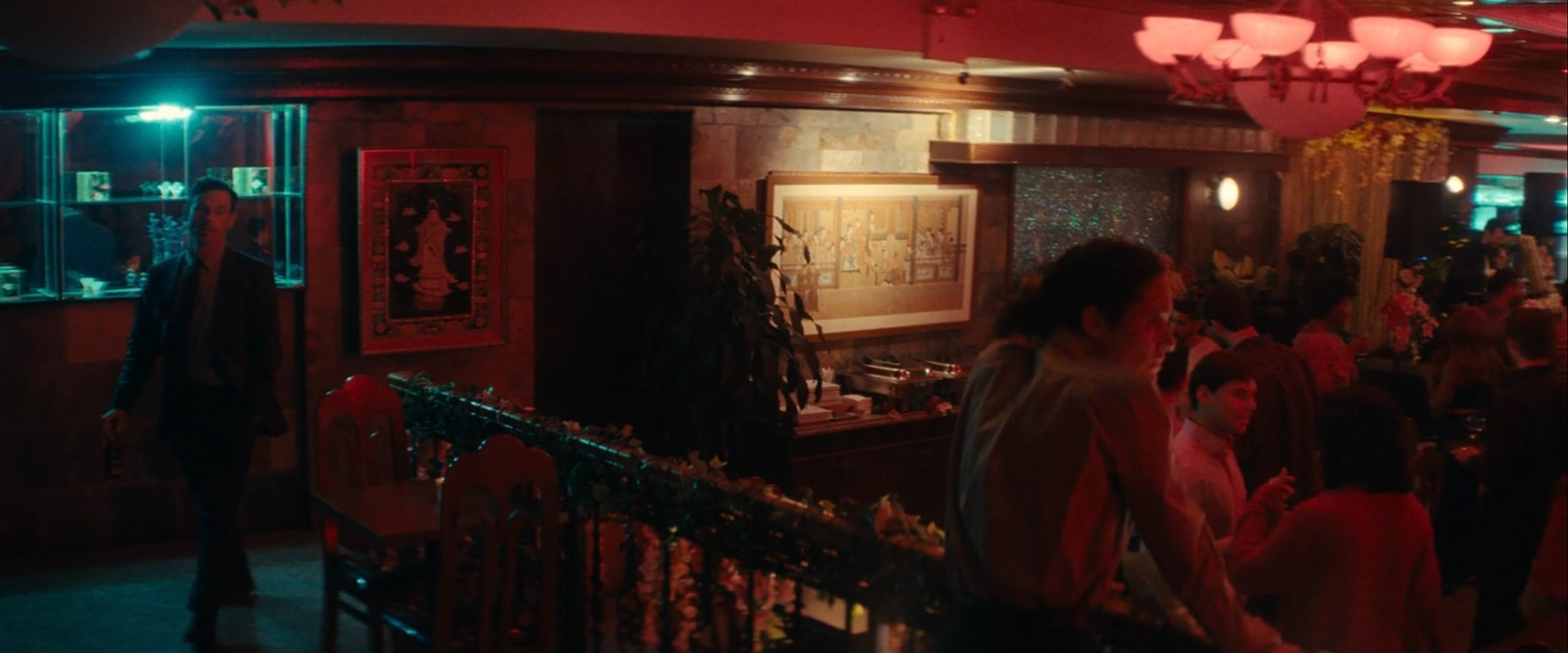
After his initial reading of the script, Emmett’s instinct was to make a modern neo-noir thriller, with saturated colored lighting and dramatic lensing with wide-angle glass.
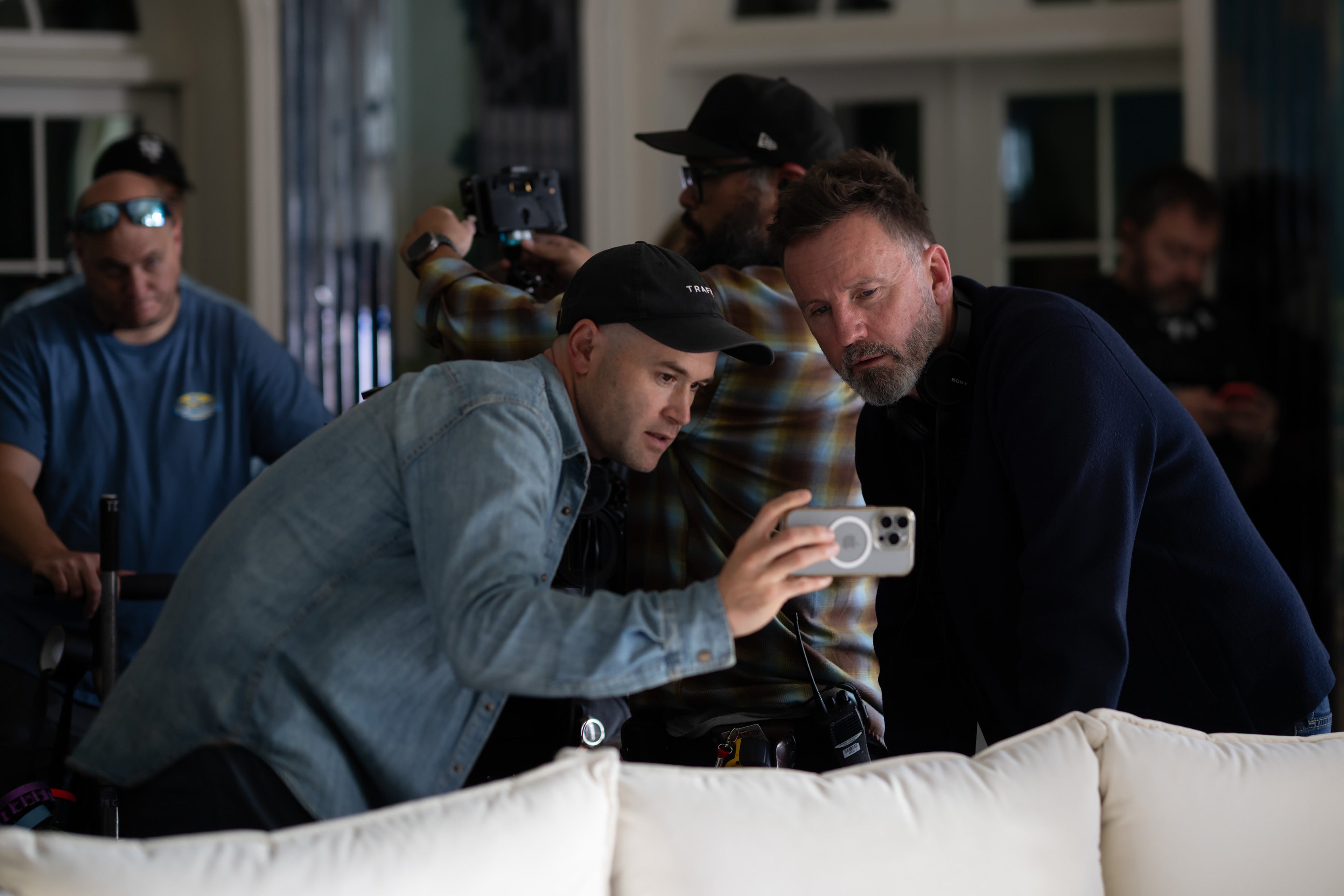
Photo credit: Disney/Sarah Shatz
“Brian's instincts, given his pedigree as a very dramatic, narrative filmmaker, are very grounded, I think, in reality, and quite moody. He can have a tendency to be quite dark in his filmmaking approach,” Emmett explained. “And then Liz, who has a background in comedy writing, her inclination was, I think, to lighten the mood somewhat.”
"Liz was still interested in capturing some comedy and some funnier moments, and I think you feel and see that throughout the episodes,” Emmett added. “It was important for Liz to set a visual roadmap that wouldn't be so heavy that the comedy would be lost, and so it definitely took a minute for all of us to put our heads together and really drill down on just how dark or light we would go in these scenes. We were all sensitive to each other and toward these individual scenes.”
Throughout those eight weeks, each department prepared pitches for the studio, with Emmett looking at photography and film stills from other projects. The whole production practiced these pitches with each other, giving everyone clear insight into what other departments were doing.
“That was an incredibly useful exercise in allowing all of us to get on the same page,” Emmett shared. “And I think without that, we may not have been as gelled as a team going into production as we were.”
Framing the Look and Characters
These early discussions not only focused on Alice and Catherine as protagonists, but also on how the audience would experience each character, and how the world of the show would be seen through their eyes.
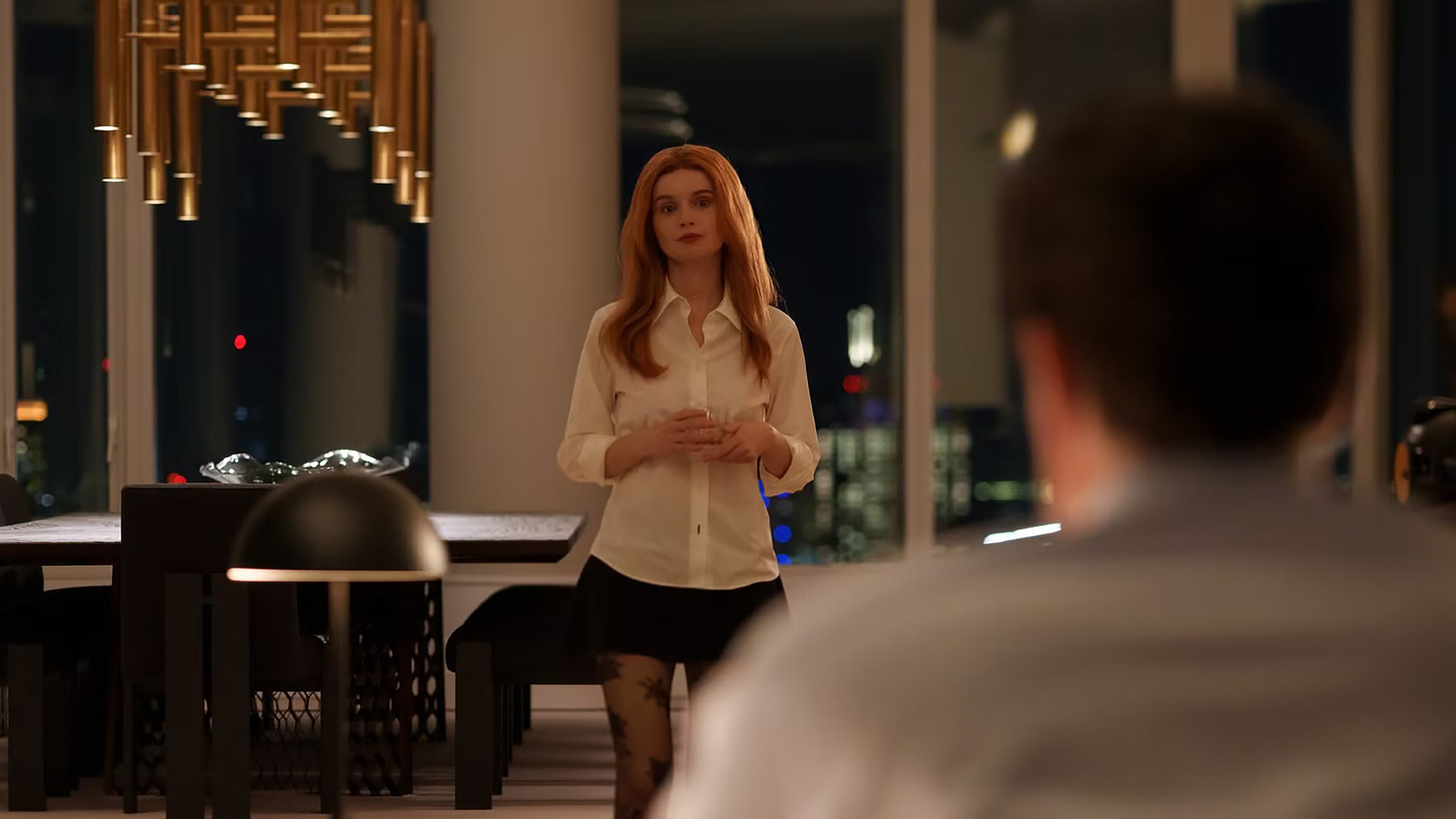
“More specifically, we were really curious about using reflections in the show and shooting through layers and panes of glass and shooting through objects that might distort our field of vision,” Emmett said. “Because the world that we were photographing was unclear, [it] was a process of discovery. The whole season was a process of trying to gain clarity, and so we thought it was important to try and obscure the image.”
"It went as far as us choosing lenses and working with Panavision to custom modify G-Series [and T-series] anamorphic lenses that allowed us to create more distortion than one would normally have,” Emmett continued. “That would give us this out-of-focus, detuned look on the edges and the top and bottom of our frame. We had to be quite careful to photograph certain people, in wide shots and medium shots, because you'd have a really soft top and bottom frame.”
“We ended up with a very narrow, small, sweet spot of focus.”
When it came to framing, Emmett and Lannin put the characters into what Emmett called different visual cages and boxes, going beyond the classic frames-within-a-frame motif. It was a way for the visual language to box in the characters, not physically, per se, but within the frame of the show.
“It was a metaphor for their trauma. That they're trapped by their trauma, and they're trying to move beyond that,” Emmett said. “And so I think this season of television is us watching Alice and watching Catherine exercise some of those demons.”
During prep, there was also a lot of talk about the atmosphere in New York City and the grit that came from the rain and haze inherent in the atmospheric elements of the city.
“Haze is a funny thing. When you're out on the street at night, you're trying to not let it make the image feel cheesy, with plumes of haze coming out or steam coming out of vents and grates,” Emmett said. "But if you walk around New York at night, there's a ton of that stuff. It's all over the city. It’s quite prevalent. The place is just dripping with steam and wetness.”
“In terms of lighting, we really leaned into older films from the 70s and New York City crime dramas,” Emmett added. “We talked a lot about Taxi Driver, [which] was a real touchpoint for us. And then there was also In the Cut, which was a really great example of a crime drama. Both those films had a lot of really saturated lighting.”
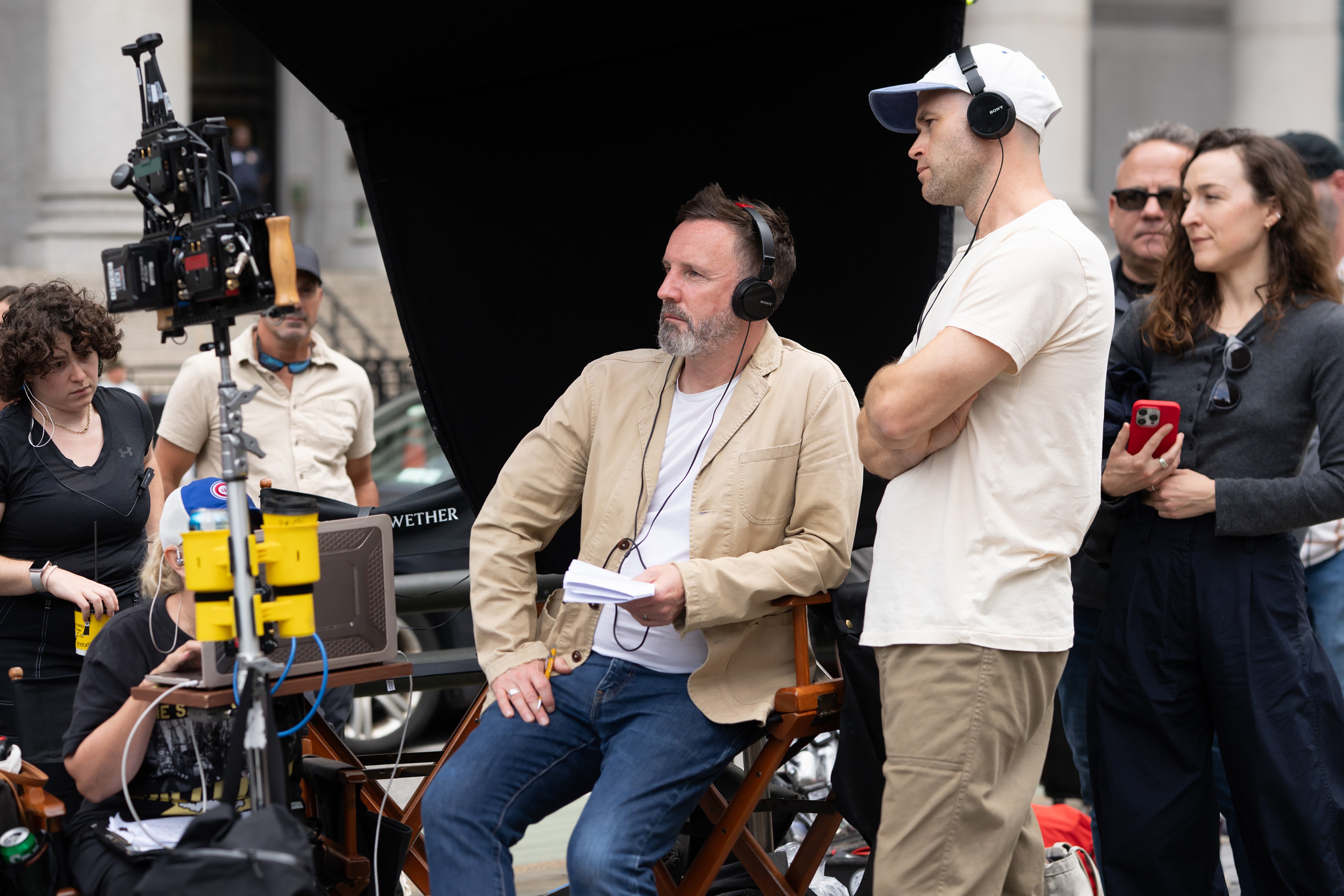
Photo credit: Disney/Sarah Shatz
Leaning on the Sony VENICE 2 and the Sony Ecosystem
To capture the series, Emmett paired his Panavision lenses with the Sony VENICE 2, which he often set up using the VENICE 2 Extension system, also known as the RIALTO 2. With the show filming on location in New York, the camera's high sensitivity allowed more flexibility with lighting and with Emmett’s lens choice.
“I've been a big fan of the VENICE 2 for years and the thing about that camera is that it offers a unique tool set for cinematographers,” Emmett said. “You've got the Dual Base ISO, and you're able to really shoot up to the ISO 8000, which is phenomenal if you're really trying to capture locations that already have a low-light situation. But then, if you're using older anamorphic lenses, they have to be shot at a T-stop that is usually around a T4, where things start to resolve really nicely.”
“In New York, you actually don't need a super high ISO necessarily. But it's always nice to know that I've got that option,” Emmett continued. “And I do like the noise that you get from the camera at the higher ISO. But what happens when you're shooting at these really high ISOs is that you're able to use practical lights on set, and then you can diffuse those lights on top of it. So if you're limited with your resources, that's a really great option to have.”
“Or if you're shooting in more of a vérité style, and that's the look that you're after, then having the high ISO and then being able to diffuse those lights is really beautiful.”
This support was critical when the team shot in a penthouse on the 60th floor. While it was an extravagant location, it was still a small space surrounded by windows and other reflective surfaces, limiting not only what equipment could be brought up, but also where the team could physically be during each scene.
“You don't really have the ability to even soften the light, because as soon as you set up a diffusion rag or frame, it's going to be reflected in the glass,” Emmett said. “So I started leaning into using some harder lights, some LEDs that were quite powerful and could be plugged into household outlets.”
“But in order to balance the exposure — you couldn't diffuse them that much — I started leaning into this concept of people being in shafts of sunlight versus shadow. And so you'll see a lot of that in the first two episodes,” Emmett continued. “These intense, almost front-lit beams of light on Catherine. I thought that was a fun way to light her in a garish sort of way that added intensity to the character.”
The FX3 was used in situations where the RIALTO 2 wasn’t the most practical choice. Because the image can be closely matched to the VENICE 2 and it’s lightweight design, the FX3 could be set up on a C-stand to capture unique angles, while the main cameras were being reset for another scene.
“I like using the FX3 in scenarios where it might be impractical to use the RIALTO. Just maybe even for time, or just trying to get a quick shot or perspective that we might not even want to wait to convert one of our cameras over into the RIALTO mode,” Emmett explained. “The FX3 we used for a lot of security camera perspectives because it's so lightweight. You could send it up on a C stand, and you could monitor it with your iPhone. You’re able to save yourself a lot of time and headache on set if you’re keeping your A and B cameras and your C camera in Steadicam mode.”
“[We were] able to keep those cameras working on set and setting up the next scene, while also setting up a security camera perspective in a different room. That worked a lot in the first two episodes, and it worked later in the other episodes in the FBI offices.”
Even with the compact nature of the FX3, the RIALTO 2 let Emmett achieve the same unique angles and compositions while still maintaining the look of the VENICE 2 sensor for crucial scenes.
“The RIALTO is a great option if you're trying to get an incredibly low perspective,” Emmett said. “Normally, you might use mirrors or an angled prism mirror to get that low angle, but now I find it's just more effective to use the RIALTO in that scenario by just laying the camera on the ground. And if you need to still get lower, it's easy enough to just build your actors up onto a small deck of Apple boxes and some plywood, which we do occasionally.”
“Keeping everything in that Sony world makes a lot of sense.”
Crossing the Finish Line with Color
When the episodes finally arrived in the color suite, the VENICE 2 and the X-OCN ST codec allowed Emmett to carry his color pipeline from prep to finishing. Show LUTs that he created with Steven Bodner at Picture Shop in pre-production supported the visual language from beginning to end.
“The VENICE 2 is a really great platform for color grading,” Emmett said. “I find that the image is, to me, perfectly neutral. It’s a great jumping-off point for adding your own special sauce in post. We didn't have a DIT on set, so it was really important that the LUT or the LUTs that we made would really stand up to all the different lighting conditions that we were going to find ourselves in throughout the show.”
“I find I only generally like to use a few LUTs and keep it pretty simple, so we had a low, medium, and high contrast LUT and I mostly stuck with the medium contrast LUT,” Emmett explained. “Keeping the LUTs simple allowed me to have one less variable on set. I'd rather bake in the lighting through our color and contrast choices on set rather than trying to mess too much with the LUTs.”
The way that Emmett captured colors with the VENICE 2 let him work with his locations in a creative way instead of fighting the lighting or composition limitations. Every location, from the penthouse to a cramped shower, became an exercise in creativity.
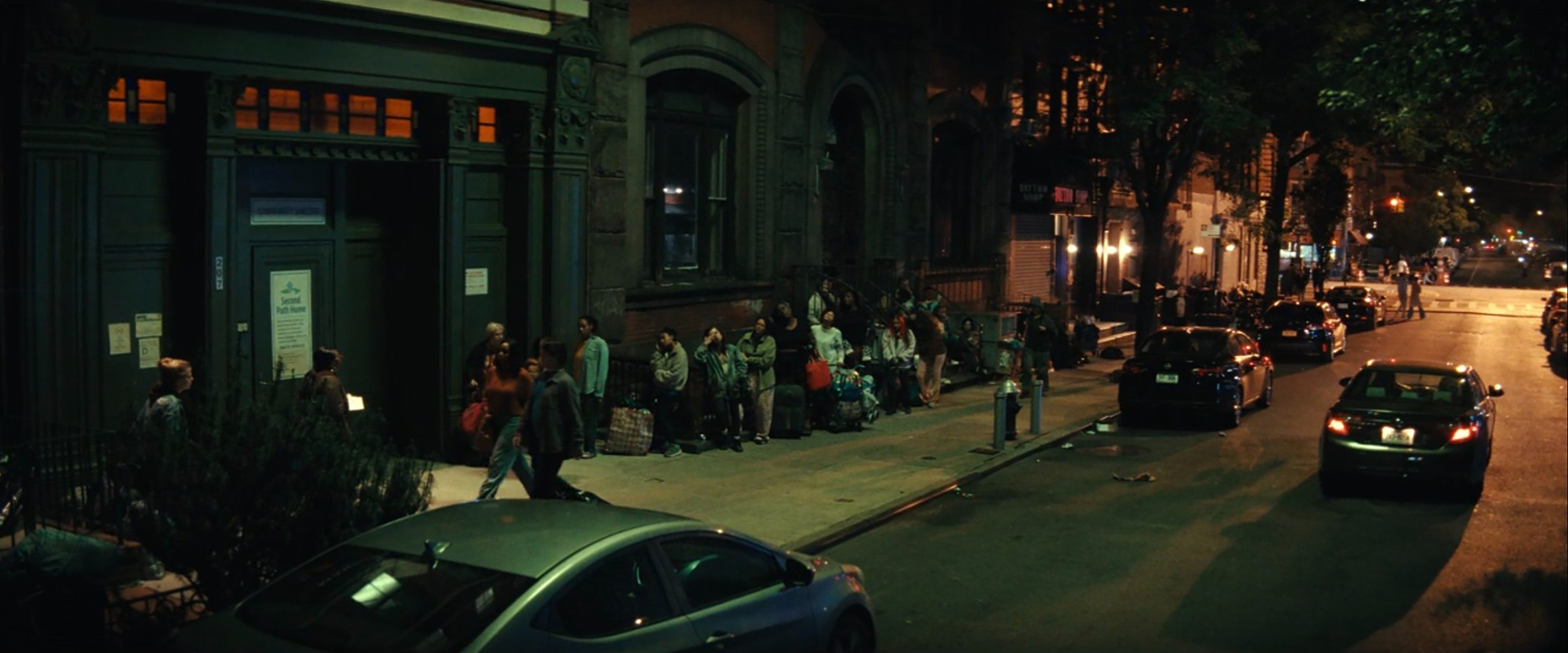
“The VENICE 2 does a really great job of representing the colors, especially the neon saturated colors, and it does a really great job representing those colors true to your eye,” Emmett said. “The color theory we used was dictated by the locations and how they wanted to be lit. We broke it down based on socioeconomic levels. Like, the high society places, or the places where you might find these men in power, were always lit with very consistent color temperatures. In the Brooklyn house and in the penthouse — the first two episodes — you find really consistent tungsten units.”
“And then we would juxtapose that with locations that Catherine found herself in,” Emmet added. “Like, these women's shelters, for instance, or even, say, the police station, which had really inconsistent, mismatched color temperature. You'd have lights that flicker and bulbs that look like they were never changed and on the verge of going out.”
“And so immediately, subconsciously, we were able to telegraph what space you were in.”
It Takes a Village
Furious evolved from a cat-and-mouse game between an FBI agent and a serial killer to a complex story about the meaning of justice. Keeping all of these threads in sync took the entire creative discipline of every department, from production design and wardrobe to lighting, camera, and cast.
“It's so fun when the visuals line up with the performance, everything is just humming, and everyone is working in tandem on this plane of creativity,” Emmett said. “The synchronicity of our creativity was quite lovely.”
Season 1 of Furious premiered on Hulu on July 27, 2026, and has been renewed for a second season. To learn more about the cameras used on the series, visit our Camera Comparison Chart.


