05-26-2026 - Interviews & Behind The Scenes
Sony RIALTO Traps Audiences Inside a Character’s POV for “Dead Eyes”
By: Yaroslav Altunin
The first-person perspective is a POV not often seen in cinema, if at all. Perhaps a single shot, a single scene, but rarely a full movie. For director Richard E. Williams and DP Julian Panetta, taking on that challenge brought their film, Dead Eyes, all the way to SXSW.
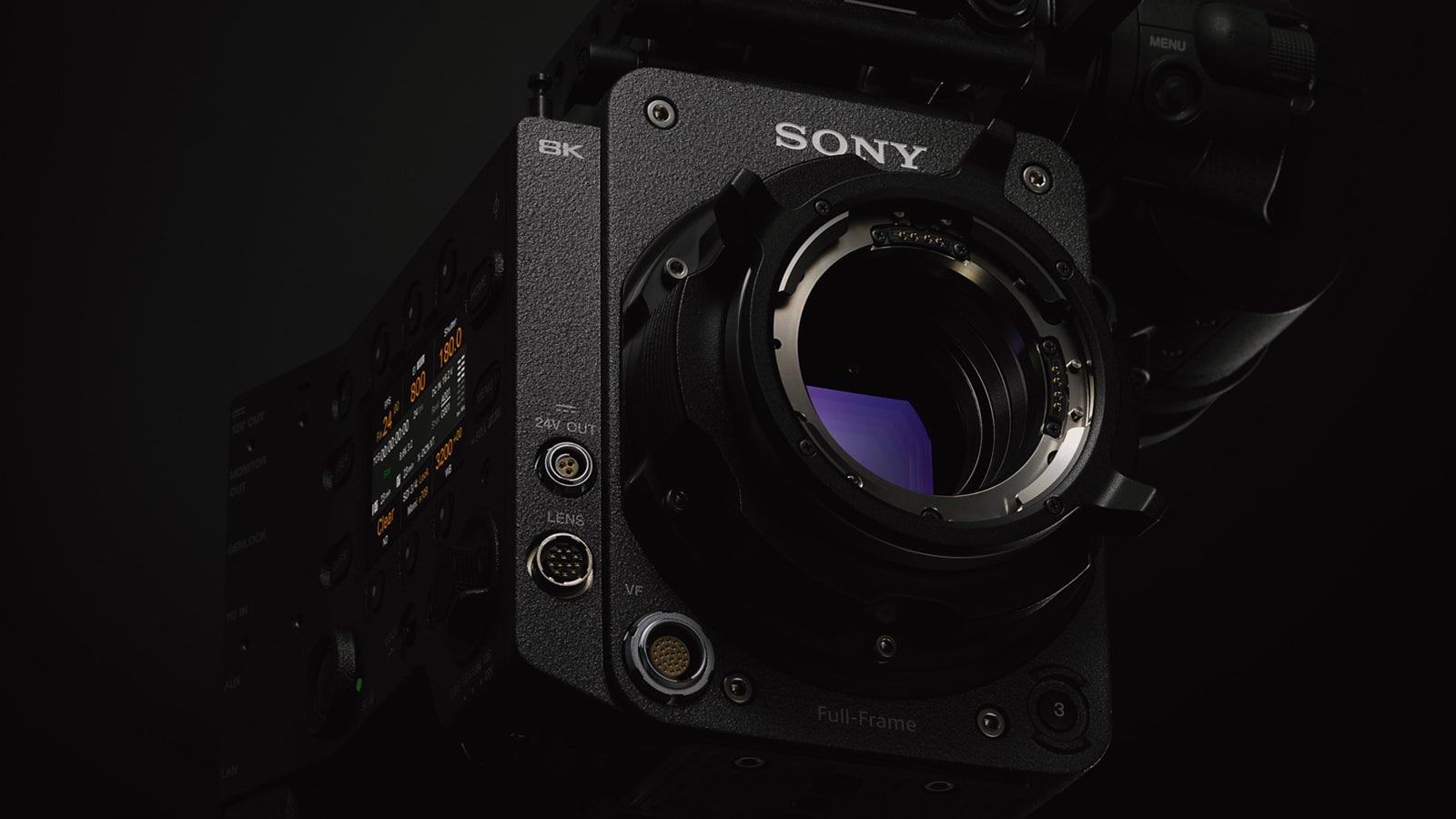
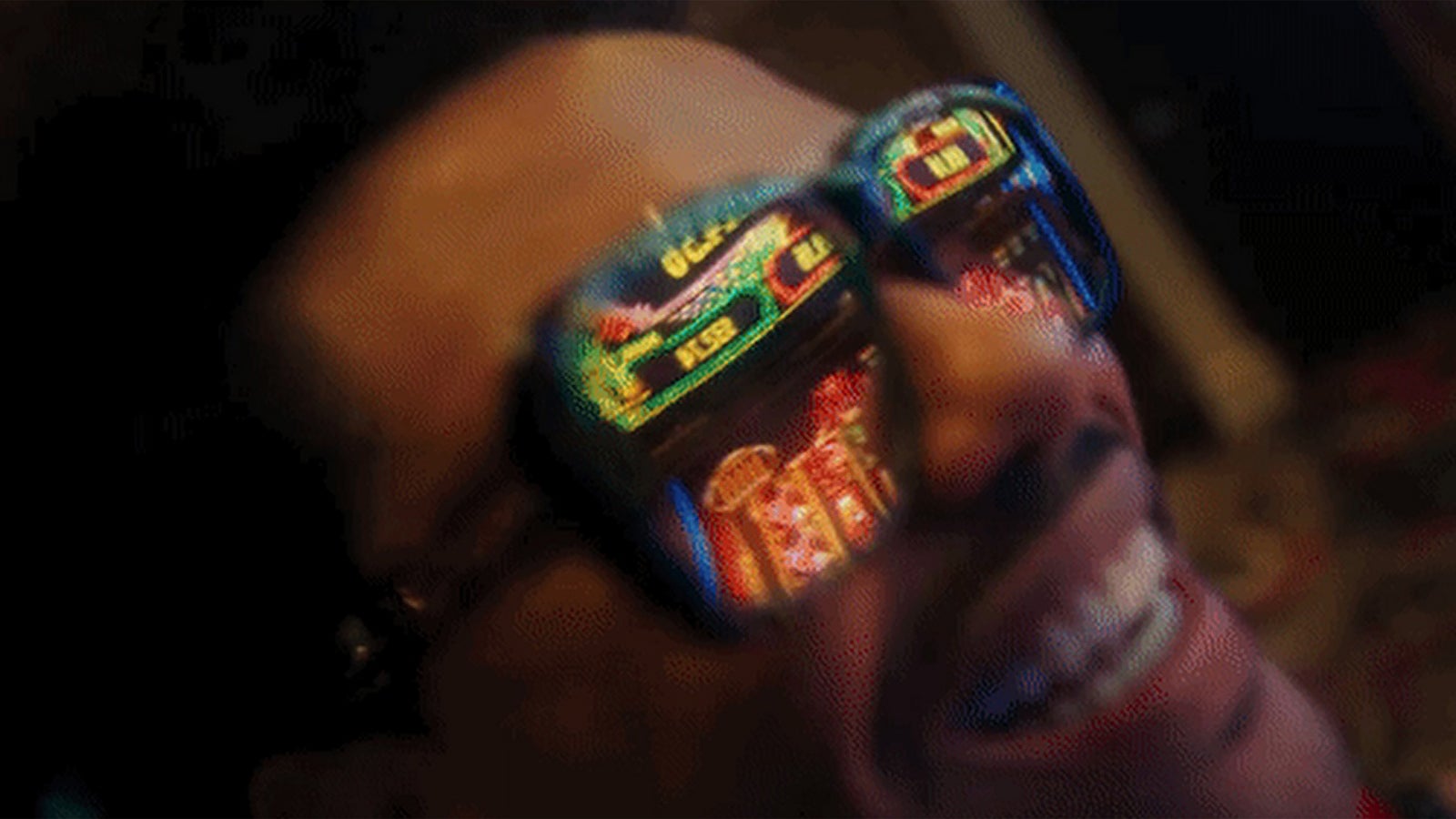
Shot entirely in a first-person perspective with the Sony VENICE and the VENICE Extension System — also known as the RIALTO — Dead Eyes is a self-described first-person horror film that puts the audience into the body of the main character.
Sony Cine sat down with Panetta to learn more about the ins and outs of crafting a first-person narrative film, how simple lighting and blocking became borderline impossible, and how the RIALTO seemed to be the only camera to help them get Dead Eyes in the can.
Making a Movie No One Has Seen
The decision to capture Dead Eyes in first-person came early, and from an unusual source. As part of his role at the Australian Cinematographers Society, where Panetta held a Q&A with Claudia Miranda about Top Gun: Maverick, Williams had the opportunity to see how the RIALTO was being used on set. However, while this meeting initially sparked the idea for Dead Eyes, Panetta and Williams turned to a completely different medium for inspiration when developing the visual language of the film.
“[Dead Eyes] is hugely inspired by video games. Things like The Forest and Slender Man were [video games] that we looked at,” Panetta said. “I've been playing video games for 25 years, so it's basically the most research I’ve ever done for a film, just not deliberately.”
“Richard just felt like that first-person perspective hadn't really been properly explored in a film before. Obviously, there'd been ads and other things, like Hardcore Henry, that had been made in first-person, but never really from a narrative perspective. And horror is the obvious genre for something like this because you're trapping the viewer.”
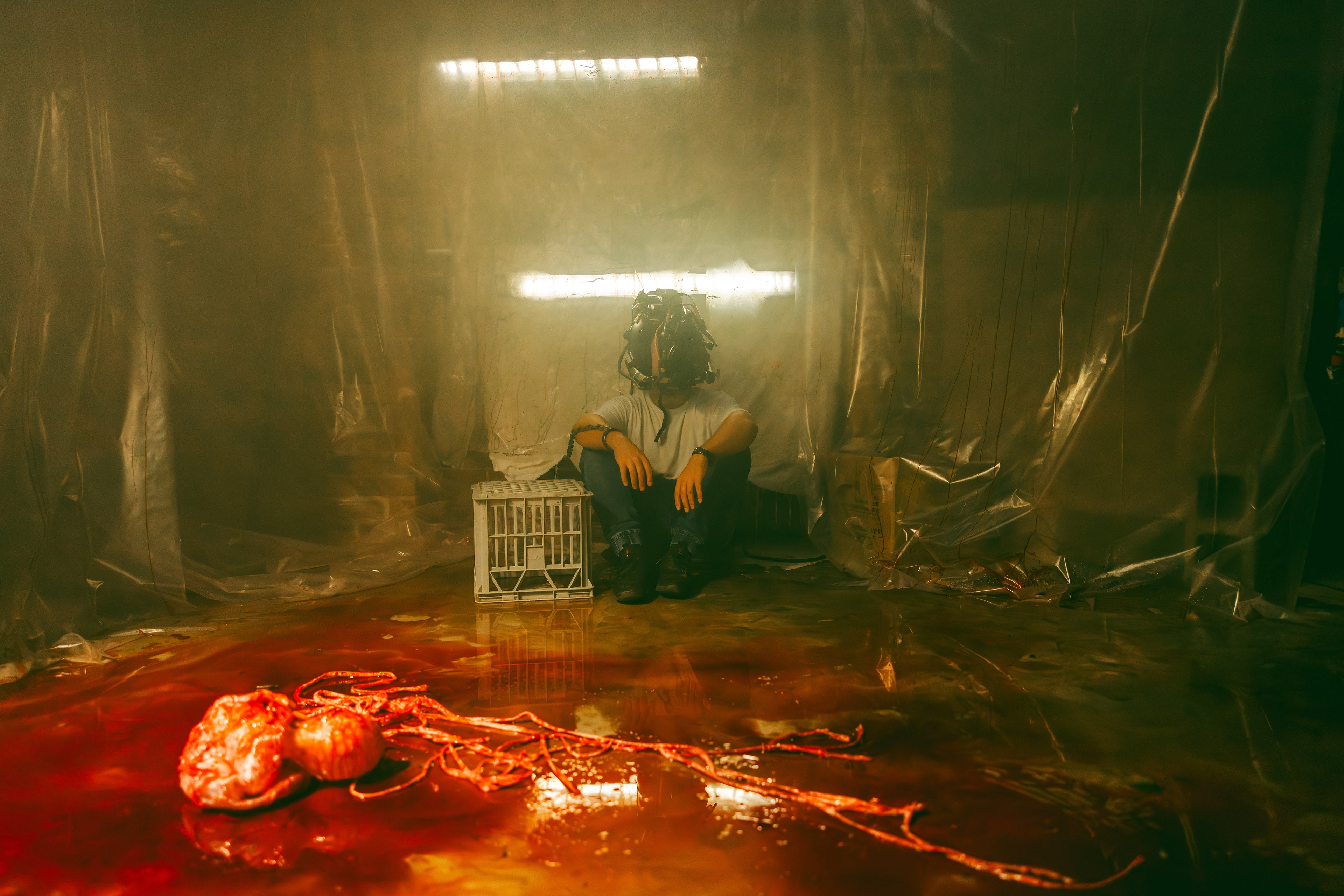
Translating that first-person perspective to the silver screen posed unique challenges. Long takes that lasted upwards of eight minutes and location-based lighting gave the camera operator freedom of movement but limited what Panetta could do with his own lighting and what Williams could do with blocking, as the camera could see almost everything.
To explore this new creative look, transitions between scenes became the second component in building out their scenes.
“In pre-production, we would work out where everything starts and ends, and how you get between different shots, whether it's a blend or a wipe, or are they going to sleep and waking up, or is it something else entirely,” Panetta explained. “Those transitions become really critical in terms of blocking as well. For instance, making sure that the foliage, dirt and grass match if you're doing a blend or a wipe.”
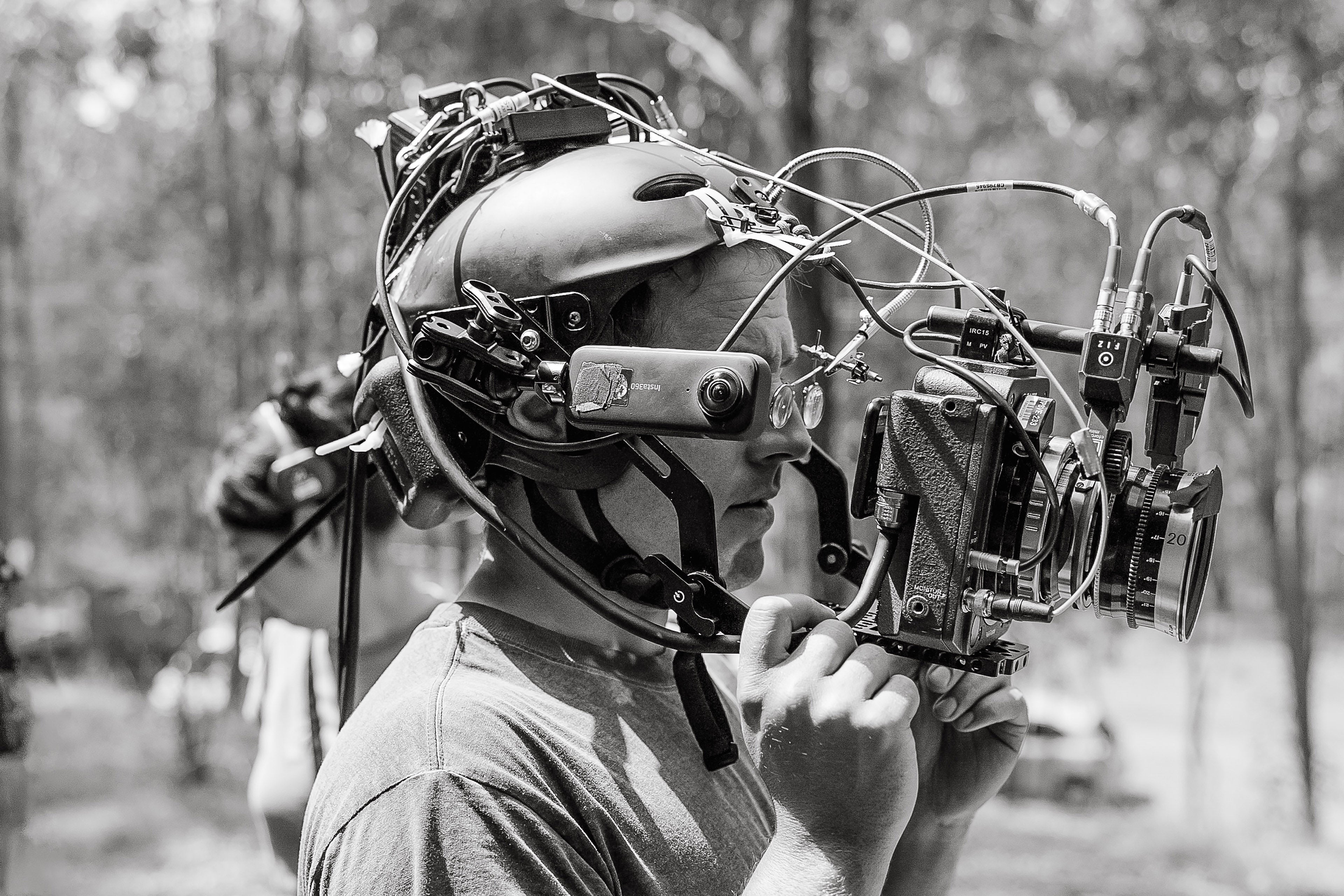
The Lens and Camera Rig of Dead Eyes
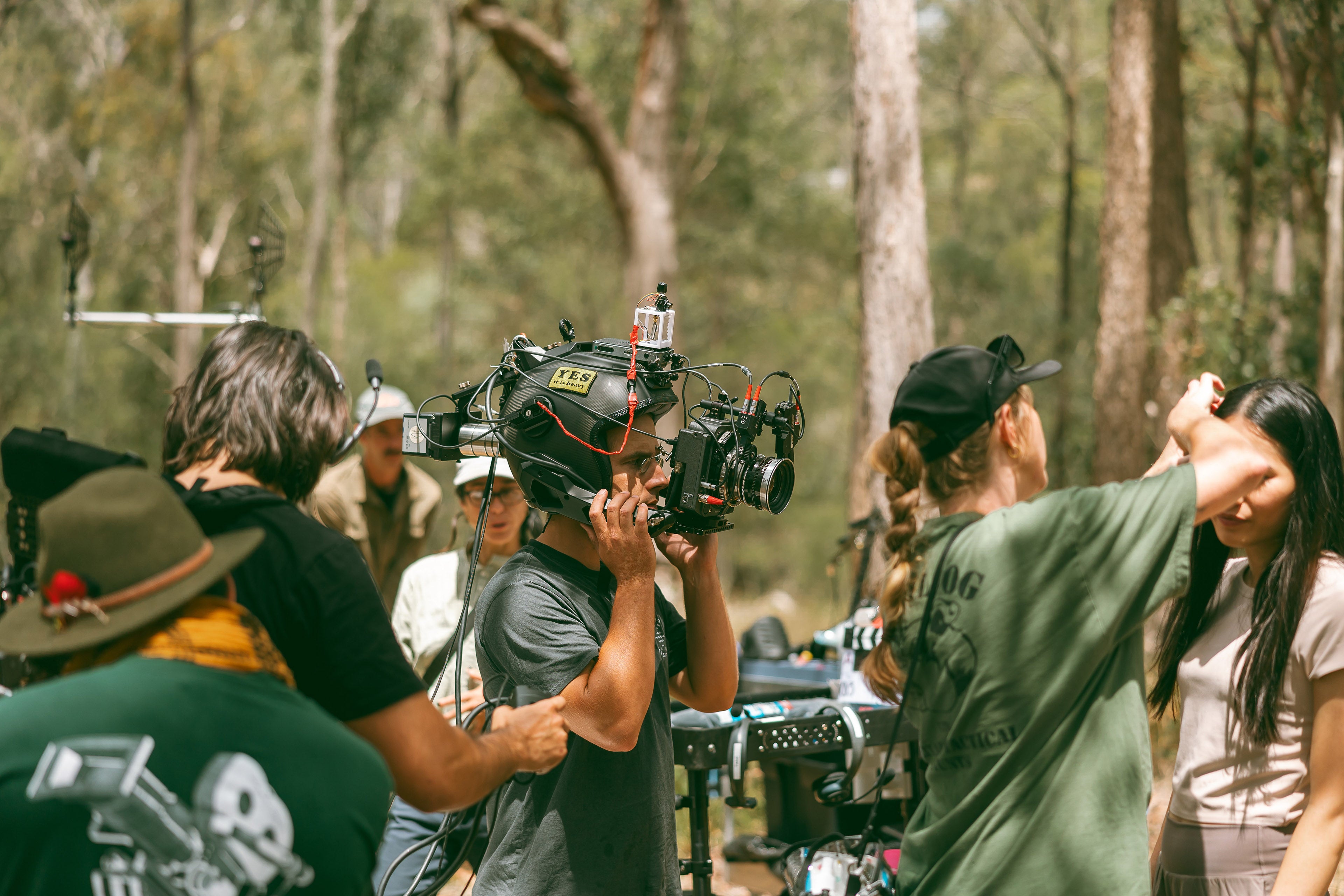
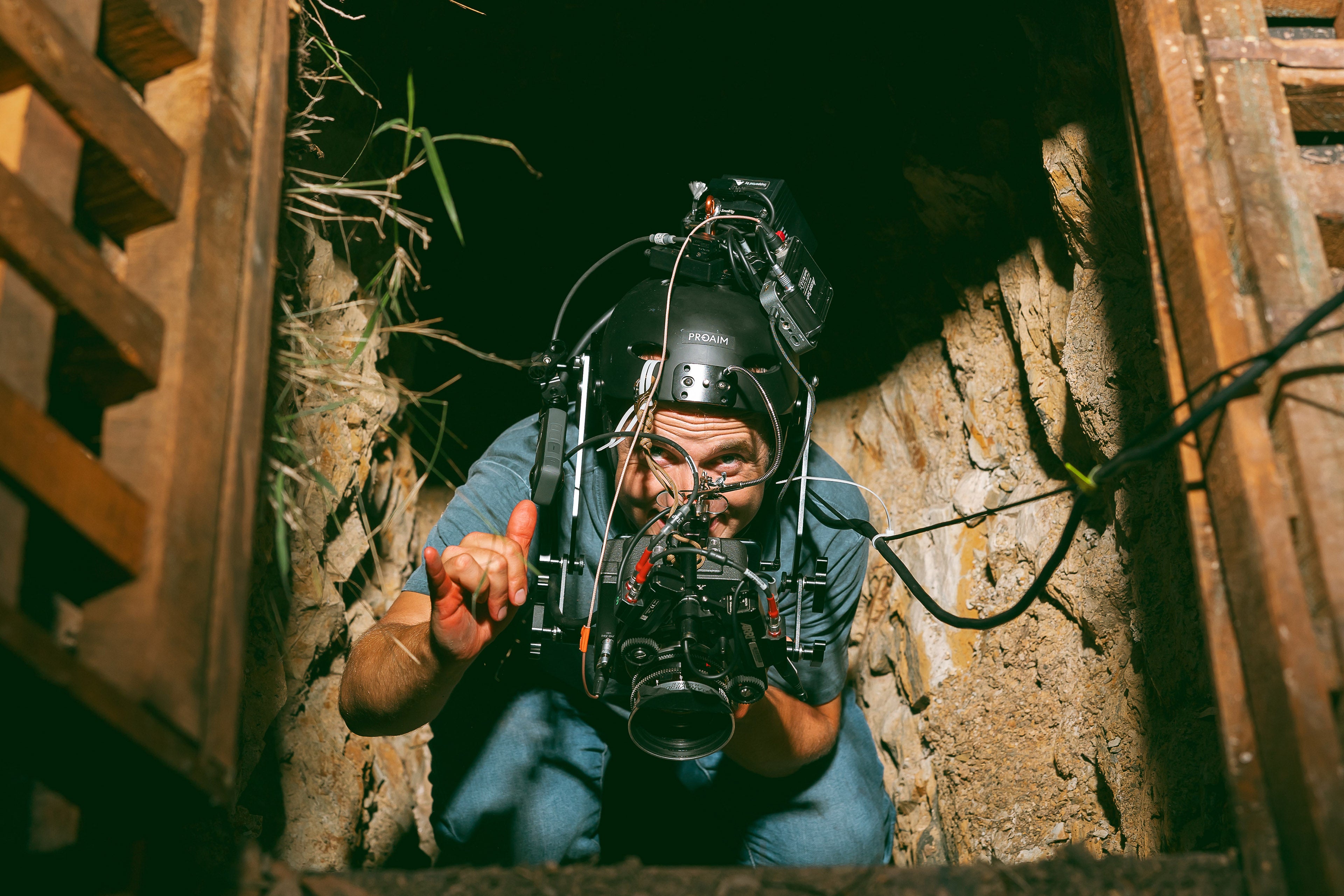
Panetta chose the VENICE and RIALTO for image quality and the lightweight form factor, planning to shoot the entire film on the RIALTO using off-the-shelf camera helmet rigs, which included a smartphone for a monitor close the operators face and special glasses that allowed him to focus on the display. This camera operator also became one part cameraman and one part actor, which further changed the way Panetta had to approach building a scene.
“[Behind the camera] it’s always an operator, but we did have the voice actor quite close to the camera, reading their lines so the actors would have someone to bounce off of. The timing is obviously quite critical,” Panetta said. “But there's also the boom operator, and then there's the guy carrying the guts of the VENICE on a separate backpack rig.”
“And if these are really long takes, it’s basically the director, me, the focus puller, and the script supervisor. Everyone is walking in this very long train of eight to 10 people alongside the actors.”
Physicality became another challenge on set, especially for the actors and the camera operator. With only one angle and no cuts, scenes would run long and often include stunts that needed to be repeated. It was here that the RIALTO shined, providing high-end image quality and a light-weight design that could allow for multiple long takes.
“Just the physicality of some of it for the operator [was challenging.] There are scenes where he's driving a car or climbing down a ladder and designing everything in a way that's safe and still works for the film, which is quite tricky,” Panetta said. "It was also really tough for the actors. These guys have to do 10 pages of dialogue in a continuous scene, which we can't cut around, and they have to look down the lens as well. Most actors really struggle with that, but we had an amazing cast that worked very hard to prep themselves for that task.”
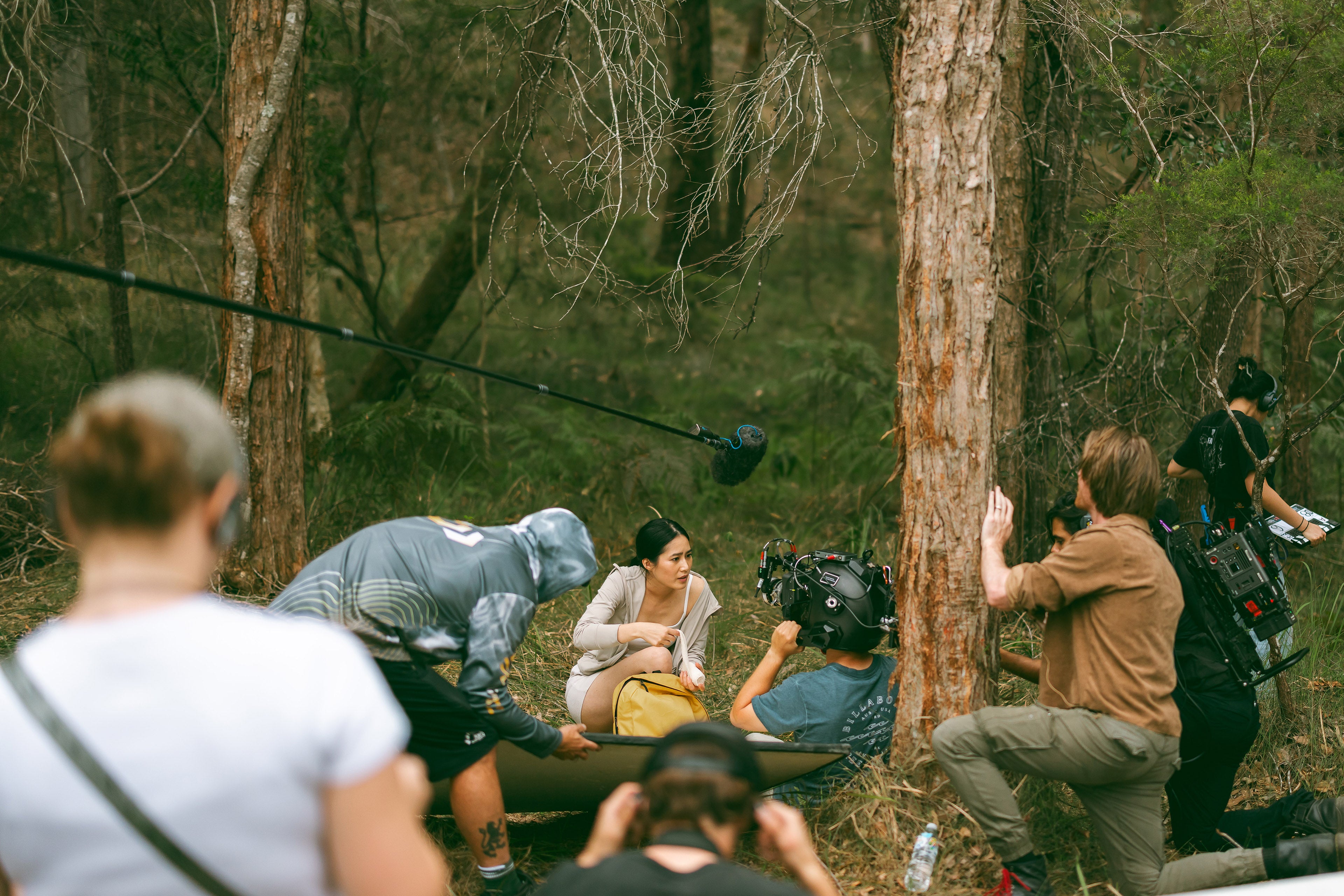
However, the most critical component of this elaborate chain of creatives was a singular lens. Much like the unchanging gaze of the main character, Panetta chose to capture the entire film on one custom-tuned 20mm lens, with only a select few scenes shot on a wider 17mm lens.
“One thing we did, specifically for this, was have Panavision custom-tune a lens for us,” Panetta said. “That really gave us a lot of control over some of the distortion and that perspective element of it. It was [based on] an H series lens, which is obviously vintage and has character, but this was really about turning it up to 11.”
“Part of the testing was figuring out what focal length works and what's right. And the truth is that a 20mm is not even remotely close to what a human eye sees, as we have stereo vision,” Panetta continued. “So it's never gonna be exactly the same. And I think that choice to use a slightly longer lens actually gives us a lot of discretion about what's in the shot and what's out of the shot. One thing Richard says is that if you're not directing the audience’s eye, you're not really directing the film.”
“The minimum focus needed to be altered, as on a standard H series, it's not close enough for a film like this. So that was something that we needed customized, which I think worked really well. The effect of changing the minimum focus so drastically gave us all the lens characteristics we wanted.”
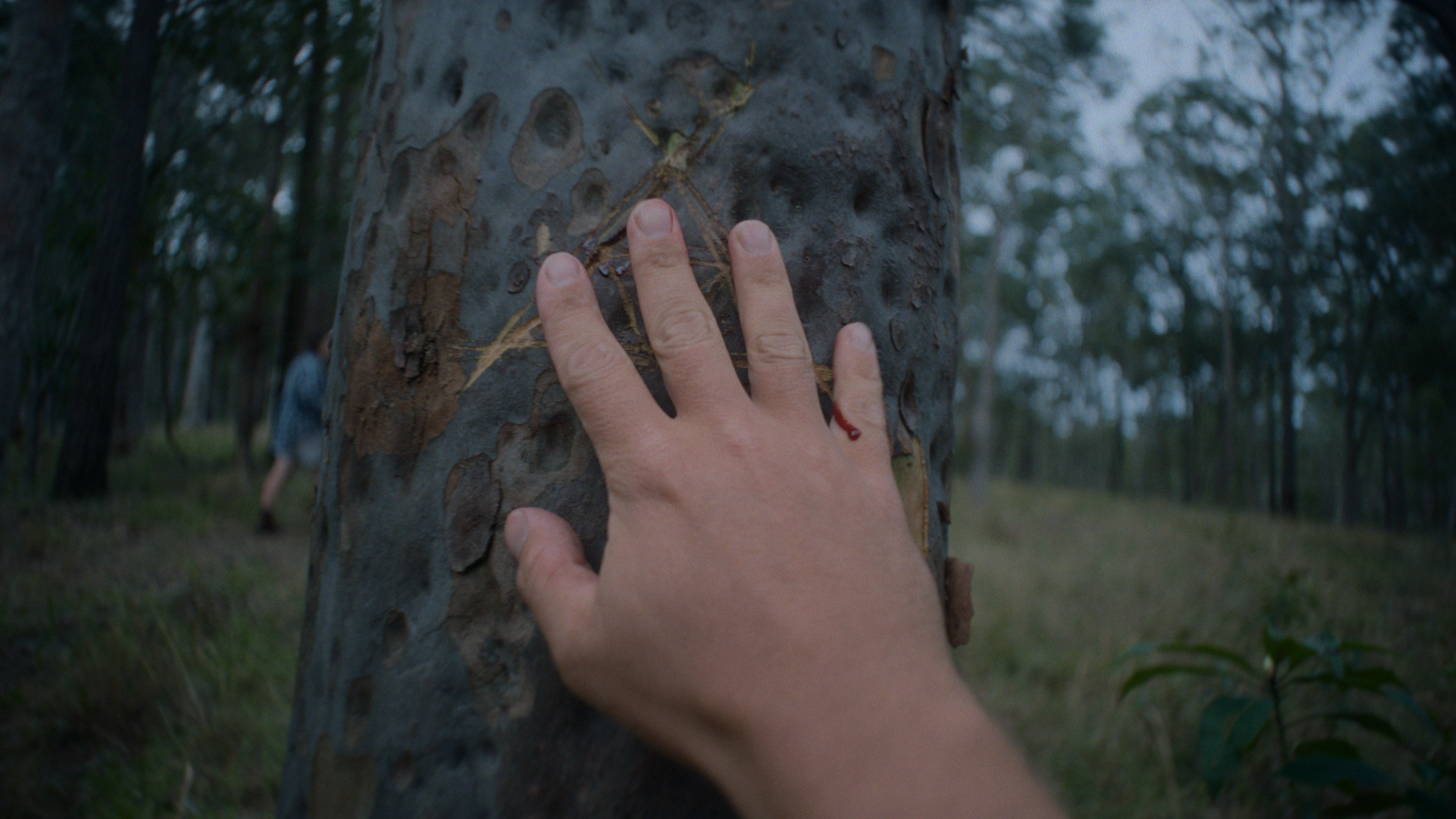
Because the audience could not see the main character, the characteristics of this lens across the entire aperture range became a creative toolkit that Panetta and Williams used to convey the lead's emotions and mental state.
“What we wanted was something a little bit anamorphic and swirly with distorted bokeh,” Panetta said. “We love that stuff, and this lens flares like mad as well. Richard loved it and because the film is quite psychological from the perspective of the main character, having it be a dirty and messed-up lens reinforces that this guy is not quite put together and that he's quite stressed.”
“That was something that we did—ride the iris to change the lens characteristics throughout a scene to reflect his stress level, which is very subtle in the film but definitely fun to play with.”
To really sell the immersion of the POV and character, the camera operator also needed to be an actor in the scene. Things like his hands and legs in frame became useful for Panetta and Williams to sell the illusion.
“A bit of hand acting really helps with the illusion and with the immersion,” Panetta said. “That was always something I'd constantly look at the script and say, ‘Is there an opportunity to put a hand in here?’ Even something as subtle as someone leaning on a wall. All of that is really good because you don't want it to feel like someone's just carrying a GoPro on the end of a stick. You want to make it as reactive and as human as possible.”
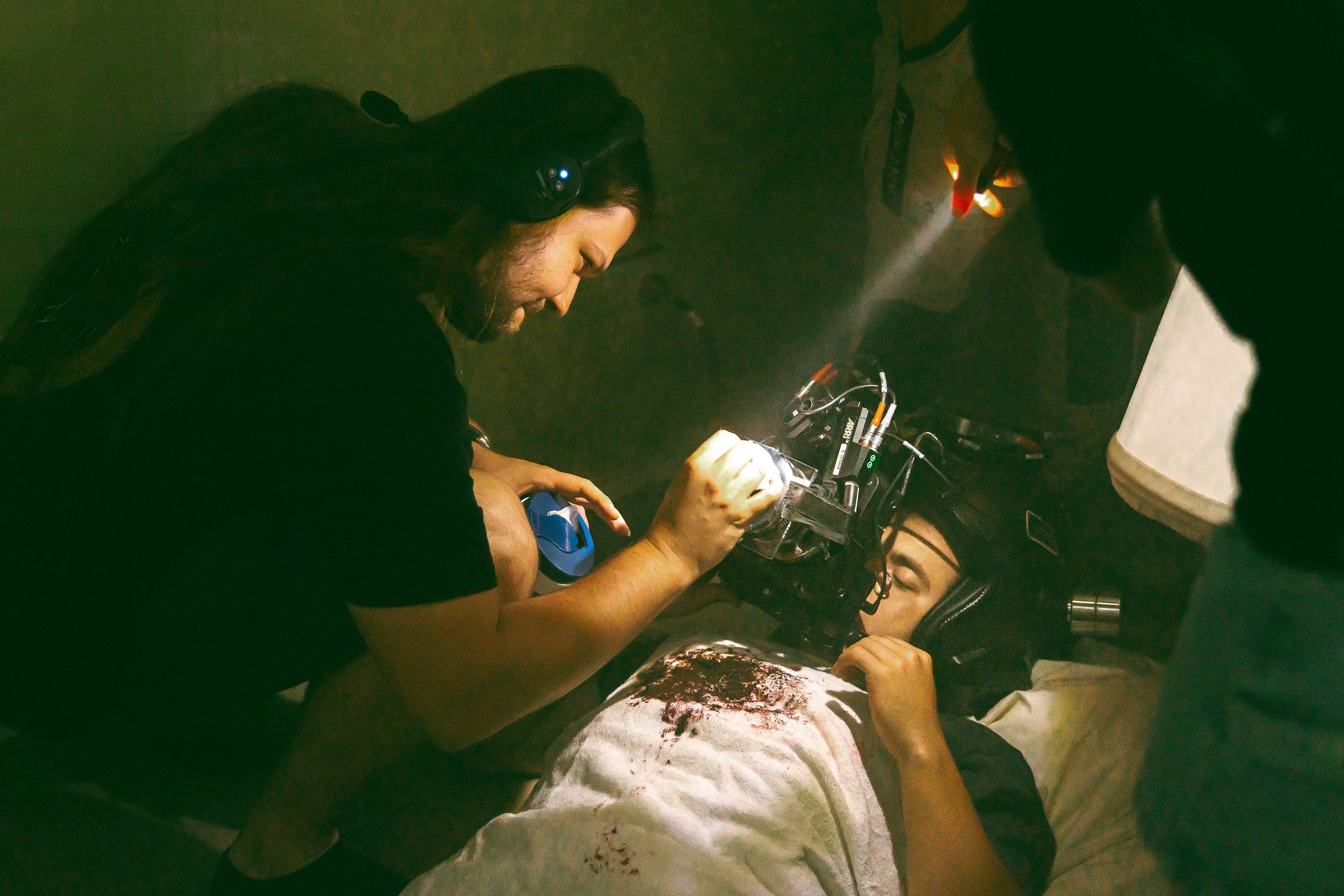
The VENICE Extension System as an A Camera
Bringing all these elements together demanded a lot from the camera. While initially the team had considered shooting Dead Eyes on the Sony FX3, Panetta didn’t want to compromise on image quality or the form factor — the latter being crucial for capturing the first-person POV. The VENICE Extension System gave the cinematographer the best of both worlds, offering the powerful X-OCN codec for RAW capture as well as the high-resolution and dynamic range of the VENICE sensor in a camera package only twice the size of the FX3.
“[The RIALTO] unlocked a whole other world of storytelling,” Panetta said. “For a theatrical film, we don't want to trade off image quality. So there were basically no trade-offs. It was the perfect camera for this, other than the RIALTO Mini, which didn't exist at the time.”
The high ISO capabilities also supported the capture of night scenes and moments when lighting was limited. Because the RIALTO gave the camera operator freedom of movement to capture an entire environment, lights needed to be hidden or worked into the production design. With ISO 2500, the VENICE was more sensitive to this limited light while still providing a clean image.
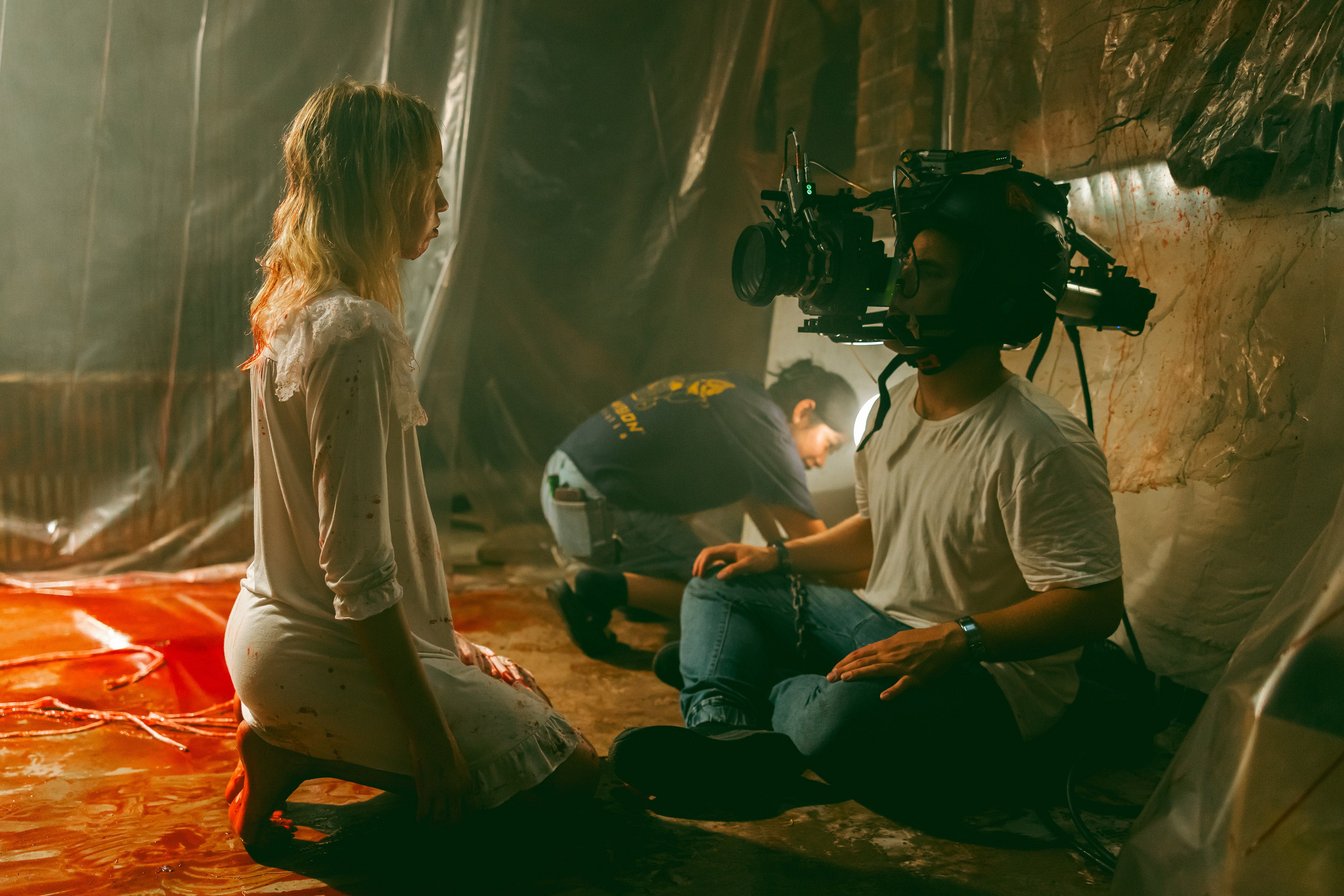
“We used ISO 2500, well and truly. That was definitely handy in those night exteriors,” Panetta said. “And the NDs as well. When we’re shooting outside and the lighting is changing very quickly, being able to go up and down the NDs just before a take very quickly is definitely essential."
By having the ND filters easily accessible, Panetta was able to change change the exposure on the fly and still maintain a consistent aperture on his lens. This allowed him to creatively adjust the character the lens depending on the story instead of the lighting situation.
Finding Inspiration in Unlikely Places
Focusing on a single perspective for the entire film was a creative choice that demanded a new approach. It also demanded new things from the RIALTO, which isn’t often used for a first-person perspective, especially for an entire film. But for Panetta and Williams, finding a way to tell this story felt like a lifetime in the making.
“I'm not drawing on my film knowledge to help the director. I'm drawing upon all this video game stuff that's just been cemented in my mind since I was five years old…the composition and how you see video game cut scenes laid out,” Panetta said. “It's definitely an unconventional way to get inspiration, but I think it really works in this case. ”
Dead Eyes had its world premiere at SXSW 2026. To learn more about the Sony VENICE and VENICE Extension System, as well as the other cameras in the Sony Cinema Line, visit our Camera Comparison Chart.