05-14-2026 - Interviews & Behind The Scenes
How DP Jay Hunter and Sony VENICE 2 Set the Stage for “St. Denis Medical”
By: Yaroslav Altunin
Created by Eric Ledgin and Justin Spitzer, St. Denis Medical is a mockumentary sitcom that has built a loyal fanbase over the course of two seasons. The third series from Spitzer, who also created Superstore and American Auto, St. Denis Medical brings a fresh take on the genre by focusing on the different perspectives found in real-world documentaries.
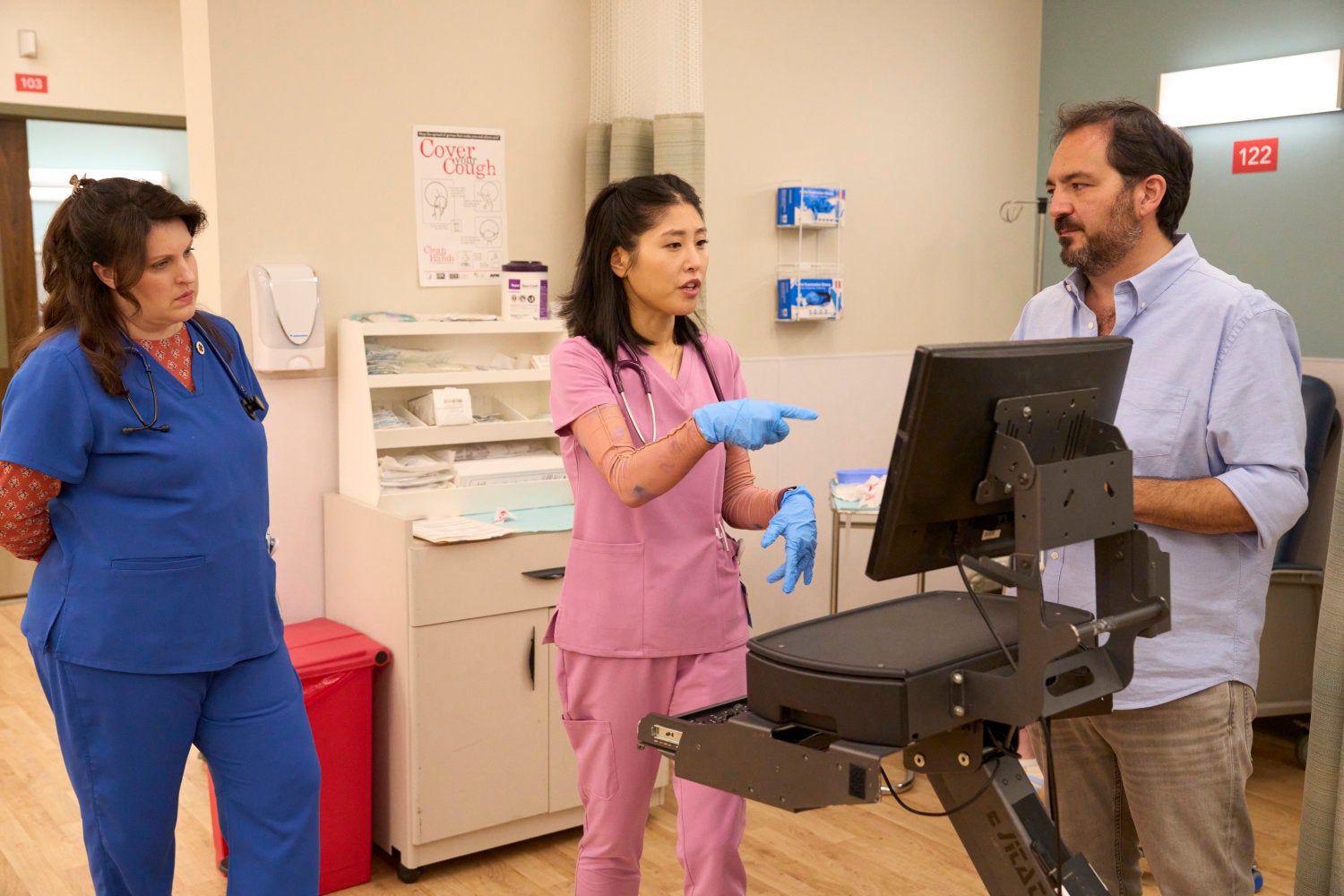
To capture St. Denis Medical, DP Jay Hunter was brought on to lens almost the entirety of both 18-episode seasons. A long-time collaborator, Hunter has also directed episodes for all three previous shows. To explore the mockumentary style of St. Denis Medical in a new way, Hunter relied on the Sony VENICE and VENICE 2 to craft a theater-style environment, giving his crew and the actors unbridled freedom to explore a scene.
Sony Cine sat down with the cinematographer to explore how he developed the creative workflow for the show, how he captured every scene in three different styles, and how the VENICE 2 enabled him to make a show that broke all the rules.
Making New Rules To Build a Mockumentary
St. Denis Medical is a series about camaraderie that follows an ensemble cast of characters who run the titular hospital. And much like the show, the team behind the series has also developed camaraderie, having worked together on Spitzer’s previous shows. When Hunter was brought on board, it was this working relationship that gave life to experimentation on set.
“[On St. Denis Medical] I did the pilot and shot all of Season 1 and all of Season 2, with the exception of the episode I directed, called ‘Nod and Agree,’” Hunter said. “I've shot many pilots before, but with this team of people, this is the first one where I've built it from the ground up. It’s been me from day one.”
“Having one DP helps a lot of people and streamlines everything. The shows I've done with this team, Justin Spitzer, Simon Heuer, and Eric Ledgin, and all the departments, it's basically the exact same crew we've been working with for like 10 or 11 years. We just have such a great working relationship,” Hunter said. “We feel like a family, and no one ever wants to leave. As a team, we've done 170 episodes of television together, which is crazy to say, and all for one network too.”
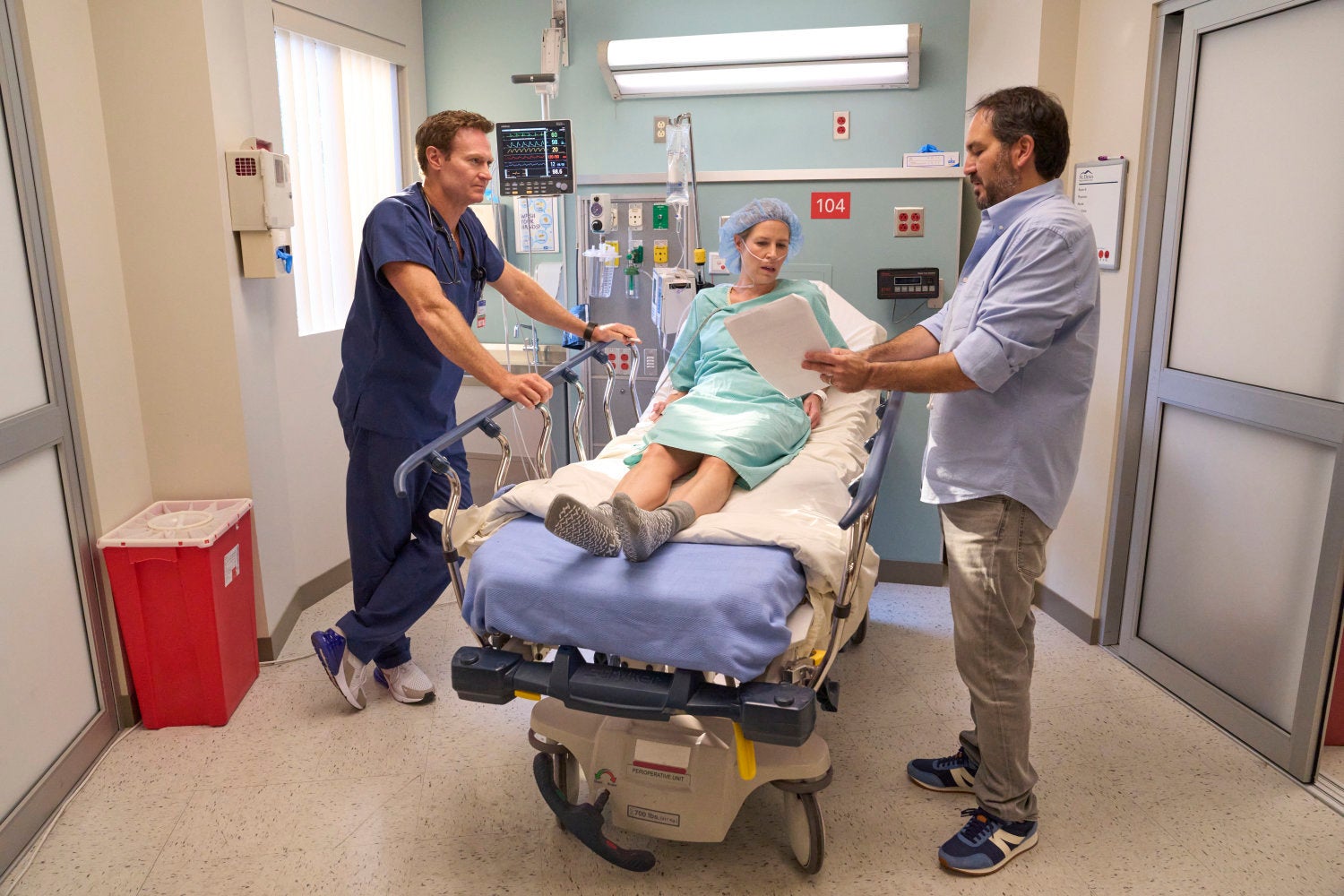
For Hunter, working on episodic television feels like shooting a 10-day feature film back-to-back all year, and when he began developing the show's look, having this support from his team was a crucial step in exploring new ways to capture a well-trodden format.
“The first reference [for St. Denis Medical] was a documentary series called Lenox Hill, which is on Netflix,” Hunter said. “It's a very raw, single-camera documentary. I think it's literally just a camera operator and maybe an audio person embedded in this hospital in New York. And they're just following doctors and nurses around and covering their stories. It's very compelling, and there's this really raw energy to it.”
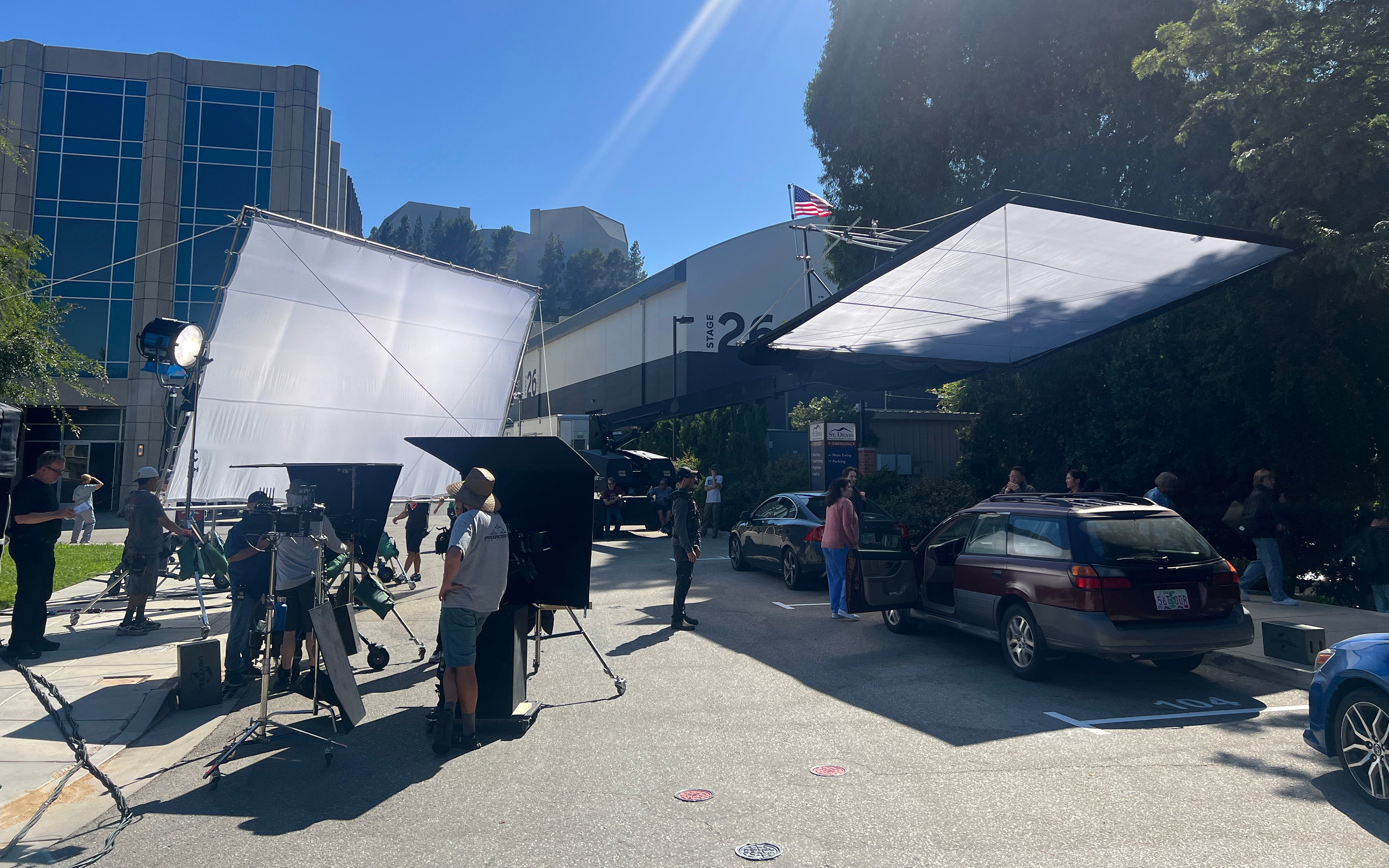
With this in mind, the creative team asked Hunter to craft a working environment where lights couldn’t be set up on the floor, and actors could move freely in the space. Even when the set was built, no removable walls were added to remove the temptation to use them later. Blocking became fundamental to how the team would craft each scene. If something wasn’t working in one space, the actors and camera team needed the ability to move around in the blink of an eye.
“This wasn’t going to be a show about lighting necessarily,” Hunter said. “We do light the hell out of everything; there are 1000 lights burning on the set at any one time, but they're all in service of this 360-degree, practical lighting, naturalism.”
Ever since the VENICE came out, I've been shooting everything on it. I just fell in love with the look and versatility.
Exploring What The Camera Can Do
With these creative rules in place, Hunter and his team could do things that the camera and actors wouldn’t be able to a conventional set. Blocking became fundamental to the exploration of a scene and compositions could pivot to meet the creative decisions of the cast.
“What I promote and encourage a lot is very realistic blocking,” Hunters explained. “On our show, you can do all the stuff that you're normally unable to attempt because of time restraints, or just other logistical considerations, because our cameras truly function as documentary cameras.”
“I tell the directors, if the actors want to come in and just start walking circles around each other and turning away from the camera, that's okay, because that forces our documentary cameras to move with the action. And as soon as we start doing that, it starts feeling like a real documentary.”
This unique approach to covering a scene opened new doors for Hunter and his team. Each scene would be shot in three different ways to give the director and editor unconventional options that would further dive into the documentary look.
“We shoot every scene three different ways. So if we shoot a two-page scene, we're going to shoot that scene three fundamentally different ways,” Hunter said. “In my mind, when I created this technique, I wanted to show the audience that the scene was filmed as if by three different crews.”
“The first way we do it is as if there is a two-person camera crew,” Hunter continued. “The two handheld cameras are in the space, there’s a boom operator with them, and their task is to cover the scene wherever the actors go, as if you had no take two, no repeats, and you had to just move with the scene.”
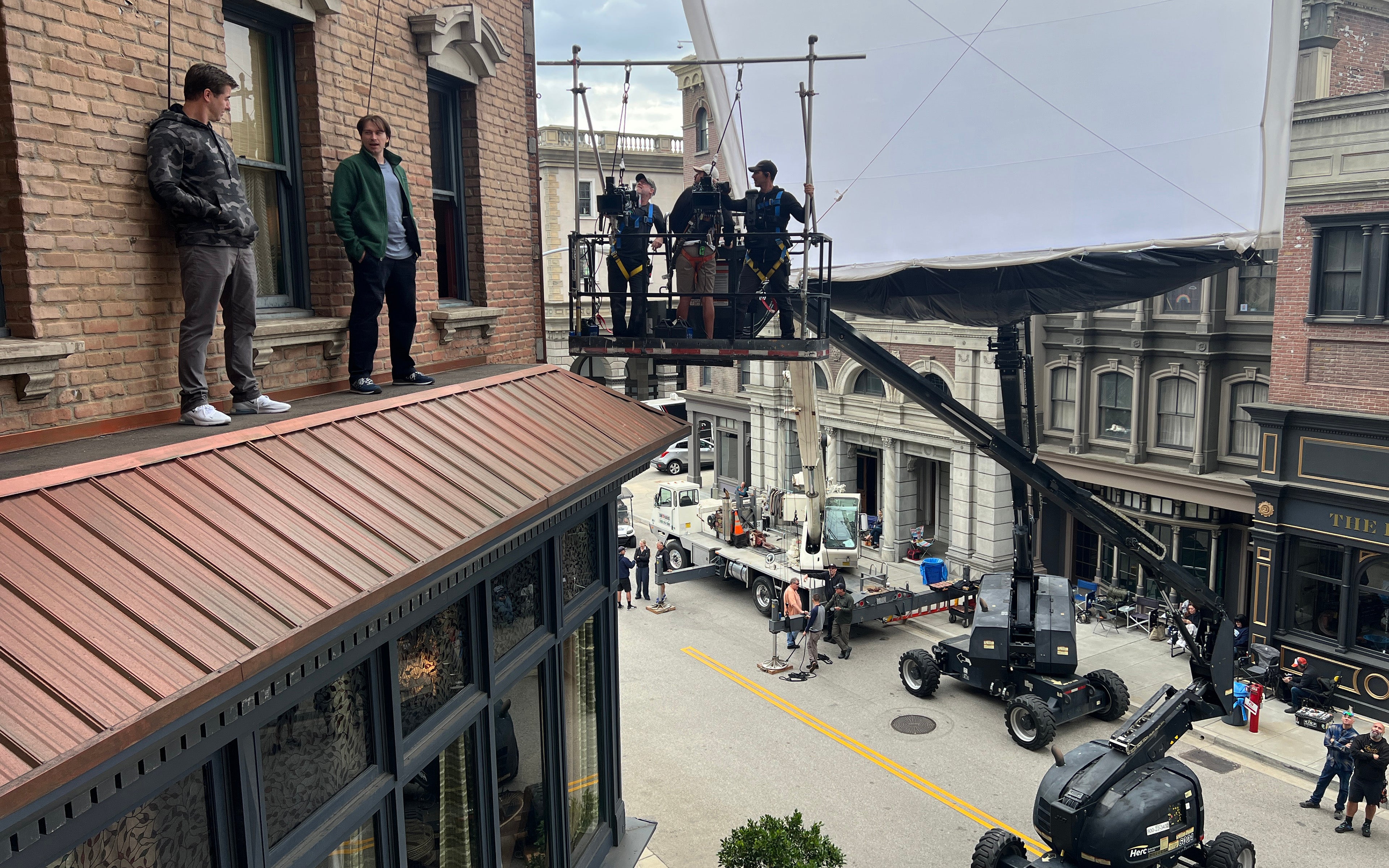
These cameras would typically cross-shoot, provide over-the-shoulder coverage, and move with the actors. This set the rhythm of the scene and provided a foundation for the additional perspectives.
“The second thing we used was originally called the Lenox Hill, but we call it the Lenny for short,” Hunter said. “Which is as if the scene was covered by one camera. We staged the exact same scene with the exact same blocking, and we just have one camera do it.”
"What that inevitably means is that the camera is physically a little closer to the scene. It tends to be more in the middle of the scene or in the middle of our ensemble of characters, and you're panning back and forth. There are often six, seven, or eight characters, and you might be on one side of the room, and then someone on the other side of the room says something, that Lenny camera has to pan over and zoom into that person from a distance. It gives it this sort of single-camera feel that is fundamentally different from the other version.”
The Lenny, often shot by A Camera operator Jacob Pinger or B Camera operator Mande Whitaker, delivered the raw aesthetic that Hunter and the creative team were seeking. The fundamental feel of this perspective is meant to be reactive, so the camera isn’t focused on catching every word or moment and often misses dialogue or comes in late into a scene, making the camera operator a character within the show.
“And then the third way that we shoot everything is voyeuristic,” Hunter continued. “In my mind, it's like the documentary crew is shooting something in one end of the hospital, and a producer or the director gets on their walkie and says, ‘Hey, pan left and zoom all the way in, there's something going on.’”
“The idea is that the camera gets a very obscured shot. More beat up and shooting through layers of things. It's not the kind of shot that always has to work as a master for the entire scene, although that is sometimes how we use it. Sometimes, I like that to be this bonus angle that was shot down a hallway, and you're only getting like a weird off-angle profile of somebody.”
Initially, having all three angles seemed excessive. However, in the edit, the creative team found that all three methods worked together seamlessly as long as there were no dramatic changes in blocking or if the camera was in an unrealistic place.
“That was the birth of our style, and we've been expanding on it and growing it,” Hunter said. “But it all comes back to that desire for authenticity, reality, and natural atmosphere.”
The Cameras of St. Denise Medical
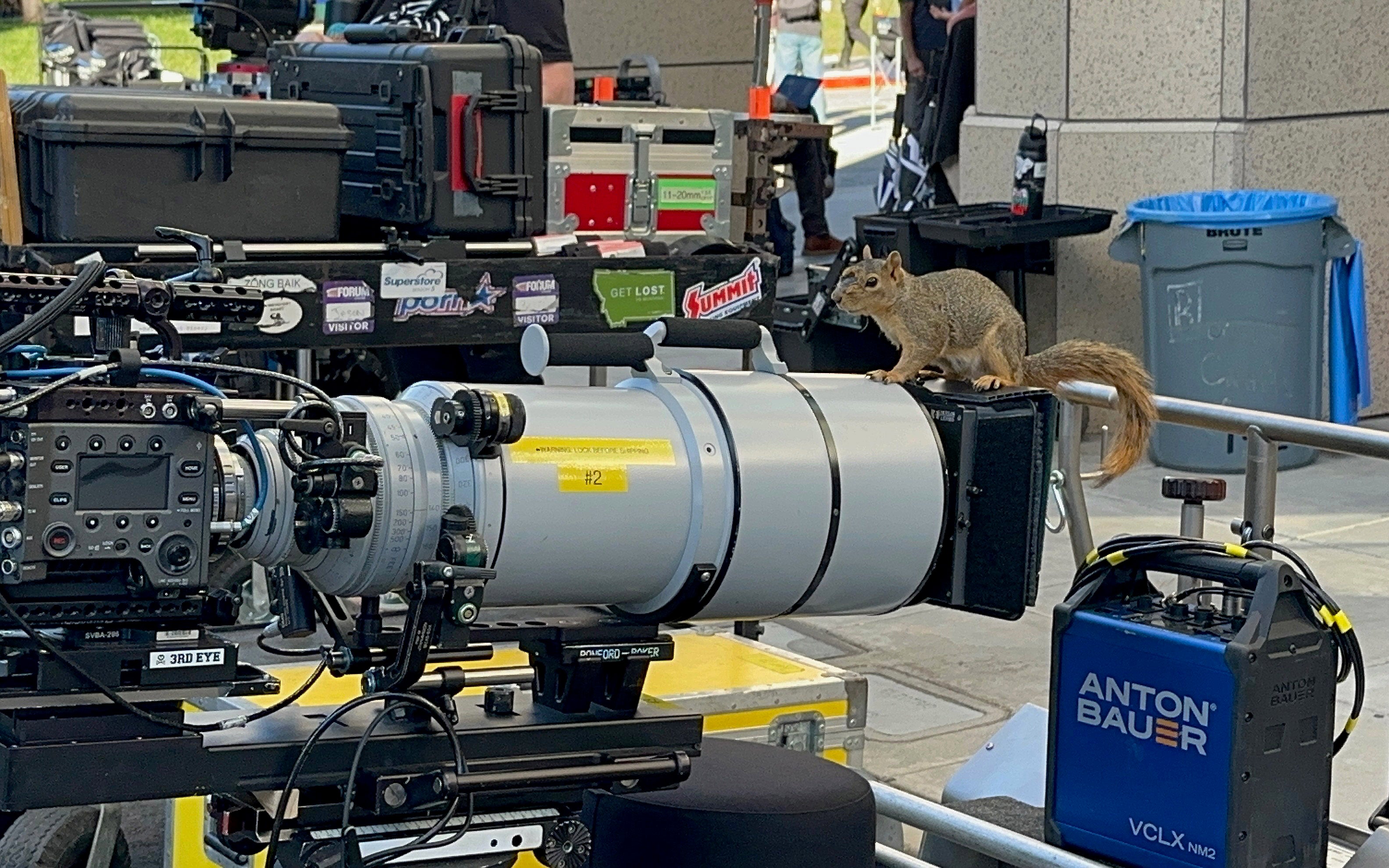
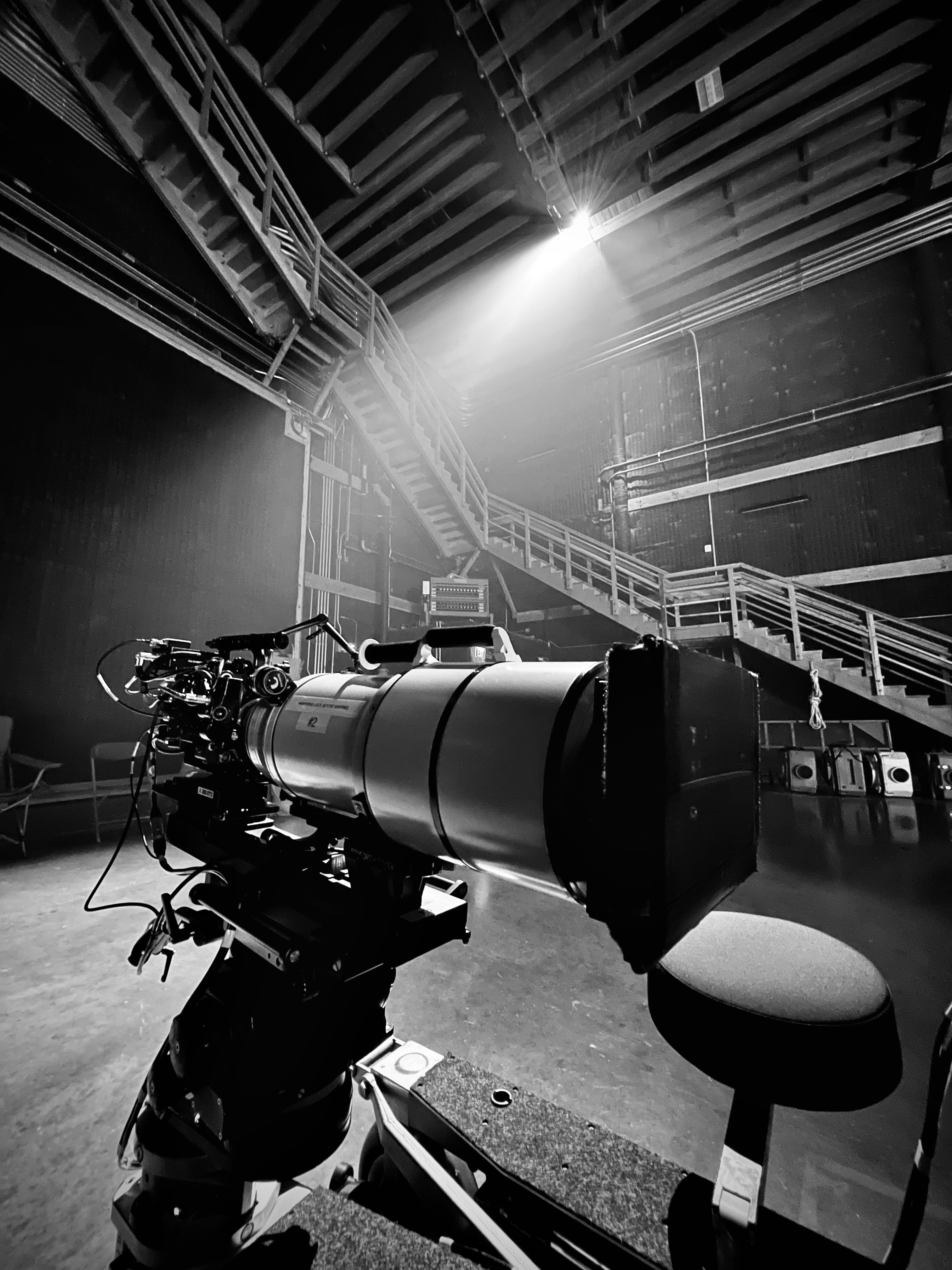
St. Denis Medical is captured on three cameras: two VENICE 2 bodies and one VENICE, which is mostly paired with a long zoom lens to capture the third, voyeuristic look. While Hunter has been shooting on the VENICE system since its 2018 launch, it was the versatility of both cameras that made it a perfect fit for St. Denis Medical.
“Ever since the VENICE came out, I've been shooting everything on it. I just fell in love with the look and versatility,” Hunter shared. “I love how you can shoot this wide variety of formats on this enormous sensor. On the VENICE, I could go up to 6K; the VENICE 2 can go up to 8.6K. I can go very big, or I can do anything in between.”
Whether it's network-mandated 16:9 2K deliverables or high-resolution 8.6K plates for VFX, Hunter uses the VENICE 2 to capture a wide range of resolutions and sensor sizes used by productions and to tailor the capture format to meet creative, budget, and post-production needs. However, this scalability in the sensor is also an asset for Hunter when it comes to lenses.
“I have a wide variety of personal lenses that I use,” Hunter said. “I have these two Nikkor T/2.0 primes, the 300mm and a 200mm, and a 300mm that used to be Caleb Deschanel's personal lens that I bought from him, which we affectionately call the Oscar lens. I also have a 140-420mm ISCO zoom, a lens that ISCO and Claremont Camera made a long time ago.”
“But since a lot of these lenses are Full Frame, they cover the entire VENICE 2 sensor,” Hunter added. “So it's nice to have a camera that you can master a whole show in any format you could imagine, but also, if my 140-420mm ISCO zoom is a little too tight at our [Super35] 4K resolution, I can shoot it at 8.6K [Full Frame], and I'll use more of the glass and get a ‘wider’ range on the zoom.”
By switching between the different sensor crops and resolution options, Hunter can adjust his frame to cover a wide range of image circles. This not only gives him more lens options but also allows Hunter to choose how much of the image circle he wants to use when shooting with Full Frame lenses.
“It just gives you a little more image area and a little wider angle of view, so I love the ability to do that.”
With a series that moves as much as St. Denis Medical, having a camera that is also light makes it easier to follow the rules that Hunter and the creative team have established. The cameras need to exist in the space as much as the actors. Because the VENICE requires an external RAW recorder that extends the body of the camera, Hunter uses it for the long lens setups. On the VENICE 2, the recorder is built-in while also being more compact than its older counterpart. This makes it a perfect fit for handheld operation.
And when Hunter needs an even smaller form factor, the VENICE Extension System 2 reduces the camera footprint even further.
“It's a camera that I can do everything with, and I don't even have to think, 'Is this camera right for this production?’ The camera is right for every production, in my mind,” Hunter said. “Especially with the RIALTO 2 extension. If the thing is too big, I've got the RIALTO. I've got all these tools where I can just apply them to virtually anything I could possibly work on. And now that the VENICE 2 has the card reader built in, it's significantly lighter.”
How X-OCN Let’s St. Denis Medical Thrive in the Edit
By shooting in the X-OCN RAW format, the versatility of the VENICE and VENICE 2 also extended into post-production. With X-OCN, there was no need to compromise on the look to meet storage demands and Hunter found everything he visually demanded from a RAW format, without worrying about media. When shooting a scene three different ways, storage management became a critical part of a well-oiled machine.
"The other thing that I really love about the VENICE and the VENICE 2 is the X-OCN codec,” Hunter said. “I shoot these long-form projects, whether it's a movie or it's a television show, and a lot of the time the budget cannot handle the media storage when shooting RAW. You need more cards, more hard drives, and more backups. And then the Unity storage and post just gets doubled or tripled, and the cost goes through the roof.”
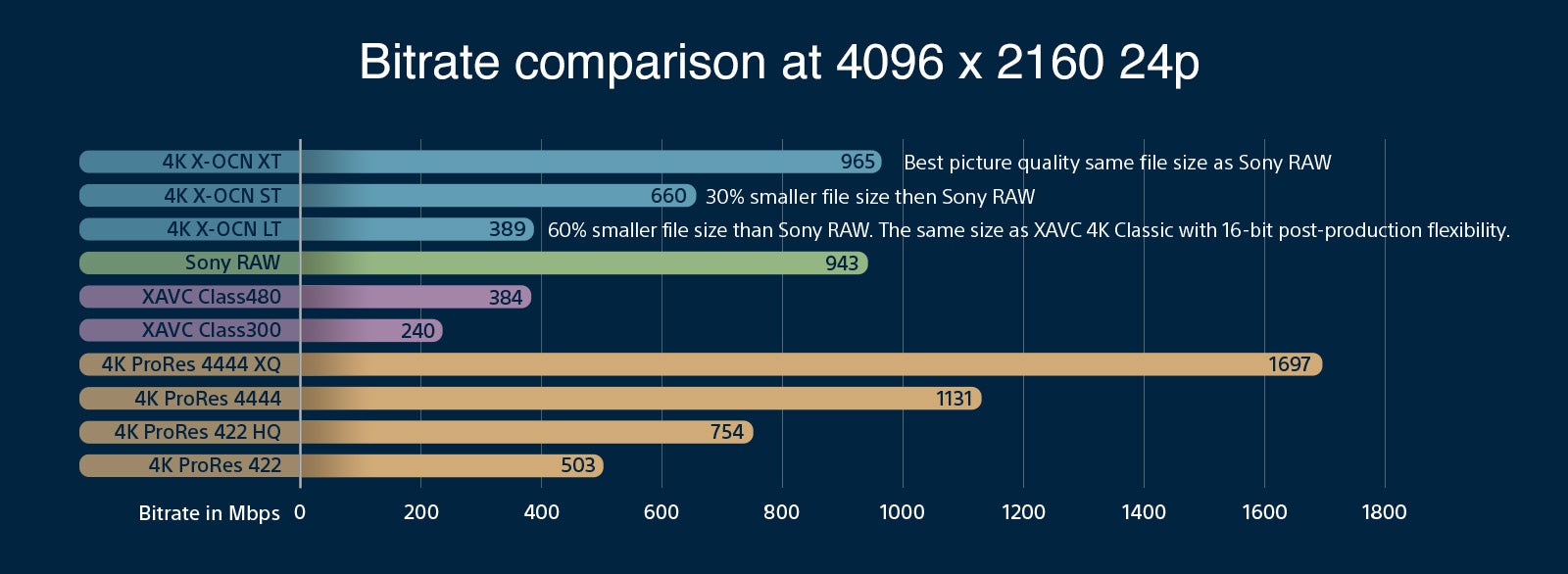
"When Sony invented the X-OCN codec, it was a game-changer because sometimes it seems like it's using less storage and media than ProRes HQ or 4444. It's way better than ProRes, so my colorist Jim Garrow and I can do the things that I'm able to do with raw data, but with the X-OCN codec.”
"This stuff matters to your producers, your line producers, your post producers, your studio, and heads of production.”
How Restrictions and Restraints Lead to Creative Discoveries
St. Denis Medical thrives in the moment. If an actor wants to explore something unconventional, or if a camera wants to look in any direction to capture a surprise improvisation, the rules that Hunter and the creative team set for themselves provide the stage.
“I think for me, the biggest shock in the beginning was how good the show looked given all the restrictions and stylistic restraints we put on ourselves,” Hunter said. “But the lighting, always having this ability to see 360 degrees, and just all the freedom we gave to ourselves, it was primarily for the benefit of the writers, the showrunners, the actors, and the directors.
“And I’ve got to credit everybody. It’s the camera operators, lighting, grip, sound, art department, and the camera itself. It’s all those factors. Great cinematography is not one thing. It's like 5 million little things that all contribute to it. It's everyone's contributions adding up.”
Stream St. Denis Medical now on Peacock to catch Hunter’s work in action across two seasons. To learn more about the VENICE 2 and the other cameras in the Sony Cinema Line, visit our Camera Comparison Chart.


