08-18-2026 - Interviews & Behind The Scenes
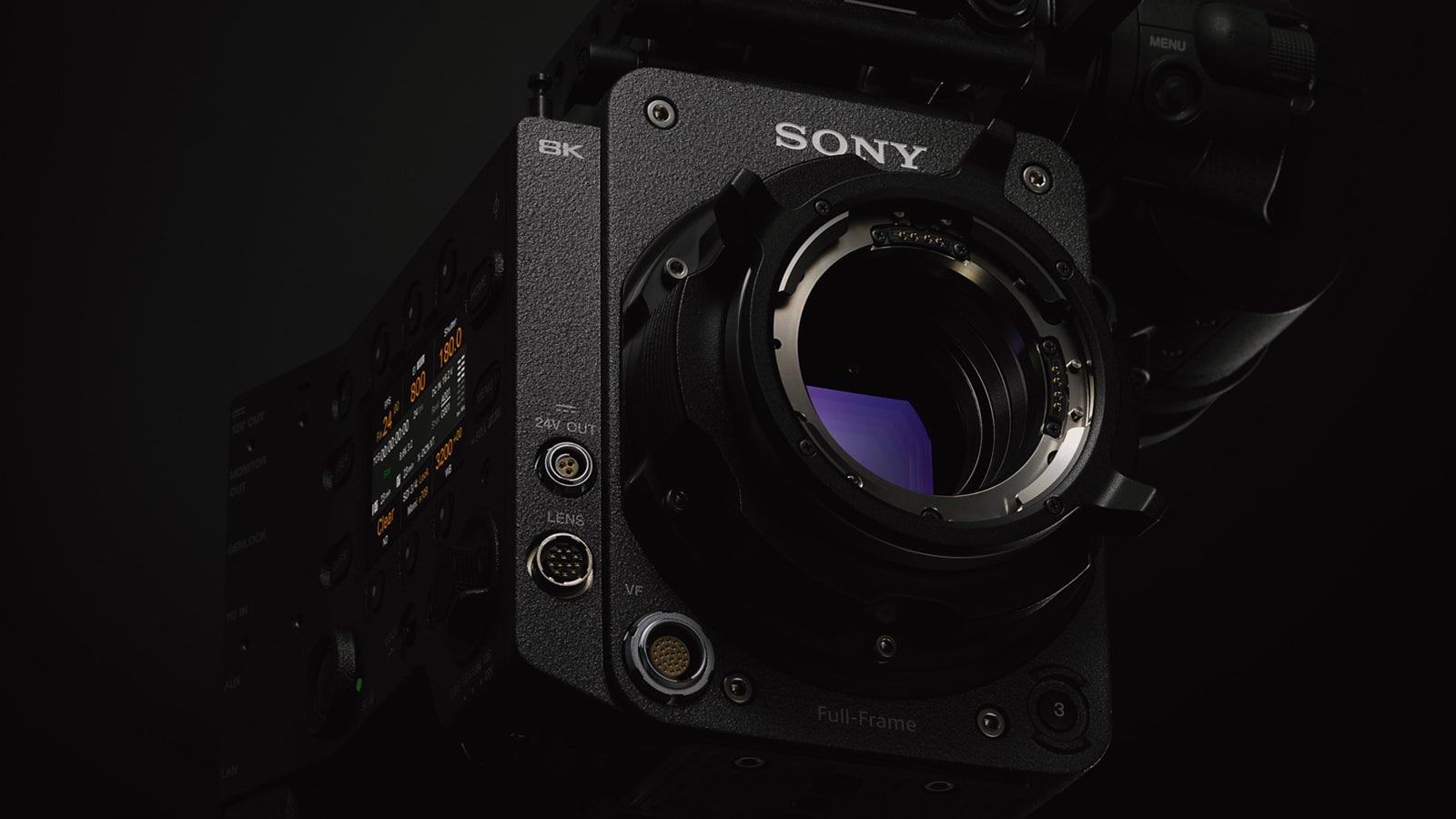
Michael Pessah, ASC Captures the Authenticity of Henson Puppets with Sony BURANO
By: Yaroslav Altunin
For over 70 years, The Jim Henson Company has brought its unique brand of puppets to life both on television and the big screen. In Wowsabout, a television special created for PBS Kids, the characters Roxy and Ronald explore the natural wonders of Sequoia National Park in a musical adventure.
After having filmed a musical segment for The First Snow of Fraggle Rock, DP Michael Pessah was invited back to the Henson world to capture the natural landscapes of Sequoia National Park. Using the Sony BURANO and FX3, Pessah ventured hours into the forest with Roxy and Ronald, blending the Henson visual language with the real world.
To learn more about how this project came to life, Sony Cine sat down with Pessah, where he shared the challenges of scale, the importance of color for Henson puppets, and how the BURANO was a critical tool that helped him thrive on location.
Bringing Roxy and Ronald out of the Soundstage
From Fraggle Rock to The Dark Crystal, the visual language of Henson puppets are often designed for the soundstage. Yet with Wowsabout, the characters of Roxy, a free-spirited singing hedgehog, and Ronald, an over-prepared, tree-loving pig, would find themselves in the midst of Sequoia National Park.
“The visual ambition of Wowsabout was that it's filmed almost entirely on location, and a lot of puppetry, for really understandable reasons, is filmed on sound stages where a big part of that is just controlling perspective,” Pessah said. “Very often, your puppeteers are standing up, and the puppets are six feet off the ground, so the bottom of your frame line is actually quite a bit physically higher than it typically would be if you’re filming a person.”
“And on top of that, you have the burden of creating perspective and scale, not just because your puppets are small and are often out of scale with their environment, but also sometimes you have puppets that are interacting with full-size humans. Being able to control the scale of the props and the scale of the world is something that would make sense to do on a sound stage.”
Early on, creators Halle Stanford and Dorian Davies — who also wrote and Executive Produced the special — along with director John Tartaglia, felt that it was important to show the majesty of actual national parks in the show, which made the first challenge one of logistics. Here, the strength of the production team, supported by the Sony BURANO and high-efficiency LED lights, created an environment that embraced the authenticity of the environment.
A World Six Feet Off The Ground
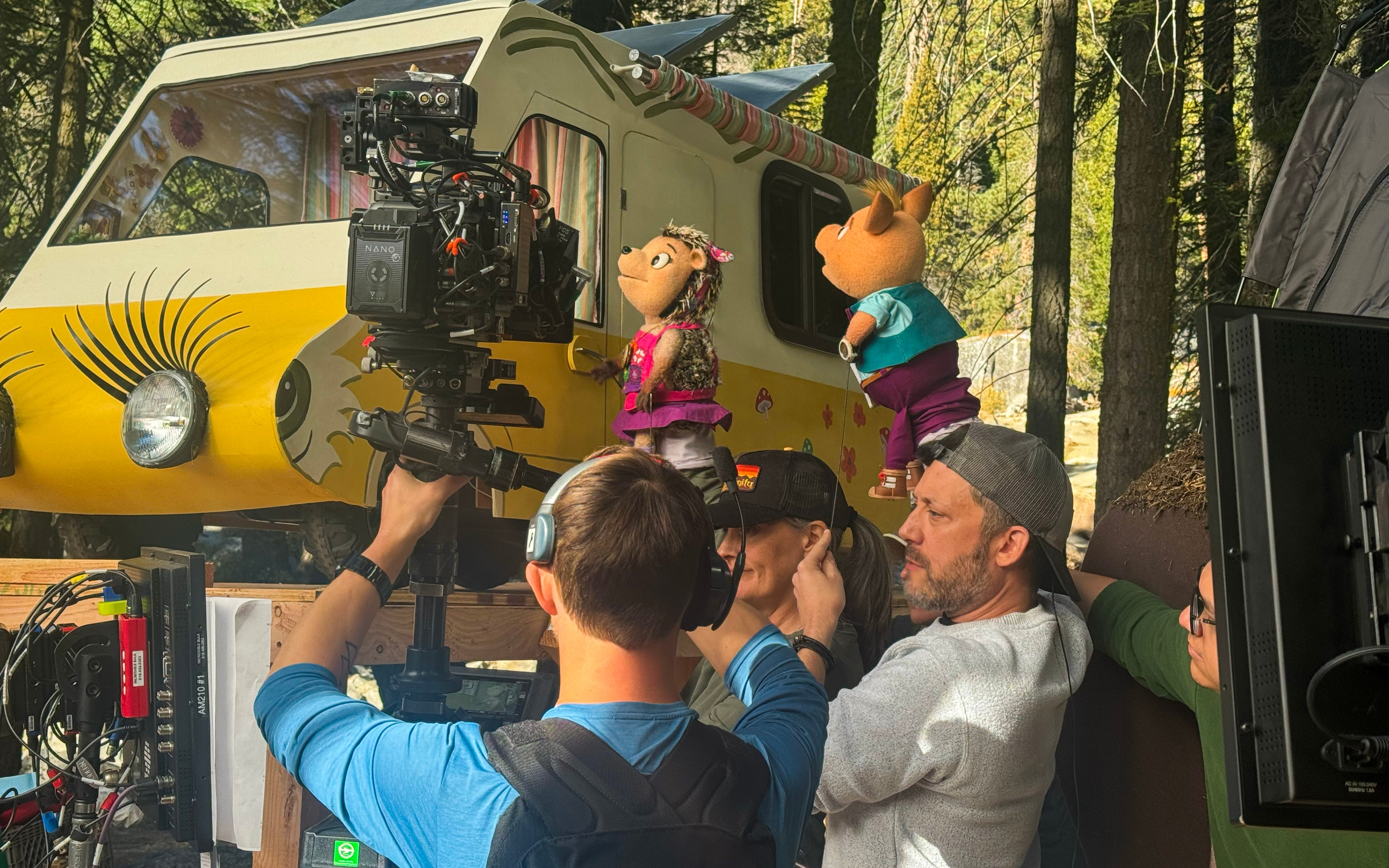
The cinematography of Henson puppets lives six feet above the ground. As the puppet actors perform in the frame, an entire world of puppeteers, camera assistants, and grips live below the composition to make it all happen. To support this elevated frame, Pessah and his team used the lightweight BURANO to capture Roxy and Ronald with Steadicam and within a miniature process trailer.
“The weight of the camera became very, very meaningful, not only just to be able to have a lot of Steadicam [shots] without exhausting our Steadicam operator, Nick Serabyn, but to be able to have a camera that could be lifted way up over his head for operating lengthy shots that are more than six feet off the ground,” Pessah explained. “We also had a very fun rig, an elevated miniature process trailer, where Roxy and Ronald are in their Wowsabout mobile.”
“So much of the show was about having authenticity, and having these genuine, real-world locations made it feel like they are two characters on an actual road trip and at a real campsite.”
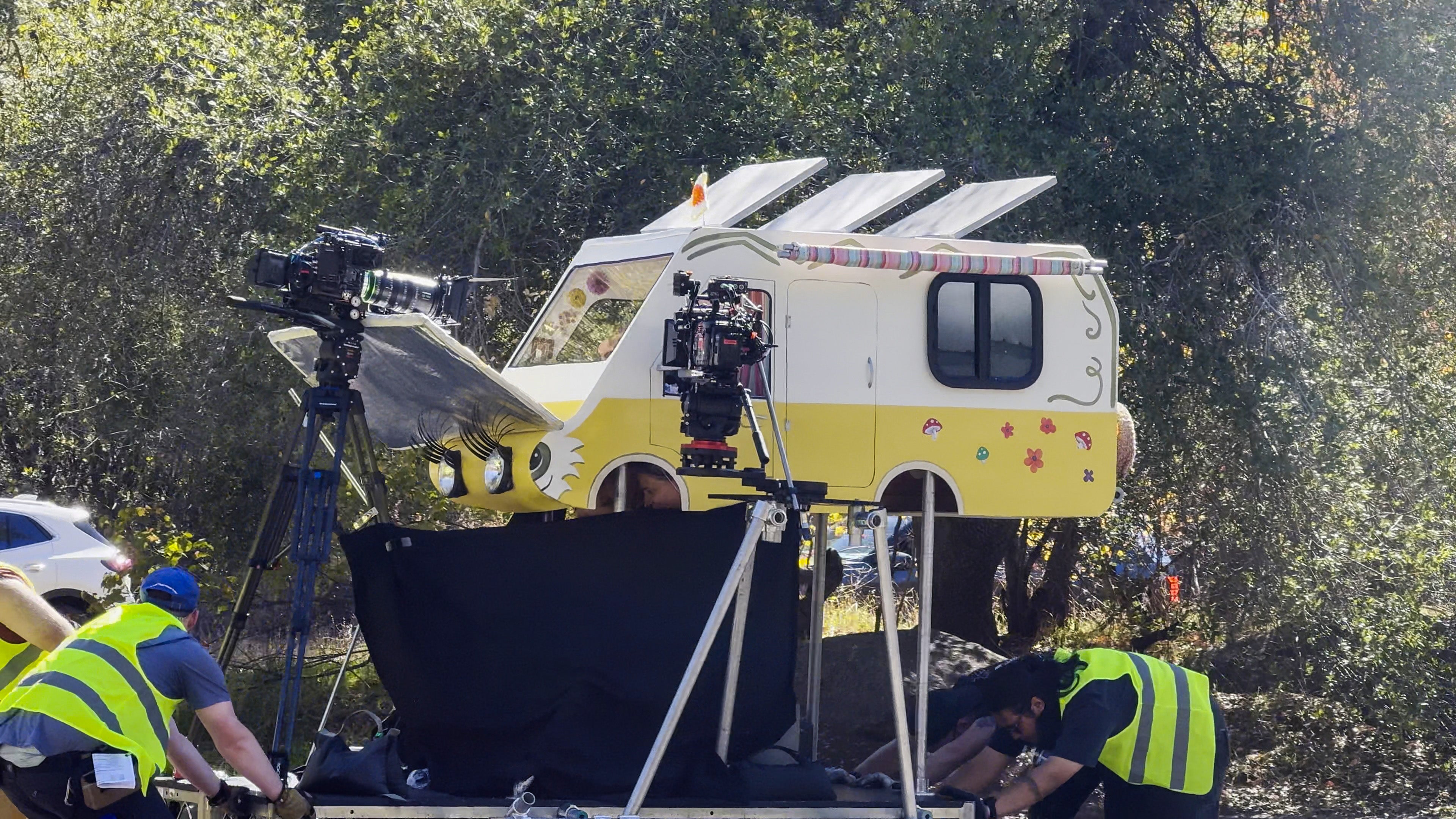
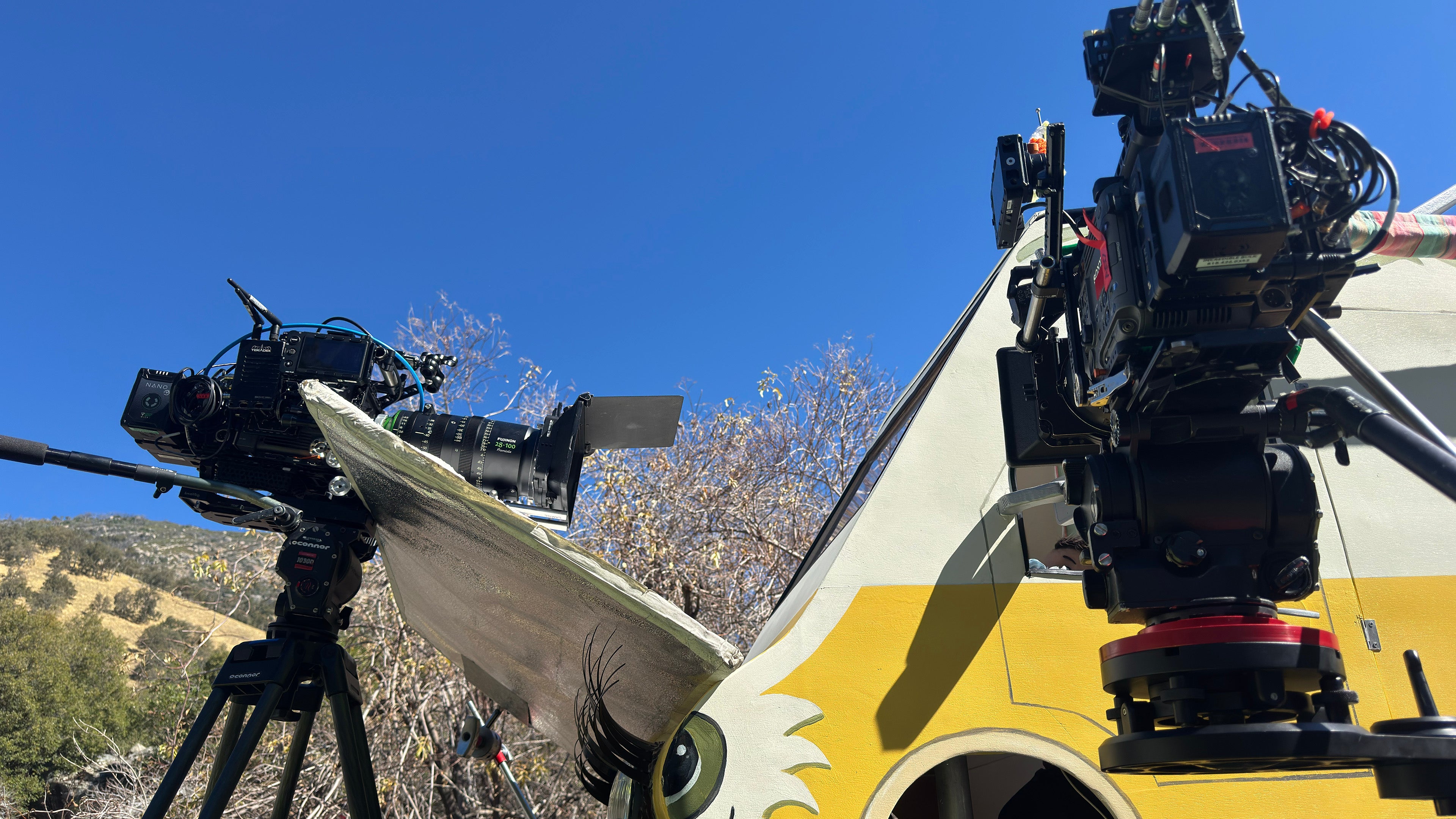
“The geniuses in the production’s art department built a real vehicle for them to drive around, and our grip department placed the vehicle on six-foot risers off of a dolly platform,” Pessah continued. “And so the puppeteers, John Tartaglia and Dorian Davies, were able to sit on apple boxes, on a moving car chassis with the Wowsabout mobile frame above them. Then I was able to rig two BURANOs, one on a hostess tray and one as a hood mount, and we were able to push them and do actual car process photography with these puppets moving them through the park.”
But it was the versatility of the BURANO that allowed Pessah to strip down the camera and hand it off to a one-person camera team for B-roll and landscape sequences.
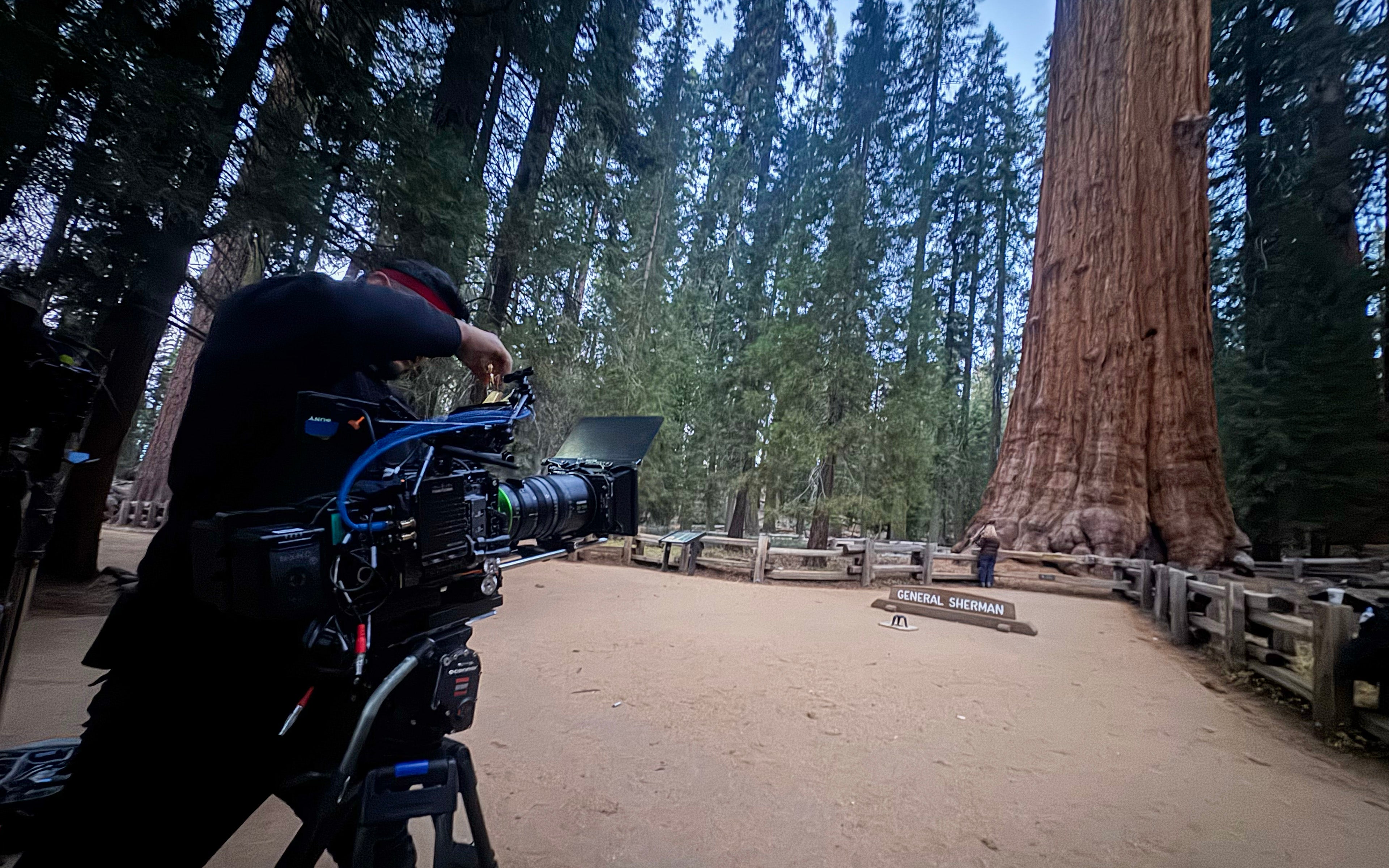
“Additionally, we wanted to be able to send out our very gifted B camera operator, Mike Buchbauer, to go film birds and sunrises and sunsets and waterfalls and get additional photography as a one-person band. The BURANO was a great camera for this.”
Even as Buchbauer would go out on his own to film additional footage, the team would build another BURANO for elaborate Steadicam sequences to capture musical numbers among the giant sequoias, ensuring their footage would match perfectly.
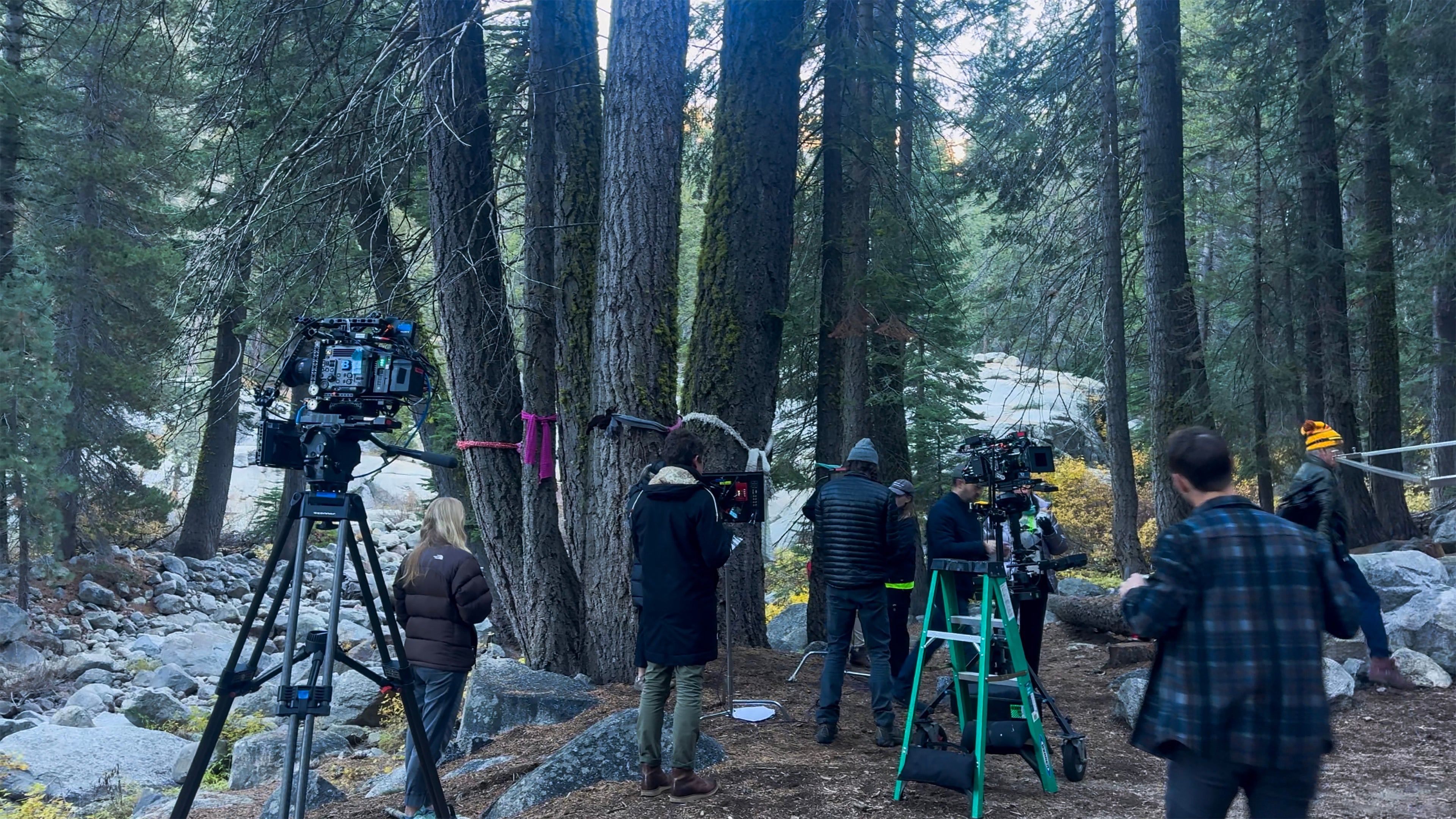
“We had a BURANO with a prime lens, and in order to get enough light on [Roxy and Ronald] to hold the tree and the skies, we had a handheld 1200D LED bouncing into a bounce board,” Pessah explained. “And so if you imagine, we were moving together like in one of those swirling spiral animations. Two puppeteers, our 2nd AC walking with them holding two monitors so they could see the shot, our Steadicam operator, and behind the Steadicam operator, you had someone hand-holding a 1200D LED with a battery and a backpack.”
“Then behind him, you had a grip holding a 4x4 silver bounce and me and one of the producers with a handheld monitor. So you had nine people and two puppets circling around in a spiral surrounded by Sequoia trees”
Capturing Authentic Color and Light
In addition to balancing scale and perspective, Pessah and his team would tackle ever-changing lighting conditions that would affect a scene's color and exposure. As with the skin tones of human actors, the colors of the puppets play an important role in how young audiences perceive those characters.
"One of the joys of working with the BURANO, and particularly if you're working in X-OCN LT, if you have a green leaf that's being backlit, it's going to be green,” Pessah said. “If you are, for the most part, keeping your color temperature to 5600K and you're shooting outside, the colors that are going to be on your file are going to be extremely true to what you see with your eye.”
"That's always been a strength of Sony, and I think that's a strength of this camera,” Pessah continued. “And that's a confidence builder. The color rendition of these very meticulously designed puppets is really important, and at the same time, you have an interaction with a lot of different types of natural light. When you're in the natural world, I think one thing that you are taking into consideration is that we, as humans, have an innate sense of how that's supposed to look.”
“If the camera is doing anything peculiar to that, it just sort of bumps us. So having cameras that had color science that has real verisimilitude was really important. And also, because you have, for example, a talking pig in this world, the more real and the more authentic we could make the natural world, in some ways, the better the illusion and the better the storyline of these puppets worked amidst them.”
Even with an ambitious shooting schedule, Pessah wanted to explore the light of magic hour as much as possible. But because the locations were near Sequoia trees that are thousands of years old, having a generator on set wasn’t possible, forcing the creative team to use EcoFlow batteries to power the limited lighting they had. It was here that the high sensitivity of the BURANO and the FX3 became a critical support tool.
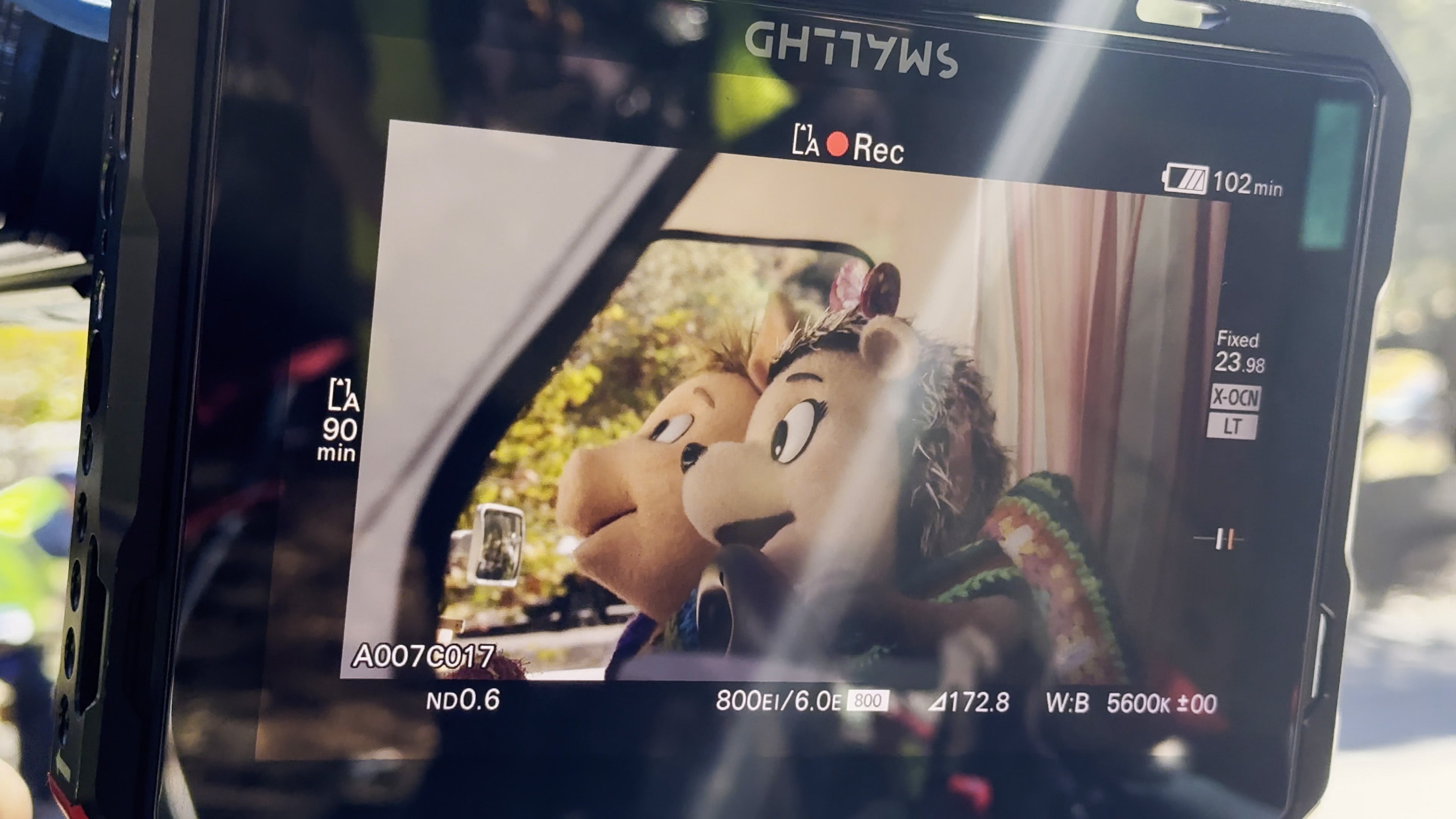
"In order to keep lighting consistent, we would first film in the best type of natural light and just embellish a little just to make sure that we had rich color on our puppets,” Pessah said. “But this is also where the BURANO really helped us because there are scenes that we filmed at the absolute crack of dawn. We were outside at night, and we were waiting for the first available light with a camera at 3200 ISO and filming wide open.”
“Sometimes, we would even use an FX3 at 12,800 ISO to be able to capture every last little bit of that first morning light before the sun came up.”
“Then for scenes that were filmed at midday, our grips were able to tent the set,” Pessah added. “And since our actors are very small in this case, it doesn't take a very big piece of silk to tent the entire set. We then used LED lights off of EcoFlow [batteries] as a way of controlling contrast and being able to light them cinematically in a way that didn't involve running a generator.”
This sensitivity, along with the high-resolution recording options of the BURANO, extended the support into post-production, where subtle inconsistencies could be adjusted. And while most of the special was shot in 6K to reduce post-production costs, Pessah had the ability to switch to 8.6K for VFX when needed.
“Being able to shoot at 6K and sometimes even 8.6K was very important considering that there were going to be some VFX [elements] and we might want to zoom in, in post,” Pessah said. “And knowing that we'd be shooting into the sun a lot, we'd be shooting into backlight a lot, to have the usable latitude we could get from shooting X-OCN LT would help if we needed to do any matching or really pull any extra information on the sky. I knew that the BURANO would have the latitude to make that work."
Find the Right Perspective
With Roxy and Ronald being pint-sized in comparison to the sequoia trees around them, Pessah needed to pair the BURANO and FX3 with lenses that would provide a cinematic quality, but keep distortion to a minimum. A combination of Tokina primes, Fujinon Premista zooms, and Sony G Master lenses in E-mount proved to be the perfect partner for the BURANO, which could be fitted with a PL-mount or an E-mount.
“I wanted lenses that had a cinematic quality to them and had a beauty to them, but I didn't want lenses that would put too much of a stamp on the image — where the image was about the lens and not about what we were actually looking at,” Pessah said. “And one thing about filming puppets is that, because of perspective and because of the size of them, you're often quite closer to them than you would be to a human because their heads are smaller.”
“Because of that, you're actually generally working on a shallower depth of field because so much of depth of field is informed by focus distance. And I found that [the Tokina primes], when stopped down a bit, still had a lot of beauty to them and the contrast in them didn't change dramatically if we're shooting at a T2.8 or a T5.6.”
From the set, Pessah discovered the 40mm to be the perfect sweet spot when used at 6K on the BURANO and, at T4, allowed Roxy and Ronald to stay in focus or be framed in a two-shot without adding distortion.
"In scenes where we were cross-filming, sometimes I'd have a G Master 70-200mm that's cross-shooting with the Tokinas,” Pessah said. “They of course looked a little different, but not so much so that they couldn't be matched with a touch of work in the color grade. The 70-200mm is a phenomenal lens in terms of a full-frame zoom that is easily handheld and f/2.8 across the range.”
“The Tokinas also were pretty rectilinear on the wider end as well, which is very important because, again, working with puppets, you don't want to distort them,” Pessah added. “You want to stay honest to their dimensions. The designers at the Creature Shop think a lot about the relationship between the eyes, the mouth, and the snout of the puppet, and you don't want to tamper with that. You want to honor the intention of their work.”
Filming Amongst Nature’s Splendor
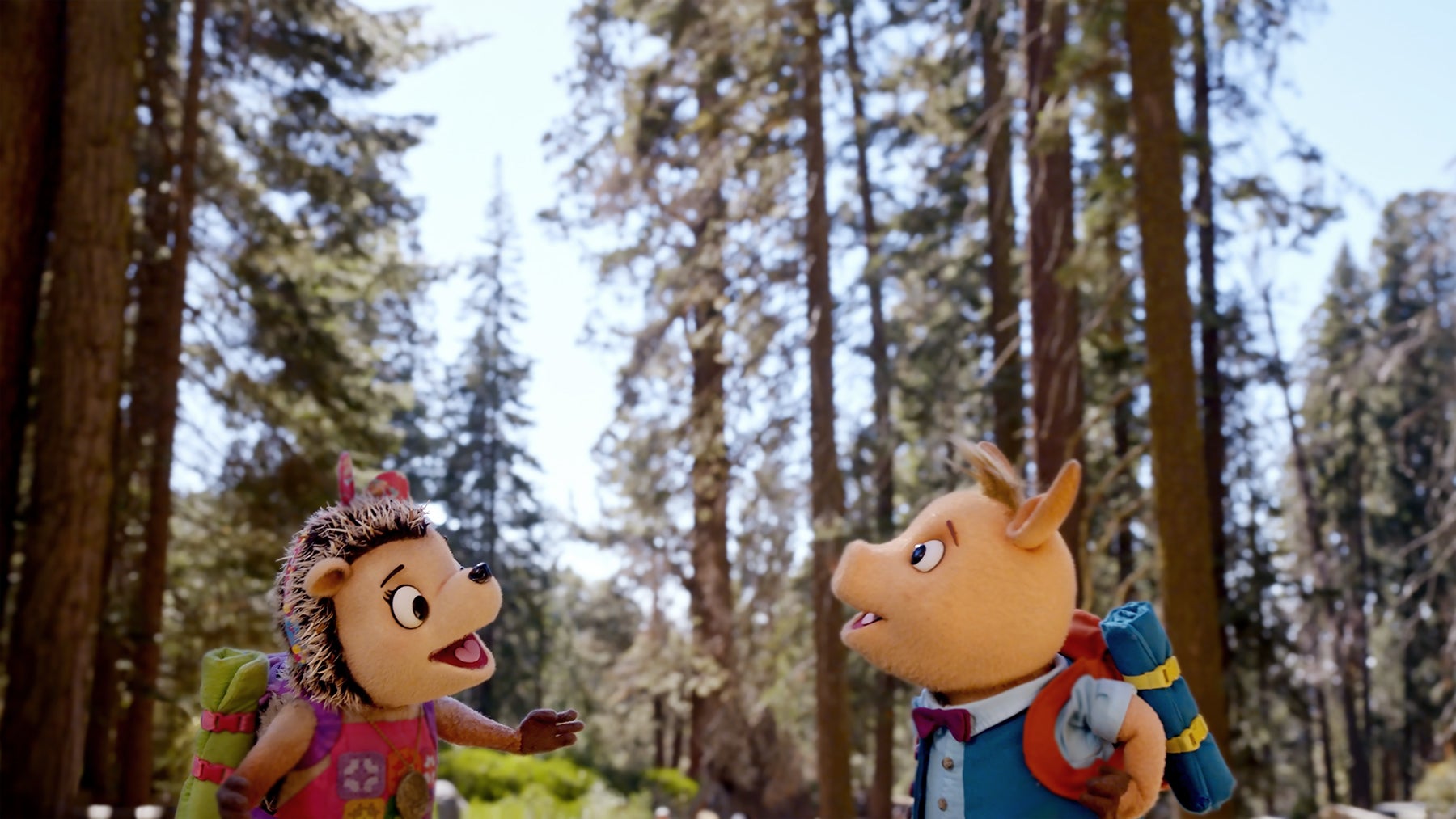
Roxy and Ronald’s adventure in the Wowsabout special isn’t just a musical journey through a national park. Behind the scenes, Pessah and his team worked tirelessly to bring the creative vision to life with an authenticity only found in remote locations of Sequoia National Park.
“We were pretty deep in a national park that took hours to get to, and it was also a very ambitious schedule,” Pessah said. “And we needed cameras that wouldn't let us down. It would have been very difficult to have had a camera problem. I've taken BURANOs out into all sorts of situations, and I knew that they have really good battery life, which helps a lot, and they are reliable cameras.”
“And that's really, really important. This wasn't a situation where you wanted to have a camera that would fail on you.”
Learn more about Wowsabout and the adventure of Roxy and Ronald to see Pessah’s cinematography in action. To explore the BURANO further or to see the other camera in the Sony Cinema Line, visit our Camera Comparison Chart.