05-19-2026 - Interviews & Behind The Scenes
Cinematographer Joe Bressler Makes the BURANO Dance with NYC Ballet
By: Yaroslav Altunin
New York City Ballet (NYCB) is an artistic institution founded in 1948 by famed dancer and choreographer George Balanchine and Lincoln Kirstein. In the decades since, it has become a foundational part of not only New York’s artistic culture but also the world’s. Yet the art created within its walls isn’t something consumed in any media; it is experienced live on stage, where no two shows are exactly alike.
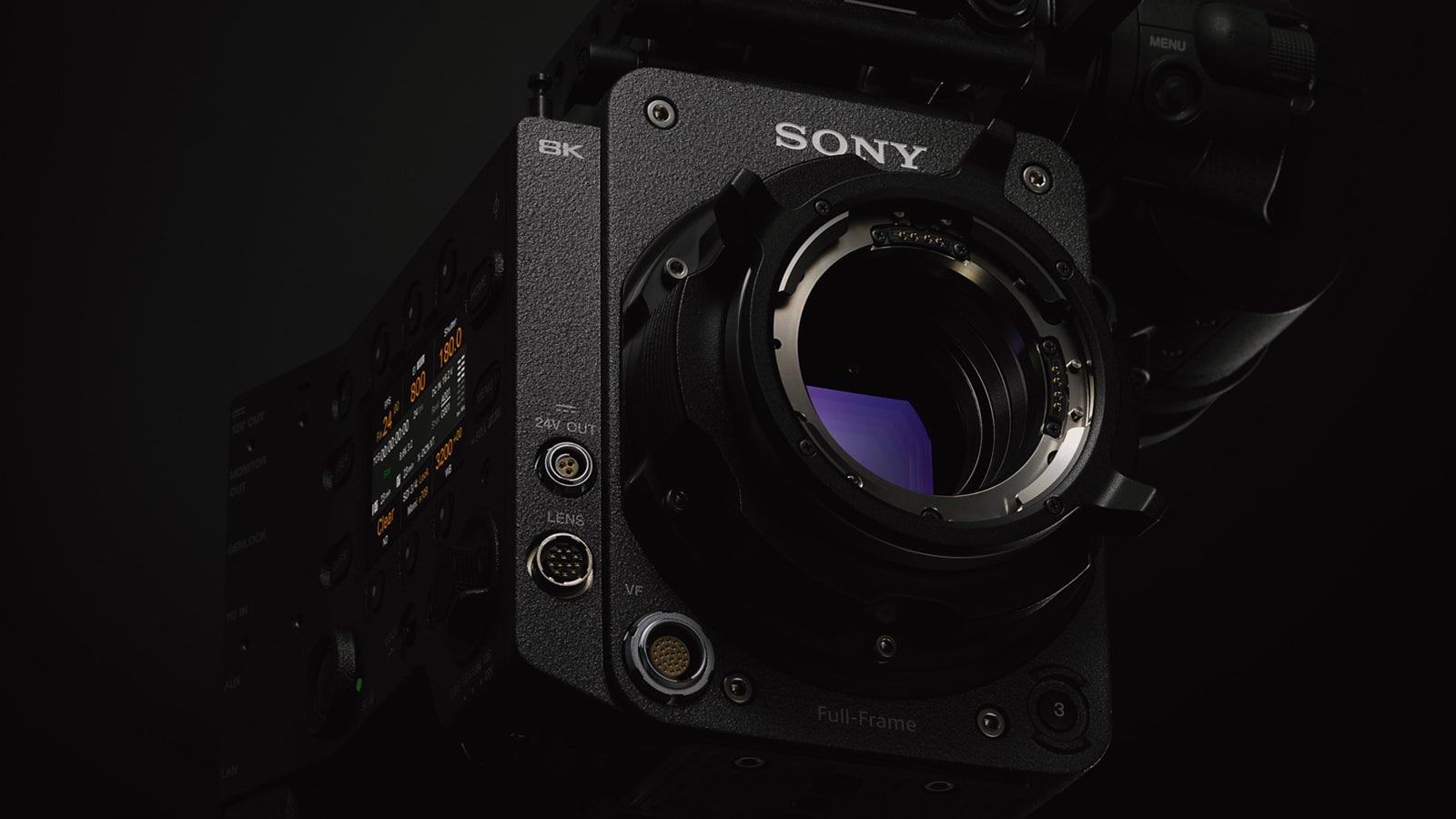
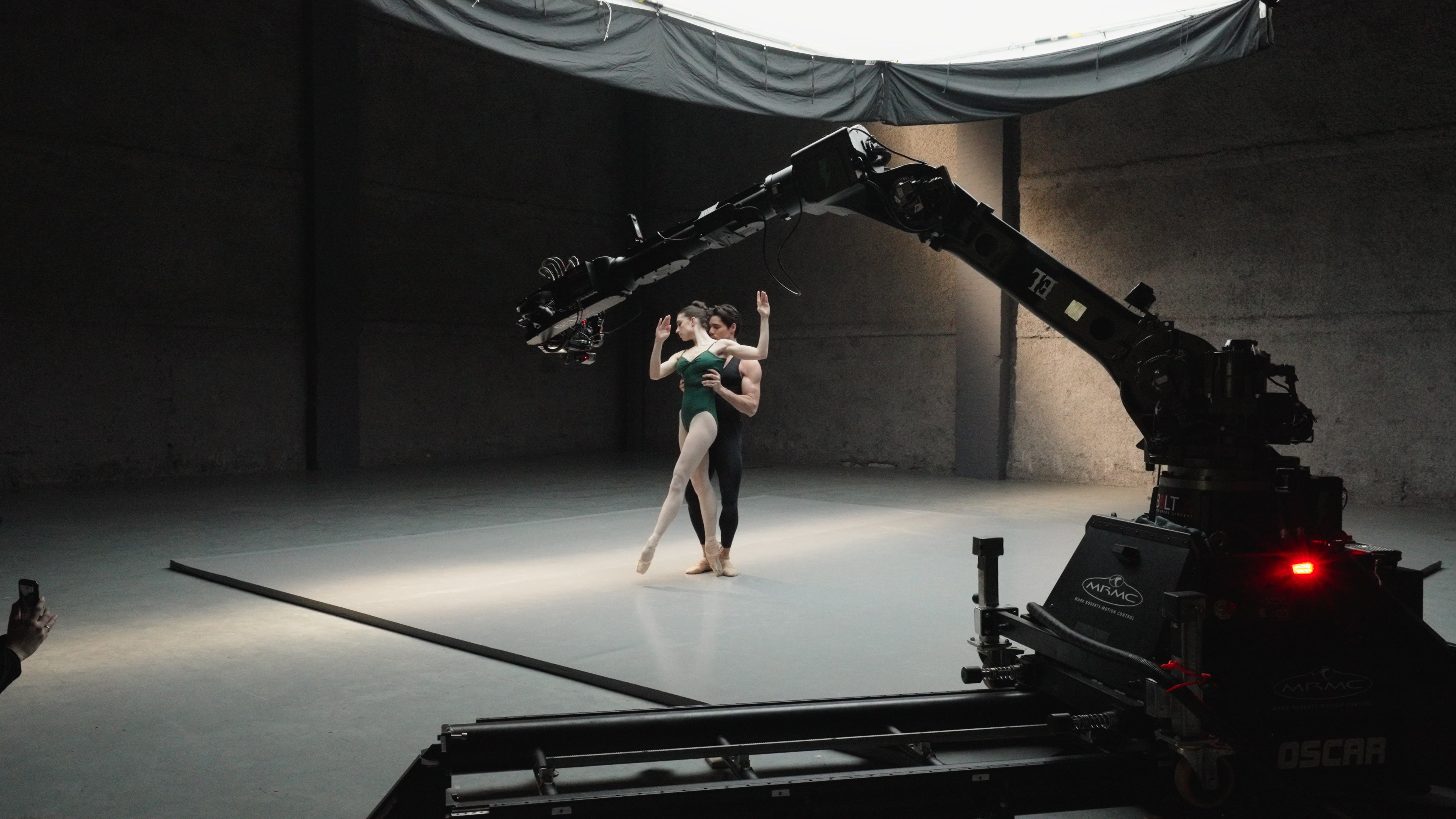
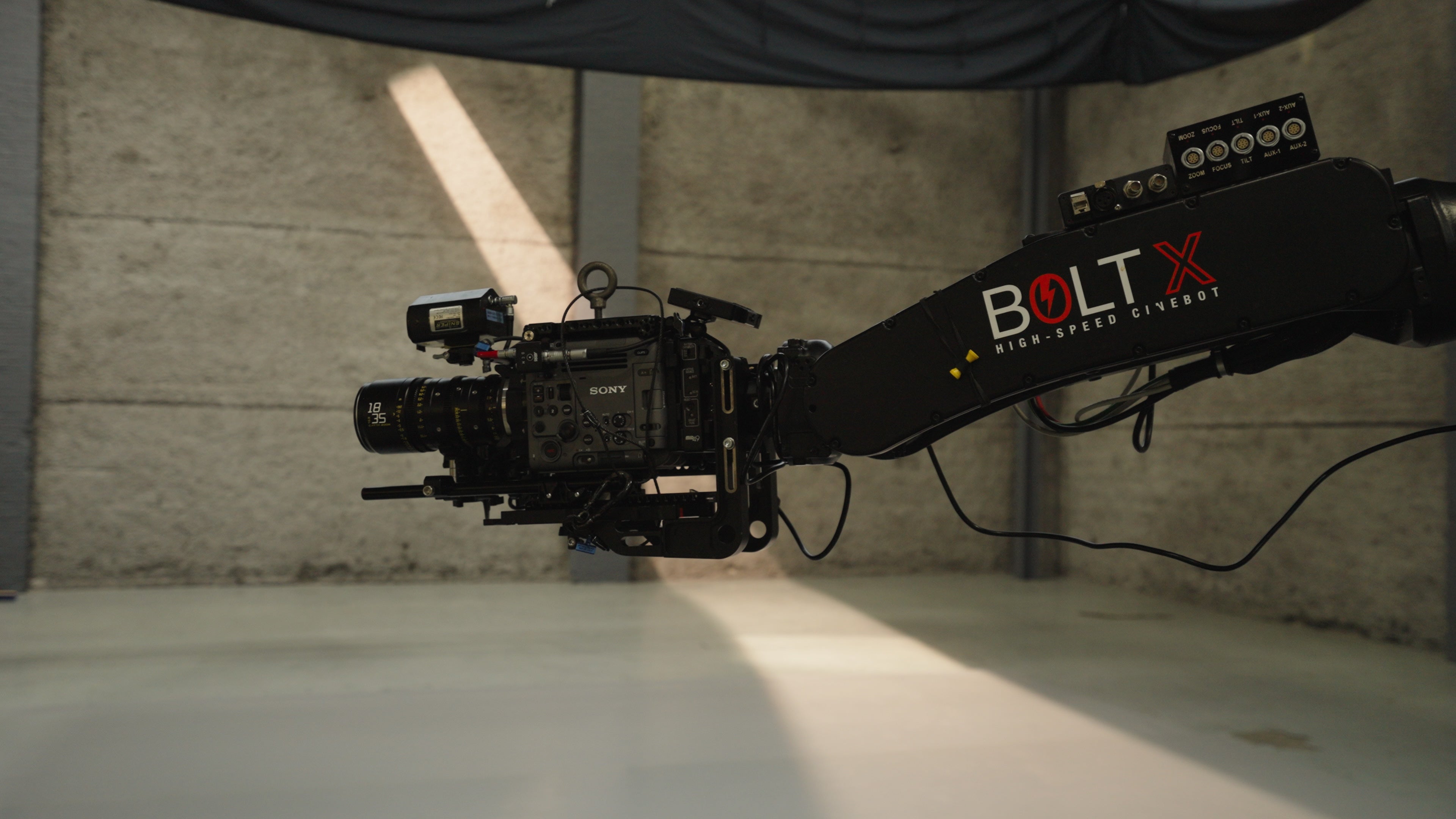
Promoting a ballet to an audience has been a constant challenge for arts organizations around the world, and NYCB has embraced the visual language of cinema to showcase what patrons of the arts will experience in the theatre. For Christopher Wheeldon's Continuum, which made its New York City Ballet premiere during its 2026 spring season, the company brought on director Emilie Silvestri and DP Joe Bressler to craft a one-minute and forty-six-second spot using the Sony BURANO and the MRMC Bolt X motion control camera robot in one take.
Sony Cine sat down with Bressler to learn how much work went into capturing a spot in one take and how the BURANO, with its X-OCN LT codec, lets him push creative boundaries.
Merging the World of Cinema and Ballet
Even though NYCB has embraced cinematic visual language in its marketing, the concept is relatively new, and finding inspiration for new ads comes from unlikely sources. For the Continuum spot, the idea was sparked by an experiment Bressler put together on his own, in collaboration with Rambow Studio Collective, which offers Motion Control rentals in NYC.
“I came [to Rambow Studio Collective] and set up a couple of different shots [with the Bolt X],” Bressler said. “I had my friend who's a model come in, and we did a beverage commercial where she's drinking an OLIPOP soda, and then I did another test with my friend who's a ballet dancer, who I've worked with on another project, and we filmed her dancing with the robot.”
Bressler posted these tests on his social media, with BTS supporting the final composition. This caught the eye of a producer from NYCB, whom Bressler had met during a documentary he did for the ballet company.
“She saw what I had done with the robot, and the fact that I had a dancer doing ballet sparked the idea in her head that maybe we could do something with the robot,” Bressler said. “[They] wanted to do this project for the Continuum ballet, which was perfect for the Bolt X because they had these ideas for how they wanted to move the camera and actually lean into the robotic-ness of the way that the Bolt X works.”
With the Bolt X, one of the largest in the line, Bressler could move the camera 20-30ft at a time in any direction, creating really sharp, angular movement. This creative choice paired well with the visual references that Silvestri brought in.
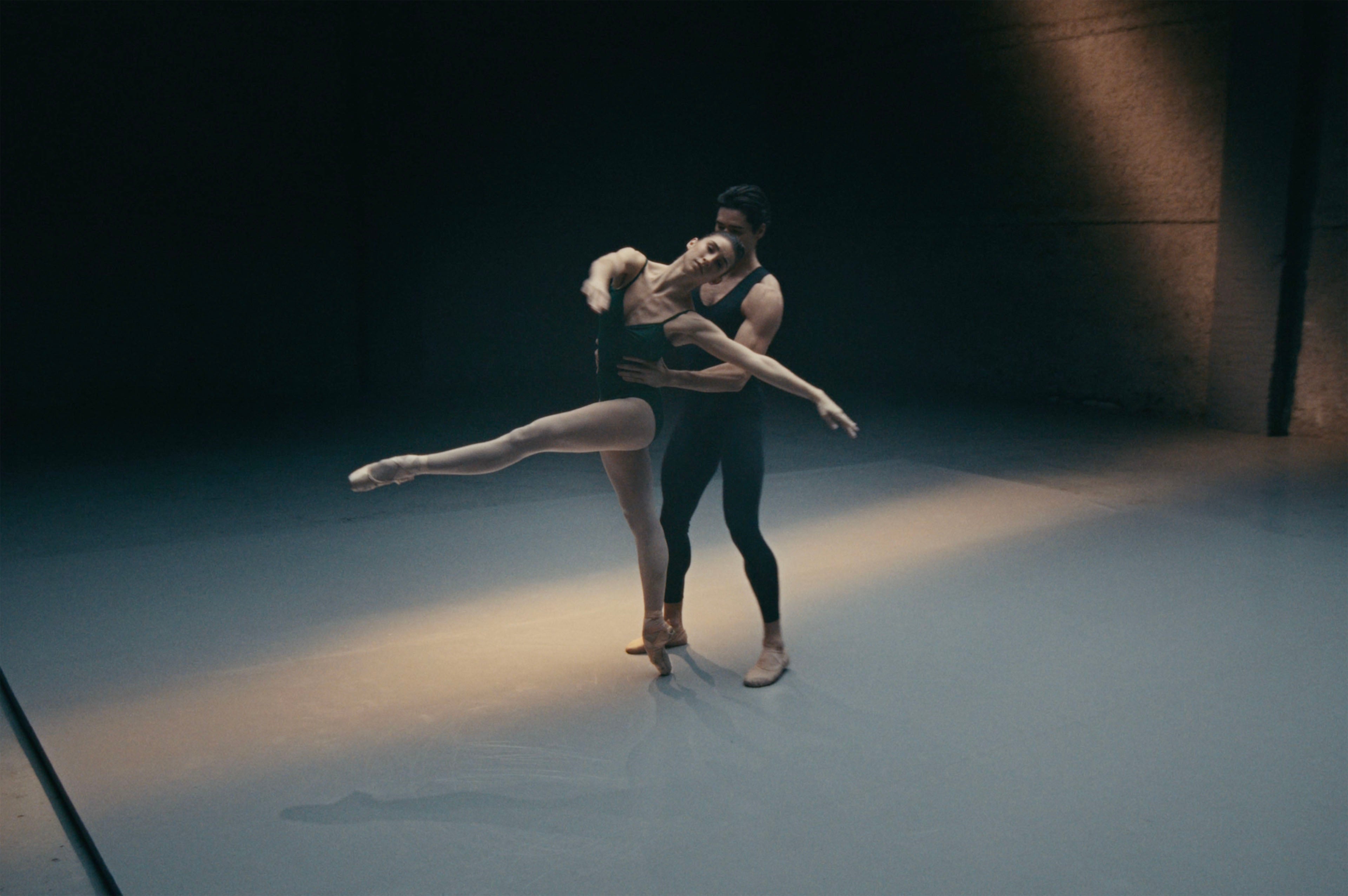
“Emilie came to me with a lot of references of spaces,” Bressler said. “She was looking at photography of brutalist spaces that are concrete and have gaps in the ceiling where light is shining down in a shaft. That was the visual look that they were going for. A very stark, brutalist vibe.”
The aim was to make the spot feel like it was shot in a post-war brutalist space in Germany. At the same time, the space needed to feel theatrical, like a stage, where the dancers would move anywhere and still be in the light.
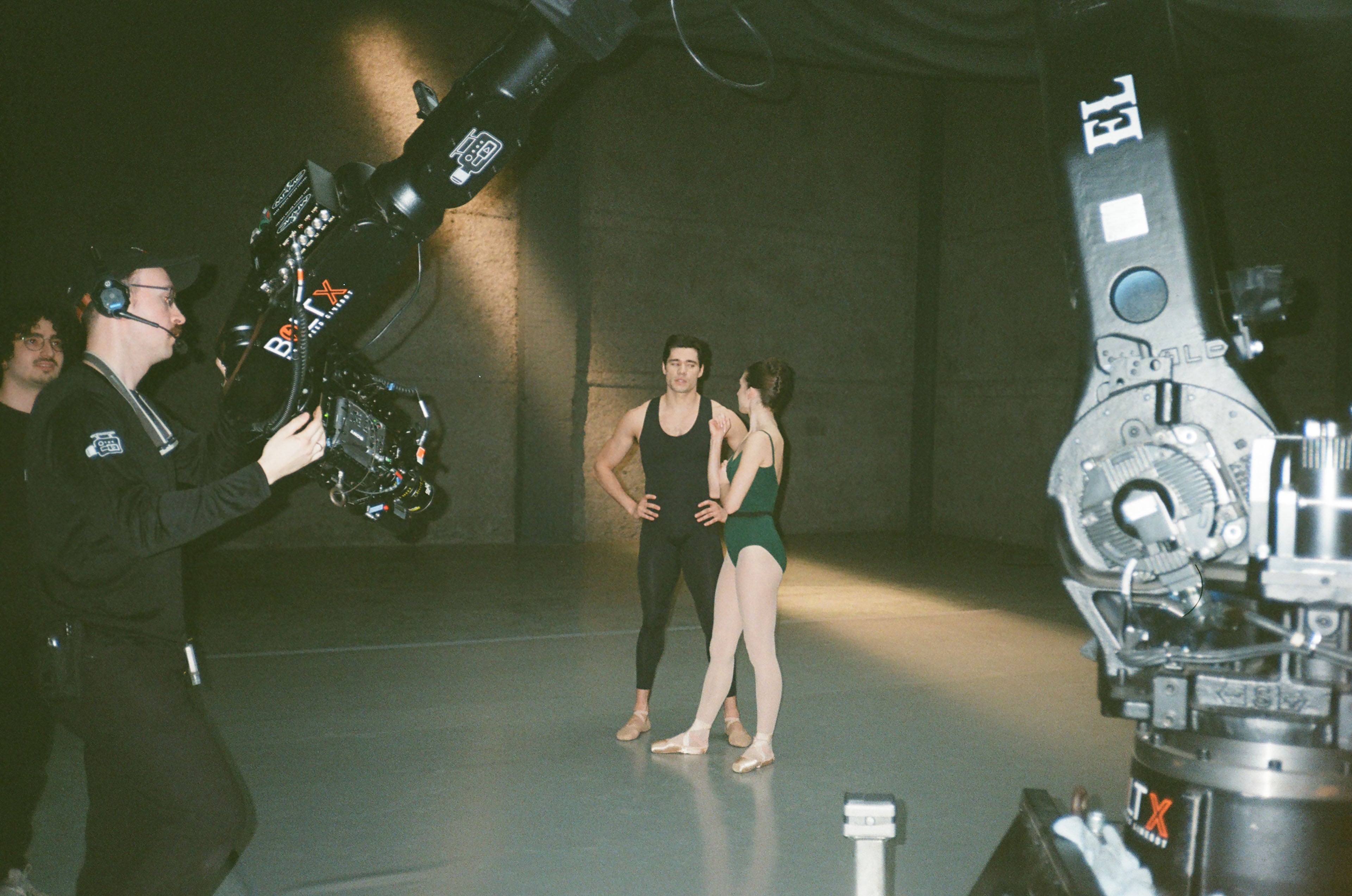
“We really wanted the robot to feel like it was, at times, dissonant from the dance and at other times perfectly matching it,” Bressler said. “In the beginning, the way the camera is moving, it's kind of curious. It’s checking out the dancers from all these different angles. We wanted it to feel like it was spying or surveilling because it was not perfectly synced up with how the dancers were moving.”
“And then halfway through, where the camera is rotating with them, we wanted it to feel like the camera was locking on to them and then finally in lockstep with their movements. We wanted the camera to feel like it had a mind of its own, and it was a third-party observer of the choreography.”
To achieve this, Bressler and Silvestri settled on capturing the entire spot in one take, allowing the dancers' movement and the motion-control robot's motion to be on full display with the distraction of cuts.
“I really love doing one-takes because it's such a fun challenge,” Bressler said. “Inherently, one takes are quite theatrical, and the ballet is also a theatrical experience. So I feel like it's a good fit for ballet choreography to be a one-take. And there was never a point where it needed to be more than one shot.”
“It felt theatrical and immersive because it’s not only one uninterrupted take, but we also are immersing the audience by moving the camera and eventually moving with the dancers.”
Having Confidence in the Camera
Crafting the one-take spot for Continuum demanded that many moving parts come together in a single moment. While the project itself was shot over the course of one 10-hour day, Bressler and Silvestri spent days in prep. First, they captured the dancers and their choreography for reference using a smartphone, before passing the footage to Rambow motion control operator Riley Morgan, who created the physical location in previz and programmed the Bolt X before the team ever got to set.
“Previs was really important to the shoot being successful and to being able to be as creative as you want and really getting results you're gonna feel good about,” Bressler explained. “We remotely did a previs…then we had our prelight, and then we shot for one day.”
All of these steps were critical components, because even with a 10-hour day, the BURANO didn’t roll until late in the day. To capture the final spot, Bressler only had nine takes, and everything needed to be planned ahead.
“We didn't even start rolling until the last two hours of the day because we had the rehearsal, the dancers had to go into hair and makeup, and they had to get warmed up,” Bressler said. “But it was so mind-blowing how perfectly [the dancers] were able to hit their marks.”
“After the first take, it was just so good. All the different parts coming together and seeing that unfold in front of your eyes was really fun. Because we worked on all these things in prep and now I'm just watching the result of it in real-time.”
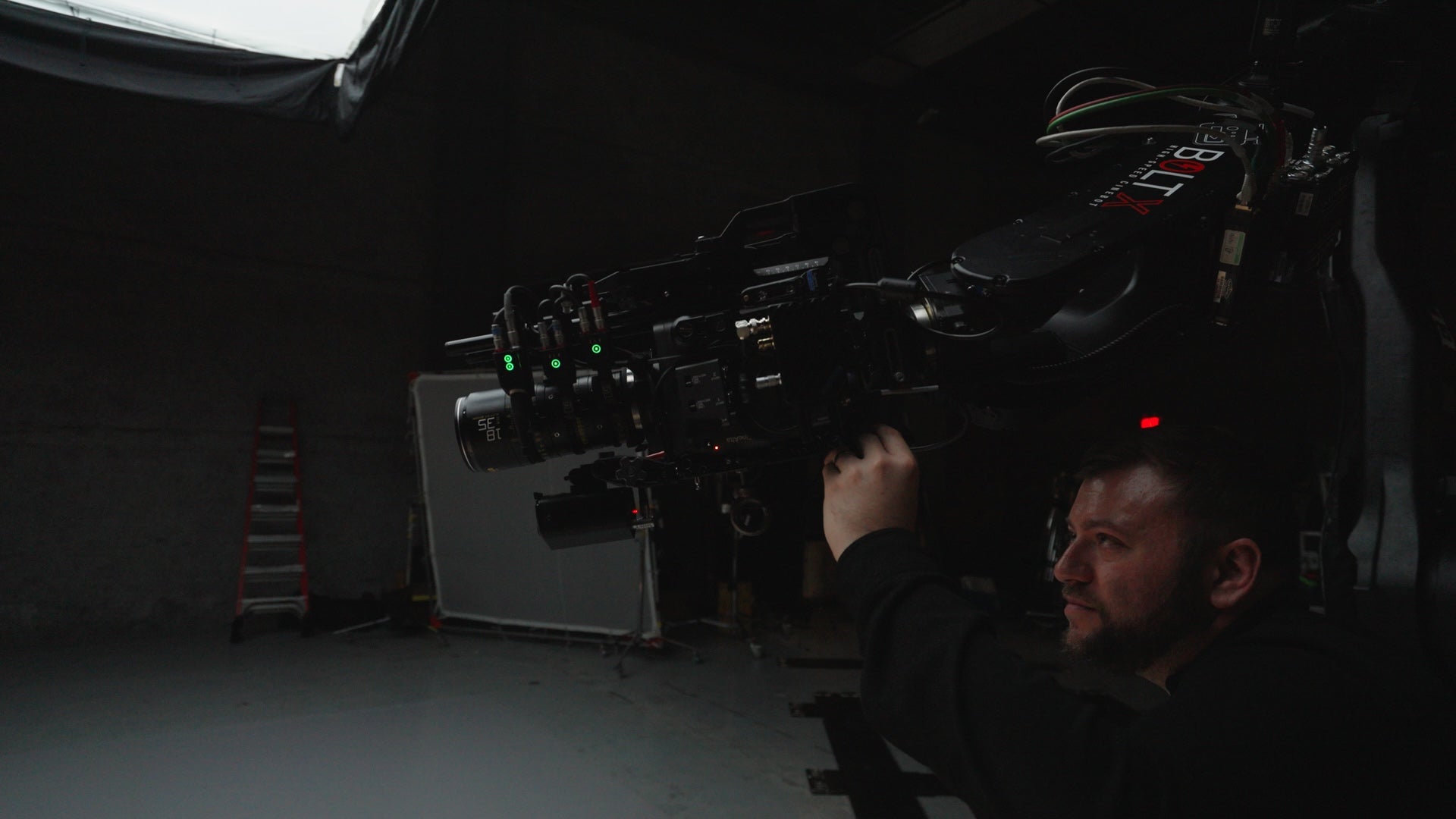
With so much work being done for just two hours of filming, Bressler needed a camera that would be as reliable as his team. With the Bolt-X delivering consistent movement and the dancers performing at their peak, the BURANO had no room for error.
“It was a no-brainer to use [the BURANO] on this ballet shoot, because it's been a part of my workflow to use the BURANO for everything, and I haven't needed to deviate from that. There hasn’t been a project I've worked on where there’s a feature I needed that the BURANO doesn't have,” Bressler said. “It has Super35 and Full Frame options, and the fact that it shoots 8.6K was a huge asset, not really because I use 8.6K all the time — I usually shoot in the 6K Full Frame mode — but if somebody needs 8.6K, I can offer that and not have to rent another camera.”
For Bressler, the expectations his clients have demand that he be a nimble filmmaker who is able to capture everything from social media content to high-resolution ads that play on 30ft billboards. It’s a constant dance to meet creative requirements, strict schedules, and budgets.
“The modern filmmaker is being asked to do so many different things from project to project. We're being asked to fulfill so many different types of deliverables,” Bressler said. “I do stuff that ends up only going to Instagram, and I do stuff that ends up on billboards. Having one camera that I know can run the gamut with its 8.6K, 6K, and 4K, which also has good high frame rate options, is really, really important.”
“Generally, I choose to shoot in the 6K mode on the BURANO because it offers an efficient file size to resolution ratio,” Bressler added. “It’s nice to shoot 6K on projects that require off-speed work as well, due to the fact that you can record up to 60FPS in 6K and not have to change recording modes.”
“For those reasons, I usually default to 6K and didn’t see any reason to film any higher resolution for Continuum.”
Reliability and flexibility are crucial components of Bressler’s toolkit. With Continuum, the BURANO needed to deliver the imagery that he and Silvestri developed in prep within a short time window. On other projects, the camera needs to adapt to other shooting situations and lens options.
“The modularity of the BURANO is really nice. Having the PL mount be native but then having the E-mount underneath it is really cool,” Bressler said. “Because then you can use it on smaller shoots with E-mount lenses, which is something that maybe no other camera can really do in the category. This is just a robust tool that is super flexible."
With so much movement occurring in the one-take for Continuum, Bressler chose a lens that could move with the scene. By programing the lens along side the movements of the robot, the image danced in unison with the camera, dancers, and Bolt X.
“I shot Continuum on the DZO Catta Ace 18-35mm for two reasons,” Bressler said. “You would be surprised at how little room we had actually to frame our dancer and not see our softbox overhead, especially when we were rotating the camera. So we needed to be able to zoom at certain parts of the choreography to frame things out. But we also needed a lens that was really lightweight.”
“They're also pretty clean at a T/4, T/5, and T/6. We wanted a lot of the environment in focus. Even though there's not a lot going on in the environment, we wanted you to feel just like really stark space."
Bringing Dance to Life in the Edit
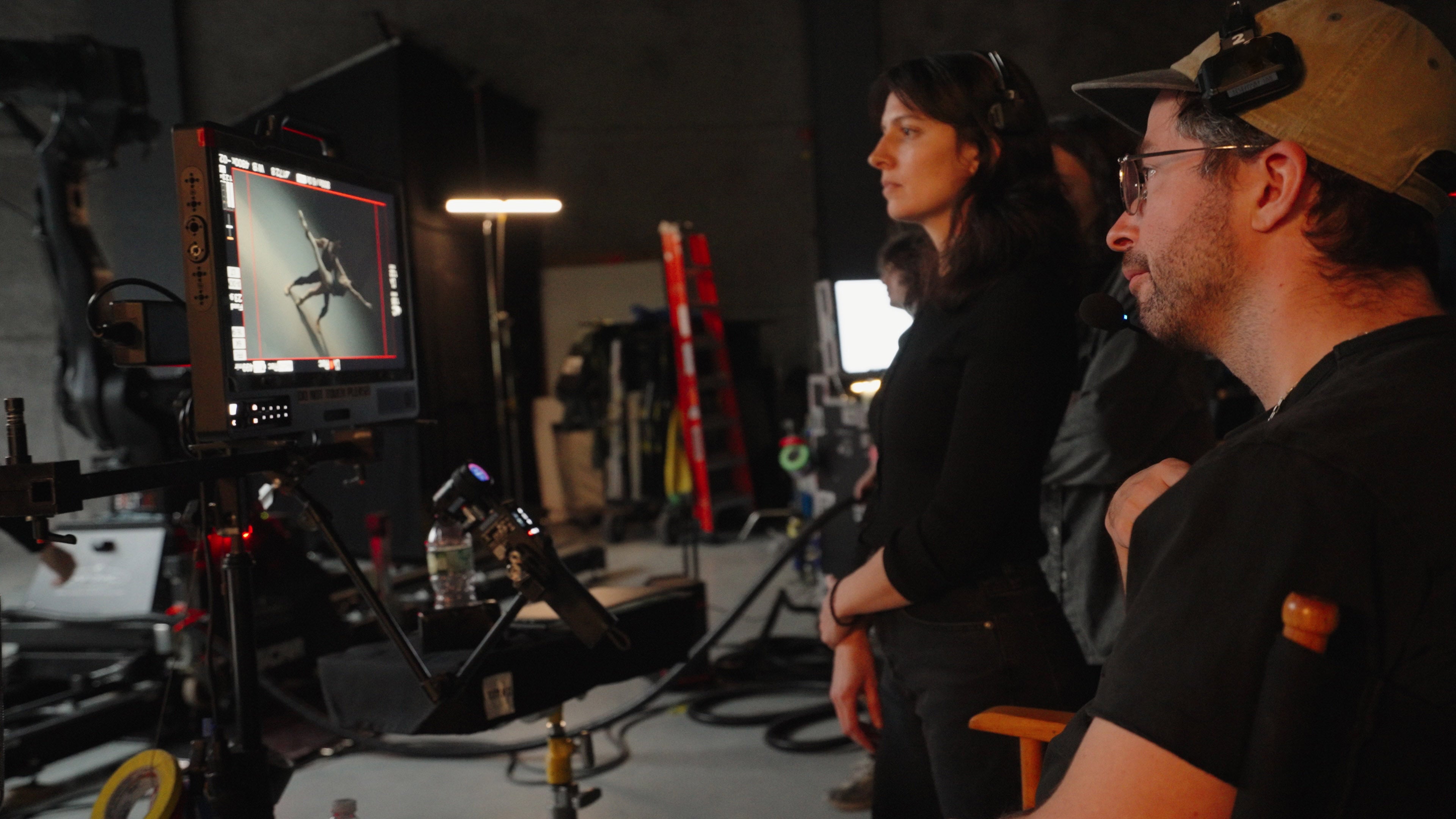
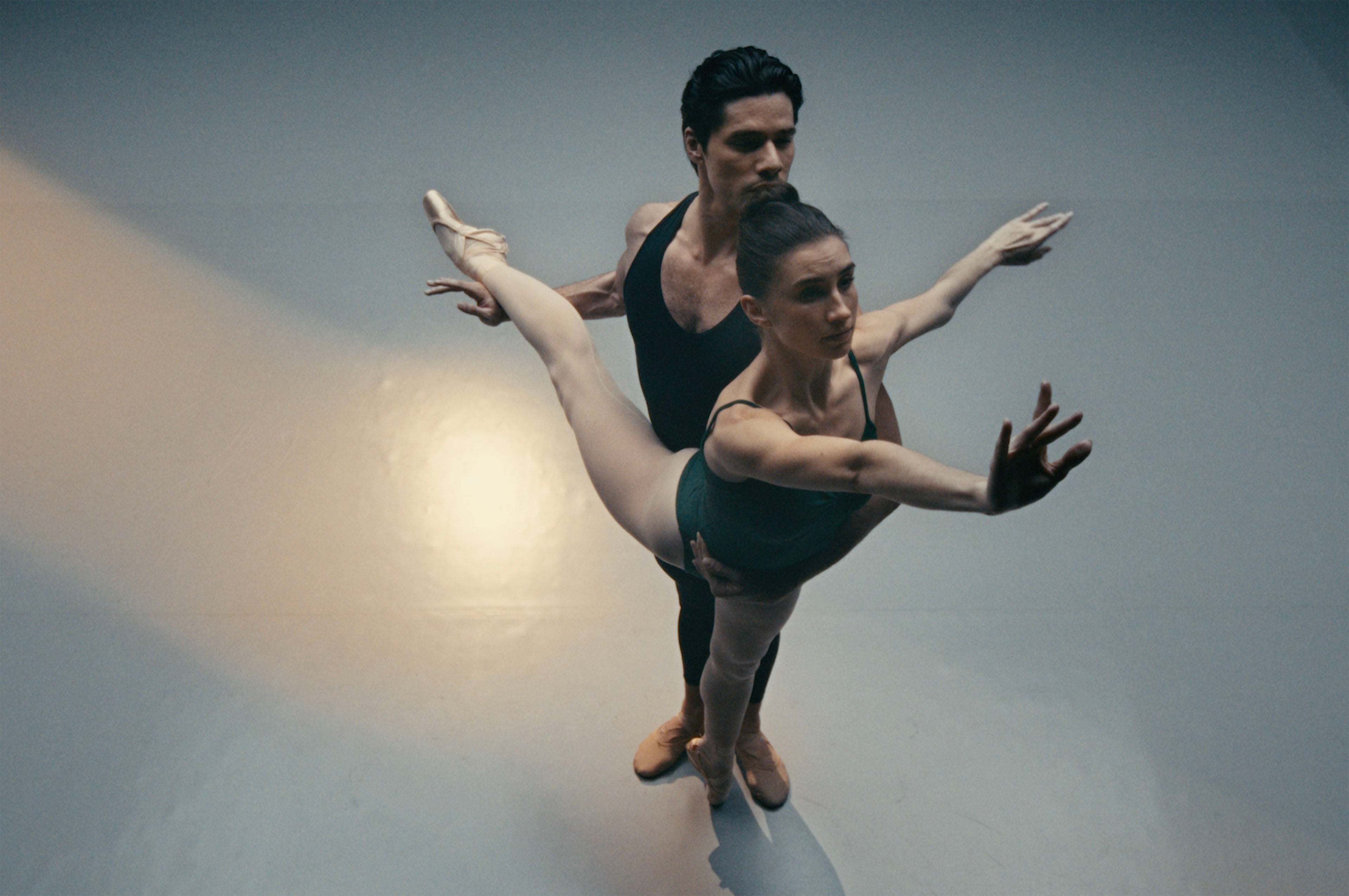
Where the spot for Continuum really came to life was in the edit. Bressler lit the scene with three SolaFrame 3000 lights that he layered over each other to create a shaft of light, pairing it with several SkyPanel S60s that were built as a soft box above the dancers. The SolaFrames also moved with the scene just like the camera and the dancers, creating the feeling of time passing. The two sets of lights were set to different color temperatures, and with the power of the X-OCN LT codec from the BURANO, Bressler was able to push the image to meet his creative expectations.
“I love the XOCN LT codec,” Bresler said. “I think that's such a reasonable [codec] in terms of getting a phenomenal image, but the file sizes are very, very good.”
“We pulled the image apart quite a lot in the grade because on the shoot, we had different color temps for the SolaFrames and the SkyPanel S60s lighting from overhead,” Bressler added. “In the grade, we actually pushed how far we had differentiated the color temps on set between our SkyPanels and our SolaFrames. We really warmed up that slash of light in particular.”
“That was a really good test. I hadn't torn apart the BURANO image that much before Continuum, and I was really impressed with how much we were able to make decisions in post about the color temps of our top light and our roaming slash of light.”
Performing Again and Again
Unlike the actual ballet, the Continuum spot is a performance that can be seen again and again. Not just from the dancers, but from Bressler, the Bolt X, and the BURANO. It is the culmination of creatives and their tools working at their best.
“What I value in a camera is something that just gets out of my way and functions as intended,” Bressler shared. “Roger Deakins always says, ‘Good cinematography is something that you can't really notice.’ And a good camera, to me, is a tool that I don't really notice. It just works.”
“I'm introducing the BURANO to directors, production companies, or agencies that aren't familiar with it, and the last thing I want to happen is for there to be some sort of surprise. With the BURANO, it just performs again and again. We're doing work with it that we're really happy with in such a wide variety of applications. I’m doing docs with it, I'm doing commercials, I'm doing music videos, and dance choreography, and across the board, it's just working really well.”
“[The BURANO] is something I feel really good about bringing on projects. It’s perfect because sometimes I need something that can be smaller and sometimes I need something that can also be flexible when built out bigger,” Bressler concluded. “And I love the flexibility of use it with FX3 when I need to. The FX3 and the BURANO are basically all that I've been using in the last couple of years.”
NYCB’s production of Continuum will conclude on May 20th, 2026. To explore the ballet in more detail, visit nycballet.com. To learn more about the Sony BURANO or the other cameras in the Sony Cinema Line, visit our Camera Comparison Chart.