04-09-2026 - Interviews & Behind The Scenes
“Buddy”: How a 90s Children’s Television Series Inspired a Sundance Horror Film
By: Yaroslav Altunin
Director of Photography Zach Kuperstein has honed his craft in the shadows, making his mark on the horror genre with films like The Vigil, Barbarian, and The Eyes of My Mother, for which he also received an Independent Spirit Awards nomination.
After exploring the world of thrillers, Kuperstein returned to the horror genre to lens Buddy, a film that follows a group of amnesiac children living in the episodic world of a once-popular children's television show hosted by the tyrannical anthropomorphic unicorn. Directed by Casper Kelly and written by Kelly and Jamie King, the story unfolds across several visually striking worlds that slowly intertwine.
Sony Cine sat down with Kuperstein to learn more about his creative approach, how he deconstructed his image to mimic a 90s children's television series, and how the Sony VENICE 2 gave him the versatility to capture the visual language of each distinct world in the film.
Finding the Visual Language of Buddy
To understand the story of Buddy, one would need to first look into the late-night cartoon era of the early 2000s and 2010s, which spawned viral hits like Too Many Cooks and other unorthodox specials. These took classic imagery, mixed it with the nostalgia of late-night infomercials and long-forgotten sitcoms, and broke continuity to side-step into the uneasy realm of laminal space and, finally, horror.
Kelly had directed three of these specials, including Too Many Cooks, and brought this unique storytelling creativity to Buddy. Understanding this storytelling approach became be Kuperstein’s first challenge.
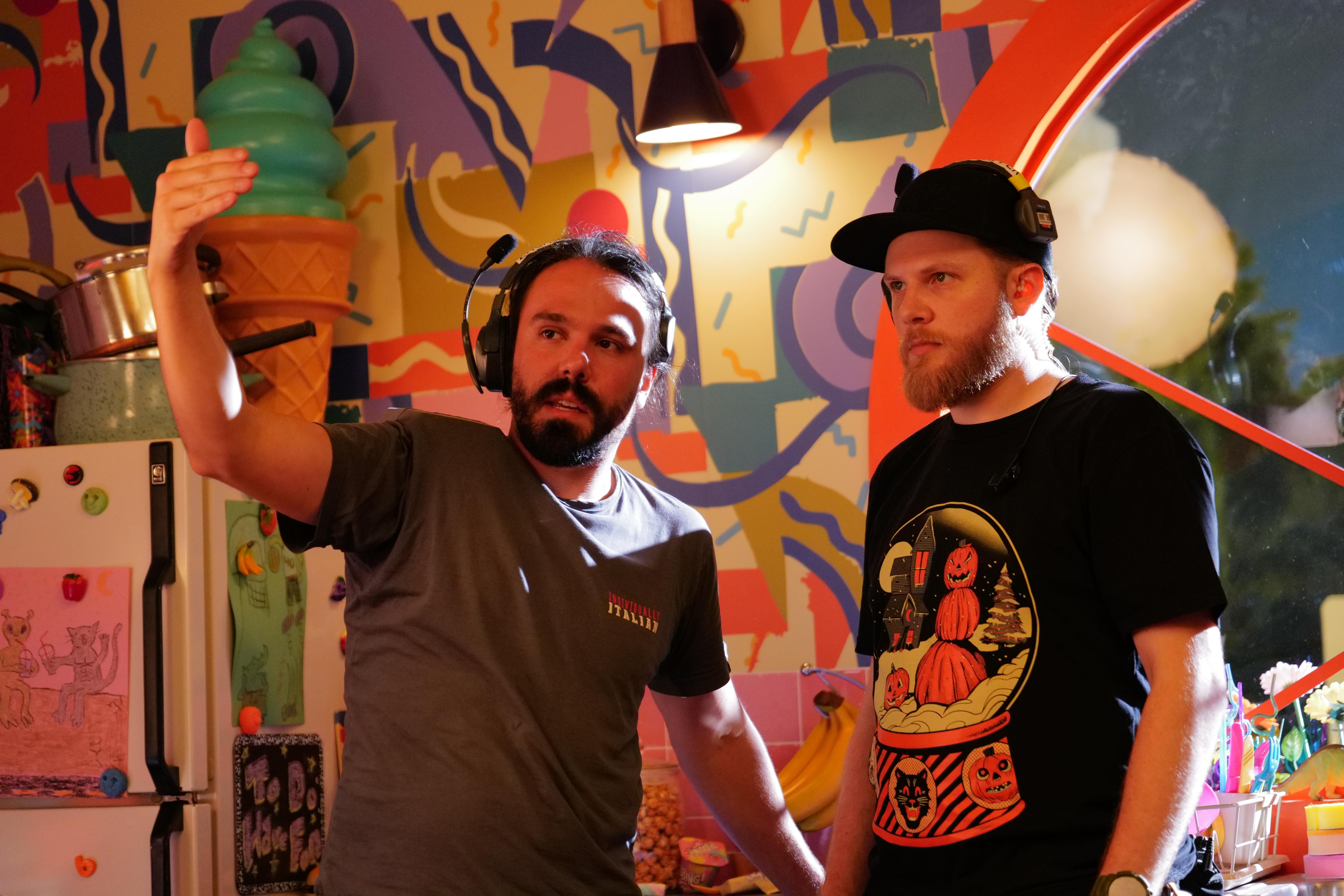
“When [BoulderLight Pictures] brought the script to me, I was like, ‘This is nuts. I love it,’” Kuperstein said. “This film has three different worlds in it…so I flagged that with [Casper] when we first started talking about it, especially the parts that are in Buddy's world, which are meant to feel like a 90s kids TV show.”
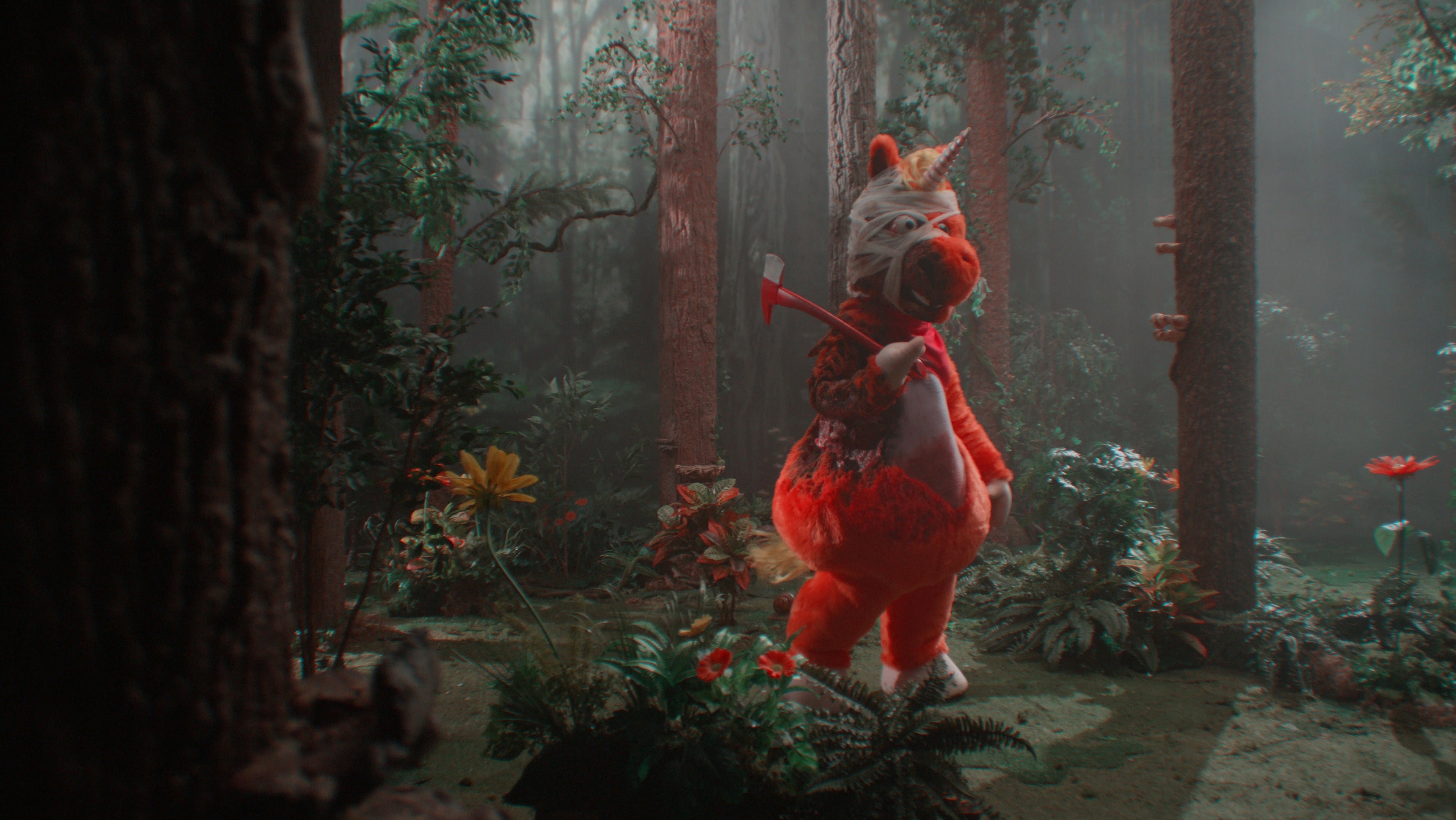
“It's a wild story. It’s hard to pitch, but it takes place inside of a 90s kids TV show, a la Barney & Friends, and instead of a purple dinosaur, there's an orange unicorn,” Kuperstein explained. “And he's got his band of kids who are following him around, they sing songs, all that. And it starts to go off the rails when one of the kids doesn't want to participate in the dancing episode.”
Kuperstein’s first question for Kelly was “How far do you want to go on that?” The initial idea was to avoid emulating the look of Buddy’s world and instead shoot it like the children's television shows it was based on. While Kelly was immediately on board, that would be another obstacle to overcome in order to find the visual language Kuperstein wanted.
“I want to do Barney as true as I possibly can. At first, we tried to do it with real analog TV cameras, and I did a lot of research to figure out what cameras were used to shoot the early seasons of Barney,” Kuperstein shared. “They were using Ikegami’s…the earliest generation of three CCD cameras.”
With help from Mike Sime at Visual Alchemy, a company that specializes in older broadcast equipment, Kuperstein tested both Ikegami and Sony broadcast cameras from the era of Barney & Friends. However, because Buddy’s world made up the majority of the film, the older equipment wouldn’t have been as reliable and, on some occasions, cost-prohibitive due to the need for ancillary equipment. But from these tests, Kuperstein developed a three-step process to degrade his digital image and emulate the look he and Kelly wanted.
“I broke it into three different components of the look. One of them being the color treatment, which would be encapsulated in a LUT,” Kuperstein said. “To make that match work, we shot side by side with a BURANO [and VENICE 2], even though we were going to use the VENICE 2 on set as they had the same color signs. We put them next to these broadcast cameras, shot chip charts, and faces under different lighting conditions. Then I did manual color matching from one to the other to create the color treatment and create the contrast and the overall feel of the colors.”
The second step would be to develop a filter that would apply scan lines, image degradation, and other artifacts from cameras of the 90s. Using the reference material he shot at Visual Alchemy, Kuperstein finally tuned the filter in his color grading suite to match the old Ikegami and Sony broadcast cameras.
“The third element was the optical path. It's just very different when you're shooting with modern cinema lenses, and the depth of field is quite different than a two-thirds-inch broadcast sensor,” Kuperstein said. “So we used lenses that would be used at the time. We found these Fujinon zooms; I think they were 8.6-172mm zooms, and they cover a 2/3-inch area. They create a very small image circle on a giant VENICE 2 sensor.”
“So I used the lowest resolution that I could on the VENICE 2 and then cropped into that. Per my calculations, it actually ended up being about close to 2K resolution at that size. A little less than that because we also wanted the aspect ratio of 4:3,” Kuperstein added. “So with those lenses and that small part of the sensor that created the optical path part of it, mixing that with the degradation effects, and with the color effect, made a pretty complete and convincing emulation.”
Why Kuperstein Chose the Sony VENICE 2 to Capture Buddy
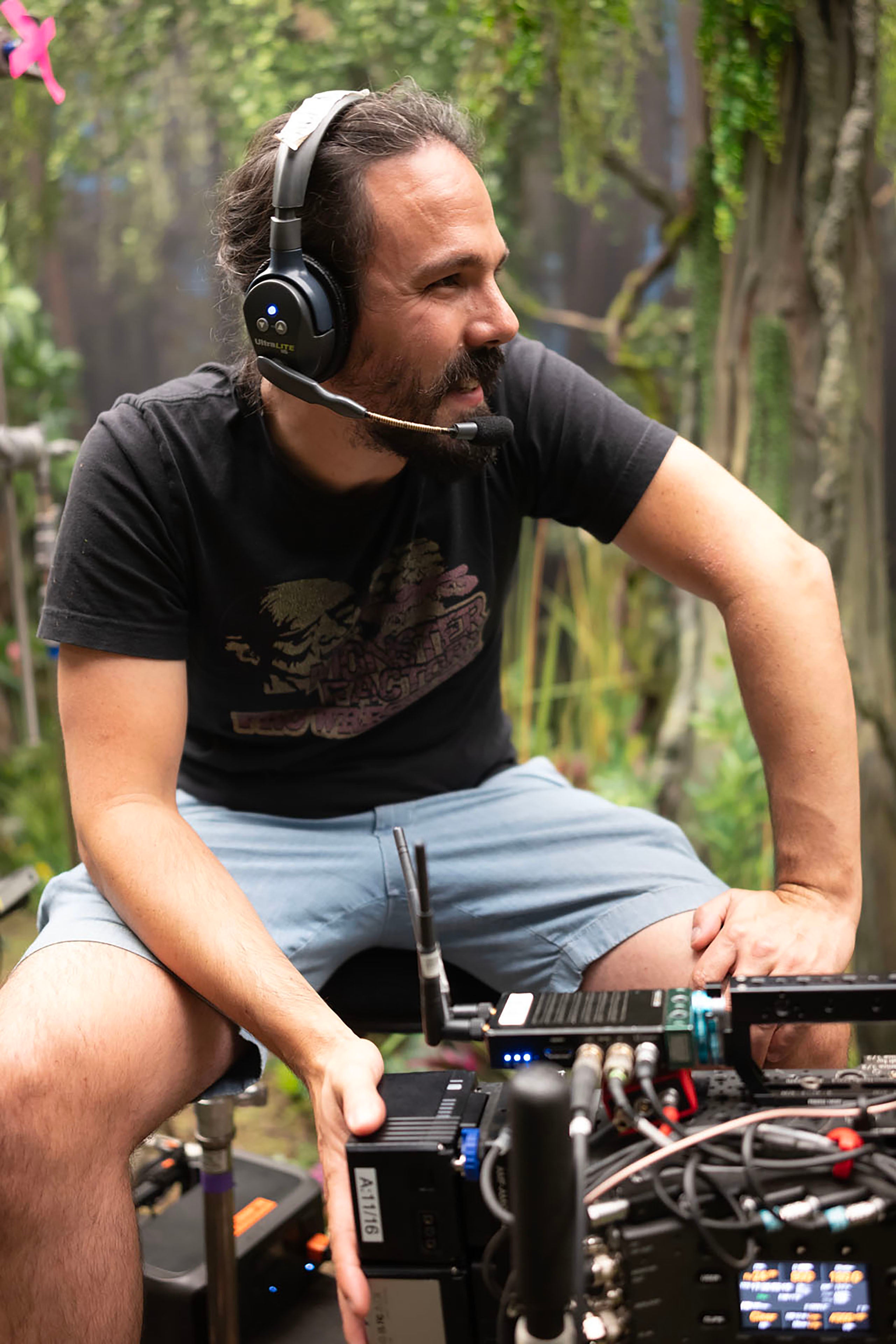
To avoid spoilers, Buddy’s world is only a part of the story. This meant Kuperstein needed a camera that could not only handle his emulation workflow but also capture the real world and other places within the film — spaces with distinct looks of their own. Having worked on both the VENICE and VENICE 2, Kuperstein knew he could rely on the camera during production and also push the image in drastic ways.
“[The VENICE 2] has become my go-to now. The first movie I did with the VENICE was Barbarian, then I went to the VENICE 2 after that with Woman of the Hour, and the last three movies I've done have been with the VENICE 2,” Kuperstein said. “The main thing I like is the single-stop NDs. And I’ve never had any issues with the color. My colorist really likes working with it, and he can usually get a lot of details out of the shadows if I need it.”
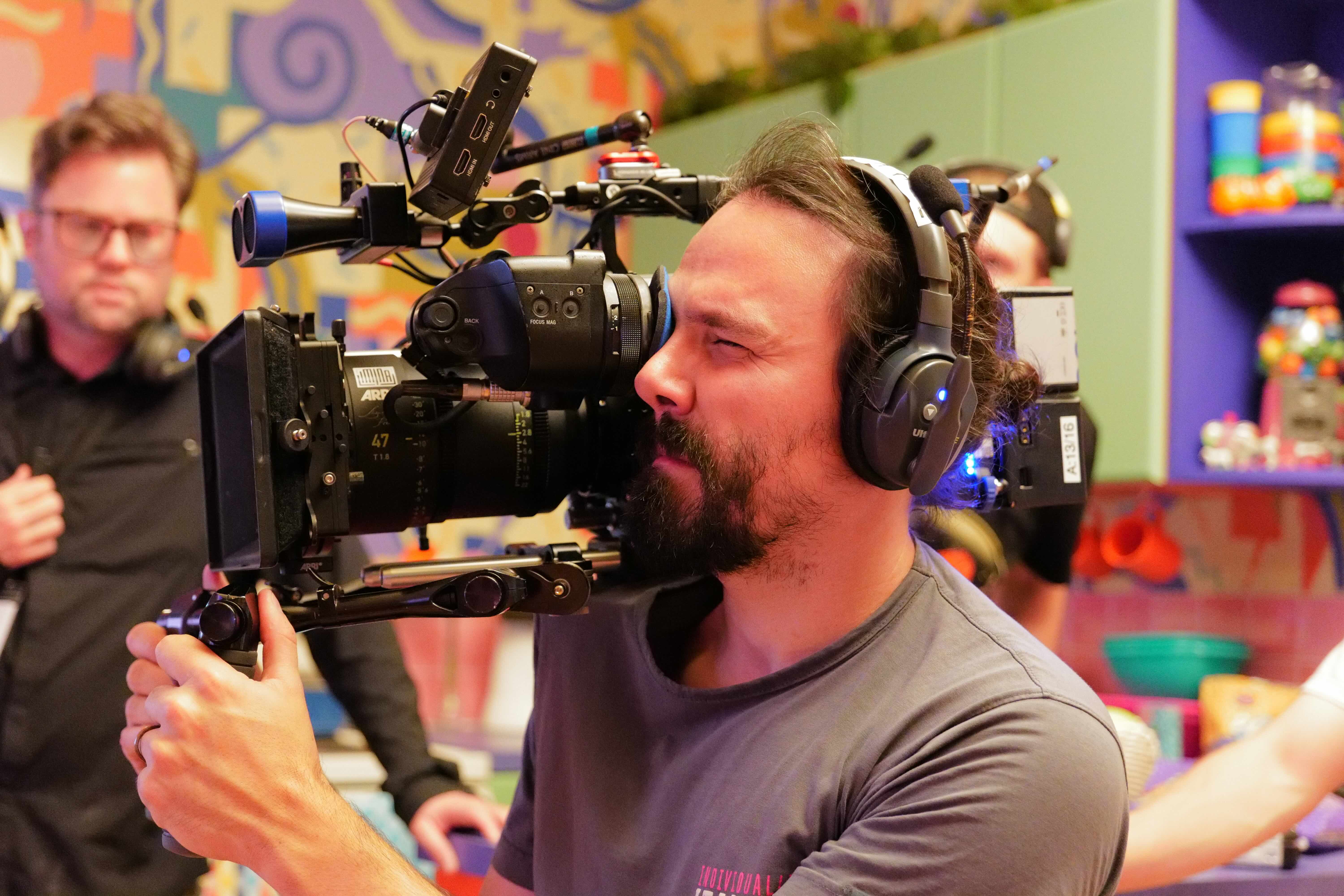
“I started using EL Zone on this project and quickly realized where [exposure] goes too far in either direction,” Kuperstein continued. “And the RIALTO mode is very helpful when you need to fit in a tight space, which came into play in the house pretty often on [Buddy]. The handheld build is also very functional when you put it on your shoulder.”
Pushing a Genre Into New Directions
Between capturing Buddy’s world, the real world, and whatever lies in between, it feels like Kuperstein is crafting several movies at once. But the cinematographer is no stranger to shooting films with unorthodox stories. And as he pushes the visual language of horror past its boundaries, the Sony VENICE 2 keep ups, no matter what imagery Kuperstein and his creative collaborators want to make.
Buddy premiered at the 2026 Sundance Film Festival as part of the Midnight program and is set to open exclusively in theaters on September 4th, 2026. To read more about the film, visit the film’s Sundance page. To learn about the Sony VENICE 2 and the other cameras in the Sony Cinema Line, visit the Camera Comparison Chart.


