02-10-2026 - Filmmaker Interviews
“The Rip”: How Juan Miguel Azpiroz, AEC, Weaved Together Film Noir Shadows and Silhouettes
By: Yaroslav Altunin
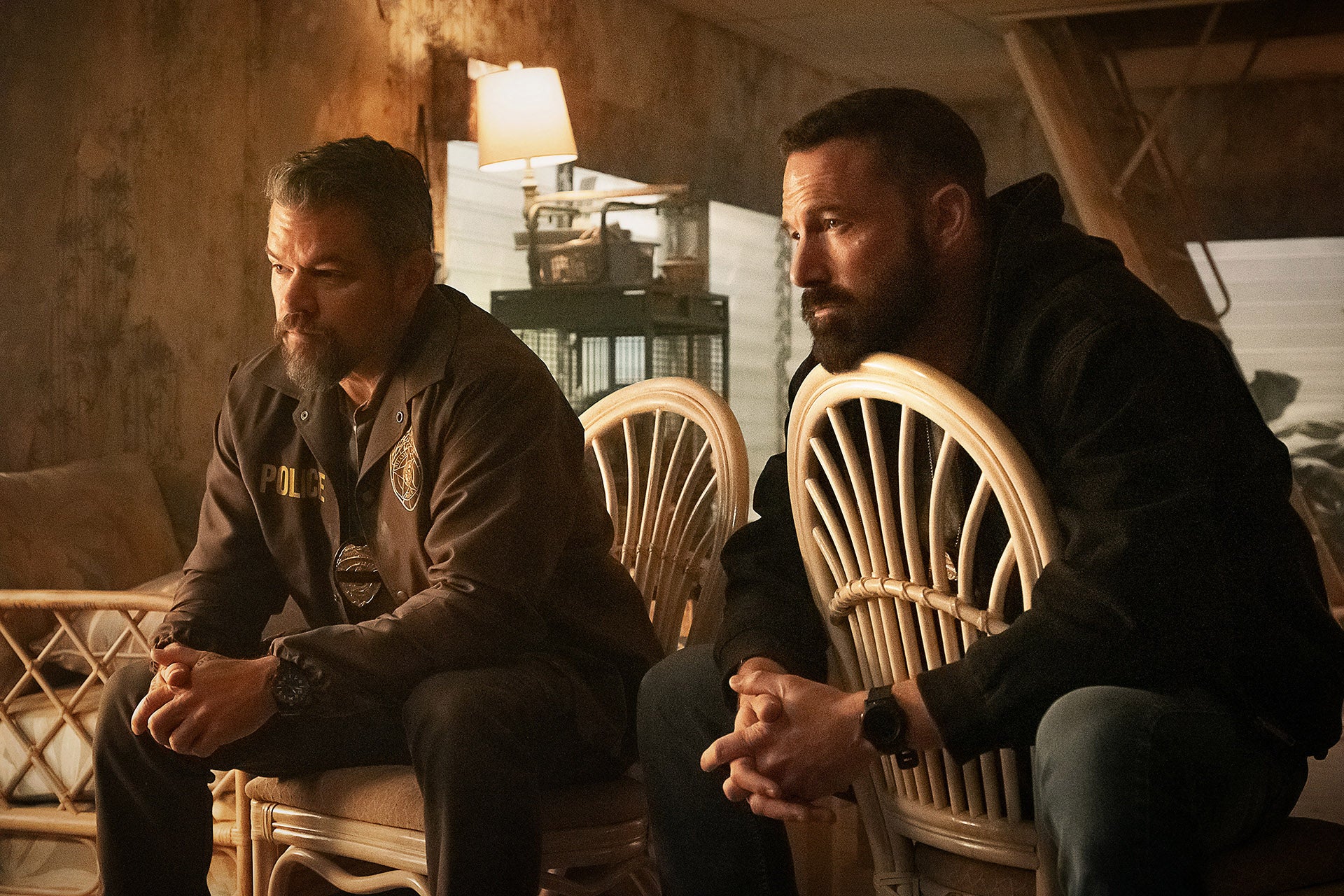
After nearly a dozen films, Ben Affleck (Air, Zack Snyder's Justice League) and Matt Damon (Oppenheimer, The Last Duel) once again star opposite each other in Netflix’s The Rip, a modern noir thriller Joe Carnahan (Narc, Smokin’ Aces). Also starring Steven Yeun, Teyana Taylor, Sasha Calle, Catalina Sandino Moreno, with Scott Adkins, and Kyle Chandler, the film follows a group of Miami cops who are torn apart by distrust after seizing millions in cash.
To capture The Rip, Carnahan brought on long-time collaborator Juan Miguel Azpiroz, AEC (Shadow Force, Copshop), who crafted a visual language that defied expectations, using shadow and silhouette to elevate the story.
Sony Cine sat down with Azpiroz to learn how he and Carnahan crafted the film’s visual language, why they sometimes ignored their prep, and how traditional theater inspired a pivotal scene.
Building The Visual Language of The Rip, One Scene At a Time
While most of the film takes place in one location — a residential home — The Rip is peppered with both intense action scenes and intimate character moments that throw the viewer off balance. As a thriller, the story plays with that balance, throwing expectation out of the window, something that Azpiroz and Carnahan tapped into during production.
“This is my eighth movie with Joe Carnahan, my fourth movie with him as a director, and then I made another four with him as a producer,” Azpiroz said. “We have such a great collaboration. We understand each other so well, and I am so into the world he creates as a screenwriter and as a director.”
“But on top of that, I think this is one of the best scripts that he has written, and he has written a lot of good scripts. It's a really well-balanced action/thriller/character-driven drama. It’s a delight to read and even more to shoot.”
This collaboration was built on the sensibilities shared by the cinematographer and director. Even though they grew up in different countries and cultures — Carnahan in Michigan and Azpiroz in Spain — the two quickly discovered a shared love for the same music, cinema, and art.
“Joe and I, after such a long time working together, have developed our own way of working on movies,” Azpiroz said. “From the get-go, it was really easy to connect with him. When we're talking about a scene, and I'll say, ‘Hey, do you remember that movie?’, I don't even need to finish the sentence because he knows exactly what I'm talking about.”
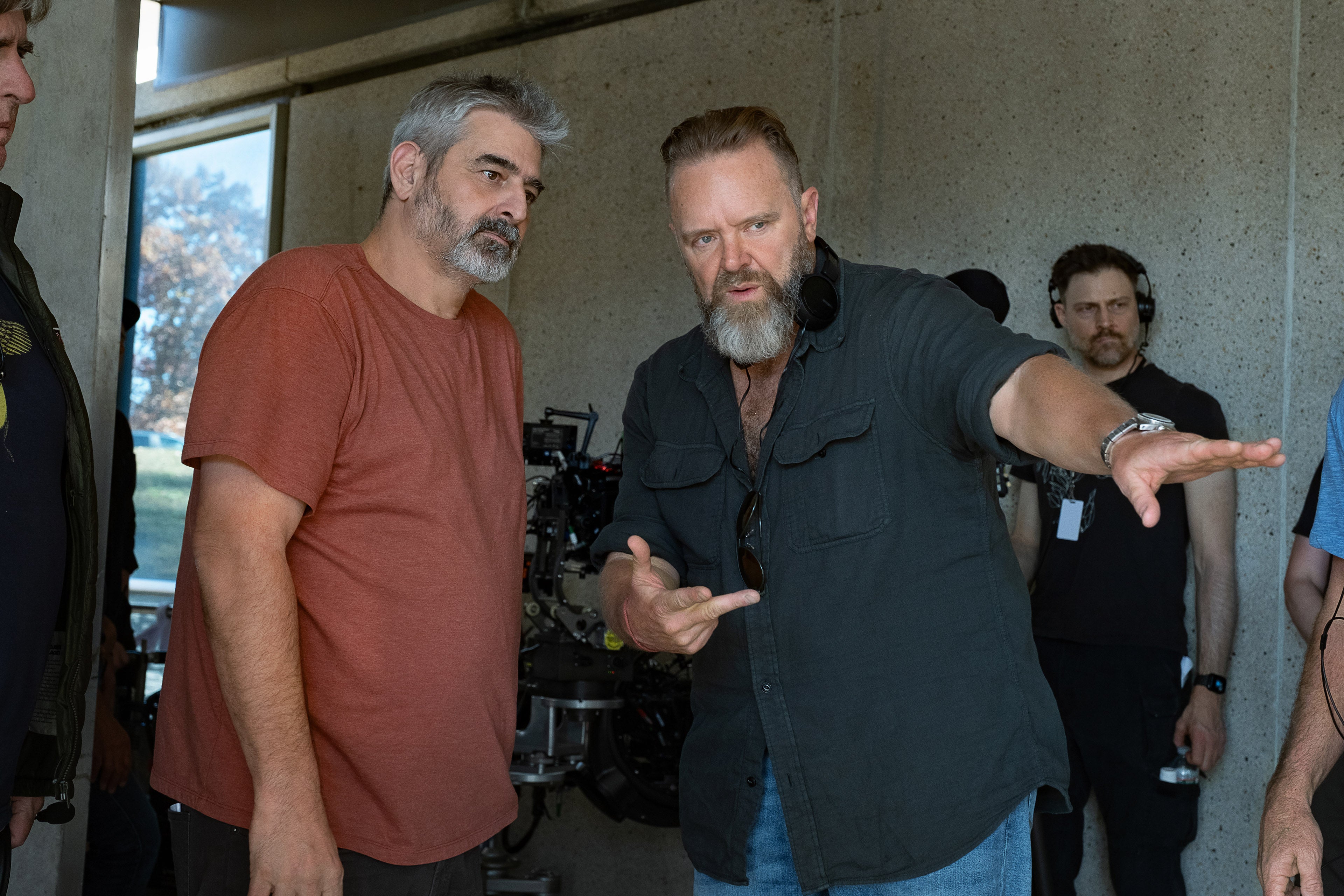
And it is before and during prep that this communication lends itself to the film. Weeks before pre-production was to start, Azpiroz and Carnahan met at the director's LA home and went through the script scene by scene, developing the look using reference material from the movies they love.
“On this particular movie, I always thought that it was a black and white noir movie from the 40s,” Azpiroz said. “Obviously, we're in 2025, and it can’t be black and white, but to me it was a noir movie. So I show up in LA at Joe's home with a picture from The Night of the Hunter, where the grandma is in a rocking chair outside on the porch, and she's all in a silhouette except for a gun. That gun is lit. And I said, ‘This is the movie I want to shoot.’”
Carnahan agreed with this initial visual look, and the duo continued to play with color and contrast, figuring out how to use shadow and silhouettes in pivotal story moments and character interactions. It is here, before prep, where they made lens and lighting choices, and created a shot list for the entire movie.
“But what we've been doing lately, especially on this movie, is that we don’t carry that shot list to the set,” Azpiroz shared. “Whatever sticks to our brains is what the movie really is. If it doesn't stick to our brains, we don't need it.”
"And it's fantastic to see that after a shoot day, I go home and I look at the shot list, some days we check off every single one of the shots, and some days we check none. But it's a better scene than the one we had planned because during the moment with the actors, they may do this or not do that, and everybody working together makes the scene better. Both Joe and I love the spark of those moments.”
While Azpiroz does a lot to prep a film, it’s not a strict set of goalposts to follow. Having a strong foundation allows for more creativity and the confidence to pursue spontaneous moments.
“I work a lot in prep. I know everything I'm going to do, and I want to do. But then I allow for the magic to happen,” Azpiroz said. “I allow the movie to happen and just be open to whatever the movie offers you. That's how we work.”
How a Film From 1955 Inspired the Look for The Rip
The photo reference that Azpiroz first brought to Carnahan was from the 1955 film The Night of the Hunter, an American Southern Gothic horror-thriller directed by Charles Laughton and starring Robert Mitchum and Shelley Winters. But it wasn’t the film itself that inspired Azpiroz; it was the way the lighting separated the world and characters in a scene and how it guided the eyes of the viewer.
“In The Night of the Hunter, the lighting draws you in to look at places that you wouldn’t always look at. It's not naturalistic, but it looks like that lighting belongs to that movie,” Azpiroz said. “And I wanted to achieve something like that [for The Rip].”
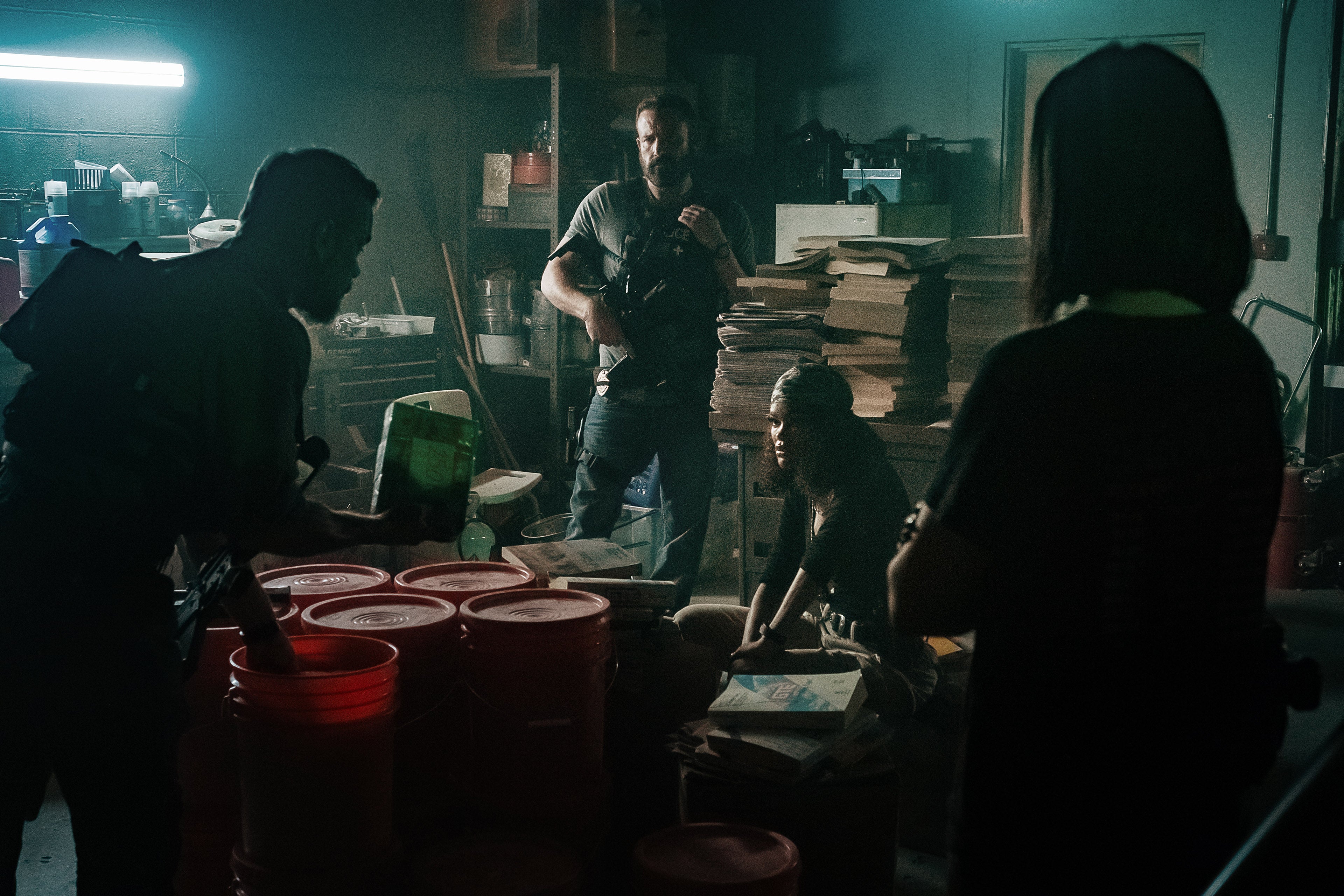
“So we did a lot of silhouettes, a lot of characters playing in the dark, and then moving back to just catch the light, and choosing on what lines that should happen. A lot of our lighting guides you to places, even though they're subtle and probably no one will notice on the first watch.”
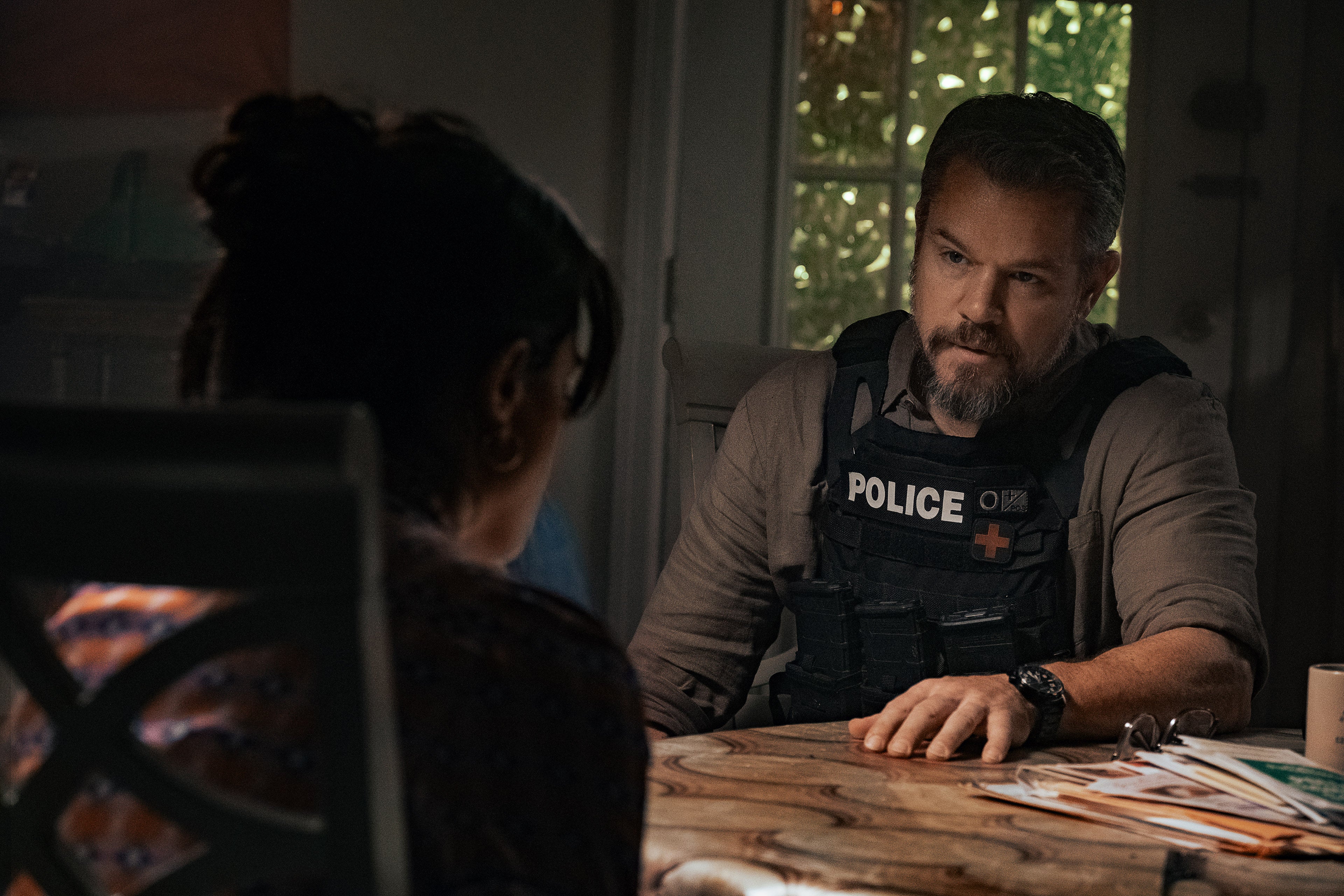
With the film set predominantly at night, Azpiroz played against expectation. Dark and moody interiors were draped in shadow and silhouette, while the exteriors were bright and vibrant, decisions that were all based on how the cinematographer wanted the characters to feel in those moments.
“There is a difference in the way I shot the interiors and the exteriors. From a narrative point of view, I wanted that interior to make the characters feel trapped,” Azpiroz explained. “They can’t go anywhere. We're locked in here. Those interiors are pretty contrasty and dark, and there are a lot of shadows and a lot of silhouettes and a lot of noir.”
“Opposite that, I wanted to shoot the exteriors very bright, because in my mind, even though we're trapped in the house, it’s a safe place to be. If we go outside, we're gonna be in the open, and we're gonna be a target,” Azpiroz continued. “So even though the entire movie is at night, the exteriors are very bright.”
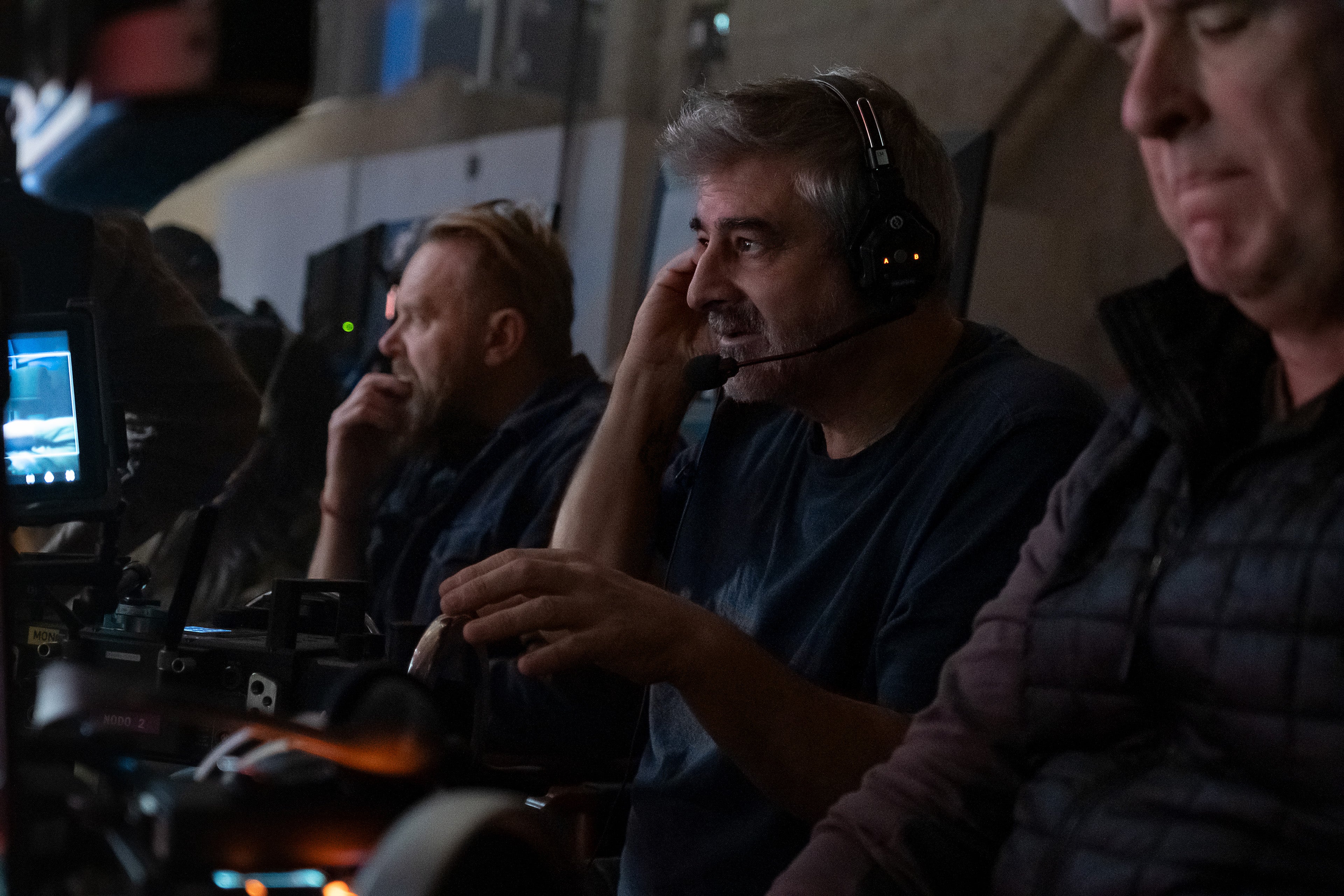
Overcoming the Challenges of Intimate Moments in an Action Thriller
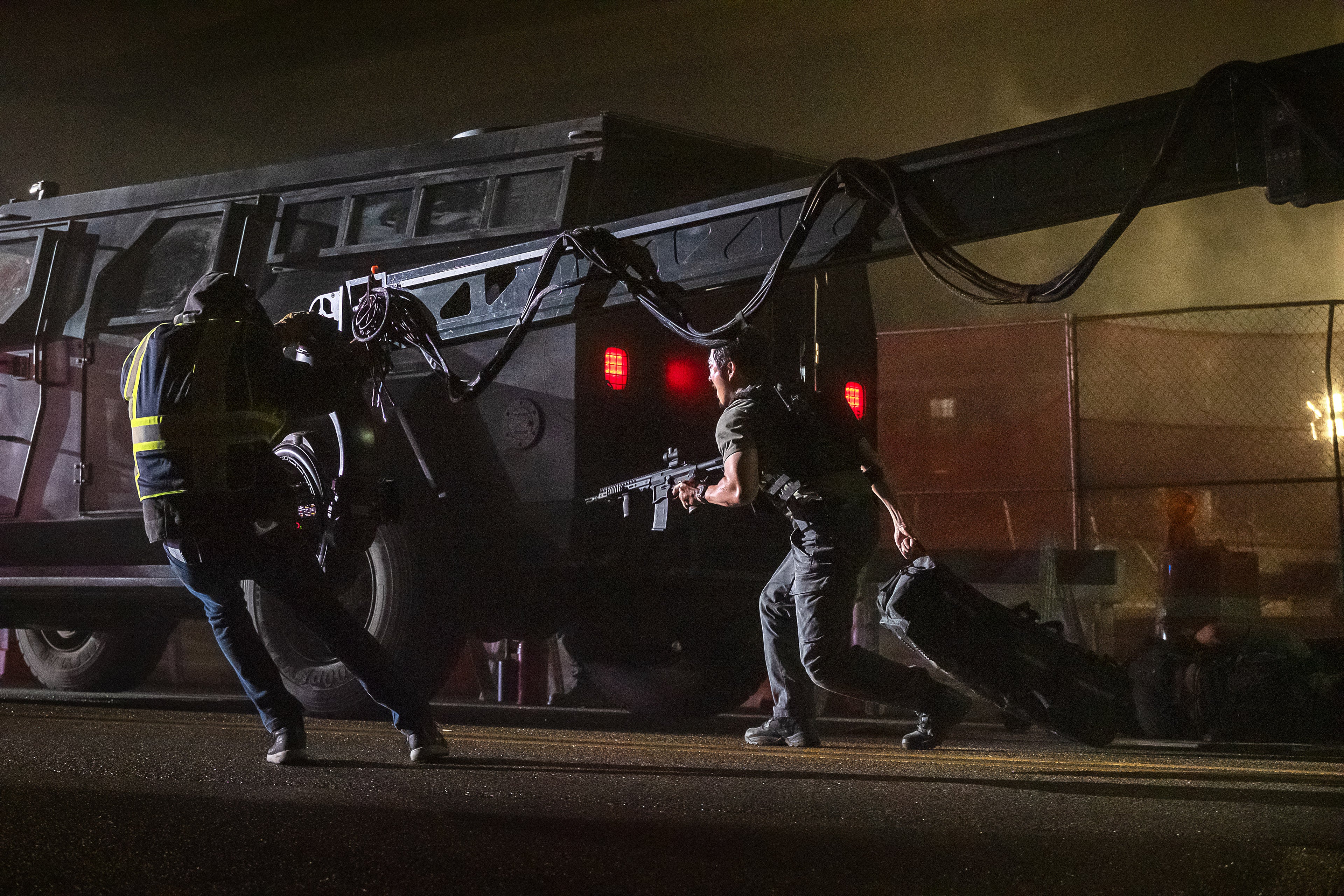
While set in Miami, exteriors for The Rip were shot in Los Angeles, and interiors were shot on a soundstage in New Jersey. This allowed Azpiroz to use LA's light pollution, even using it as a backlight or to silhouette characters running on rooftops. To capture the harsh darkness of his interiors and vibrant low-light exteriors, Azpiroz utilized the Sony VENICE 2 for its versatility on set.
However, the most challenging moments came when four characters sat in the back of a Lenco BearCat, a law-enforcement security vehicle. For this scene, Azpiroz looked to the theater.
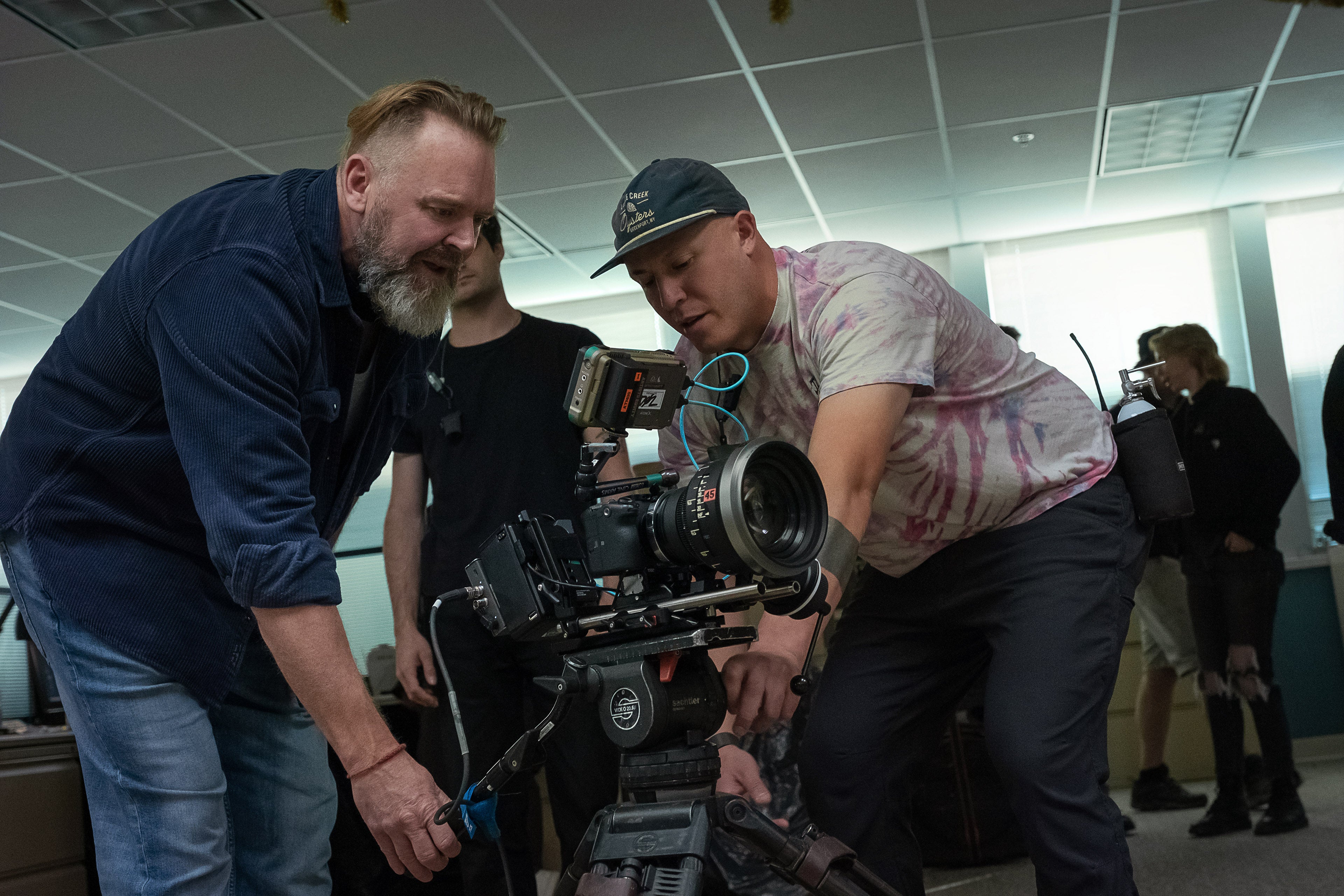
“It took us a while to understand how to shoot that scene because we didn't want to interfere too much with the actors. We wanted to give them the space and use it almost like a black box theater,” Azpiroz said. “So we shot those 20 minutes of the movie with two small Sony FX3s with small lenses on the DJI RS 4, the little remote control heads.”
“And [DJI] was kind enough to make the wheels work for that head. So we had two micro remote heads with wheels and two small cameras, which we shot at ISO 12,800,” Azpiroz continued. “We had planned an entire system of moving walls and this and that, but we never used it because the cameras and the system we were using were small enough, and the quality is second to none.”
Throwing Out the Plan and Trusting Your Team
From technical solutions for creative problems to planning every moment before prep even begins, Azpiroz is a cinematographer who explores his visual language from a strong foundation of safety. But for him, the things that made The Rip so memorable were the collaborators he had at his side.
“Matt Damon, Ben Affleck, Steven Yeun, Sasha Calle or Teyana Taylor are some of the best actors out there now,” Azpiroz said. “Just to be able to be with them on set and to see how they perform and how they work and how they deliver those great lines that Joe wrote was a joy.”
Catch The Rip now on Netflix to see Azpiroz’s compositions. To learn more about the Sony VENICE and the other cameras in the Sony Cinema Line, visit our Camera Comparison Chart.


